
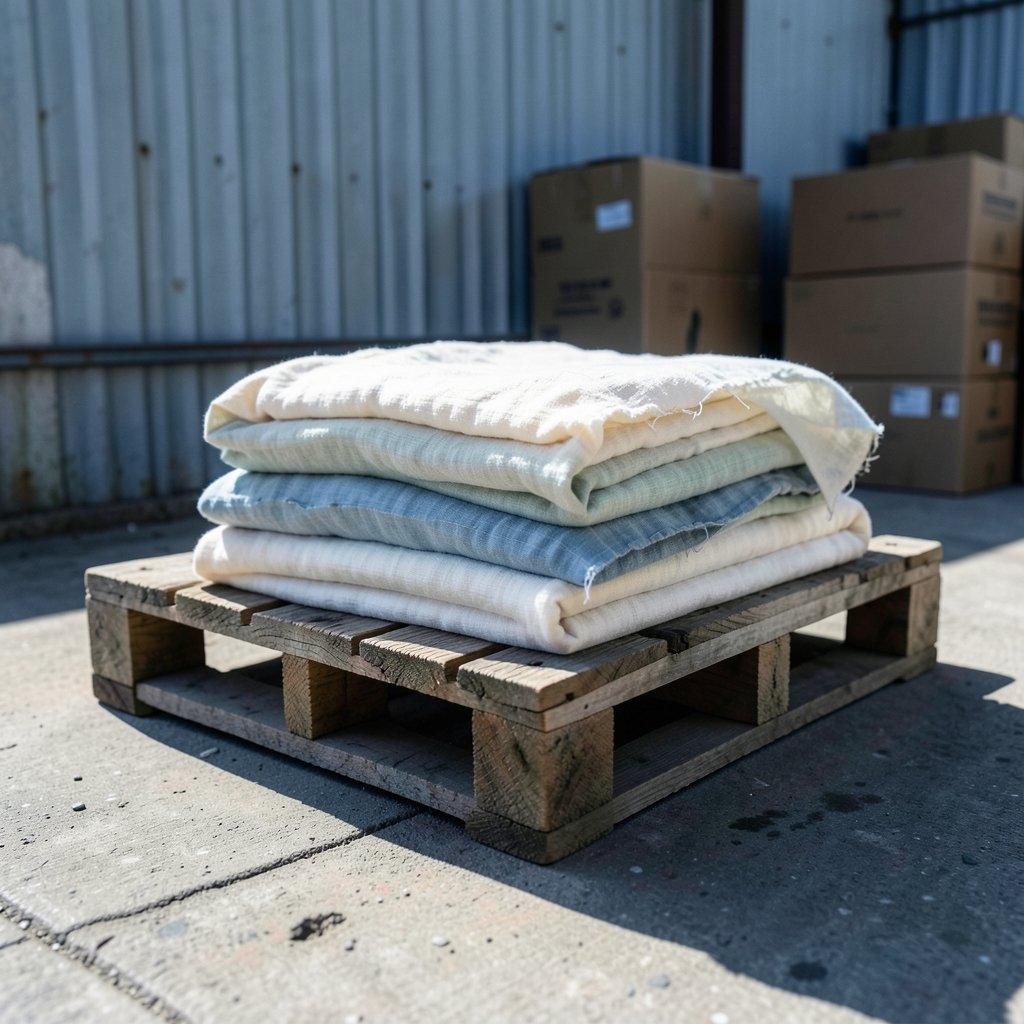
What if the most useful blanket in a home is the one that weighs almost nothing? That is the odd promise of muslin blankets. They look thin, almost flimsy, next to a plush fleece throw. Yet parents, nurses, and travelers keep reaching for them. The fabric has a long history, a few real safety caveats, and a lot of marketing noise around it. This guide cuts through the noise: what muslin actually is, why the open weave matters, where it belongs in a sleep routine, and how to spot a good one from a bad one without paying premium prices.
What Muslin Actually Is
Muslin is a plain-weave cotton fabric. The name is widely tied to Mosul, the textile city on old trade routes (now in Iraq), though that etymology is often repeated more confidently than it is documented. The fabric itself is simple: a lightweight, open weave with visible air gaps between threads.
Those gaps are the whole point. In baby blankets, muslin usually shows up as double gauze, two thin layers loosely woven together. The result is breathable, quick-drying, and soft in a crinkled way that gets softer with each wash. It drapes instead of sitting stiffly on top of a body.
Muslin also has a serious history. Bengal, in modern Bangladesh and India, exported enormous quantities of fine muslin in the 17th and 18th centuries, including the legendary “Dacca muslin” so fine it was said to pass through a ring. British industrial competition and colonial trade policy helped push that trade into decline during the 19th century. The gauze squares sold in baby aisles today are a humble descendant of a fabric that once moved empires.
One important caution: “muslin” is not a regulated standard. There is no official thread count, weight, or gauze specification attached to the word. Two blankets both labeled muslin can differ wildly in thickness, softness, and breathability. The label tells you the weave type, not the quality.
Why the Open Weave Matters

A blanket’s job is to trap warmth. Muslin’s job is to trap a little warmth and let the rest go. Three practical consequences follow.
First, airflow. The loose weave lets heat and moisture escape, which is why muslin is popular in warm climates and summer months. A baby or adult wrapped in muslin is less likely to wake up clammy.
Second, quick drying. Thin layers dry fast after washing, which matters if you are laundering a blanket every few days.
Third, temperature flexibility. Because muslin insulates lightly, it works as a light layer rather than a heavy one. Fold it double for a cooler evening, use it single for a warm afternoon. It is a layering tool, not a substitute for a winter duvet.
What muslin is not: a magic fabric. A thick, tightly woven muslin with a synthetic backing will behave nothing like a loose double gauze. The weave, not the word, does the work.
Muslin Blankets and Infant Sleep Safety
This is the section where care matters most. Public health guidance on infant sleep is consistent on one point: soft bedding, including blankets, pillows, and bumpers, should be kept out of a baby’s sleep space to reduce suffocation risk. The US “Back to Sleep” campaign, later renamed Safe to Sleep, has promoted this guidance since 1994.
The same guidance warns against over-bundling and overheating. Breathable layers are preferred over thick blankets. So where does muslin fit?
The honest answer is: muslin blankets are excellent for supervised use, swaddling (with correct technique and the right size), tummy time, stroller cover-ups, and as a light layer over a car seat or during cuddle time. They are not a reason to put a loose blanket into a crib with a young infant. A breathable blanket is still a blanket. If you are unsure about your baby’s sleep setup, follow your pediatric provider’s advice and the current safe-sleep guidance rather than a product label.
For parents building a nursery routine from scratch, the same discipline that applies to setting up other home systems applies here. Just as a careful Home assistant setup guide beginners from blank sd card walks you through each step in order rather than improvising, safe sleep works best when you set the environment up deliberately before the baby arrives, not at 3 a.m.
Who Else Uses Muslin Blankets
Babies get the headlines, but muslin blankets have a wider fan base.
Travelers like them because they pack to nothing and dry overnight in a hotel bathroom. Hot sleepers use them as a summer top layer. Photographers use neutral muslin as a soft backdrop or swaddle prop. Adults increasingly buy oversized muslin throws for sofa use in warm months, and muslin bedding has become a category of its own.
There is a practical appeal for anyone who has ever stared at a big project and felt stuck before starting. The first draft of anything, whether a blanket collection or a document, is easier when you begin with something light and adjustable. The same principle behind a guide to start resume build first draft without staring at blank page applies to building a nursery: start with a few flexible basics, then add.
How to Judge Quality Before You Buy
Since “muslin” guarantees nothing, you need other signals. Here is what to check, in rough order of usefulness.
| What to check | Good sign | Warning sign |
|---|---|---|
| Gauze layers | Two or more distinct loose layers | Single thin sheet sold as “muslin” |
| Hand feel | Soft, slightly crinkled, drapes easily | Stiff, papery, or coated |
| Weave visibility | You can see light through it | Dense, opaque, plasticky |
| Shrinkage note | Pre-washed or stated shrinkage | No care info at all |
| Fiber label | 100% cotton, clearly stated | Vague “cotton blend” |
| Stitching | Secure edges, no loose hems | Rough seams that fray fast |
Two more practical checks. First, wash it before first use if the care label allows. Cotton muslin softens with washing, and a pre-wash tells you how much it shrinks. Second, hold it up to a window. If light passes through evenly, the weave is consistent. Patchy light means uneven weaving, which usually means uneven breathability.
In the US, textile fiber content and country of origin must be disclosed under the Textile Fiber Products Identification Act and its rules. That label is your minimum baseline, not a quality grade. Flammability rules are a murkier area: children’s sleepwear falls under specific federal standards, but blankets are generally treated as bedding rather than sleepwear, so coverage differs. If flammability claims matter to your purchase, treat marketing language with skepticism and check the actual standard cited.
Common Mistakes People Make
A few patterns show up again and again.
Buying by the word “muslin” alone. The label is a weave type, not a quality mark. A cheap, tightly woven muslin is just thin cotton.
Expecting warmth. People buy a muslin blanket for winter and are disappointed. It is a light layer. Pair it with something warmer or use it in warm conditions.
Skipping the pre-wash. Unwashed muslin can feel stiff and may shrink noticeably on the first wash. Wash cold, dry low, and expect the crinkle to settle in.
Using a loose blanket in a crib. The most serious mistake. Breathable does not mean safe for unsupervised infant sleep. Follow safe-sleep guidance.
Over-washing with harsh detergent. Muslin softens with washing, but heavy detergent and fabric softener can coat the fibers and reduce the airy feel. A simple, mild wash works better.
Ignoring the care label. Cotton muslin is generally machine-washable, but temperature guidance varies by product. The label governs, not general advice.
Muslin vs. Other Blanket Fabrics
A quick comparison helps set expectations.
| Fabric | Warmth | Breathability | Drying speed | Best use |
|---|---|---|---|---|
| Muslin (double gauze) | Low | High | Fast | Summer, swaddle, layering |
| Fleece | High | Low | Medium | Cold rooms, sofa throws |
| Knit cotton | Medium | Medium | Medium | Everyday baby use |
| Wool | High | Medium | Slow | Cold climates, adults |
| Quilted cotton | Medium-high | Low-medium | Slow | Crib alternatives, floor play |
The pattern is clear: muslin trades warmth for airflow and drying speed. That trade is exactly why it works in hot rooms, humid climates, and for babies who run warm.
Care That Keeps Muslin Soft
Cotton muslin is low-maintenance, and the care routine is short.
- Wash before first use in cold or lukewarm water with mild detergent.
- Skip fabric softener; it coats fibers and reduces the airy hand feel.
- Tumble dry low or line dry. High heat accelerates shrinkage and wear.
- Expect the crinkle. Muslin is supposed to look slightly rumpled; that is the weave, not damage.
- Store folded loosely. Compressing it tightly for months can flatten the gauze layers.
If you are building a broader home setup and want the same step-by-step rigor applied elsewhere, a resource like this Figma tutorial build real screen from blank file prototype shows how structured, incremental instructions beat guesswork. The same holds for laundry routines: a fixed wash cycle beats improvising every week.
Conclusion
Muslin blankets earn their reputation through a simple physical fact: an open weave lets air move. That makes them breathable, fast-drying, and genuinely useful in warm conditions, for swaddling with care, and as a light layer for adults who sleep hot. They are not warm winter blankets, and the word “muslin” on a label promises nothing about quality. Check the gauze layers, hold the fabric to the light, read the fiber label, and wash before use. And keep the safe-sleep rule firm: a breathable blanket is still a blanket, so it stays out of an infant’s unsupervised sleep space. Choose well, and the thinnest blanket in the house may become the one you reach for most.
Frequently Asked Questions
What is a muslin blanket made of?
Most muslin blankets are 100% cotton, woven in a loose plain weave. Baby versions are usually double gauze, meaning two thin layers are woven loosely together. Some products blend in other fibers, so check the fiber label. In the US, fiber content must be disclosed under federal textile labeling rules.
Are muslin blankets safe for babies to sleep with?
They are breathable, but breathability is not the same as safety. Public health guidance advises keeping soft bedding, including blankets, out of an infant’s sleep space to reduce suffocation risk, and warns against overheating. Muslin blankets work well for supervised use, swaddling with correct technique, tummy time, and stroller cover. For crib sleep, follow current safe-sleep guidance and your pediatric provider’s advice.
Do muslin blankets keep you warm?
Only lightly. Muslin is a low-warmth, high-breathability fabric. It is best for warm rooms, summer months, and layering. For cold conditions, pair it with a warmer layer or choose a different fabric. Expecting a muslin blanket to replace a duvet will lead to disappointment.
How do you wash a muslin blanket?
Machine wash in cold or lukewarm water with mild detergent, skip fabric softener, and tumble dry low or line dry. Wash before first use, since cotton muslin softens with washing and may shrink on the first cycle. Always follow the product’s care label, which governs temperature and drying instructions.
Why does my muslin blanket look wrinkled?
That crinkle is normal. The loose double-gauze weave naturally rumples, and the texture is part of what makes the fabric soft and breathable. Ironing is unnecessary and can flatten the gauze layers. Loose folding for storage keeps the weave from compressing over time.
Is muslin the same as gauze?
Not exactly. Gauze describes a loose, open weave, and muslin is a type of plain-weave cotton fabric. In baby products, the two terms overlap heavily because muslin blankets are usually made as double gauze. The practical takeaway: neither word is a regulated quality standard, so judge the actual fabric, layer count, and hand feel rather than the label wording.



