
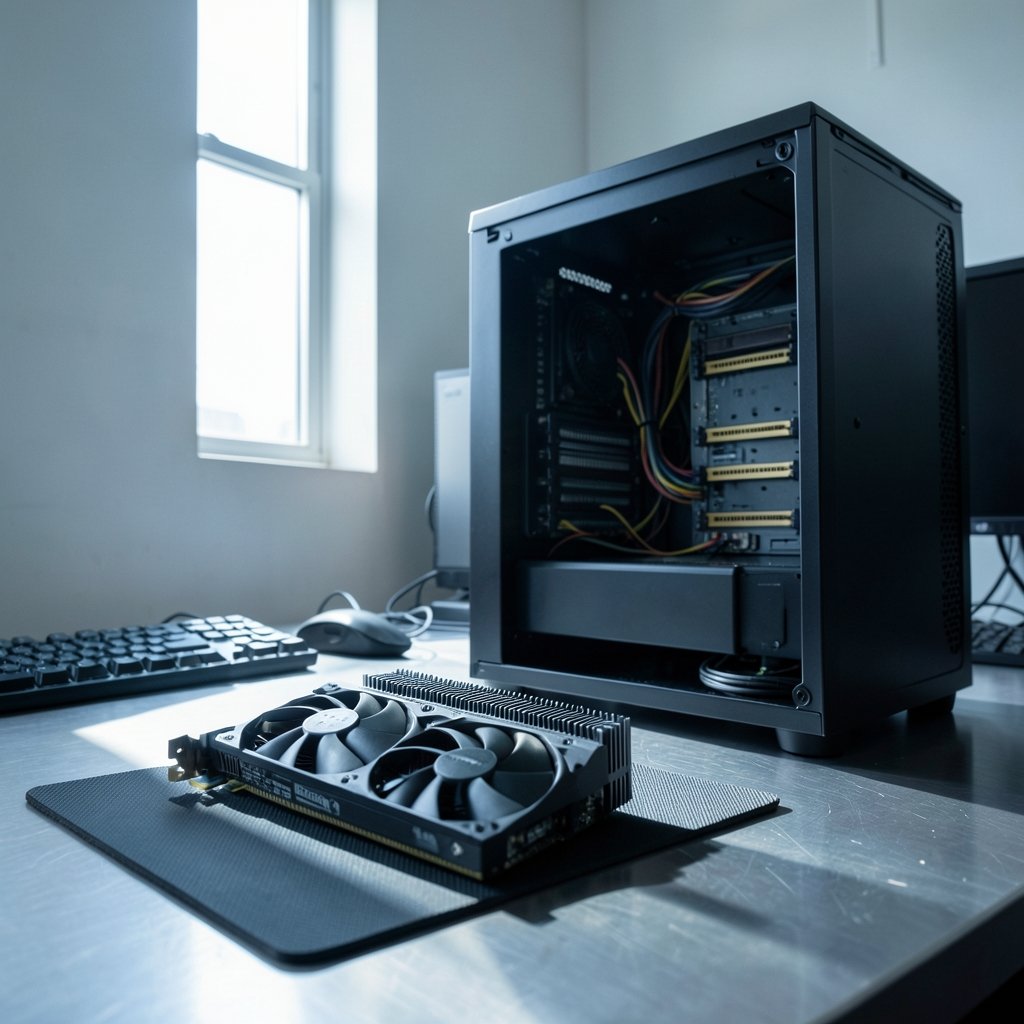
What if the most expensive GPU in the room produced the worst answer? That question shapes every buying decision teams will face when comparing NVIDIA RTX Spark hardware against full AI workstation pricing in 2027. The assumption that a bigger invoice buys better model output is one of the most expensive mistakes in AI hardware planning, and it survives mostly because nobody tests it properly. (Graphics processing unit (GPU) overview)
The uncomfortable truth is that output quality and hardware price are only loosely connected. Price buys speed, memory capacity, and support terms. It does not buy a smarter model. Understanding where that line falls is the difference between a workstation that pays for itself and one that quietly drains a budget while producing the same mediocre results as a laptop.
Why price and output quality drift apart
A GPU does not generate text. It runs matrix math. The quality of what comes out the other end is set by the model weights, the precision format, the sampling parameters, and the evaluation method used to judge the result. Swap a $10,000 workstation for a $3,000 card and run the same model at the same settings, and the outputs are functionally identical. The expensive machine just gets there faster.
This is the single most important framing point for anyone building a 2027 procurement case. Hardware changes which models you can run and how quickly. It does not change what a given model knows or how well it reasons. Once that clicks, the comparison between RTX Spark-class hardware and a full AI workstation stops being a spec-sheet fight and becomes a question about fit.
What RTX Spark actually represents in the lineup
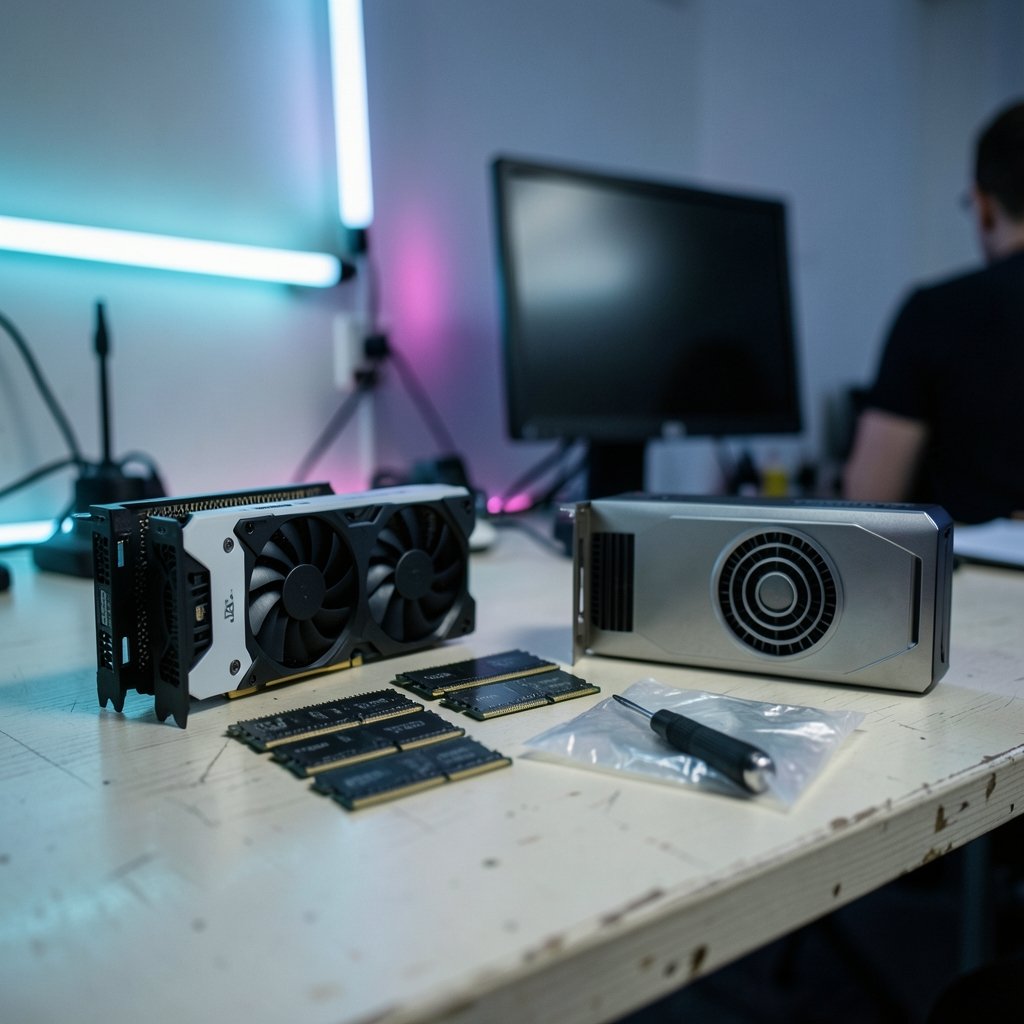
NVIDIA’s consumer and professional lines have always been distinct, and the distinction matters more for AI work than for gaming. Consumer GeForce cards prioritize clock speed and price-per-frame. Professional cards add ECC memory, certified drivers validated against CAD and content-creation software, and longer support windows.
RTX Spark, as a name, sits in territory that needs careful verification before any budget is signed off. Buyers should confirm exactly which product family they are pricing, what memory configuration ships, and whether driver certification is included. Naming confusion is common in this segment, and it has already caused ripples across the market. Reports that the RTX Spark retail launch is facing doubts over Arm gaming plans show how quickly a product’s positioning can shift, which is precisely why procurement should never lock a budget to a name alone.
The practical rule: price the capability, not the badge. Ask what memory ceiling the card offers, what precision formats it supports natively, and what the support contract covers. Those three answers determine almost everything about real-world AI performance.
The memory ceiling is the real quality gate
Here is where hardware genuinely does affect output quality, and it is not through raw compute. It is through memory capacity.
Whether a model fits in VRAM determines which model you can run at all. A 70-billion-parameter model at full precision needs far more memory than most consumer cards provide. Drop to a lower-precision format and it may fit. Drop further and it fits comfortably, but with a measurable accuracy cost. That trade-off, not the price tag, is what changes the quality of your outputs.
| Configuration tier | Typical VRAM range | What it supports | Quality impact |
|---|---|---|---|
| Consumer card | 8–32 GB | Smaller models, aggressive quantization | Noticeable degradation on complex reasoning |
| Mid professional | 24–48 GB | Mid-size models at moderate precision | Minor, task-dependent degradation |
| High-end workstation | 48–96 GB | Large models at higher precision | Closest to reference model behavior |
The lesson for 2027 planning is blunt: buy the memory you need for the models you actually intend to run, and not a byte more. A card with double the VRAM you need is a card with half its value wasted.
Precision formats and the accuracy trade
Modern accelerators support a ladder of numeric formats, from full precision down to aggressively compressed 4-bit formats. Each step down the ladder roughly doubles throughput and halves memory use, and each step also introduces approximation error.
For many tasks, that error is invisible. Summarization, classification, and drafting tolerate low-precision inference well. For others, particularly multi-step reasoning, code generation with strict syntax requirements, and anything involving numerical accuracy, the degradation is real and measurable. A workstation that runs a model at 4-bit precision to fit within its memory budget may produce worse answers than a cheaper card running a smaller model at 8-bit.
The practical guidance is to benchmark at the precision you will actually deploy, not the precision in the marketing deck. Teams that test only at full precision and then ship at 4-bit are measuring a machine they will never use.
How to actually evaluate output quality
Evaluation is where most procurement cases fall apart. “It feels better” is not a metric. A defensible evaluation needs a fixed prompt set, a fixed model, a fixed precision, and a scoring method agreed before testing begins. (NIST AI program: standards and evaluation)
Build a task-specific prompt set
Generic benchmarks tell you how a model performs on generic problems. They do not tell you whether it can handle your contracts, your codebase, or your support tickets. Assemble 50 to 200 real prompts drawn from actual work, with known good answers where possible. This is the single highest-value hour in the entire evaluation.
Fix every variable except the hardware
Run the same model, same weights, same precision, same sampling temperature, and same prompt order on each candidate machine. Change one thing at a time. The moment two variables move together, the comparison is worthless.
Score blind and score twice
Have outputs graded without knowing which machine produced them. Where feasible, use two graders and measure agreement. If the graders disagree more than the machines do, the test is not sensitive enough to justify a purchase decision.
Separate speed from quality
Throughput and latency are easy to measure and easy to confuse with quality. Track tokens per second separately from accuracy scores. A machine that is twice as fast and equally accurate is a productivity win. A machine that is twice as fast and slightly worse is a trade-off that needs an explicit decision, not an accidental one.
Record the precision
Every result should carry a label stating the quantization level used. Without it, the numbers cannot be reproduced and the comparison cannot be defended six months later.
Where the market timing complicates the math
Anyone budgeting for 2027 hardware has to weigh release cadence against immediate need. Waiting for the next generation is a legitimate strategy, but only if the current hardware genuinely cannot do the job.
The rumored NVIDIA RTX 60 series timeline and whether it skips a 2027 launch is worth tracking because a generation gap changes depreciation math substantially. Similarly, reports of an RTX 50 Super delay stretching into 2026 affect both availability and the resale value of hardware bought today. Neither rumor should drive a purchase on its own, but both belong in the risk column of any multi-year plan.
The counterweight is that supply uncertainty cuts both ways. OEM lineup changes, such as an Asus RTX Spark reorder reshaping the OEM lineup in Q4 2026, can leave buyers unable to source a specific configuration at the moment they need it. Locking in hardware early costs flexibility but buys certainty, and for teams with production deadlines, certainty usually wins.
Total cost of ownership beats sticker price
Sticker price is the least interesting number in a workstation purchase. The costs that actually matter accumulate over three years.
Power draw is the first. A high-end workstation running inference around the clock can consume several times the electricity of a mid-range card. At scale, that difference is a line item, not a rounding error. Cooling follows close behind, particularly in dense office environments where HVAC capacity is already stretched.
Support contracts are the second. Professional cards typically carry longer warranties and certified driver support. Consumer cards do not. For a team that cannot afford a two-week driver regression, that support is worth real money, and it should be priced as such rather than treated as a freebie.
Utilization is the third and most overlooked. A workstation that sits idle 80 percent of the time is a poor investment regardless of its specifications. Shared inference servers, batch scheduling, and off-peak job queues often deliver more effective capacity than a single oversized machine. The question is not “how fast is this card” but “how many useful hours does it deliver per week.”
Common mistakes that wreck the comparison
A few failure patterns show up again and again in AI hardware evaluations.
The first is benchmarking the wrong model. Teams test a large model on a workstation, then deploy a smaller one in production for cost reasons, and never re-run the evaluation. The numbers they approved describe a system they never built.
The second is confusing throughput with capability. Higher tokens per second is genuinely valuable, but it does not make a model smarter. Buying speed when the bottleneck is accuracy is a common and expensive error.
The third is ignoring the software stack. Driver maturity, framework support, and library compatibility vary between product lines. A card that is theoretically faster but poorly supported in your inference framework will underperform in practice.
The fourth is treating a benchmark score as a decision. Scores are inputs. The decision requires a cost model, a utilization estimate, and a clear statement of what quality threshold is acceptable for the task at hand.
Building a defensible 2027 decision
The strongest procurement cases share a structure. They state the task, define the acceptable quality threshold, identify the memory requirement, benchmark at production precision, and then compare total cost across the candidate machines.
That sequence matters. Starting with hardware and working backward toward a justification produces a decision that looks rigorous but is really post-hoc rationalization. Starting with the task produces a decision that survives scrutiny.
For teams weighing adjacent infrastructure spending, the same discipline applies to software budgets. Cloud compute pricing, for instance, has its own traps, and a breakdown of Cloudflare Workers pricing for small projects and what you actually pay shows how per-request costs compound in ways that flat monthly quotes hide. The principle transfers directly: model the real workload, not the marketing tier.
Conclusion
The gap between NVIDIA RTX Spark hardware and a full AI workstation is not primarily a quality gap. It is a capacity, support, and cost gap. Output quality is governed by the model, the precision, and the evaluation method, and those are choices the buyer controls regardless of which card sits in the chassis.
Teams that get this right in 2027 will do three things. They will size memory to the models they actually run. They will benchmark at production precision with real prompts and blind scoring. And they will price the full three-year cost, including power, support, and idle time, rather than the invoice alone. Do that, and the hardware question becomes straightforward. Skip it, and the most expensive machine in the room really can produce the worst answer.
FAQ
Does a more expensive GPU produce better AI output?
No, not directly. A pricier card buys speed, memory capacity, and support terms. At identical model settings and precision, outputs are essentially the same. Quality changes only when the hardware lets you run a larger model or a higher precision format that a cheaper card cannot accommodate.
What is the most important spec for local AI work?
Memory capacity, measured in VRAM. It determines which models fit and at what precision. Compute speed affects how fast you get answers, but memory determines whether you can run the model at all. Size memory to your intended workload before comparing anything else.
How should output quality be measured?
Use a fixed set of real prompts from your own work, run the same model and precision on each candidate machine, and score the results blind. Track accuracy separately from tokens per second. If two graders disagree more than the machines do, the test is not sensitive enough to base a purchase on.
Does quantization reduce quality?
It can, and the effect is task-dependent. Lower-precision formats roughly double throughput and halve memory use, but they introduce approximation error. Summarization and classification usually tolerate it well. Multi-step reasoning and strict code generation are more sensitive. Always benchmark at the precision you plan to deploy.
Is it worth waiting for the next GPU generation?
Only if current hardware genuinely cannot meet your quality threshold. Waiting carries real costs: delayed projects, uncertain launch dates, and supply risk. If today’s cards meet your memory and precision requirements, buying now and depreciating over three years is often the safer financial path.
How does precision format affect benchmark results?
Substantially, and often invisibly. A model tested at full precision and deployed at 4-bit will show different accuracy in production than in the evaluation. Every benchmark result should carry a precision label so the comparison can be reproduced and defended later.



