
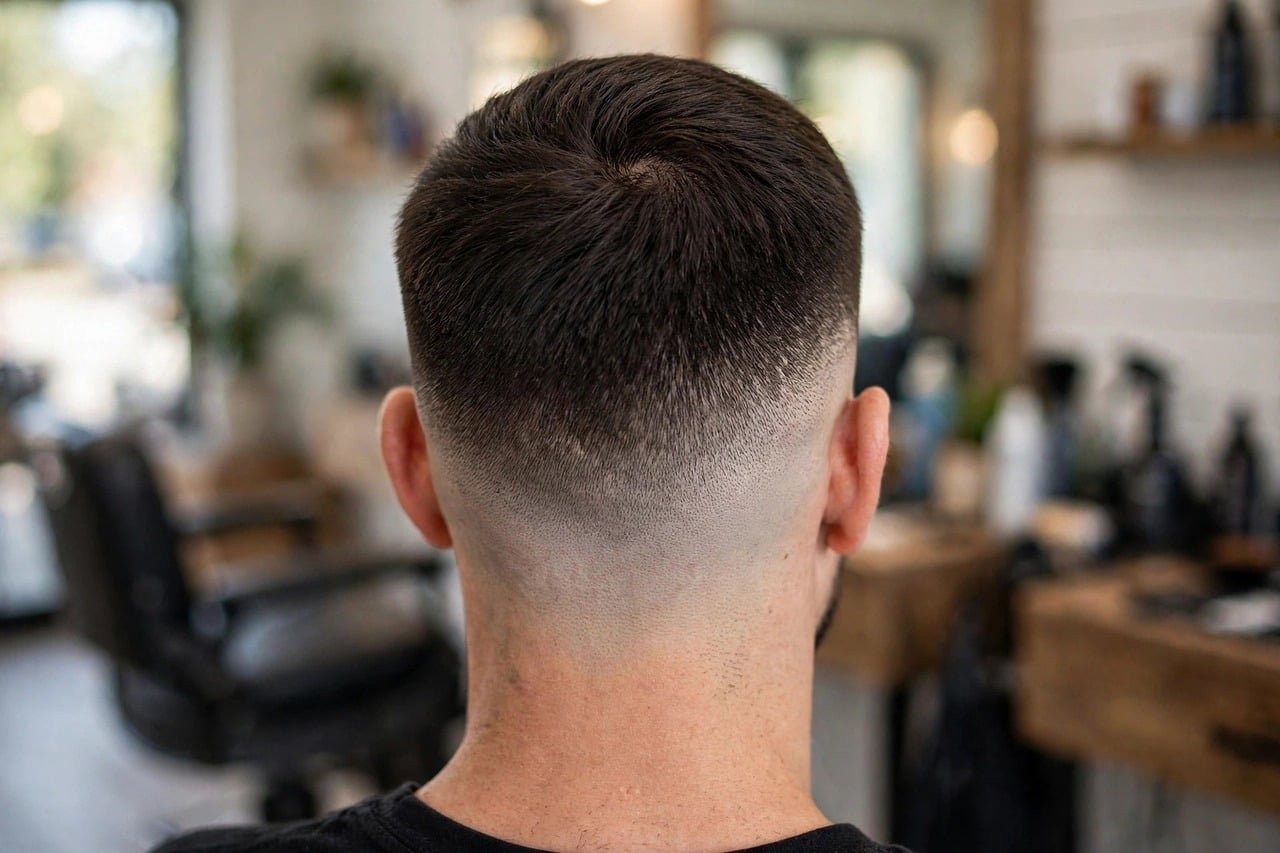
Can a haircut really look expensive? Walk into any barbershop in a major city and you will hear the same request echoing around the chairs: “Give me the old money haircut.” It sounds like a joke, but it is one of the most requested men’s styles of the past few years. The look is neat, controlled, and almost aggressively normal. No hard lines. No heavy gel. No bright dye. Just a clean taper, a soft part, and hair that behaves itself.
That restraint is the whole point. The old money haircut is a style built on looking like you did not try very hard, even though the cut itself takes real skill to execute. Below is a practical breakdown: what the cut actually is, how it differs from the fades most men ask for, how to describe it to a barber so you get what you pictured, and where the label gets a little silly.
Where the Term Comes From
Here is the first thing to know: “old money haircut” is not a trade term. No barbering school teaches it, no standards body defines it, and no peer-reviewed study has ever measured it. It is internet culture. The phrase spread through social media in the early-to-mid 2020s alongside the broader “old money aesthetic” trend, the same wave of content that pushed quiet luxury clothing, tennis whites, and loafers without socks. The exact first use is not documented, so treat any precise origin date you see online with suspicion.
The style underneath the label, though, is genuinely old. The side part and the tapered gentleman’s cut were standard men’s barbering through the mid-20th century, and the Ivy League look was a documented American style long before TikTok existed. The cut did not change. The name did.
The label also overlaps with quiet luxury, the stealth-wealth trend that fashion media covered heavily around 2023. Commentators often tie that moment to the final season of the television drama Succession, though that connection is media commentary rather than established fact. Either way, the haircut became part of the same visual vocabulary: understated, tidy, and expensive-looking without a logo.
What the Old Money Haircut Actually Looks Like
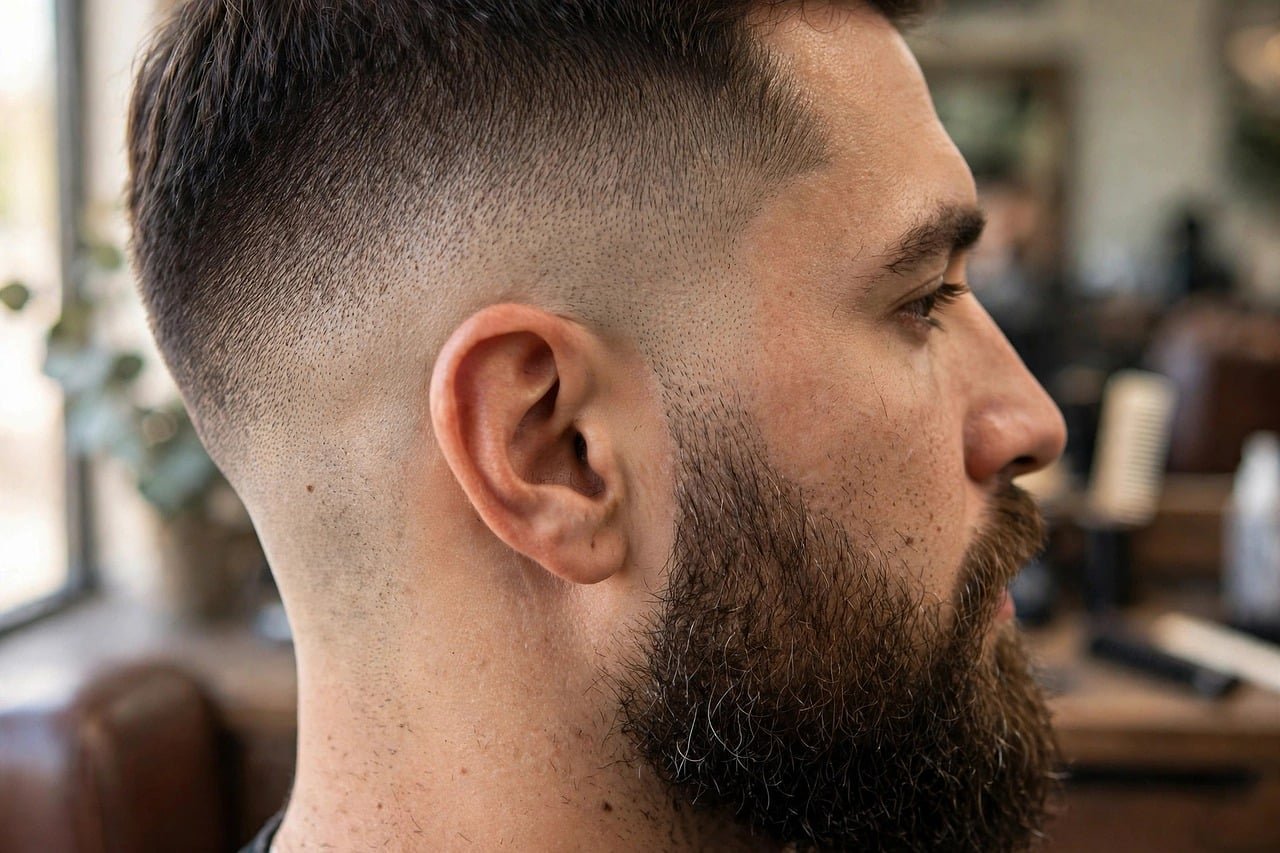
The style is defined by restraint rather than one fixed shape. Two men can both have an old money haircut and look quite different. What they share is a set of qualities:
- Moderate length on top. Enough hair to part, sweep, or push back, typically two to four inches. Not a buzz, not a flowing mane.
- A taper, not a skin fade. The sides shorten gradually toward the neck and ears. There is no shaved-to-the-scalp line and no hard disconnection between top and sides.
- Scissor-led work. Barbers generally describe the look as cut mostly with scissors, with clippers used only to clean the edges.
- Natural texture. No flat-ironing, no wet-look pomade, no visible shine. If product is used at all, it should be matte and barely detectable.
- A clean neckline and around the ears. The finish is what sells the polish. A great cut with a scruffy neck looks careless in the wrong way.
The overall effect should read as “this person has a barber they see regularly” rather than “this person spent forty minutes in front of a mirror.”
Old Money Cut vs. the Modern Fade
Most men under forty have spent a decade asking for fades. That makes the old money cut feel almost rebellious by comparison. The table below lays out the practical differences.
| Feature | Old Money Cut | Modern Fade |
|---|---|---|
| Sides | Tapered, blended gradually | Clippered short, often to skin |
| Transition | Soft and blended | Hard line or tight gradient |
| Main tool | Scissors | Clippers |
| Top length | Moderate, partable | Varies, often textured or cropped |
| Styling | Matte, minimal product | Paste, powder, or clay for texture |
| Regrowth | Ages gracefully | Shows quickly at the fade line |
| Upkeep | Four to six weeks | Two to three weeks |
That last row matters more than most men expect. A skin fade looks sharp for about ten days and then starts to blur. A taper grows out softly, which is one reason the style suits busy people. It also explains part of the appeal of the whole aesthetic: it looks like money partly because it does not demand constant maintenance.
How to Ask a Barber for It
The single most common mistake is walking in and saying “old money haircut” and hoping for the best. Some barbers will know exactly what you mean. Others will guess, and guesses go wrong. Here is a sequence that works in practice.
- Bring two or three photos. Pick men whose hair texture and head shape resemble yours. A photo of someone with thick, straight hair will not translate to fine or curly hair, and your barber knows it.
- Say “scissor cut with a taper” out loud. Those are the technical words that map to the look. “Taper” means a gradual shortening; “fade” means a clipper gradient, often to skin. They are not the same request.
- Specify the part. A classic side part is the safest choice. A soft middle part or a swept-back style also fits, but the barber needs to know which one you want before cutting.
- Ask for the top to stay long enough to move. If you cannot run your fingers through it and have it fall back into place, it is too short for this style.
- Request a natural neckline. Ask for it squared or rounded to your preference, but not shaved high. A high neckline pushes the cut toward a different, more modern look.
- Book a rebooking before you leave. Four to six weeks is the usual rhythm. Putting the next appointment in the calendar is what keeps the shape intact.
A good barber will also ask about your routine. If you wash your hair daily, use a harsh shampoo, and never condition, the cut will sit flat and look dull no matter how well it is executed. Tell them the truth. It changes the advice you get.
Styling Without Looking Like You Tried
The styling rule for this look is simple: less. Men routinely ruin a good cut by adding too much product, and the shine is the giveaway. A small amount of matte clay or a light styling cream, worked through damp hair and left to dry naturally, is usually enough. Finger-comb the part rather than carving it with a comb. If the hair looks wet, you have used too much.
There is a practical reason beyond aesthetics. The old money look is a claim about taste, not spending power, and the styling reflects that. A man with a modest budget and a good barber will out-style a man with an expensive cut and a fistful of gel every time. The same logic shows up in plenty of everyday money decisions, where the visible result matters far more than the price tag attached to it. Anyone who has watched a gift card scam work and victims rarely get their money back knows how quickly appearances and reality can drift apart. (Pompadour hairstyle))
Hair texture also shapes the outcome. Straight, medium-thick hair is the easiest starting point. Curly hair can absolutely carry the style, but it needs a barber comfortable cutting curls with scissors and a styling routine built around definition rather than smoothing. Fine hair benefits from a slightly shorter top so it does not collapse. None of these are dealbreakers; they are just details worth raising before the first snip.
What It Costs and What You Are Really Paying For
Prices vary widely by city and by barber, so no single figure is meaningful. What is worth understanding is where the money goes. You are paying for time and skill, not for a product. A scissor-led taper takes longer than a clipper fade, and the blending is harder to get right. That is the premium.
The maintenance math is where the style quietly wins. A fade might need a touch-up every two to three weeks. A taper stretches to four to six. Over a year, that difference adds up to several fewer appointments, which partly offsets a higher per-cut price. The same pattern appears across all kinds of recurring expenses, where the headline cost hides the real one; a breakdown of identity threat detection and where the money really goes makes a similar point about looking past the sticker.
One honest caveat: this is a look, not a membership card. Commentators have pointed out that the label implies class status while the cut itself is achievable at almost any price point. The signal is about perceived taste, not actual wealth. A $25 cut from a skilled barber in a small town can look better than a $90 cut in a fashionable neighborhood. Anyone selling you the idea that the haircut requires a certain income is selling you something else. If you want a clearer sense of how money and image get tangled together in modern culture, the way AI companies make money is a useful parallel: the product looks simple, and the business behind it is anything but.
Common Mistakes and How to Avoid Them
Most disappointing old money haircuts come down to a handful of avoidable errors.
- Asking for a fade “but soft.” Barbers hear this as a fade. Say taper.
- Letting the barber take the top too short. Regrowth takes weeks; regret lasts just as long.
- Over-styling on day one. The cut should look good with almost nothing in it.
- Skipping the neckline conversation. It is the difference between polished and neglected.
- Choosing a photo of someone with different hair. Match texture and head shape, not celebrity.
- Going too long between cuts. At eight weeks, a taper stops being a taper.
There is also a subtler mistake: treating the cut as a costume. The style works because it fits the person wearing it. If a side part feels unnatural to you, a soft sweep back or a relaxed middle part will read just as well and feel far less like a disguise.
Conclusion
The old money haircut is a simple idea dressed up in a fashionable name. Strip away the social media packaging and you are left with a scissor-cut taper, a soft part, moderate length on top, and a clean finish, which is roughly what well-groomed men have been asking barbers for since the middle of the last century. It looks expensive because it looks considered, not because it costs a fortune.
The practical path is straightforward. Find a barber who cuts with scissors, bring photos that match your hair, use the word taper instead of fade, keep the top long enough to move, and go easy on the product. Book the next appointment before you leave the chair. Do those things and the cut will do the rest, quietly, which is exactly the point.
FAQ
What exactly is the old money haircut?
It is a conservative men’s style featuring a soft side part or swept-back top, tapered (not shaved) sides, natural texture, and minimal visible product. The name is a social media label from the 2020s, but the underlying cut has been standard barbering for decades.
Is it the same as an Ivy League haircut?
They are close cousins. The Ivy League look is the older, documented mid-century American style with a similar neat, tapered shape. “Old money haircut” is essentially a newer internet name for a very similar silhouette.
Do I need to ask for a fade or a taper?
Ask for a taper. A fade is a clipper gradient, often down to skin, while a taper shortens gradually without a hard line. The old money look is built on the soft, blended transition a taper gives you.
How often should I get it cut?
Most men book every four to six weeks. The taper grows out gracefully, so it holds its shape longer than a skin fade, which typically needs attention every two to three weeks.
Can I pull it off with curly or fine hair?
Yes, with adjustments. Curly hair needs a barber who cuts curls with scissors and styles for definition. Fine hair usually works better with a slightly shorter top so it does not fall flat. Show photos that match your texture.
Does it actually require an expensive barber?
No. The look depends on skill and a clear brief, not on the price of the chair. A capable barber at a modest price can deliver it. The label signals taste rather than wealth, and plenty of expensive cuts miss the mark entirely.



