
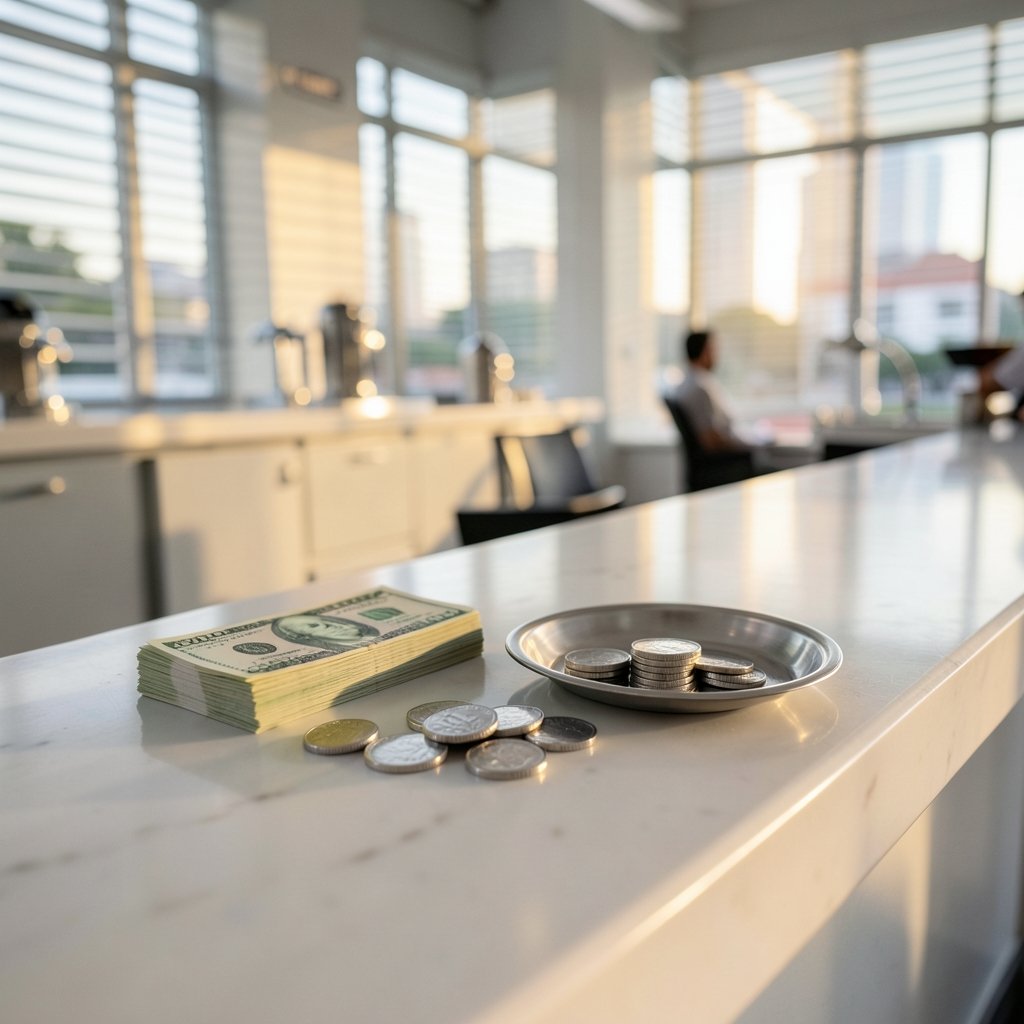
What do you picture when you hear “Panama money”? Maybe it’s a crisp US dollar bill spent on a taxi in Panama City. Maybe it’s a shadowy offshore bank account. Or maybe it’s a canal that moves billions in trade every year. All three images are real, and they overlap in ways that surprise most people.
Panama is one of the few countries on Earth that runs on another nation’s currency. It is also one of the world’s most talked-about financial centers, for reasons that range from smart banking to a 2016 scandal that reshaped global tax enforcement. This article breaks down what Panama money actually is, how it works, and what people get wrong about it.
Why Does Panama Use the US Dollar?
Panama’s official currency is the balboa, but you will almost never see a balboa banknote. The balboa exists only as coins, and it is pegged one-to-one to the US dollar. In practice, US paper money handles nearly every transaction: groceries, rent, salaries, taxis, coffee. (Panama balboa)
The history explains a lot. Panama declared independence from Colombia in 1903, and the United States quickly secured rights to build the Panama Canal. When the canal opened in 1914, US currency was already circulating in the Canal Zone. That habit never faded. Panama has not issued paper balboa notes since 1941, and the dollar became the everyday medium of exchange.
This arrangement is called dollarization. Panama does not have a central bank that sets interest rates or prints money. The Banco Nacional de Panamá acts as a state bank and holds reserves, but it does not run independent monetary policy. The trade-off is real: Panama gets price stability and low inflation, but it cannot lower interest rates during a recession or devalue its way out of a trade shock. Economists have debated this bargain for decades, and most Panamanians accept it as part of the national setup.
What a Dollarized Economy Feels Like
For visitors and residents, the practical effects are simple. Prices are quoted in dollars. ATMs dispense dollars. Balboa coins sit in your pocket alongside US coins, and both work at the register. There is no exchange-rate math to do, which makes budgeting refreshingly easy compared with most of Latin America.
The catch shows up in the broader economy. Because Panama imports most of what it consumes, its prices track US monetary conditions closely. When the US Federal Reserve raises rates, Panama feels it immediately, without any local lever to soften the blow.
The Balboa: A Coin-Only Currency

The balboa is one of the strangest currencies in circulation because it is essentially a shadow of the dollar. Coins come in denominations that mirror US coins, and they are minted to match the size and weight of their US counterparts. That makes them interchangeable in vending machines and parking meters.
| Feature | Balboa (PAB) | US Dollar (USD) |
|---|---|---|
| Paper notes | Not issued since 1941 | Standard for all transactions |
| Coins | Minted and circulating | Also circulating |
| Exchange rate | Pegged 1:1 to USD | Reference currency |
| Central bank | None that sets policy | Federal Reserve |
| Everyday use | Small change | Nearly everything |
If you visit Panama, do not expect to convert your money into balboas at a bank window. You will simply spend dollars, and you may get balboa coins as change. Keep a few as souvenirs; they are legal tender but rarely leave the country.
Panama as a Financial Hub
Panama’s financial sector is large relative to the size of its economy. The country hosts dozens of international banks, law firms, and corporate service providers that help non-residents set up companies, foundations, and trusts. The appeal is straightforward: a dollarized economy, a strategic location, strong shipping and logistics, and a legal framework built for cross-border business.
This is the second meaning of “panama money”: offshore wealth. In journalism, the phrase often refers not to currency but to the structures people use to hold assets outside their home country. Those structures are legal when used for legitimate purposes like estate planning, international business, or asset protection. They become a problem when they are used to hide taxable income or launder criminal proceeds.
The line between the two is where most of the controversy lives. Understanding the cost side of this world helps. A close look at where identity threat detection really costs and where the money goes shows how much financial institutions spend just to verify who their customers are, a direct consequence of the compliance era that followed the Panama Papers.
The Panama Papers and Their Aftermath
In April 2016, a leak of roughly 11.5 million documents from the Panamanian law firm Mossack Fonseca became public. The files were shared with the International Consortium of Investigative Journalists and the German newspaper Süddeutsche Zeitung, and they revealed offshore structures linked to politicians, celebrities, and business figures around the world.
The fallout was significant. Mossack Fonseca closed in 2018. Governments tightened beneficial-ownership rules, banks poured money into compliance, and the reputation of offshore jurisdictions took a lasting hit. Panama itself responded with reforms.
International pressure followed quickly. The European Union added Panama to its list of non-cooperative tax jurisdictions in 2018 and removed it in 2019 after the country committed to changes. The Financial Action Task Force, the global body that sets standards against money laundering, placed Panama on its “grey list” of jurisdictions under increased monitoring in 2019 and removed it in 2023. Those listings are not permanent labels; they are checkpoints that shift as countries change their laws.
For anyone reading about Panama money today, the lesson is that the rules changed after 2016. Opening an account or forming a company now involves far more paperwork, and banks ask harder questions about where funds come from.
Common Mistakes People Make With Panama Money
Practical experience with Panama’s financial system reveals a few recurring errors. These are the ones that trip people up most often.
- Assuming you need to exchange currency. You do not. Bring dollars or use ATMs. Balboas are coins, not a separate wallet.
- Expecting US-style banking convenience. Opening an account as a non-resident can take weeks and requires extensive documentation. Walk-in service is not the norm.
- Confusing legal offshore planning with tax evasion. They are different. One is a legitimate strategy used worldwide; the other is a crime.
- Ignoring reporting rules at home. US citizens, for example, must report foreign accounts above certain thresholds. Panama’s rules do not override your home country’s tax law.
- Believing the grey-list story is over. Compliance standards keep evolving, and banks remain cautious about certain transaction patterns.
The compliance burden is not abstract. It shapes how banks price risk and how much they spend on screening customers. That dynamic is visible across the industry, and a breakdown of threat intelligence actually costs in 2025 and where the money goes illustrates how financial firms allocate budgets to detect fraud and sanctions risks before they become headlines.
How Panama Money Connects to Global Finance
Panama’s role in global finance extends beyond secrecy. The country is a logistics hub. The canal carries a significant share of world trade, and shipping, insurance, and banking tied to it generate real economic value. The Colón Free Zone, one of the largest free-trade zones in the Western Hemisphere, handles re-export trade across the region.
That legitimate commerce is why the dollar works so well there. Trade is priced in dollars, shipping contracts are denominated in dollars, and international banks settle in dollars. Dollarization is not a quirk; it is infrastructure.
The same openness that makes Panama a trade hub also makes it a target for financial crime. Fraudsters use the country’s reputation as a hook in scams that have nothing to do with Panama itself. A common example is the gift card scam, where victims rarely get their money back, and scammers often invoke offshore accounts or foreign authorities to add credibility. Knowing how those schemes work is a practical defense.
New payment technology is another frontier. As central banks explore digital currencies, the question of who controls the money supply becomes more urgent for dollarized economies. A look at how CBDC digital currency is moving central bank money into digital form explains why countries without their own monetary policy watch these developments closely.
Is Panama Money a Good Deal for Residents?
For people who live and work in Panama, dollarization has clear benefits. Salaries in dollars hold value. Imported goods are priced transparently. Inflation has historically been moderate, and there is no currency risk for anyone earning and spending locally.
The costs are structural. Without a central bank, Panama cannot print money to fund deficits or cushion downturns. Fiscal discipline becomes essential, and the country relies on international borrowing and its service economy to stay stable. Retirees and remote workers often find the combination attractive, which is why Panama has built a reputation as a destination for foreign residents.
Anyone considering a move should plan a realistic budget rather than relying on stereotypes. The same discipline applies to major personal spending, whether that is a mortgage or a wedding. A practical guide to choosing a wedding venue that saves money and stress shows how careful planning beats assumptions, and the principle carries over to any large financial commitment in an unfamiliar market.
The Technology Angle
Panama’s financial sector is modernizing like everywhere else. Banks invest in fraud detection, digital onboarding, and anti-money-laundering software. Fintech firms are building payment tools for a market that already thinks in dollars, which removes one layer of friction that startups face elsewhere.
Artificial intelligence is part of this shift. Banks use it to flag suspicious transactions and to automate customer checks. The economics of that business are worth understanding, because AI companies make money in ways that shape what tools actually reach small institutions. A clear explanation of how AI companies make money helps readers see why compliance software is priced the way it is.
For smaller businesses, the opportunity is more direct. Automation can cut costs without a huge budget if it is applied to the right tasks. A guide on how to use AI business automation without wasting money covers the practical side, and the same logic applies to firms operating in Panama’s dollar-based market: start with a narrow problem, measure the result, then expand.
Conclusion
Panama money is three stories in one. It is the US dollar circulating in a country that chose stability over monetary independence. It is the balboa, a coin-only currency that survives mostly as small change and national symbol. And it is the offshore wealth industry that made Panama famous, then infamous, then reformed.
The practical takeaway is simple. If you visit, spend dollars and enjoy the lack of exchange-rate math. If you do business there, expect real compliance work and plan for it. If you read about Panama in the news, check which meaning of “Panama money” the story is using. The country’s financial identity is unusual, but it is not mysterious once you separate the currency from the reputation.
FAQ
What currency does Panama use?
Panama uses the US dollar for nearly all transactions. The balboa is the official currency, but it exists only as coins pegged one-to-one to the dollar. Paper balboa notes have not been issued since 1941.
Can you use US dollars in Panama?
Yes. US dollars are legal tender and circulate everywhere, from supermarkets to taxis. ATMs dispense dollars, and prices are quoted in dollars. You do not need to exchange money before you arrive.
Why does Panama not have a central bank?
Panama deliberately runs a dollarized economy. Without its own central bank, it imports US monetary policy and gains price stability, but it gives up the ability to set interest rates or devalue its currency during economic shocks.
What were the Panama Papers?
The Panama Papers were a 2016 leak of about 11.5 million documents from the law firm Mossack Fonseca. They exposed offshore financial structures used by politicians, celebrities, and others, and they triggered global reforms to beneficial-ownership and anti-money-laundering rules.
Is offshore banking in Panama legal?
Offshore structures are legal when used for legitimate purposes such as international business, estate planning, or asset protection. They become illegal when used to evade taxes or hide criminal proceeds. Banks now require extensive documentation about the source of funds.
Is Panama on any international watchlists?
Panama was removed from the Financial Action Task Force grey list in 2023 and from the EU’s non-cooperative tax jurisdiction list in 2019 after committing to reforms. Watchlist status changes over time as countries update their laws, so check current listings before relying on older reports.



