

What if the cash in your pocket lost 999,999 out of every million units of its value in just a few years? That is not a hypothetical. It happened in Peru, and the story of how the country rebuilt its money from that wreckage explains almost everything about how Peruvian money works today.
Peru’s currency is the sol, written as PEN and split into 100 céntimos. It is one of the steadier currencies in Latin America, backed by a central bank with a serious inflation-fighting reputation. But travelers and business people still stumble over the same handful of questions: How much is it worth? Are old banknotes still good? Can you pay with a card, or do you need cash? This guide walks through the practical side of Peruvian money, from the notes in your wallet to the phone apps that many Peruvians now use instead.
The sol: a currency born from hyperinflation
Peru’s modern money has a dramatic origin story. In the late 1980s, the country suffered one of the worst hyperinflation episodes in world history under its previous currency, the inti. Prices spiraled so fast that wages were sometimes paid daily and rushed to the market before they lost value.
On 1 July 1991, the government replaced the inti with the nuevo sol at a rate of 1 new sol = 1,000,000 inti. That drastic reset, combined with disciplined monetary policy, helped stabilize prices. In 2015 the word “nuevo” was officially dropped, so the currency is simply the sol again. If you want the full historical backdrop, the story of the Peruvian inti and its hyperinflation is worth reading before you travel. (Peruvian sol)
That history matters in practice. It is why many Peruvians still keep savings in US dollars, a habit known as financial dollarization. It is also why the central bank guards its independence fiercely and why the sol has held up better than many of its neighbors’ currencies.
Who issues Peru money, and what does it look like?
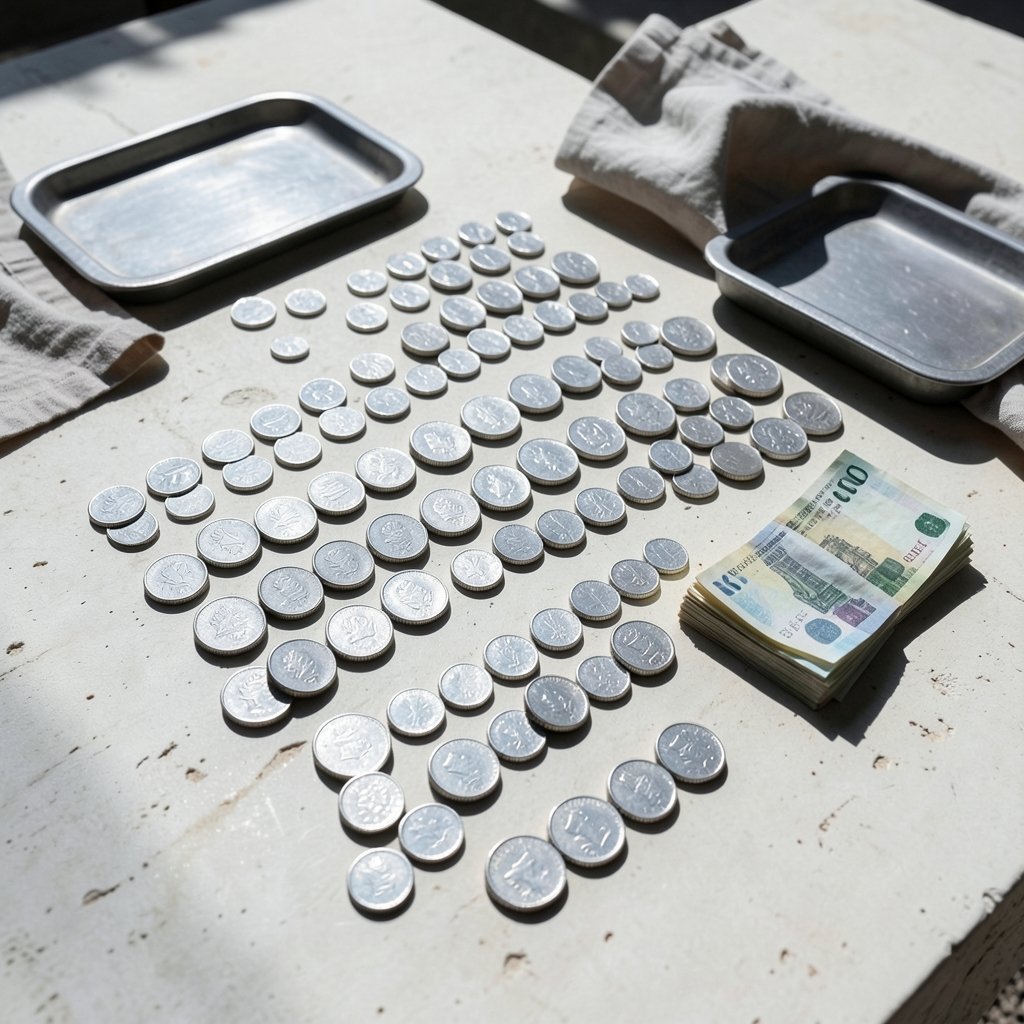
The Banco Central de Reserva del Perú (BCRP) issues Peru’s currency and sets monetary policy. Coins are produced by the Casa Nacional de Moneda, the national mint. The BCRP runs an inflation-targeting framework, aiming for inflation of about 2% with a one-percentage-point margin on either side, a system it has used since 2002.
Here is the current lineup of notes and coins you will encounter:
| Type | Denominations |
|---|---|
| Banknotes | 10, 20, 50, 100, and 200 soles |
| Coins | 5, 10, 20, and 50 céntimos; 1, 2, and 5 soles |
The 200-sol note was reintroduced in the 2010s, and it is the one most likely to draw a second look from a cashier. Each note carries a portrait and a theme from Peruvian culture and history, along with security features the BCRP updates periodically. If you receive an older note that looks slightly different from the rest, it is almost certainly still valid. Older designs remain exchangeable at banks.
How much is the sol worth?
The sol floats against major currencies, so its value moves daily. In recent years it has traded in the range of roughly 3.7 to 3.8 soles per US dollar. Because exchange rates shift constantly, anyone quoting you a fixed number is giving you a snapshot, not a rule. Check the official daily rate before you convert a large amount, and treat any rate you saw weeks ago as stale.
For day-to-day budgeting, a simple mental shortcut helps. At around 3.75 soles to the dollar, 10 soles is a bit under three dollars, and 100 soles is roughly 27 dollars. That arithmetic makes it easy to judge whether a taxi quote or a menu price is reasonable.
One thing that surprises visitors: the sol is not a “cheap” currency in the way some regional currencies are. Peru’s stability means prices in soles are fairly predictable, and you will not get wildly better deals by haggling over exchange rates in the street.
Cash, cards, and the rise of Yape and Plin
Peru is a cash-heavy society in many everyday situations, but that is changing fast. Two mobile payment apps dominate: Yape, run by BBVA, and Plin, an interbank system. Both let people send money instantly by phone number or QR code, and both have spread rapidly since the late 2010s. Taxi drivers, market vendors, and small shops increasingly accept them.
For a visitor, the practical split looks like this:
- Carry cash for markets, small eateries, rural areas, and tips.
- Use cards for hotels, larger restaurants, and supermarkets in cities.
- Withdraw from ATMs inside banks or busy commercial areas rather than on quiet streets.
- Keep small notes and coins handy; breaking a 100-sol note for a 3-sol purchase can be awkward.
A common mistake is arriving with only large bills. Vendors often cannot make change for a 100 or 200. Another is assuming every card terminal works the same way; some small businesses add a surcharge for card payments or prefer cash.
If you are thinking about how digital money fits into this picture more broadly, the shift toward central bank digital currencies and how central bank money is going digital is a useful parallel, since Peru’s own payments landscape is moving in that direction too. (Central Reserve Bank of Peru)
Avoiding counterfeit notes and common cash mistakes
Counterfeiting is a real concern in Peru, particularly in busy tourist areas and at night. The BCRP regularly updates security features, and a few simple checks go a long way:
- Feel the paper. Genuine notes have a distinct texture and raised print.
- Hold the note up to the light to check the watermark and security thread.
- Look for color-shifting ink on the larger denominations.
- Be wary of notes handed to you in a hurry, especially in dim light or crowds.
- When in doubt, ask for a different note or pay by card.
The most common scam is not a clever forgery but a simple switch: someone takes your note, claims it is fake or the wrong denomination, and hands back a different one. Count your change carefully and keep your cash out of sight when possible.
Scams around money are not unique to Peru, of course. The way a gift card scam works and why victims rarely get their money back shows how quickly money can vanish once it leaves your hands, and the same principle applies to cash anywhere in the world.
Tipping, taxes, and the tourist realities
Tipping in Peru is modest and not always expected. In restaurants, a tip of around 10% is a common gesture in tourist areas, but many locals simply round up. Taxis usually do not expect tips; agree on the fare before you get in. Porters and guides appreciate a few soles.
One money topic that catches travelers off guard is the IGV, Peru’s sales tax, which is generally included in displayed prices. What you see on a menu is usually what you pay, which makes budgeting simpler than in countries where tax is added at the register.
Another practical point: the soles you cannot spend at home. Exchange leftover cash before you leave, or spend it at the airport. Coins in particular are hard to convert abroad, so use them up on snacks or small purchases.
Why the sol has stayed stable
Peru’s currency stability is not an accident. It rests on three pillars: an independent central bank with a clear inflation target, a large stock of foreign reserves, and a economy that has grown steadily for decades. That combination has kept the sol from the wild swings seen in some neighboring countries.
That said, stability is relative. The sol still moves against the dollar, and global shocks, political uncertainty, and commodity prices all leave a mark. For travelers, this means the exchange rate you get today may not be the one you get next week. For anyone holding soles or doing business in Peru, it means paying attention to the official rate is worth the small effort.
If you are curious about the broader economics of currencies and how money systems are evolving, the way AI companies make money and how businesses use AI automation without wasting money offer an interesting contrast to traditional monetary systems, since digital economies are rewriting some of the old rules.
Practical tips that actually work
After the theory, here is what tends to work in practice when handling Peruvian money:
- Exchange at banks or reputable casas de cambio, not with street vendors offering “special” rates.
- Bring a mix of denominations, and break large notes at supermarkets or pharmacies.
- Keep a small emergency stash of soles separate from your main wallet.
- Learn the coins early; the 5-céntimo and 50-céntimo pieces look similar at a glance.
- Check your change twice, especially in markets and taxis.
- Do not flash cash in crowded areas or at night.
A mistake many first-time visitors make is over-planning their cash. Peru’s cities are well served by ATMs and cards, so you rarely need a huge wad of soles. A modest amount of cash plus a working card and a payment app covers almost everything.
For anyone weighing bigger financial decisions, the way identity threat detection really costs and where the money goes is a reminder that security has a price, and the same logic applies to protecting your cash and cards while traveling.
Conclusion
Peru’s money tells a story of recovery. The sol rose from the ashes of hyperinflation to become one of Latin America’s more dependable currencies, backed by a central bank that takes its inflation target seriously. For travelers, that stability translates into predictable prices and a currency that is easy to understand once you know the denominations, the cash habits, and the apps.
The practical formula is simple: carry a mix of notes and coins, check the exchange rate rather than trusting a fixed number, learn to spot a counterfeit, and embrace mobile payments where they are accepted. Do that, and Peru’s money becomes one less thing to worry about and one more part of the trip worth understanding.
Frequently asked questions about Peru money
What is the currency of Peru called?
Peru’s currency is the sol, with the international code PEN. It is divided into 100 céntimos. The name means “sun” in Spanish, and the modern sol replaced the inti in 1991.
How many soles are in a US dollar?
The rate changes daily, but in recent years the sol has traded at roughly 3.7 to 3.8 per US dollar. Always check the official rate on the day you exchange, since the figure moves with global markets.
Can I use US dollars in Peru?
In tourist areas, some hotels and tour operators accept US dollars, but the sol is the standard everywhere. Paying in dollars often gets you a poor exchange rate, so it is usually better to convert to soles.
Are old Peruvian banknotes still valid?
Yes, older notes remain exchangeable at banks even if they are no longer the current design. If a cashier hesitates over an older note, you can swap it at a bank rather than lose the value.
Is it safe to use ATMs in Peru?
ATMs inside banks, malls, and busy commercial areas are generally safer than standalone machines on quiet streets. Use them during daylight, cover the keypad, and avoid withdrawing large amounts at once.
Do I need cash in Peru, or can I rely on cards?
Both. Cards work well in cities for hotels, restaurants, and supermarkets, but cash is essential for markets, small eateries, taxis, and rural areas. Mobile apps like Yape and Plin are increasingly common among locals.



