

What makes a single colorway of a sneaker become known by a nickname that outlasts the model number? The phrase pure money 4s is one of those names. It floats around sneaker forums, resale listings, and group chats, usually attached to a specific look: white leather, chrome accents, and a clean, almost icy feel. But the term is also slippery. It gets used loosely, sometimes for the wrong shoe, and sometimes for shoes that were never officially called that at all. (4 (number))
This guide sorts out what the nickname refers to, how it fits into the wider Air Jordan 4 story, how to spot fakes and bad listings, and how to buy a pair without overpaying. It is written for people who have heard the term and want a straight answer, not a hype pitch.
What “pure money 4s” actually refers to
In sneaker culture, “Pure Money” is a nickname tied to a specific design language: an all-white or near-white upper with metallic silver or chrome detailing. The name has been applied across several Jordan models over the years, and the Air Jordan 4 is one of the silhouettes most associated with it in conversation.
The important thing to understand is that nicknames are not official product names. Sneaker nicknames come from collectors, retailers, and early leaks. They spread because they are memorable, not because a brand printed them on the box. That is why you will see “pure money” used for more than one shoe, and why two sellers can use the same phrase for pairs that look quite different.
For a buyer, this matters a lot. If you search for “pure money 4s” and assume every result is the same shoe, you will end up comparing apples to oranges. The safer approach is to identify the actual model, the color code, and the release details before you talk price.
Why the nickname spread so fast
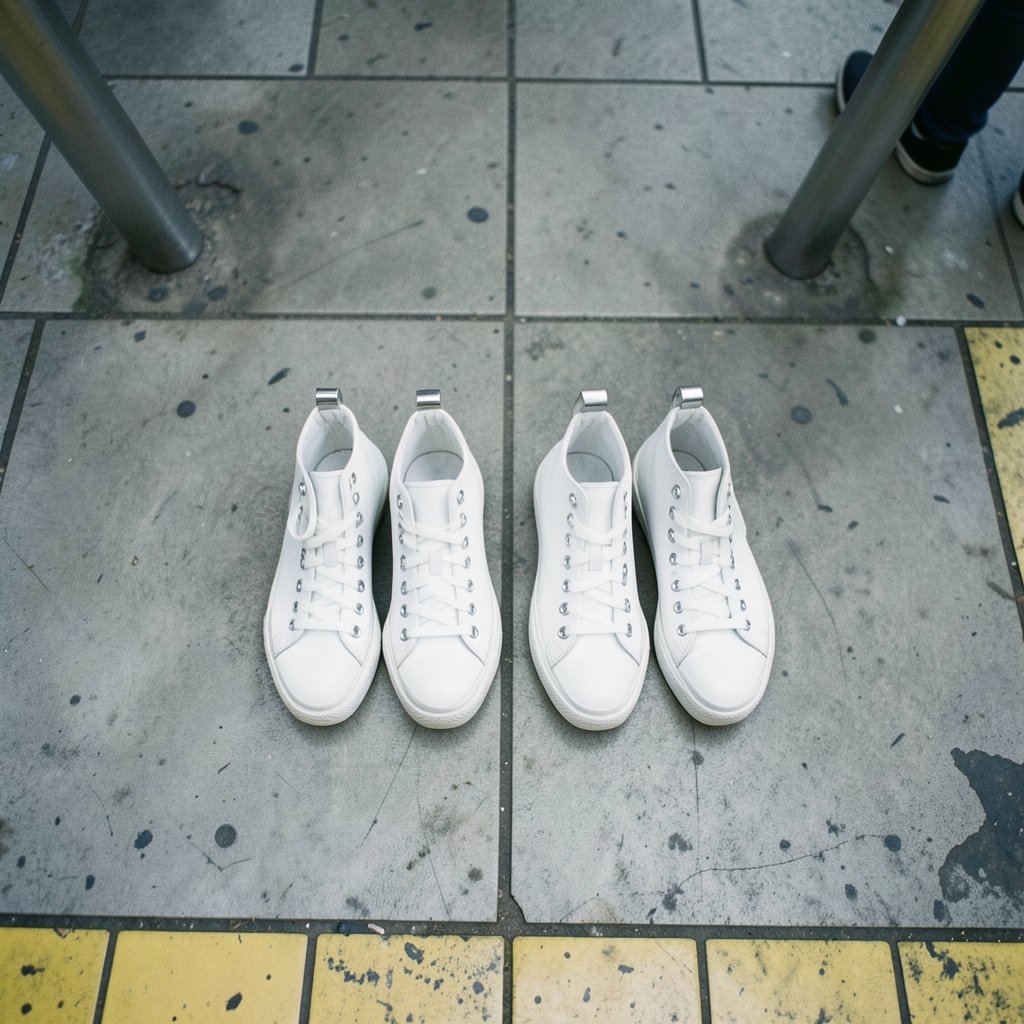
Nicknames travel faster than product codes. A short phrase like “pure money” does three things at once:
- It describes the look. White and chrome reads as clean, bright, and expensive.
- It is easy to say. “Pure Money 4s” fits in a caption or a listing title.
- It signals insider knowledge. Using the nickname tells other people you follow the culture.
That third point is the engine behind most sneaker slang. The name becomes a shibboleth, a small signal that you belong to the group. Once enough people repeat it, it becomes the default way to describe the shoe, even among people who never saw the original leak.
There is a practical downside. Nicknames create search noise. A resale platform may have dozens of listings using the phrase, and only some of them match the shoe you actually want. Learning to read the product code and the color description is the skill that separates a calm purchase from an expensive mistake.
Where the Air Jordan 4 fits in sneaker history
The Air Jordan 4 arrived in 1989 and became one of the most recognizable basketball shoes ever made. It introduced visible mesh panels and a distinctive support wing on the upper, and it appeared during a defining stretch of Michael Jordan’s career. That history is why the silhouette carries weight far beyond basketball.
You can read a detailed breakdown of the model’s design and release timeline on the Air Jordan 4 encyclopedia entry, which covers the shoe’s construction and cultural footprint. Understanding the base model helps because every “pure money” conversation is really a conversation about a specific version of this shoe.
The Jordan line as a whole is documented extensively. The Air Jordan brand overview explains how the signature line grew from a single endorsement deal into a global footwear business. That context explains why a colorway nickname can move prices so much: the demand covers the shoe and a piece of a story people grew up with.
White sneakers and the maintenance problem
Here is the part that listings never mention. A white leather sneaker is beautiful on day one and a maintenance project by month three. If you are considering a pair in this style, go in with realistic expectations.
What actually works, based on how people care for leather footwear:
- Brush off loose dirt with a soft brush before it works into the grain.
- Use a small amount of mild leather cleaner on a microfiber cloth, not a soaking wet rag.
- Wipe the midsole separately with a melamine sponge for scuffs.
- Let the shoes air dry away from direct heat, never on a radiator.
- Store them with shoe trees and keep them out of sunlight to slow yellowing.
What does not work: bleach, washing machines, and harsh all-purpose cleaners. They strip finishes and accelerate the yellowing that white midsoles are prone to anyway. A pair kept clean holds value far better than one that has been scrubbed aggressively.
How to tell a fair listing from a bad one
Most bad experiences with nicknamed sneakers come down to vague listings. A seller writes “pure money 4s, great condition” and posts two blurry photos. That is not enough information to spend money on.
Use this comparison to judge a listing before you engage:
| Signal | Good listing | Red flag |
|---|---|---|
| Photos | Multiple angles, clear label and size tag | One photo, filtered or cropped |
| Naming | Model, colorway, size, condition stated | Nickname only, no details |
| Provenance | Receipt, box, or purchase history offered | Refuses to share origin |
| Payment | Platform with buyer protection | Bank transfer or gift cards only |
| Communication | Answers specific questions | Pushes for speed and urgency |
That last row is the one that matters most. Urgency is a sales tactic, and it shows up in fraud as often as it does in legitimate resale. If a seller insists you pay immediately through an unprotected method, walk away. The mechanics of these schemes are worth understanding: a gift card scam works because the payment is hard to reverse, and victims rarely get their money back. Sneaker deals that demand gift cards are following the same playbook.
Payment safety and the real cost of a bad deal
Buying sneakers secondhand is a small financial transaction with a large fraud surface. The safest path is a platform that holds funds until delivery is confirmed. The riskiest is a direct transfer to a stranger.
It also helps to understand where money actually goes in any transaction involving trust and verification. Identity checks, fraud screening, and dispute handling all cost money, and those costs show up somewhere. A breakdown of where identity threat detection really costs and where the money goes explains why “free” protection usually is not free.
For collectors, the bigger risk is not outright theft. It is overpaying for a misdescribed pair. A shoe sold as a rare colorway that turns out to be a general release is a loss you may never recover, because the seller technically delivered a product.
Counterfeits: what to check first
Counterfeit sneakers have gotten good. The days of obvious stitching errors are mostly gone for popular models. What still gives fakes away tends to be small and consistent.
Check these areas first:
- The size tag. Font, spacing, and placement are hard to copy precisely.
- The tongue label. Logo proportions and embroidery density vary on replicas.
- The midsole paint. Overspray and uneven edges are common on fakes.
- The box label. Style codes and font weight should match the shoe.
- The smell and weight. Genuine leather and foam have a different feel.
None of these is conclusive alone. The reliable method is to compare against verified photos of the same size and production run, and to use an authentication service for anything expensive. The Better Business Bureau scam tracker is a useful place to check whether a seller or storefront has a pattern of complaints before you send money.
Pricing: what drives the number up or down
Sneaker prices move on four levers: scarcity, condition, size, and timing.
Scarcity is the biggest. A limited run with a strong nickname commands more than a general release, even if the materials are similar. Condition comes next. Deadstock pairs with original packaging sell for a premium, while worn pairs drop sharply, especially in white colorways where yellowing is visible. Size matters because demand is uneven across the size run; common sizes are often more expensive because more people want them. Timing matters because prices spike around release anniversaries and drop in quiet months.
If you are new to this, set a ceiling before you shop and stick to it. The most common mistake is deciding the budget after falling in love with a listing. A useful habit is to track sold prices, not asking prices, for a few weeks. Asking prices are wishes. Sold prices are facts.
The broader money angle around hype shoes
Sneaker resale is one small corner of a much larger conversation about how attention turns into money. The same dynamics, limited supply, strong branding, and social proof, show up in digital products, collectibles, and online businesses. If the mechanics interest you, a look at how to make money with AI covers how new tools are changing small-scale commerce, and how do AI companies make money explains the business models behind those tools.
There is a caution buried in that comparison. Hype markets reward speed, and speed is exactly when people skip verification. Whether the asset is a sneaker, a token, or a service, the pattern is the same: pressure to act now, thin information, and no easy way back. Even the design of money itself is shifting, and a plain explanation of CBDC digital currency and central bank money going digital shows how payment systems are evolving in ways that affect fraud risk and refunds.
For anyone running a small resale operation, tools matter but discipline matters more. A guide to using AI business automation without wasting money makes the point well: automation amplifies whatever process you already have, including a bad one.
Practical buying checklist
Before you commit to a pair described as pure money 4s, run through this sequence:
- Confirm the exact model and colorway; the nickname alone is not enough.
- Ask for the style code and a photo of the size tag.
- Compare photos against verified images of the same production run.
- Check sold prices for the same size and condition.
- Insist on a payment method with buyer protection.
- Get the condition details in writing, including yellowing and sole wear.
- Budget for cleaning supplies and shoe trees from day one.
That list takes ten minutes and prevents most of the regret stories in this hobby. The people who enjoy collecting long term are rarely the ones who moved fastest. They are the ones who asked the boring questions.
Conclusion
The phrase pure money 4s is a nickname, not a product code, and that single fact explains most of the confusion around it. It describes a look, white leather with metallic detailing, applied to one of the most iconic sneaker silhouettes ever made. The name spread because it is short, descriptive, and signals insider status, which is also why it gets misused in listings.
For buyers, the practical path is straightforward. Identify the real model, verify the details, check sold prices rather than asking prices, and pay through a channel that protects you. Treat urgency as a warning sign and vagueness as a reason to walk away. White sneakers demand maintenance, and a well-kept pair holds value in a way a scrubbed one never will.
Hype is loud, but the fundamentals are quiet and reliable. Learn the shoe, learn the market, and the nickname stops being a mystery and becomes just a useful shorthand.
What does “pure money 4s” mean?
It is a collector nickname for a white and metallic-accented version of the Air Jordan 4. The phrase is not an official product name, so it should always be checked against the actual model and color code before you buy.
Are pure money 4s rare?
Rarity depends on the specific release, not the nickname. Some versions tied to the name were limited, while others were widely available. Always check the production details and sold prices for the exact pair rather than assuming the nickname means scarcity.
How can I tell if a pair is fake?
Focus on the size tag, tongue label, midsole paint edges, box label fonts, and overall weight and smell. Compare against verified photos of the same size and production run, and use an authentication service for expensive pairs. No single check is conclusive on its own.
Why do sneaker nicknames cause pricing confusion?
Because nicknames are informal and spread through leaks and forums, the same phrase can describe different shoes. Sellers also use popular nicknames to attract searches. That is why product codes and colorway descriptions matter more than the name in a listing title.
What is the safest way to pay for a secondhand pair?
Use a platform that holds funds until delivery is confirmed. Avoid bank transfers, gift cards, and any seller who pushes for speed. Payment methods with dispute options are the difference between a recoverable problem and a total loss.
Do white sneakers lose value faster?
Yes, generally. White leather and midsoles show yellowing, creasing, and dirt quickly, and buyers discount heavily for visible wear. Proper cleaning, storage with shoe trees, and avoiding direct sunlight slow the decline and protect resale value.



