

Have you ever fished a quarter out of your pocket, flipped it over, and wondered if that dull little coin was actually worth more than twenty-five cents? Most of the time, the answer is a firm no. But sometimes, the answer is a surprising yes, and the difference between the two comes down to a handful of specific dates, mint marks, and errors that collectors actively chase. (Best free pc games 2026 realistic guide whats worth your)
This guide breaks down the quarters that genuinely carry premiums, explains why they do, and shows you how to check your change without falling for the inflated numbers that float around social media. Think of it as a field guide rather than a lottery ticket.
Why Most Quarters Are Worth Exactly 25 Cents
Before getting to the good stuff, it helps to understand the baseline. A coin’s value comes from three things: rarity, condition, and demand. A 1965 quarter is not rare, is usually worn, and has plenty of competitors on the market, so it stays at face value.
The U.S. Mint has produced enormous quantities of quarters over the decades. Billions of them. That volume is why the vast majority of what you find in circulation is worth no more than the metal and the face value stamped on it. The exceptions cluster around a few well-documented series.
The main quarter series collectors track are:
| Series | Years | Key Collecting Focus |
|---|---|---|
| Standing Liberty | 1916–1930 | 1916 key date, 1918/7 overdate |
| Washington (silver) | 1932–1964 | 1932-D and 1932-S key dates |
| Washington (clad) | 1965–1998 | Errors, high grades |
| State and ATB quarters | 1999–2021 | Errors, special finishes |
| W mint mark quarters | 2019–2020 | Low mintage, collector demand |
The Standing Liberty Quarters (1916–1930)
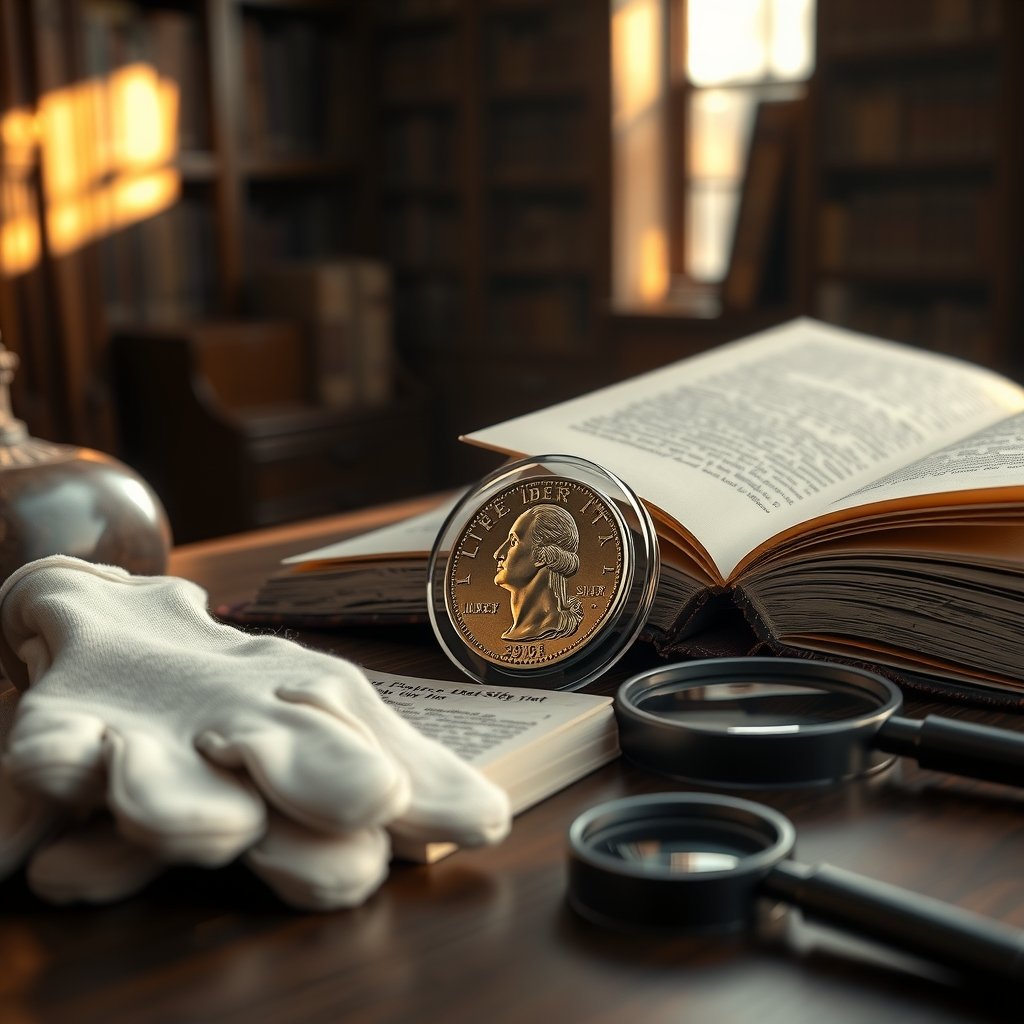
This is where serious money starts. The Standing Liberty quarter is one of the most beautiful designs in American coin history, and it is also one of the hardest to find in nice condition. The design wore down quickly in circulation, so high-grade examples are scarce.
The 1916 Standing Liberty quarter is the series key date. Only a small number were struck, and any survivor is a genuine prize. The 1918/7 overdate is another recognized variety that collectors pay well for. If you inherit a collection and find a Standing Liberty quarter, do not clean it. Cleaning destroys the surface and can wipe out most of the value. That single mistake costs collectors more money than almost any other.
The 1932-D and 1932-S Washington Quarters
The Washington quarter debuted in 1932 to mark the 200th anniversary of George Washington’s birth, and the original reverse featured a bald eagle. The U.S. Mint’s own overview of its quarter programs confirms the 1932 launch date, which is why the first-year issues matter so much to collectors.
The 1932-D (Denver) and 1932-S (San Francisco) are the two key dates of the silver Washington series. Both had low mintages compared with later years, and both are genuinely hard to find in circulated condition, let alone uncirculated. These two coins anchor nearly every “quarters worth money” list for good reason. (Ynab vs monarch money zero based budgeting vs net worth)
A practical tip: check the mint mark location carefully. On Washington quarters, the mint mark sits on the obverse below the portrait, and a worn coin can hide it under grime. A quick soak in warm water and mild dish soap, followed by a gentle rinse, is safe. Rubbing with a cloth is not.
The 1976 Bicentennial Quarter
Here is where a lot of people get confused. The 1976 Bicentennial quarter, with its dual 1776–1976 date and drummer boy reverse, was a circulating commemorative. Hundreds of millions were made. Standard examples are worth face value.
The collectible variant is the 1976-S 40% silver proof, which was sold to collectors rather than released into pocket change. Those carry a premium based on silver content and grade. If you find a 1976 quarter in your change, it is almost certainly the common copper-nickel version. Check for an S mint mark before getting excited.
State Quarters, America the Beautiful, and the W Mint Mark
The 50 State Quarters program ran from 1999 to 2008, and the America the Beautiful series followed from 2010 to 2021. The U.S. Mint’s official page on the America the Beautiful quarters explains the scope of that program, which released five designs per year for over a decade. Most of these coins are worth face value because they were minted in the hundreds of millions.
The real story from this era is the W mint mark quarters of 2019 and 2020. These were struck at West Point in deliberately low numbers and released into circulation as a treasure hunt for collectors. They drove genuine interest and still command premiums in uncirculated condition. If you spot a small W on the obverse of a 2019 or 2020 quarter, set it aside.
Error Quarters: Where the Real Premiums Hide
Error coins are the wildcard of the hobby. A doubled die occurs when the die strikes the coin twice with a slight misalignment, creating doubled lettering or design elements. An off-center strike happens when the planchet shifts before the hammer comes down. Both can carry real premiums, but the value depends heavily on grade and authentication.
The U.S. Mint’s collecting basics page notes that the Mint does not appraise coins, which is an important reality check. Nobody at the Mint will tell you what your error is worth. That job belongs to professional graders and experienced dealers.
Common mistakes people make with error coins:
- Assuming any odd-looking coin is an error. Many “errors” are just damage, wear, or post-mint tampering.
- Selling to the first buyer without a second opinion.
- Cleaning the coin to “make it look better,” which destroys value.
- Posting a blurry photo online and accepting a stranger’s valuation as fact.
Professional grading uses the 70-point Sheldon scale, and encapsulation by a major grading service affects market value significantly. The Numismatic Guaranty Company’s explanation of the grading scale is a useful primer if you want to understand what numbers like MS-65 actually mean.
How to Check Your Change Without Wasting Hours
A realistic routine beats an obsessive one. Here is what actually works in practice:
- Sort by decade first. Anything before 1965 is silver and worth checking closely.
- Flip each older coin and look for a mint mark. D and S marks on early Washington quarters deserve a second look.
- Check 2019 and 2020 quarters for a W mint mark.
- Look for obvious errors on any coin: off-center strikes, missing elements, or doubled lettering.
- Set aside anything suspicious in a holder and research it later rather than guessing on the spot.
That routine takes about two minutes per handful and catches nearly everything worth catching.
What About the “Rare Quarter” Lists Online?
Plenty of videos and articles promise that a specific quarter is worth thousands. Some of those claims are true for specific grades and specific errors. Many are exaggerated, and a few are outright misleading. The gap usually comes from conflating three different measures: bullion value, error premiums, and collector demand. A silver quarter has melt value. An error quarter has a premium. A key date has collector demand. These are not the same thing, and a list that blends them without explanation is not helping you.
If you are building a budget for a hobby like this, the same discipline that helps with subscriptions and software applies here. The thinking in this breakdown of ChatGPT Plus pricing in a practical 20-question guide is a good example of how to weigh a recurring cost against real value before committing.
Storage and Handling That Protects Value
A coin’s grade is fragile. Fingerprints etch into metal over time, and PVC coin flips can leave a green residue that damages surfaces permanently. Use inert holders such as Mylar flips or hard plastic capsules. Store coins in a dry place away from heat and humidity.
Never store coins loose in a jar where they rub against each other. Bag marks from contact are one of the fastest ways to drop a coin from uncirculated to almost uncirculated, and that drop can mean hundreds of dollars on a key date.
When to Get a Professional Opinion
If you think you have a key date, a significant error, or a high-grade silver quarter, get it looked at. Local coin shops often give free verbal opinions, and grading services charge a fee for authentication and encapsulation. For a coin worth a few dollars, grading is not worth the cost. For a coin worth several hundred, it usually is. (Best games nintendo switch 2 whats worth your time money) (Quarter (United States coin)))
Be honest with yourself about condition. Most circulated quarters that look “nice” to a beginner grade in the low circulated range. That is fine for a collection but not for a premium sale. Understanding that gap is what separates hopeful guessing from real numismatic knowledge.
Conclusion
The quarters worth money are not a secret list hidden behind a paywall. They are a well-documented set of key dates, low-mintage issues, and genuine errors that collectors have tracked for decades. The 1916 Standing Liberty, the 1932-D and 1932-S Washington quarters, the 1976-S silver proof, and the 2019–2020 W mint marks are the names that matter most. Everything else is usually face value.
The practical path forward is simple: sort your change, check mint marks, set aside anything unusual, and resist the urge to clean it. Then verify before you sell. That approach will not turn a pocketful of quarters into a fortune, but it will keep you from missing the one coin that actually matters.
FAQ
Are all pre-1965 quarters worth more than face value?
Most pre-1965 Washington quarters contain 90% silver, so they carry at least melt value above twenty-five cents. Common dates in worn condition sell near melt, while key dates like 1932-D and 1932-S carry substantial premiums on top of silver content.
What is the rarest quarter in circulation?
The 1916 Standing Liberty quarter is the series key date and is extremely rare in any condition. In terms of coins you might realistically still find in change, the 1932-D and 1932-S Washington quarters and the 2019–2020 W mint mark quarters are the most sought after.
Is a 1976 quarter worth anything?
Standard 1976 Bicentennial quarters are common and worth face value. The exception is the 1976-S 40% silver proof version sold to collectors, which carries a premium based on silver content and grade. Check for an S mint mark.
How do I know if a quarter has an error?
Look for doubled lettering or design elements, off-center strikes, missing design features, or unusual rim shapes. Compare against a known normal example. If it looks genuinely off, have a dealer or grading service examine it before assuming value.
Should I clean my old quarters?
No. Cleaning removes metal and leaves scratches and residue that permanently lower a coin’s grade. On key dates, cleaning can erase most of the value. Rinse with mild soap and water if needed, and pat dry without rubbing.
Where can I find out what my quarter is worth?
Check recent sold prices for the same date, mint mark, and grade, and consult a local coin dealer for a hands-on opinion. Remember that the U.S. Mint does not appraise coins, so valuation has to come from the collector market.
One final word on realistic expectations: the odds of finding a valuable quarter in everyday change are low, but not zero. The W mint marks proved that circulation finds still happen. Treat the hunt as a habit rather than a get-rich scheme, and you will enjoy it far more. Keep a small reference guide or a reputable price app handy, record what you find, and revisit your holdings once a year as market premiums shift. That modest routine, repeated over time, is how most serious collectors actually built their best finds—one handful of change at a time.



