

What do the Declaration of Independence, a medieval monastery’s Bible, and a porcupine’s back all have in common? The answer is a single, surprisingly slippery word: quill. Most people picture a goose feather dipped in ink, but that image only covers part of the story. The quill is a writing tool, a zoological feature, a historical artifact, and a word with roots stretching back to Germanic languages centuries before the first inkwell was ever filled. Understanding what a quill actually is, how it was made, and why it still matters today reveals a remarkably practical object that shaped how the Western world recorded its thoughts. (Quill)
What Exactly Is a Quill?
A quill is a flight feather cut and shaped into a writing instrument. The word usually refers to a primary feather from a large bird, most often a goose, though swans, crows, and eagles were also used depending on the region and the writer’s budget. The hollow shaft, called the calamus, holds a small ink reservoir through capillary action; the tip is cut and shaped into a nib that delivers ink to the page.
The term itself has a longer history than most people realize. According to the etymological history of the word quill, it entered English in the late 14th century from Middle Low German, related to the German word Kiel, meaning “quill” or “pen.” That Germanic root connects the writing tool to the feather’s shaft, which is exactly the part that made the pen work.
It’s worth clearing up a common confusion right away. A quill is not the same as a quilt (a stitched blanket) or quell (to suppress). The pen sense dominates modern usage, with the porcupine-spine sense running a distant second.
How a Quill Pen Was Actually Made
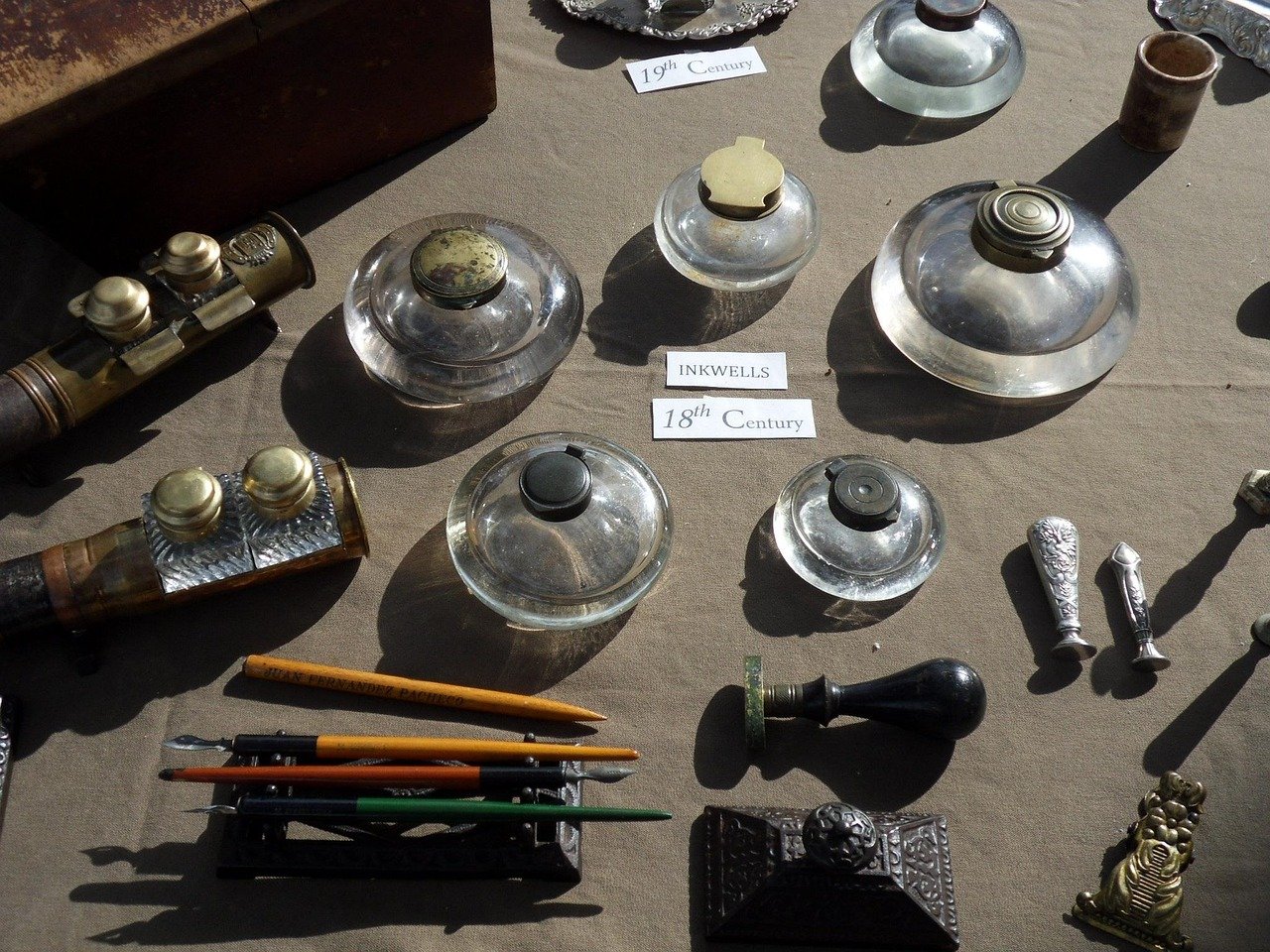
Making a quill was a genuine craft, and the process explains why certain feathers were prized over others. The steps below reflect historical practice, refined over centuries by scribes and professional pen-cutters.
- Select the feather. Goose feathers were the European standard, but swan quills were prized for their size and smoothness. The five outer left-wing primaries of a goose were considered ideal for right-handed writers because the natural curve sits comfortably in the hand.
- Cure the shaft. Fresh feathers were too soft, so the shaft was hardened by heating, burying in sand, or aging for weeks or months.
- Strip the barbs. Most of the feather’s fluffy vanes were removed or trimmed back, leaving a clean, comfortable grip.
- Cut the nib. The tip was sliced at an angle, then a slit was cut up the center to create a channel for ink flow. This step demanded precision, and a badly cut nib either scratched the paper or dumped ink in blobs.
- Trim and test. The final tip was shaped and tested on scrap parchment before the writer committed to a real document.
The construction and history of the quill pen show just how refined this process became. A skilled pen-cutter could shape a nib to produce anything from hairline strokes to bold, broad marks, which is why quills remained the tool of choice for calligraphers long after steel pens arrived.
Common Mistakes People Make With Quills
Anyone trying a quill for the first time tends to hit the same snags. The biggest one is skipping the curing stage: a fresh feather is floppy, and the nib collapses under pressure. Another frequent error is cutting the slit too long, which causes ink to flood the page. Left-handed writers often struggle with a standard goose quill because the feather’s curve works against them, so they need a right-wing feather or a differently angled cut. Finally, beginners underestimate how often quills need re-cutting: a nib dulls or softens within a page or two of heavy writing, which is why historical scribes kept a penknife close at hand.
A Thousand Years of the Quill as the World’s Pen
The quill pen was the dominant Western writing instrument for roughly a millennium, from around the 6th or 7th century until the 19th century, when steel nibs and fountain pens gradually pushed it aside. That’s an extraordinary run for a single technology. During that span, virtually every book, letter, legal document, and treaty in Europe and its colonies was written with a feather.
The scale of quill consumption is hard to imagine today. A busy scriptorium or government office went through feathers by the thousands each year, and whole trades grew up around supplying, preparing, and cutting them. Goose farmers, feather merchants, and professional pen-cutters all made their living from the quill economy.
The most famous examples sit in the U.S. National Archives, where the founding documents of the United States were written and signed with quill pens, typically goose quills. The Declaration of Independence in 1776 and the Constitution in 1787 both carry the marks of this tool, from the sweeping signatures to the varied ink flow across the parchment.
Quill vs. Modern Pens: A Practical Comparison
It helps to see how the quill stacks up against the tools that replaced it. The table below summarizes the key differences.
| Feature | Quill Pen | Steel Nib / Fountain Pen |
|---|---|---|
| Material | Bird feather (calamus shaft) | Metal nib with feed system |
| Ink capacity | Very small, needs frequent dipping | Larger reservoir or cartridge |
| Maintenance | Frequent re-cutting and re-sharpening | Occasional cleaning, nib replacement |
| Line variation | High, depends on nib cut and pressure | Moderate to high, depends on nib type |
| Durability | Softens and wears within pages | Lasts months or years |
| Cost historically | Low material cost, high skill cost | Higher material cost, lower skill cost |
| Best use | Calligraphy, ceremony, historical replica | Everyday writing, long sessions |
The quill’s weakness was never its output quality. It was throughput. A steel nib could be manufactured by the million and used by anyone without training, which is precisely why it won out during the 19th century.
The Other Quill: Porcupines, Hedgehogs, and Zoology
The word didn’t stay confined to desks and inkwells. In zoology, a quill also means a large, stiff feather, and by extension the hollow, barbed spines of porcupines and hedgehogs. Here’s the twist that surprises many people: porcupine quills are modified hairs, not feathers at all. The same word covers two completely different biological structures.
The biology of porcupines and their quills explains how these spines work as a defense mechanism. Each quill is lightweight, hollow, and tipped with microscopic barbs that make removal painful. When a porcupine feels threatened, it doesn’t throw its quills (a persistent myth); it backs into a threat, and the loosely attached spines detach on contact.
This dual meaning is a good reminder that context matters. If someone mentions a quill in a biology discussion, they almost certainly mean a spine, not a pen.
Why Quills Still Matter Today
You might assume the quill is a museum piece, but it never fully disappeared. Quill pens remain in use for ceremonial signing, including some legislative and university traditions where a symbolic pen carries more weight than a practical one. Calligraphers still favor quills for certain scripts because the flexible nib produces line variation that modern pens struggle to match. Historical replicas sell steadily to reenactors, hobbyists, and gift shoppers.
There’s also a practical reason the quill endures in education. Learning to cut and use a quill teaches something no textbook can: how ink, pressure, angle, and material interact. Students who try a quill quickly understand why medieval manuscripts show such dramatic differences in handwriting quality, and why professional scribes were so valued.
What Actually Works If You Want to Try One
Based on how quills are traditionally prepared, a few practical pointers make the difference between frustration and success. Start with a goose primary rather than an ornamental craft feather, because craft feathers are usually too soft and too short. Cure the shaft before cutting, either by heating it gently or letting it dry for several weeks. Cut the nib in small increments and test often; it’s far easier to remove a little more than to fix an over-cut tip. Use a thin, water-based ink rather than thick pigment ink, which clogs the shaft. And keep a sharp knife and a scrap of paper nearby, because re-cutting is part of normal use, not a sign of failure.
The Word Itself: Usage Notes Worth Knowing
Beyond the pen and the spine, “quill” shows up in a few narrower contexts. Historical commercial records occasionally use “a quill of” to mean a small quantity or a pen’s worth of something, though this usage is sparse and context-dependent rather than a standardized unit of measure. The word also appears in heraldry, where a quill often symbolizes literacy, scholarship, or the law.
One usage claim that circulates online deserves caution: the idea that “quill” was a common 19th-century writer’s pen name. This is weakly attested and shouldn’t be repeated as fact without a primary source. When in doubt, stick to the two well-documented senses: the pen and the spine.
Conclusion
The quill is an object that seems simple until you look closely. A single goose feather, properly cured and carefully cut, carried Western writing for roughly a thousand years and signed some of the most consequential documents in history. The same word describes a porcupine’s barbed spine, a heraldic symbol, and a calligrapher’s favorite tool. Whether you encounter a quill in a museum case, a biology textbook, or a ceremonial signing, the story behind it is the same: a humble natural material, shaped by skilled hands, that did an enormous amount of work. To understand the quill is to understand a pen and a whole era of how ideas moved from mind to page.
Frequently Asked Questions
What is a quill made of?
A quill pen is made from a large bird’s flight feather, usually a primary from a goose, swan, crow, or eagle. The hollow shaft holds ink, and the trimmed tip is cut into a nib. The feather is typically cured or hardened before cutting so the shaft stays firm enough to write with.
How long was the quill the main writing tool?
The quill pen dominated Western writing for roughly a millennium, from about the 6th or 7th century until the 19th century. Steel nibs and fountain pens gradually replaced it during the 1800s because they were cheaper to mass-produce and required no special skill to use.
Why were goose feathers preferred for quills?
Goose feathers were widely available, reasonably stiff, and large enough to grip comfortably. Swan quills were considered higher quality and were prized for their size and smoothness, while crow and eagle quills were used regionally. The five outer left-wing primaries of a goose were thought best for right-handed writers.
Are porcupine quills the same as feather quills?
No. Porcupine quills are modified hairs, not feathers, even though the same word describes both. They are hollow, barbed spines used for defense. A feather quill is a bird’s flight feather shaped into a pen. The shared name comes from the stiff, hollow shape both structures have.
Were the U.S. founding documents written with quills?
Yes. The Declaration of Independence, adopted in 1776, and the Constitution, signed in 1787, were written and signed with quill pens, typically goose quills. The documents are held by the U.S. National Archives, where the varied ink flow and sweeping signatures still show the marks of hand-cut nibs.
Can you still buy and use a quill pen today?
Yes. Quill pens are still sold as historical replicas and used in calligraphy and ceremonial signing. To use one successfully, choose a real goose primary rather than a soft craft feather, cure the shaft, cut the nib gradually, and use thin water-based ink. Expect to re-cut the tip regularly during use.



