
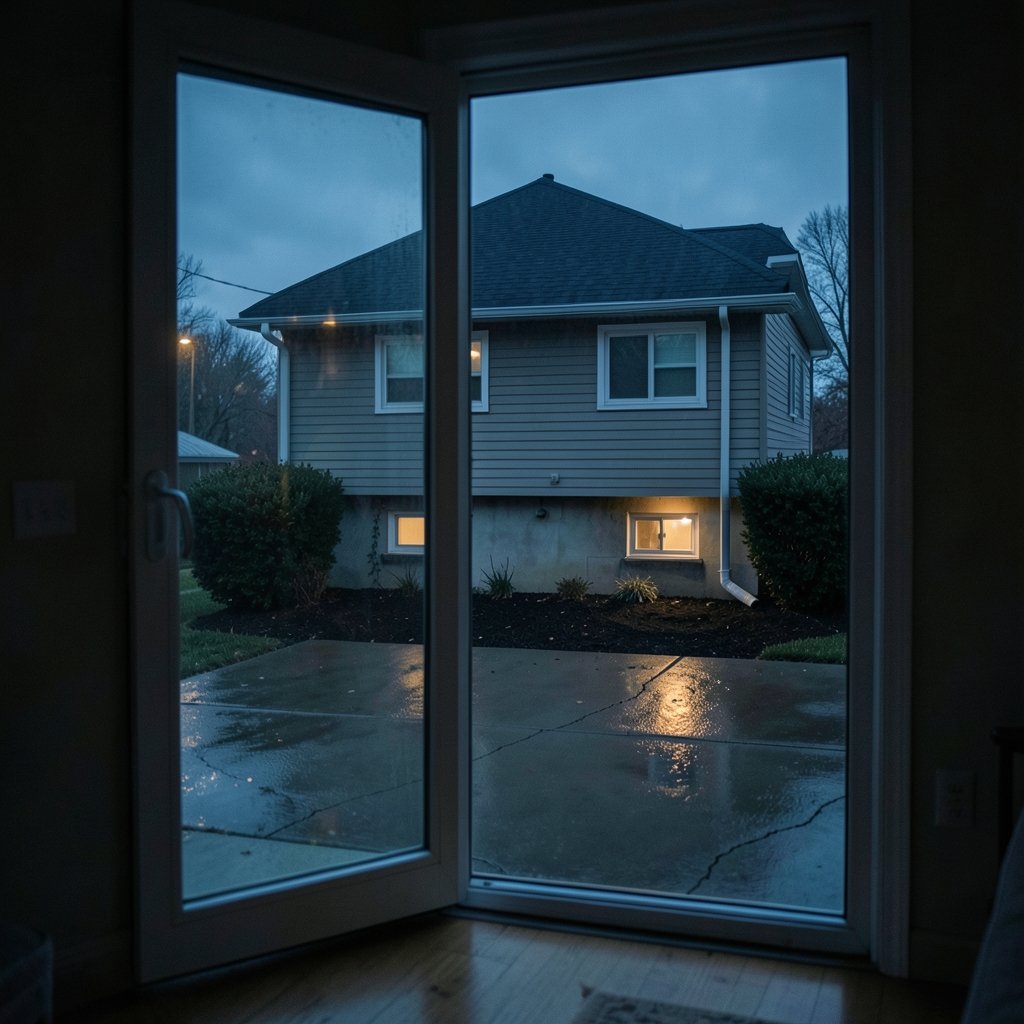
What if the most dangerous thing in your home was something you couldn’t see, smell, or taste? That’s exactly the situation with radon gas, a naturally occurring radioactive gas that seeps up from the ground and can collect indoors. It causes no immediate symptoms, gives no warning, and has been linked to thousands of lung cancer deaths every year. The good news is that testing is cheap, mitigation works, and the risk is entirely manageable once you know your numbers.
What Is Radon Gas, Exactly?
Radon is a colorless, odorless, radioactive gas produced when uranium in soil, rock, and water breaks down. It’s a noble gas, which means it doesn’t react much with anything — it just drifts. Outdoors, it disperses harmlessly into the air. Indoors, it can accumulate to concentrations that matter for health.
The key thing to understand is that radon is everywhere at low levels. The question is never “is there radon?” but “how much is in this particular building?” Concentrations vary enormously from one house to the next, even on the same street, because they depend on geology, construction, and ventilation.
Why Radon Is a Serious Health Concern
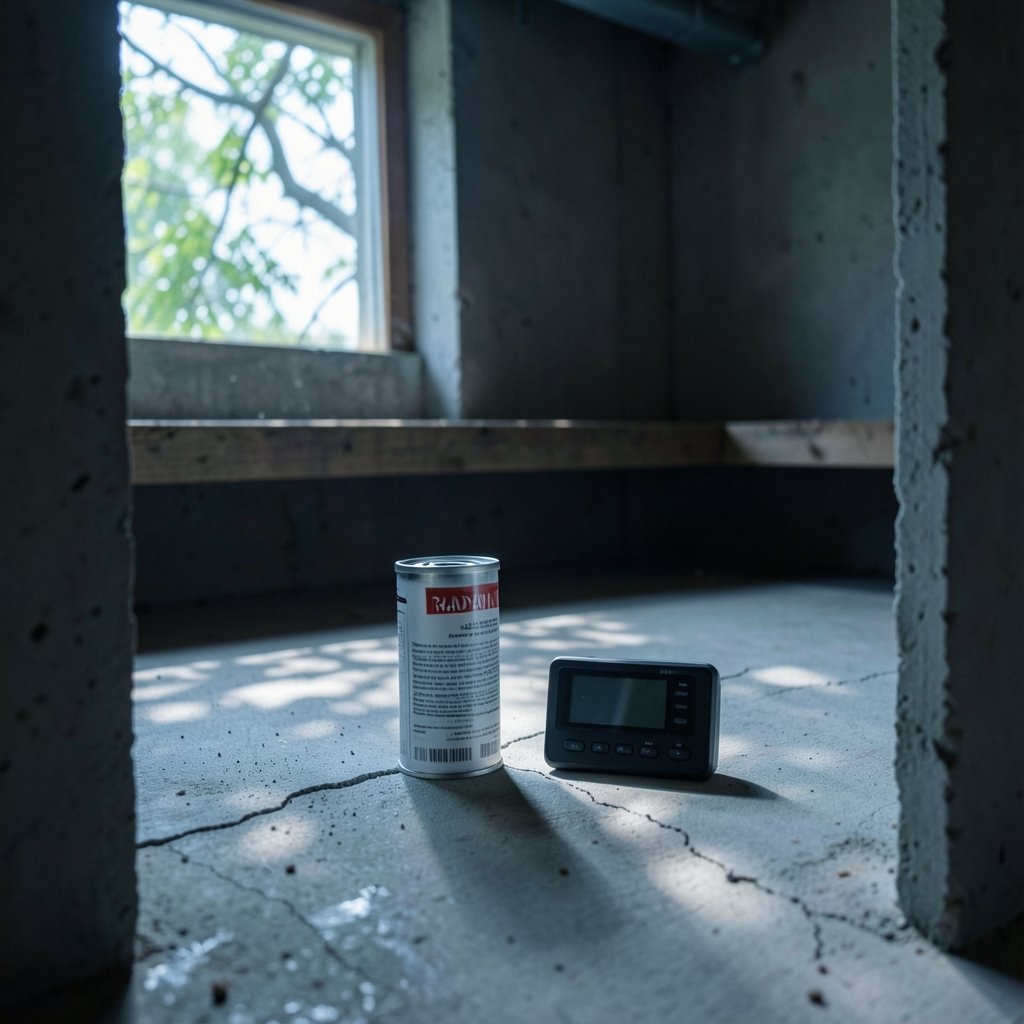
Radon is a known human carcinogen. When you breathe it in, radioactive decay products attach to dust and lung tissue, delivering small doses of radiation directly to cells that line the airways. Over years and decades, that exposure can damage DNA and raise lung cancer risk.
Radon is widely described as the second-leading cause of lung cancer overall and the leading cause among people who have never smoked. For smokers and former smokers, the combined risk is far higher than either factor alone — radon and tobacco smoke multiply each other’s effects rather than simply adding together. That interaction is one of the most important public-health facts about radon, and it’s why testing matters especially for anyone with a smoking history.
Historically, the first strong evidence came from uranium miners in the mid-twentieth century, where lung cancer rates were clearly elevated. Later epidemiological studies of ordinary homes confirmed that residential exposure carries risk too, just at lower doses spread over longer periods.
How Radon Gets Into Buildings
Radon moves through soil as a gas and enters buildings through any path that connects the interior to the ground below. Common entry points include:
- Cracks in concrete floors and foundations
- Gaps around pipes, sumps, and drains
- Crawl spaces and dirt floors
- Hollow-block walls and construction joints
- Well water, which can release radon when used for showers and laundry
Buildings act a bit like a chimney. Warm indoor air rises and escapes, creating slight negative pressure at the lowest level that pulls soil gas inward. That’s why the basement and ground floor usually show the highest readings, and why a house that is well-sealed for energy efficiency can actually hold more radon than a drafty one.
How Radon Levels Are Measured
Radon is measured in becquerels per cubic meter (Bq/m³) in most of the world and in picocuries per liter (pCi/L) in the United States. The conversion is simple and worth memorizing: 1 pCi/L is about 37 Bq/m³.
| Unit | Where it’s used | Common reference point |
|---|---|---|
| Bq/m³ | Most countries, international guidance | 100 Bq/m³ reference level |
| pCi/L | United States | 4 pCi/L action level |
Testing comes in two main flavors:
- Short-term tests run from about 2 to 90 days, often using charcoal-based detectors. They’re cheap, fast, and useful for screening.
- Long-term tests run from 90 days up to a year, often using alpha-track detectors. They give a much better picture of the annual average, since radon fluctuates with weather, season, and how the building is used.
The practical rule: screen with a short-term test if you’re in a hurry, but confirm with a long-term test before making major decisions. If a short-term result comes back elevated, follow-up testing is the standard recommendation rather than an immediate panic.
What the Numbers Actually Mean
Guidance differs between jurisdictions, and that’s a policy choice rather than a scientific contradiction. International guidance recommends a national reference level of 100 Bq/m³, with a range of 100 to 300 Bq/m³ where that isn’t feasible. The United States uses an action level of 4 pCi/L, which is roughly 148 Bq/m³. Both agree on two things: no level is entirely risk-free, and the risk rises steadily with concentration.
That’s why the “is my level safe?” question has a slightly unsatisfying answer. Below the reference level, risk is small but not zero. Above it, mitigation is worth doing. Very high readings — say, several times the action level — warrant prompt action.
Practical Tips That Actually Work
Having walked through the practical side of home testing many times, a few things consistently separate people who solve the problem from people who worry about it indefinitely.
Test in the right place. Put the detector in the lowest livable level of the home — a basement if you spend time there, otherwise the ground floor. Keep it away from exterior walls, drafts, and bathrooms. Place it at breathing height, not on the floor.
Test during the heating season. Closed windows and doors give a more realistic worst-case picture. A test taken with every window open tells you very little.
Don’t trust the neighbor’s result. Two adjacent houses can differ by a factor of five. Geology matters, but so does foundation type, soil drainage, and how the building is ventilated.
Skip the gimmicks. Radon isn’t something a houseplant, an air purifier, or a bowl of charcoal will fix. Only ventilation of the soil beneath the building reliably lowers concentrations.
Re-test after major changes. Renovations, new insulation, a new furnace, or foundation work can all change how a building breathes. A result from ten years ago may no longer reflect reality.
For readers thinking about the broader household-budget angle, the same logic that applies to cutting energy waste applies here: small, cheap diagnostics prevent expensive surprises. The mindset in this guide to saving money on gas without changing your whole life — measure first, fix what actually matters, ignore the rest — maps neatly onto radon testing.
How Radon Mitigation Works
The standard fix is sub-slab depressurization, also called active soil depressurization. A contractor installs a pipe through the foundation floor into the gravel or soil beneath, connects it to a fan, and vents the soil gas above the roofline. The fan creates a slight vacuum under the slab, so soil gas flows into the pipe instead of into the house.
This approach typically cuts indoor concentrations by a large margin — often well over half, and frequently down to near-outdoor levels. A well-designed system also includes sealing of major entry points and a post-installation test to confirm it’s working. Costs vary widely by building type and region, but mitigation is generally a one-time expense with modest ongoing electricity use for the fan.
Other methods fit specific situations: sub-membrane depressurization for crawl spaces, block-wall depressurization for hollow foundations, and aeration or activated-carbon treatment for well water. A qualified contractor should diagnose the building and match the method to it rather than apply one fixed approach.
Common Mistakes People Make
A surprising number of radon problems persist simply because of avoidable errors:
- Testing in the wrong room. A detector in a closet or on a high shelf doesn’t represent what occupants breathe.
- Testing for too short a period during unusual weather. A single stormy week can skew results in either direction.
- Ignoring a borderline result. A reading just under the action level isn’t a green light forever; it’s a reason to re-test periodically.
- Assuming a new house is safe. New construction can be radon-resistant, but only if it was actually built that way. Many new homes aren’t.
- DIY mitigation. Sealing cracks helps a little, but it isn’t a substitute for a depressurization system. Partial fixes can even make readings worse by changing pressure dynamics.
- Forgetting the water supply. In homes on private wells, radon in water can contribute meaningfully to indoor air levels.
Radon in Rental Properties and Schools
Renters often assume testing is the landlord’s job. In practice, responsibility varies by jurisdiction, and tenants may need to ask directly or test discreetly with a short-term kit. Schools and workplaces are a separate story: many countries have specific regulations requiring testing and remediation in workplaces, and radon remains a regulated occupational hazard in mining. If a building is used by children or by large numbers of people for many hours a day, testing is a reasonable expectation regardless of who owns it.
What to Do If Your Result Is High
The path forward is straightforward and doesn’t require panic:
- Confirm the reading with a second test, ideally long-term.
- Hire a certified mitigator to assess the building and propose a system.
- Have the system installed and verified with a post-mitigation test.
- Re-test every few years, and after any major renovation.
- If you smoke, treat smoking cessation as the single highest-impact step, since the combined risk is so much greater.
For anyone weighing household expenses, it helps to see radon mitigation the way you’d see any preventive maintenance: an upfront cost that avoids a much larger problem later. The same practical, budget-conscious thinking in this piece on saving money on gas without overhauling your routine applies well here — spend where it counts, and don’t pay for things that don’t move the needle.
Conclusion
Radon gas is a genuinely serious hazard, but it’s also one of the most solvable ones in a home. It can’t be seen or smelled, yet a fifteen-dollar test kit can tell you whether you have a problem, and a well-installed depressurization system can bring almost any building down to safe levels. The gap between worry and action is usually just information. Test the lowest livable level of your home, interpret the number against the reference level that applies where you live, and fix it if it’s high. That’s the whole strategy — and it works.
Frequently Asked Questions
How common is elevated radon in homes?
Elevated levels are more common than most people expect. Because concentrations depend on local geology and building construction, some regions — parts of the American Midwest and Appalachia, Cornwall in the United Kingdom, and parts of Scandinavia — see notably higher readings. But elevated levels turn up in every country and every region, including areas that maps label as low risk. Maps are indicative, not predictive of any individual home, which is why testing is the only reliable answer.
Can I test for radon myself, or do I need a professional?
Do-it-yourself test kits are widely available, inexpensive, and accurate when used correctly. Place the detector in the lowest livable level, keep it away from drafts and exterior walls, and follow the instructions on exposure duration precisely. Professionals are worth hiring when you need a legally defensible result for a real-estate transaction, when a building is large or complex, or when you want a same-day answer with electronic monitoring.
How quickly can radon harm my health?
Radon risk is cumulative, not acute. It comes from years of breathing elevated concentrations, so a single high reading isn’t an emergency and doesn’t mean damage has occurred. That said, the sooner a problem is fixed, the sooner exposure stops accumulating. There’s no benefit to waiting, and there’s no “safe period” during which a high level can be ignored.
Does opening windows fix a radon problem?
Opening windows temporarily lowers indoor concentrations by diluting the air, but it is not a fix. Radon keeps entering from the soil as long as the building sits on it, and the moment the windows close, levels climb back. Ventilation also wastes energy and is unreliable in cold weather. Real mitigation addresses the source by venting soil gas before it enters the living space.
Will a radon mitigation system lower my home’s value?
Generally the opposite. A professionally installed system with documented post-mitigation test results is a selling point, not a drawback, because it removes an uncertainty that buyers and lenders care about. Disclosure requirements in many jurisdictions mean the issue will surface during a sale anyway; having a system and a clean test result is a much stronger position than an untested basement.
Is radon a problem in apartments and upper floors?
It can be, though risk generally decreases with height above the ground. Radon rises from soil and can migrate through a building’s shared structure, service penetrations, and stairwells, so a ground-floor or basement apartment can have elevated levels even if upper units don’t. Testing the specific unit is the only way to know, and renters should feel comfortable asking the landlord for results or testing independently with a short-term kit.



