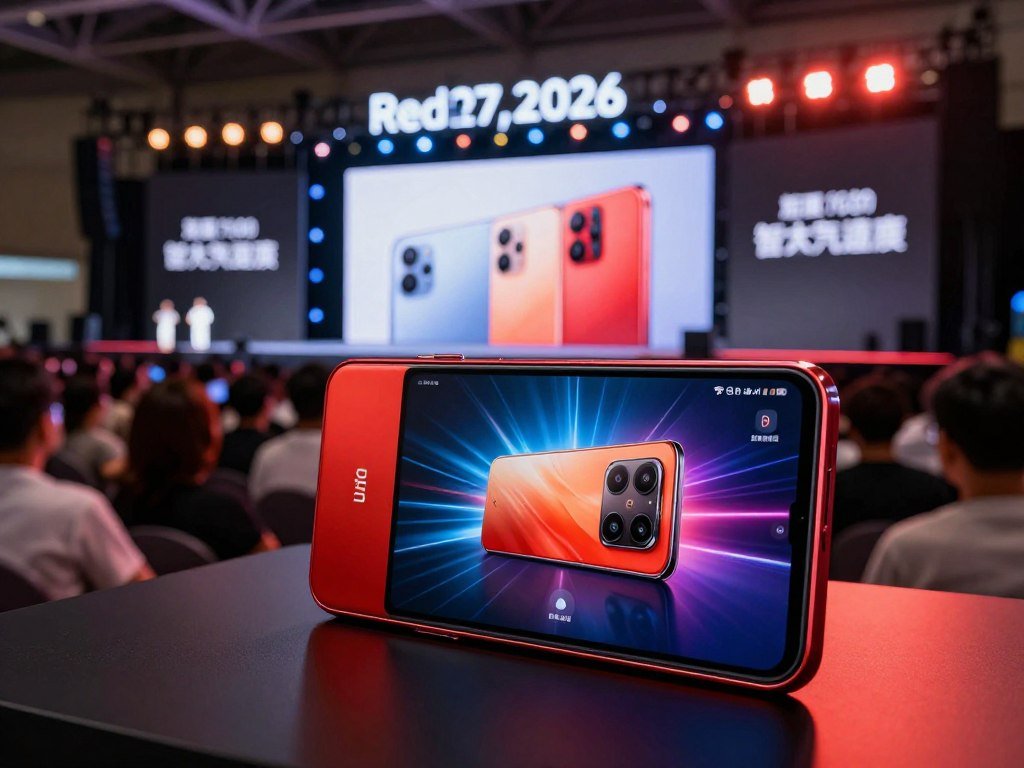
Redmi has scheduled the standard K100’s China debut for October 27, 2026, putting its early performance result in focus. The launch event is just days away, giving buyers a first look at the phone before its China debut. A refresh rate is the number of times a display updates each second, measured in hertz.
The benchmark matters because it offers one early clue about how the phone may handle computing tasks. It cannot show every part of everyday use, and it does not replace hands-on testing. A display’s feel, battery life, and game support can matter just as much to a buyer.
This news update focuses on the standard model, not the Redmi K100 Pro or K100 Pro Max. Readers can use the result as one piece of the prelaunch picture, while keeping in mind that a benchmark cannot capture every app or setting. The launch announcement will provide a fuller look at what Redmi plans to sell in China.
Key Takeaways
- Redmi set the China debut for October 27, 2026.
- The Geekbench result offers an early performance signal.
- A benchmark is not a full measure of everyday use.
- The phone’s display, battery, and game support also matter.
- Readers should treat the benchmark as one part of the phone’s prelaunch picture, not a complete verdict on how it will feel to use.
Redmi K100 Geekbench Snapdragon Elite Oct 27 Launch 2026: What the Listing Shows
The Xiaomi M786BC listing records 2,705 points in Geekbench 7’s single-core test and 9,885 in its multi-core test. Those scores offer an early CPU signal, while the listing does not measure full phone speed.
What the M786BC result reports
The Geekbench listing names Xiaomi model number M786BC and reports 16GB of RAM with Android 17. Redmi has already confirmed Snapdragon 8 Elite and HyperOS 4, which are separate details from the listing’s Android entry.
It records six CPU cores at 3.53GHz and two cores at 4.32GHz. The listing also identifies an Adreno 830 GPU, but the benchmark scores cover CPU tests, not graphics performance.
A single-core score reflects one CPU core working through Geekbench’s test tasks. The multi-core result uses several cores. Neither number directly measures gaming frame rates or how long the phone can hold peak performance.
Readers comparing benchmark results can also review a Snapdragon X2 Elite benchmark analysis, which covers laptop tests rather than this phone’s chip.
A Geekbench CPU score does not show game frame rates or sustained performance under long workloads.
How its listed hardware compares with the K90
The K100’s listed display and battery figures stand apart from the K90’s, while both models share the same confirmed chipset name. The table shows the listed comparison.
| Measure | Redmi K90 | Redmi K100 |
|---|---|---|
| Chipset | Snapdragon 8 Elite | Snapdragon 8 Elite |
| Display refresh rate | 120Hz | 165Hz |
| Battery capacity | 7,100mAh | 10,000mAh |
The K100’s higher listed refresh rate can support smoother motion when an app or game supplies enough frames. Its larger listed battery capacity may also appeal to people who value longer use between charges, though capacity alone does not set runtime.
Treat those results as a CPU benchmark snapshot, not a promise of sustained performance in demanding games.
How the D2 Chip and Game Support Shape Gaming
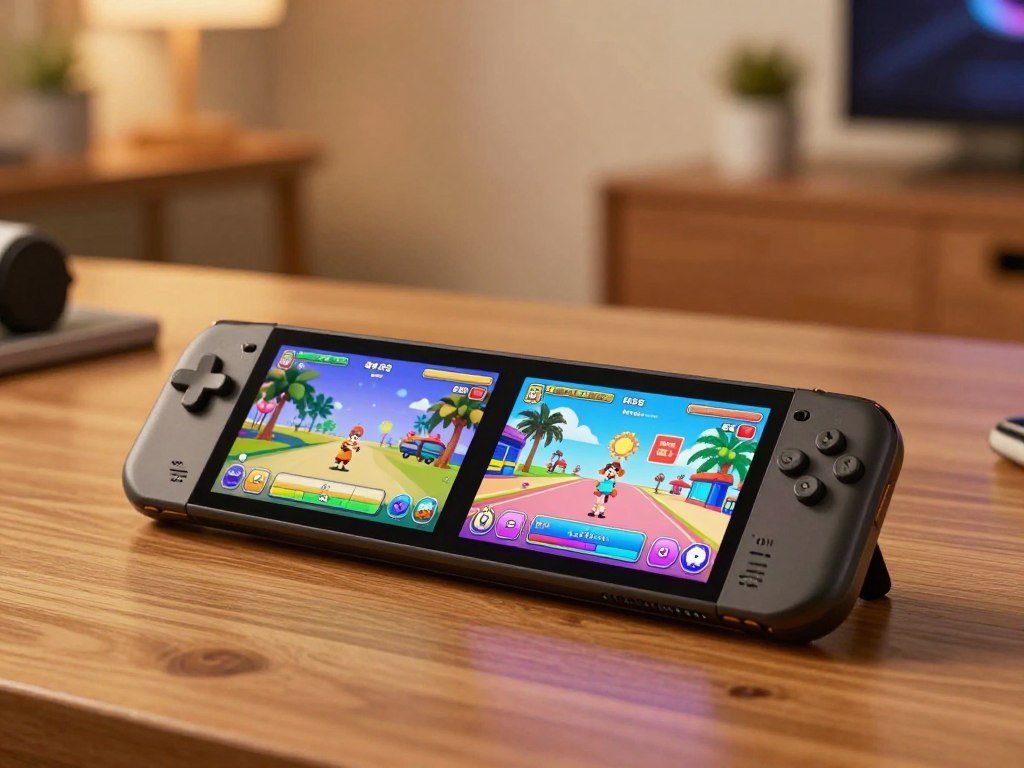
Gaming is the K100’s clearest point of distinction, with a dedicated D2 chip and support for high-frame-rate play in selected titles. Redmi calls it the first dedicated gaming graphics chip in a phone, and the display can reach a peak brightness of 3,500 nits.
What the 6.83-inch AMOLED panel offers
The 6.83-inch AMOLED display combines a large viewing area with a 165Hz refresh rate. That rate describes how often the screen can update, not how many frames a game creates.
High brightness can help keep screen details visible in bright settings. The K100’s AMOLED panel also gives games and video a vivid display, while the supported frame rate still depends on each title.
For a broader look at how screen size and refresh rate fit different uses, see this 2026 phone buying guide.
How D2 handles supported games
Display refresh rate and game frame rate are related, but they are not interchangeable. A 165Hz screen can refresh up to 165 times each second; a game must support the matching frame rate to show native 165fps play.
Redmi’s D2 claims cover two types of game support. Native rendering creates frames at the stated rate, while frame interpolation generates extra frames between rendered ones. Redmi gives these specific claims:
- Native 165fps support in more than 40 games.
- Frame interpolation support in more than 100 games.
- A claimed 1.1W average power reduction in Honor of Kings at ultra-high graphics and 144fps.
Those limits make game support important when judging what the phone can do. A fast-refresh display helps only when the game and device can supply enough frames, a point also covered in this gaming frame-rate guide.
FoneArena reports Redmi’s figures for native 165fps support and Honor of Kings power use in its K100 gaming feature report. The game-specific limits matter: Redmi’s native 165fps claim applies to more than 40 games, not every title.
What Cameras, Protection, and Other Hardware Are Confirmed?
The rear camera setup pairs a 50MP main sensor with a second rear camera. The main sensor measures 1/1.55 inch and has an f/1.68 aperture, details that add context to its 50MP count.
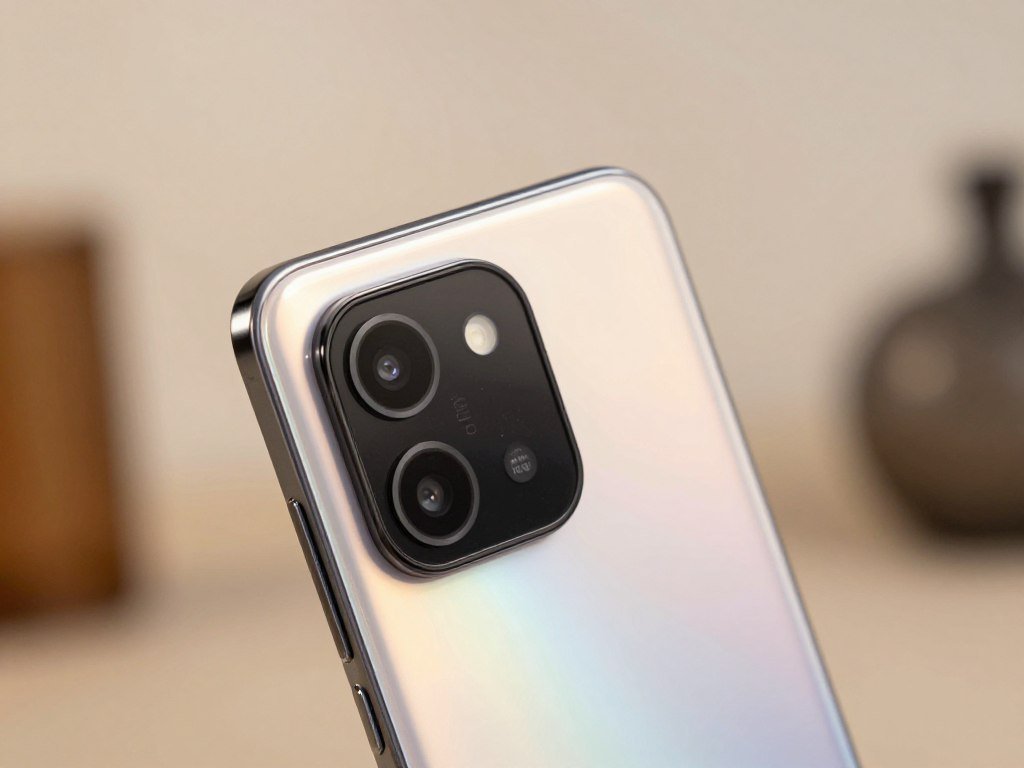
The IP68 dust- and water-resistance rating sits alongside an ultrasonic in-display fingerprint scanner. The K100 also has symmetrical dual speakers, seven antennas, and an 0815 X-axis linear motor for vibration feedback.
IP68 concerns dust and water resistance, not protection from drops.
Redmi lists three color options, including Firefly Green. The extra antennas address connectivity hardware, while the linear motor and speakers shape everyday use beyond the camera and display.
Andro-News reports the K100’s camera and protection details alongside its other confirmed hardware. Readers comparing camera choices and resistance ratings can also consult this budget phone camera and protection guide.
IP68 is a dust- and water-resistance rating, so do not treat it as a drop-protection rating.
Conclusion
The K100’s early picture combines a strong Geekbench result with a clear focus on gaming and long battery life. The score offers an early CPU-performance signal, while the unusually large battery and gaming features shape the phone’s appeal.
For buyers weighing the K100, battery capacity and game support may matter as much as raw benchmark results. Check Redmi’s China launch announcement for final availability and any further confirmed specifications before deciding whether the device fits your needs.
FAQ
What does a Geekbench single-core score measure?
A Geekbench single-core score measures CPU performance using one core. The test runs a set of tasks and records how that core handles them. It does not represent overall phone speed, since apps can use different resources and other factors affect daily use. The result is best read as one focused CPU test, not a rating of every task.
Are the Redmi K100’s Geekbench scores GPU benchmarks?
No, the Redmi K100’s Geekbench scores are CPU test results. The listing separately identifies the Adreno 830 GPU, but the reported single-core and multi-core scores do not rate its graphics performance. A GPU benchmark would test graphics tasks instead. Game results can also change with the title, graphics settings, and how long the phone runs the game.
Does a 165Hz display mean every game runs at 165fps?
No, a 165Hz display does not mean every game runs at 165fps. The screen can refresh up to 165 times per second, but the game must support that frame rate and the device must render it. Redmi claims native 165fps support in more than 40 games. Other titles may run at lower rates.
What is the difference between native 165fps support and frame interpolation?
Native 165fps support means a game renders 165 frames each second. Frame interpolation creates extra frames between frames the game has rendered, which can make motion appear smoother. Redmi says more than 100 games support interpolation on the K100. The two methods are not the same, even though both can affect how motion looks.
Is the Redmi K100’s 100W charging wired or wireless?
The Redmi K100’s confirmed 100W charging figure is for wired charging. It does not describe wireless charging speed. Charging time can also shift with the charger, cable, battery level, and phone use during charging. The 100W figure gives a power rating, not a promise that every charging session takes the same amount of time.
Is Snapdragon 8 Elite the same as Snapdragon 8 Elite Gen 5?
No, Snapdragon 8 Elite and Snapdragon 8 Elite Gen 5 are distinct chipset names. Redmi has confirmed that the standard K100 uses Snapdragon 8 Elite. The Geekbench listing’s CPU details do not rename that chip as Snapdragon 8 Elite Gen 5. Buyers should use the stated chipset name when comparing the standard K100 with other models.