

What is the first French word for money you should learn? Most learners guess something long and formal. The real answer is short, a little strange, and tied to silver rather than coins. The everyday French word for money is argent, and once you know why, a whole cluster of related words starts to make sense. (Gift card scam works victims rarely get their money back)
This guide walks through the vocabulary, the slang, the currency, and the formatting rules that trip up English speakers writing French numbers. It also covers a few practical mistakes that cost people real money when they deal with French speakers or French-language paperwork. (French franc)
Argent: The Everyday Word for Money
Argent is the word you will hear in shops, cafés, and family conversations across France, Belgium, Switzerland, Quebec, and francophone Africa. It is the default translation of “money” in almost every everyday context.
Here is the twist: argent literally means silver. The metal and the concept of money share one word. That is not a coincidence or a quirk of modern slang. The shift from naming a precious metal to naming money itself is a classic example of semantic broadening, the same process that turned the English word for a metal into a general term for coin and cash. French dictionaries list both senses side by side, with silver first and money second. (Identity threat detection really costs where money goes)
In practice, context does all the work:
- Je n’ai pas d’argent. — I don’t have any money.
- Une bague en argent. — A silver ring.
- L’argent ne fait pas le bonheur. — Money doesn’t buy happiness. This proverb is one of the most quoted lines in French, and it uses the money sense.
One grammar note that catches beginners: argent is uncountable, like the English “money.” You cannot say “two moneys.” If you need to count, you switch to a unit such as un euro, un billet (a banknote), or une pièce (a coin).
Monnaie, Devise, and Fric: Picking the Right Word
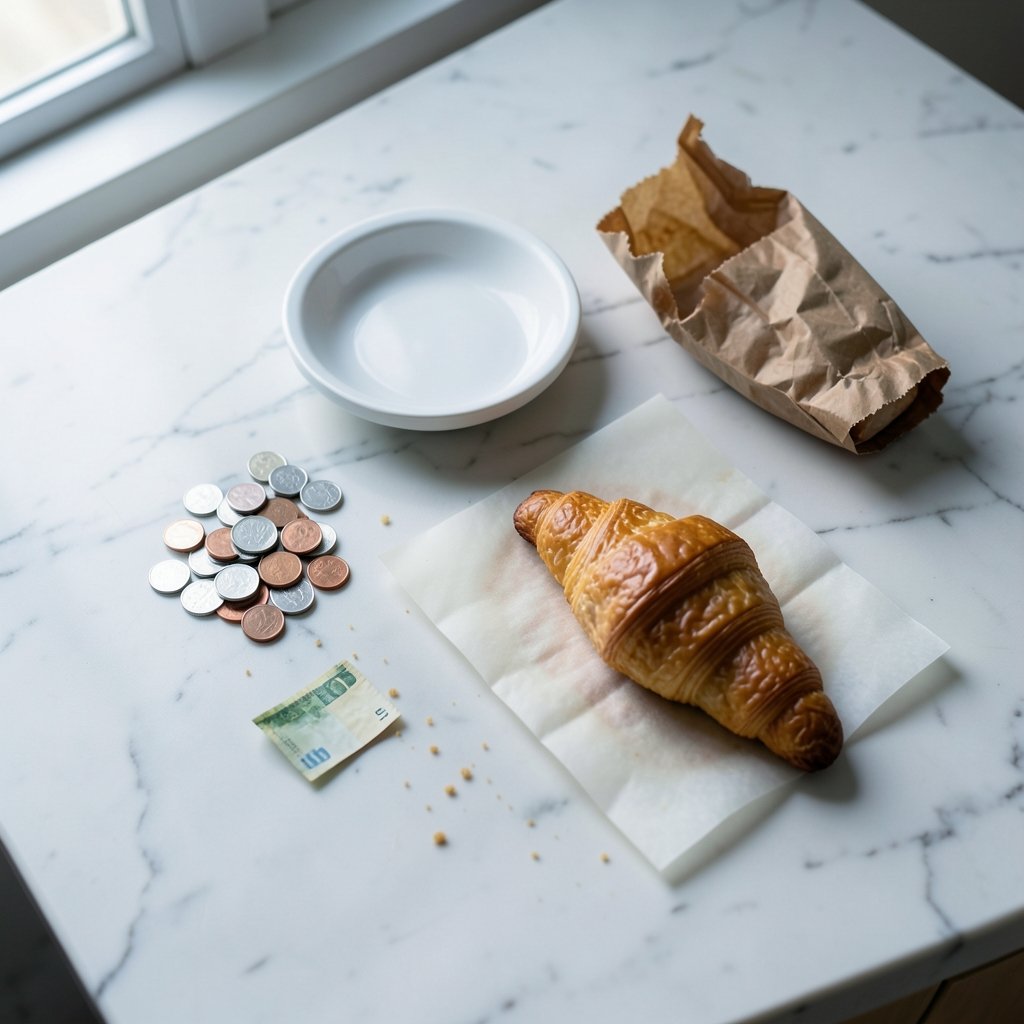
English squeezes a lot into one word. French splits the same territory across several terms, and using the wrong one is one of the most common mistakes learners make. Here is how the main options compare.
| French word | Core meaning | Typical use | Register |
|---|---|---|---|
| Argent | Money in general | J’ai besoin d’argent (I need money) | Neutral, everyday |
| Monnaie | Coins, small change; also a currency system | Vous avez la monnaie ? (Do you have change?) | Neutral |
| Devise | Foreign currency | Payer en devise étrangère (pay in foreign currency) | Neutral, financial |
| Fric | Cash, dough | Il a du fric (he’s got cash) | Informal |
| Pognon | Cash, dosh | Ça coûte du pognon (that costs a fortune) | Slang |
| Thune | Money, a coin | Pas une thune (not a penny) | Slang |
The monnaie trap deserves special attention. In a bakery, la monnaie means your change, not your money in general. Ask avez-vous de la monnaie ? and you are asking whether the shop can break a large note. Ask avez-vous de l’argent ? and you are asking something much stranger. The same word also appears in formal contexts meaning currency as a system, as in la monnaie unique (the single currency) for the euro.
Devise is the word for money that belongs to another country or another monetary system. If a French bank advertises compte en devises, it means a foreign-currency account. Using argent there would sound wrong to a banker.
The slang words are worth recognizing even if you never use them. Fric is the most widespread and least offensive. Pognon carries a slightly rougher edge. Thune is old-fashioned but still alive in speech. None of these belong in a job application or a letter to a landlord.
The Currency of France: From Franc to Euro
France uses the euro, and has since the currency was introduced for accounting and electronic payments on 1 January 1999. Physical euro banknotes and coins entered circulation on 1 January 2002 and replaced the French franc at a fixed conversion rate. The European Central Bank publishes the official history and current status of the shared currency on its euro pages. (The euro)
Before the euro, France used the franc français, whose international currency code was FRF. The decimal franc was introduced in 1795 during the French Revolution, replacing the older livre. The euro’s code is EUR. Those three-letter codes come from ISO 4217, the international standard that defines currency codes worldwide, and they appear on bank statements, invoices, and exchange screens everywhere.
The institutional side matters for anyone following monetary news. The Banque de France is the French central bank and operates as part of the Eurosystem, but interest rates for the euro area are set centrally, not by Paris alone. This is why French mortgage rates and savings rates move with decisions made for the whole currency bloc rather than with purely national policy.
A practical point for travelers and remote workers: prices in France are quoted in euros with the symbol after the number, and some smaller merchants still prefer cash for very small amounts. Cards are accepted almost everywhere in cities, but carrying a little cash avoids awkward moments at market stalls.
Writing Money in French: Numbers, Symbols, and Spacing
Formatting is where confident speakers still get caught. French and English handle numbers and currency symbols differently, and the differences are consistent enough to learn in a few minutes.
The decimal comma
French uses a comma where English uses a point. Twelve euros and fifty cents is written 12,50 €, not 12.50 €. In an English-language document, writing 12,50 can confuse a reader into thinking it is a thousands separator.
The thousands separator
French inserts a space between groups of three digits rather than a comma. One thousand two hundred thirty-four becomes 1 234. Professional French typography often uses a narrow no-break space so the number never splits across a line. For most learners, a normal space is acceptable in casual writing.
Symbol placement
The euro sign goes after the amount in French: 25 €. English usually puts it before: €25. Both are understandable, but matching local convention signals care, especially on invoices and price lists.
Currency names in speech
Spoken French usually says the number and then the currency: dix euros, cent francs. When the amount is one euro, it stays singular: un euro. When it is plural, the s is pronounced in careful speech but often dropped in fast conversation.
A quick comparison table makes the pattern clear:
| Concept | English style | French style |
|---|---|---|
| Decimal | 12.50 | 12,50 |
| Thousands | 1,234 | 1 234 |
| Symbol position | €25 | 25 € |
| Spoken form | twenty-five euros | vingt-cinq euros |
These conventions matter beyond aesthetics. A misread decimal can turn a 12,50 € charge into a 1,250 € dispute, and that kind of error is genuinely expensive to unwind. If you handle cross-border payments, it is worth understanding how currency systems and digital money are changing, including the debate over central bank digital currencies and what a digital euro might mean for everyday payments.
Practical Traps and How to Avoid Them
Textbook vocabulary is only half the job. These are the mistakes that show up again and again in real situations.
Confusing monnaie with argent in shops. The fix is simple: monnaie is what you get back or the coins in your pocket. Argent is the abstract stuff. Say gardez la monnaie (keep the change) and you will be understood instantly.
Assuming slang travels. Fric is understood across the francophone world, but regional slang shifts fast. In Quebec, you will hear different expressions than in Marseille. Stick to argent until you know the room.
Writing English-style numbers in French documents. A French reader seeing 1,234.56 will pause. Rewrite as 1 234,56 and the confusion disappears.
Forgetting that the euro symbol is not universal. Older French documents, contracts, and family papers may quote amounts in francs. When converting for a modern reader, state clearly which currency you mean rather than assuming.
Overlooking scam risk in money conversations. Language barriers are a gift to fraudsters. Someone who claims to need your help moving funds, or who asks for payment in gift cards because “the bank is slow,” is running a well-worn script. Understanding how the gift card scam works and why victims rarely get their money back is a useful defense, and it applies in any language.
Ignoring the cost side of money decisions. Whether you are budgeting a trip or evaluating a security product, the headline number is rarely the whole story. The same is true of business tooling: teams often underestimate the real price of automation, which is why a breakdown of where AI automation budgets actually go is worth reading before signing anything.
Money, Meaning, and Culture in French
The French relationship with money shows up in language in ways that go beyond vocabulary. Proverb culture is rich here. L’argent ne fait pas le bonheur is the obvious one, but you will also hear les bons comptes font les bons amis (good accounts make good friends), a line that captures a cultural preference for clarity in financial dealings between friends and family.
Register matters socially too. Talking openly about salary is less common in France than in some English-speaking countries, and asking a new acquaintance what they earn can land badly. Using argent is safe; volunteering detailed figures is a different matter.
For learners building vocabulary, the most efficient path is to learn words in clusters rather than one at a time. Group argent with monnaie, devise, and billet. Group the verbs: payer (to pay), économiser (to save), dépenser (to spend), emprunter (to borrow), prêter (to lend). Group the contexts: banking, shopping, rent, salary. This mirrors how the words actually appear in conversation and makes recall much faster.
It also helps to see money vocabulary in the wild. Reading French news about budgets, watching French films with subtitles, and following financial explainers all reinforce the distinctions. Topics such as how digital currencies are reshaping central bank money, or how AI companies actually generate revenue, are good test beds because they force you to use precise terms rather than vague ones.
Conclusion
The French word for money is argent, and that single fact opens a door. Behind it sit monnaie for change, devise for foreign currency, and a set of slang terms that range from friendly to rough. Behind it also sit the euro, the franc that came before, and a set of formatting conventions that put the comma where English puts a point and the symbol where English puts it first.
Getting these details right is not pedantry. It prevents misread invoices, avoids awkward moments at the counter, and signals that you have done more than run a phrase through a translator. Start with argent, add the currency vocabulary, and practice the number format until it feels normal. The rest follows quickly.
What does argent mean in French?
Argent means both silver and money. The metal sense came first, and the money sense developed over centuries as silver served as a standard store of value. Context decides which meaning applies, and the money sense dominates in everyday speech.
Is monnaie the same as argent?
No. Monnaie means coins, small change, or a currency system. Argent means money in general. In a shop, asking for la monnaie means asking for change, not asking for cash as a concept.
What currency does France use?
France uses the euro. It was introduced for accounting and electronic payments on 1 January 1999, and notes and coins entered circulation on 1 January 2002, replacing the French franc.
How do you write amounts of money in French?
Use a comma for decimals and a space for thousands: 1 234,56. Place the euro sign after the number: 25 €. This differs from English, which uses a point, a comma, and a leading symbol.
What is French slang for money?
The most common slang terms are fric, pognon, and thune. All are informal. Fric is the most widespread, while pognon carries a slightly rougher tone. None belong in formal writing.
Why does French use a comma instead of a point in numbers?
It is a national typographic convention rather than a rule of grammar. French printing and publishing traditions settled on the comma as the decimal marker and the space as the thousands separator, and those conventions carried over into official and everyday use.



