

What would you do if you landed in Madrid tomorrow with a wallet full of the wrong currency? It happens more than you’d think. Spain’s money system looks simple from the outside, but the details trip up tourists, new residents, and even seasoned travelers. The country runs on the euro, sets firm limits on cash payments, and protects bank deposits under a European-wide guarantee. Understanding those rules before you arrive saves time, fees, and the mild panic of a card that won’t work at a village bakery.
The Currency Spain Actually Uses
Spain’s official currency is the euro (€), the shared money of the eurozone. The country locked in the euro as an accounting currency on 1 January 1999 and put physical euro notes and coins into people’s hands on 1 January 2002, retiring the Spanish peseta for good. (Euro)
The old conversion rate was fixed and permanent: 1 euro = 166.386 pesetas. You’ll still see peseta prices printed on old menus and property deeds as a nostalgic nod, but they carry no legal weight now.
Because Spain belongs to the eurozone, its monetary policy isn’t set in Madrid. The Banco de España is the national central bank and part of the Eurosystem, but interest rates and money supply decisions come from the European Central Bank. That matters for anyone holding savings in Spain: deposit rates and mortgage costs follow eurozone policy, not Spanish domestic politics.
Euro banknotes come in denominations from €5 to €500. Production of the €500 note ended in 2019, though any you find in circulation remain legal tender. In practice, nobody in Spain wants to break a €500 note at a café, and many shops refuse them outright. Bring smaller bills.
Cash Rules That Catch Visitors Off Guard
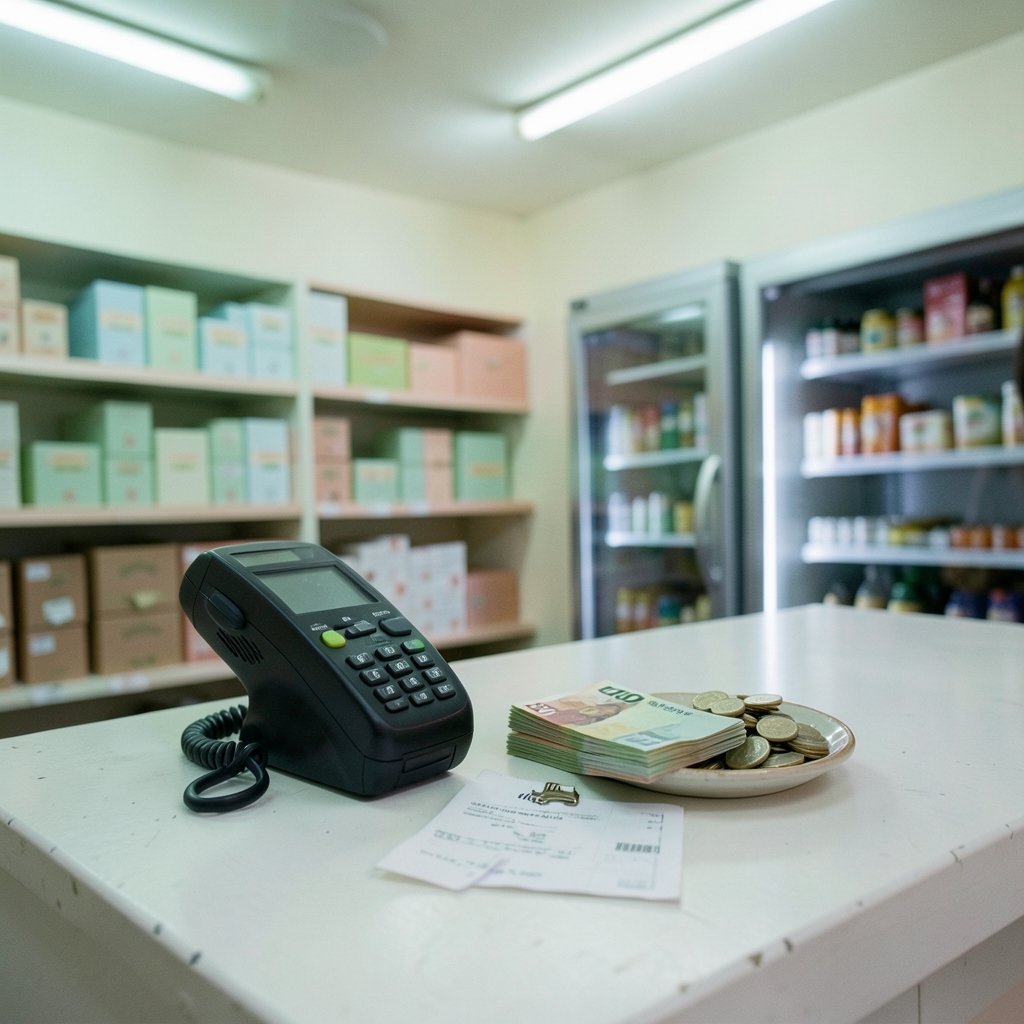
Here’s the mistake almost every visitor makes: assuming Spain is a pure cash economy or a pure card economy. It’s neither, and the rules are stricter than in most of Europe.
Spain caps cash payments between businesses and professionals at €1,000. That threshold was lowered from €2,500 back in 2012 and has stayed in place. If you’re buying a fridge, paying a builder, or settling a hotel bill in physical notes above that amount, the business can’t legally accept it. The rule targets tax evasion, but it lands on ordinary consumers too.
A few practical notes from experience:
- Carry small notes. A €50 note for a €3 coffee draws sighs. Keep €10 and €20 bills handy.
- Cards work almost everywhere in cities, but small village bars, market stalls, and rural taxis may be cash-only.
- Contactless is standard. Most Spanish terminals accept tap-to-pay, and mobile wallets are widely used.
- Keep receipts for large cash purchases. If you’re a resident, the tax authority can ask questions.
The Agencia Tributaria (AEAT) administers national taxes and enforces the cash limits. Spain’s VAT is called IVA, with a standard rate of 21% since 2012. Prices on shelves normally include IVA, so the number you see is the number you pay, which is a small mercy compared with countries that add tax at the till.
What Money Actually Buys in Spain
Spain’s cost of living sits below northern Europe’s, though the gap has narrowed. Rents in Madrid and Barcelona have climbed sharply, while smaller cities and rural areas remain far cheaper.
| Expense | Typical range (monthly or unit) | Notes |
|---|---|---|
| Coffee at a bar | €1.50–€3 | Standing at the bar is cheapest |
| Menu del día lunch | €12–€18 | Two courses plus bread and drink |
| City rent, one-bedroom | €900–€1,600 | Madrid and Barcelona at the top |
| Small-town rent, one-bedroom | €450–€750 | Varies hugely by region |
| Monthly public transport pass | €20–€55 | Many cities offer youth and senior discounts |
| Groceries, single person | €200–€300 | Cheaper at local markets |
Two habits save real money. First, eat the menú del día at lunch rather than ordering à la carte at dinner; the same kitchen, half the price. Second, shop at municipal markets and discount chains rather than convenience stores, where markups are brutal.
If you’re moving for work and wondering how to stretch a local salary, the same budgeting logic applies as anywhere: track fixed costs first, then trim the variable ones. The broader principles in this guide to how to make money with AI translate well to side income earned while living abroad, though local tax rules still apply to whatever you earn.
Banks, Accounts, and Deposit Protection
Opening a Spanish bank account as a non-resident is possible but paperwork-heavy. You’ll typically need a passport, proof of address, and a Spanish tax number called an NIF. Some banks offer non-resident accounts with monthly fees; others waive fees if you deposit a salary or meet minimum activity thresholds.
The reassuring part is the safety net. Spanish bank deposits are protected up to €100,000 per depositor per bank under the EU Deposit Guarantee Schemes Directive, administered nationally by the Fondo de Garantía de Depósitos. That coverage is per institution, not per country, so splitting savings across two banks doubles your protected ceiling.
Watch for these common mistakes:
- Ignoring maintenance fees. A “free” account often costs €10–€20 a month unless you meet conditions.
- Keeping everything in one bank. Convenient, but it concentrates your protected limit.
- Skipping the NIF. Without it, banks may freeze or restrict your account.
- Assuming ATM withdrawals are free. Out-of-network machines can charge €2–€7 per withdrawal.
Digital banking has changed the picture. Online-only banks now offer Spanish IBANs with low or zero fees, and many expats run a local account for bills alongside a home-country account for savings.
Public Finances: Debt, Inflation, and Why It Matters to Residents
Spain’s general government debt has hovered around or above 100% of GDP in recent years, a legacy of the 2008 financial crisis and the pandemic. That’s high but not unusual among eurozone members. For ordinary people, the practical effects show up as pressure on public services, tax policy, and borrowing costs rather than sudden shocks.
Inflation is the more immediate concern. Spain’s inflation history includes a brutal stretch in the late 1970s and early 1980s, when prices rose above 20% a year before euro convergence tamed things. Recent years brought a sharp spike followed by cooling. For households, the lesson is durable: fixed-rate mortgages and index-linked savings behave very differently when prices move fast.
Currency itself is changing shape. The European Central Bank has been exploring a digital euro, a central bank digital currency that would sit alongside cash rather than replace it. The debate over CBDC digital currency and central bank money going digital is worth following, because it could eventually affect how payments settle in Spain and across the eurozone. Nothing changes for consumers yet, but the direction of travel is clear.
Scams, Fraud, and Protecting Your Money in Spain
Spain is generally safe, but money fraud is common and often clever. The scams that cost people most are rarely dramatic. They’re small, plausible requests.
Gift card scams are a persistent problem. A caller claims to be from your bank, the tax office, or a utility, and asks you to settle a debt with gift cards. Once the codes are read out, the money is gone. Recovery rates are close to zero. The mechanics are worth understanding in detail, and this explanation of how the gift card scam works and why victims rarely get their money back is a useful primer for anyone new to the country.
Identity fraud is the other big category. Stolen documents, phishing emails posing as banks, and fake rental listings that demand a deposit before viewing are all routine. The financial damage extends well beyond the stolen sum: replacing documents, correcting credit records, and recovering accounts takes weeks. A breakdown of where the money actually goes in identity threat detection shows how the indirect costs dwarf the initial loss.
Practical defenses that genuinely work:
- Never pay a rental deposit before seeing the property or verifying the owner through the land registry.
- Hang up and call back on a number you look up yourself, never one the caller gives you.
- Use card controls in your banking app to freeze online payments when not needed.
- Register for alerts so every transaction triggers a notification.
Businesses face a parallel set of risks. Spending on threat intelligence and fraud prevention has risen sharply as attacks get cheaper to launch, and the cost breakdown in this analysis of threat intelligence spending in 2025 is instructive for small firms operating in Spain.
Sending Money To and From Spain
Transfers into and out of Spain run on the SEPA system, which means euro transfers within the eurozone should cost the same as domestic ones. In practice, banks and transfer services add margins on the exchange rate, and that’s where the real cost hides.
A few rules of thumb:
- Always compare the total received amount, not the headline fee. A “free” transfer with a poor rate can cost 3% or more.
- Use a mid-market rate reference before you convert.
- Avoid airport and hotel exchange desks. Their spreads are among the worst available.
- Batch transfers if you’re moving money regularly, since fixed fees hurt small amounts most.
For anyone running a business with Spanish customers, automation can cut payment admin significantly, though it pays to be careful about tooling costs. The guidance on using AI business automation without wasting money applies directly to invoicing and reconciliation workflows.
Taxes Residents Should Know
If you spend more than 183 days a year in Spain, you’re generally treated as a tax resident and taxed on worldwide income. The IRPF is the personal income tax, levied at progressive rates by both the state and your region, which means your bill depends on where you live. Wealth tax also exists in some regions, and property ownership triggers local taxes.
New arrivals often miss two things: the Modelo 720 foreign asset declaration (required if you hold assets abroad above certain thresholds) and the fact that regional differences in inheritance and wealth tax are substantial. Getting local advice in your first year is rarely wasted money.
Conclusion
Spain’s money system rewards a little preparation. The euro is straightforward, but the €1,000 cash cap, the deposit guarantee ceiling, the regional tax variations, and the persistent scam tactics all demand attention. Bring small notes, open an account with your NIF ready, split savings across banks, and treat any urgent payment request as suspicious until proven otherwise. Do those things and Spain’s financial side stays pleasantly boring, which is exactly what you want.
Frequently Asked Questions
What currency does Spain use?
Spain uses the euro (€). It adopted the euro for accounting in 1999 and introduced notes and coins in 2002, replacing the peseta at a fixed rate of 166.386 pesetas to the euro.
Is cash still widely used in Spain?
Yes, more than in most of Western Europe, especially in small towns, markets, and older bars. Card and mobile payments dominate in cities, so carrying a modest amount of cash in small notes covers both situations.
What is the cash payment limit in Spain?
Cash payments between businesses and professionals are capped at €1,000. The limit was lowered from €2,500 in 2012 and remains in force. Businesses that accept more can face penalties, so large cash purchases usually require a card or bank transfer.
Are bank deposits in Spain protected?
Yes. Deposits are guaranteed up to €100,000 per depositor per bank under the EU Deposit Guarantee Schemes Directive, administered by the Fondo de Garantía de Depósitos. The limit applies per institution, so spreading savings across banks increases total coverage.
Can I use my foreign debit card in Spain?
Usually yes, but watch for three costs: a foreign transaction fee from your bank, an ATM operator charge, and a poor exchange rate. Paying in euros rather than your home currency at the terminal almost always costs less.
Do I need a Spanish bank account to live in Spain?
Not strictly, but it makes life much easier for paying rent, utilities, and taxes. You’ll need a Spanish tax number (NIF) to open most accounts, and you should compare monthly fees and ATM charges before choosing a bank.



