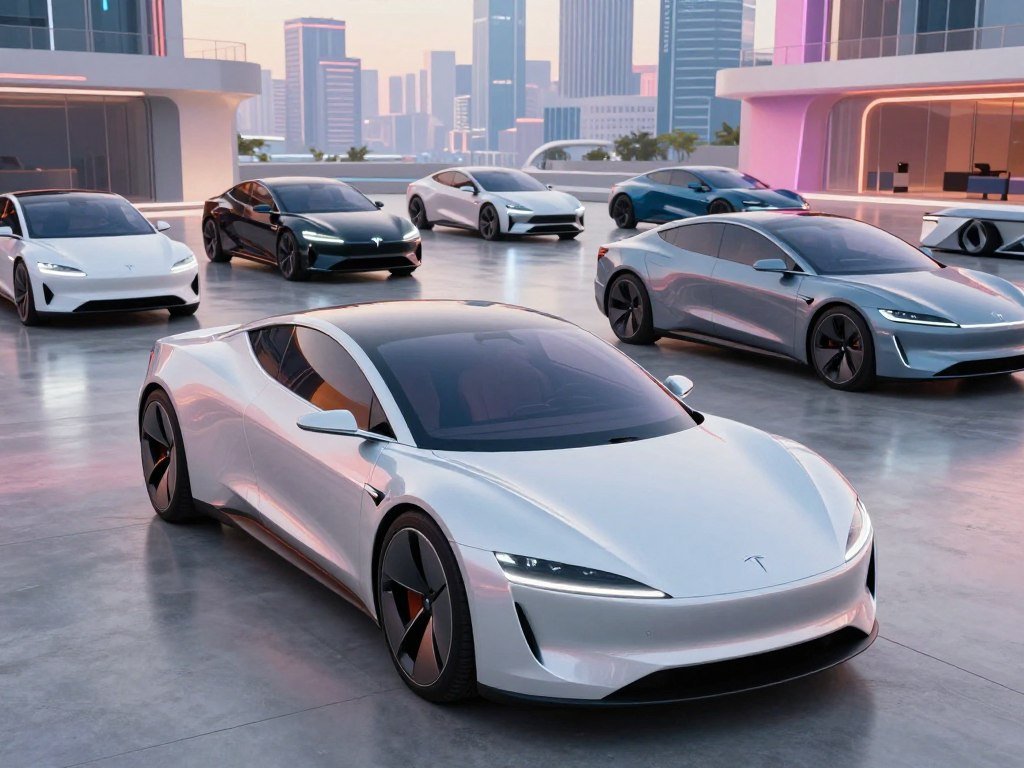
The Tesla Roadster story in 2026 has two sides: a dramatic engineering demonstration and a launch timetable buyers still need to treat cautiously. A cold-gas thruster is a propulsion device that creates thrust by releasing stored pressurized gas without combustion. The new Roadster has drawn attention with unusual hardware and striking performance claims, but buyers still lack a production car to inspect.
Nine years have passed since Tesla first introduced the second-generation model in November 2017. Its latest production target gives the project a date, not a delivery record. Meanwhile, electric cars from other makers give shoppers real prices, range figures, and customer cars to compare.
The difference matters when a vehicle’s biggest numbers come from a prototype or a timed demonstration. A buyer can compare delivered cars today, while Tesla’s plans still depend on final production details. The useful question is whether Tesla can turn the show into a production car buyers can evaluate.
Key Takeaways
- The October 2026 demonstration featured a prototype, not a customer delivery.
- Tesla’s stated production target is 2028.
- Earlier prices and performance figures do not confirm current production specifications.
- The Roadster Rocket is a special configuration, not the standard road-ready version.
- Rimac and Lucid already have electric cars with published specifications and delivery histories.
- A reservation is not final until Tesla receives and clears the wire transfer.
What Did Tesla Show at the October 2026 Roadster Demo?
The October 15 showcase put a white Roadster through an upside-down ramp run, a flip, a brief hover and a landing. Tesla’s timer showed 0-60 mph in under one second, a striking demonstration result rather than a production-car test.
The outdoor event took place at a SpaceX test site in McGregor, Texas. It had first been scheduled for October 1, then moved after Tesla cited weather. The car shown was a prototype at a stunt event, not a vehicle delivered to customers.
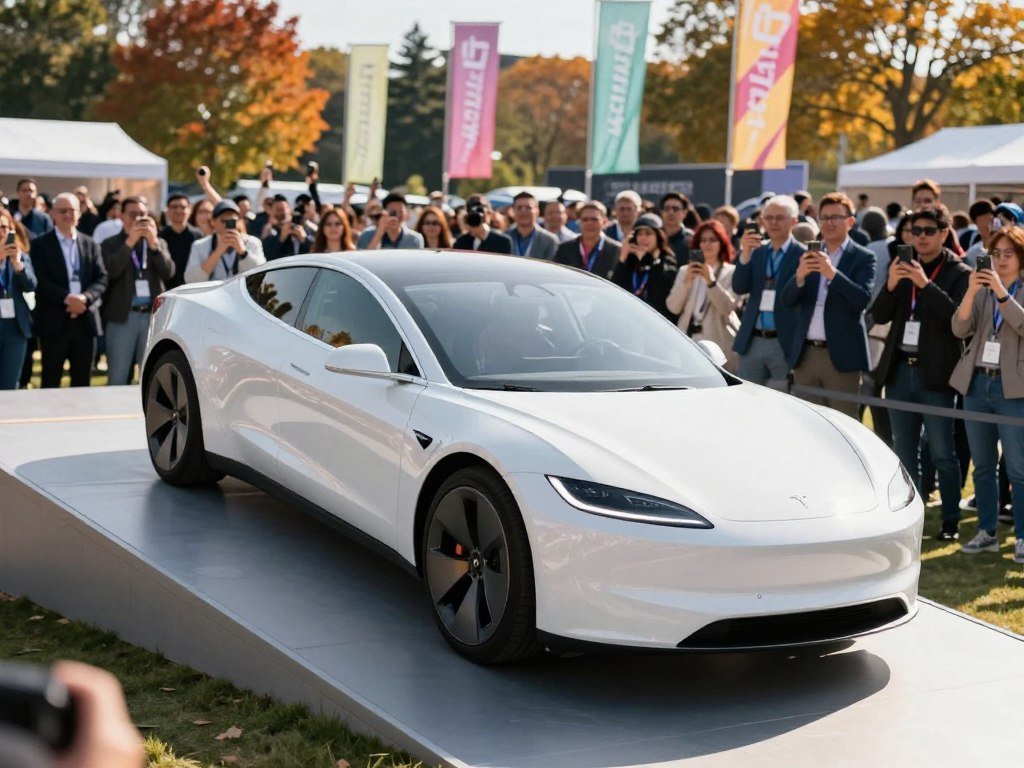
The date changed several times before the crowd saw the car. The announced schedule moved through these points:
- Late 2025
- April 1, 2026
- Late April
- May or June
- August
- October 1, moved to October 15
The display mixed car control with effects designed to show the vehicle’s unusual equipment. The Roadster climbed a curved ramp, ran upside down, flipped, hovered briefly, then landed. Those actions made for a vivid event, but they did not establish how a finished car would work in everyday use.
Reuters reported that Tesla set production for 2028 and treated the demonstration’s performance figures as company claims, not results from a delivered production car. Its report on the October reveal also described the production target.
Keep the acceleration result tied to Tesla’s timer rather than presenting it as an independently instrumented test.
The event showed what Tesla wanted viewers to see, not a full road test with published test conditions. Keep the acceleration result tied to Tesla’s timer rather than presenting it as an independently instrumented test.
How Did the Roadster Timeline Reach Its Latest Target?
The second-generation Roadster was first promoted in November 2017, with production initially promised for 2020. Its timeline has shifted several times, and each revised date was a plan rather than proof of a finished car.
Tesla’s first Roadster was based on the Lotus Elise. It was first delivered in 2008 and sold until 2012. The next-generation model arrived as a concept, with a much later production schedule than the company first suggested.
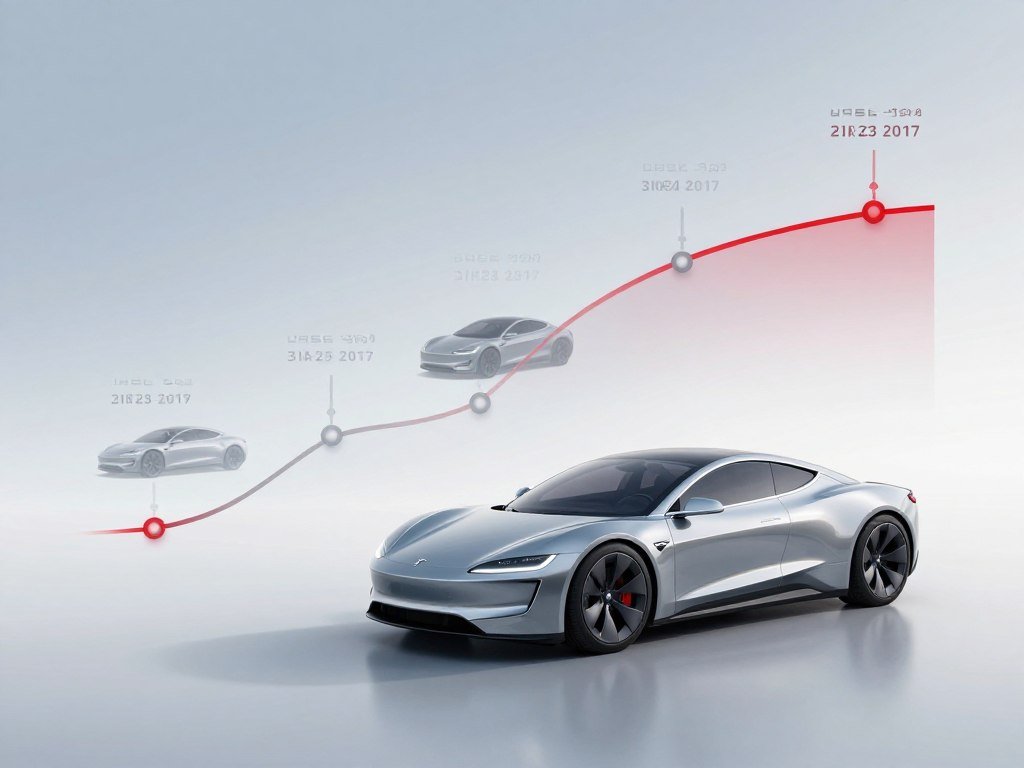
The 2022 Tesla Roadster production target was one point in the nine-year delay, while EV rivals in 2026 already include delivered cars. The target changed as follows:
| Date | Production plan |
|---|---|
| July 2020 | Target moved to 2021 |
| January 2021 | Target moved to 2022 |
| September 2021 and May 2023 | Target moved to 2023, then 2024 was called a hope, not a commitment |
| February 2024 and November 2025 | Target moved to 2025, then 2027 or 2028 |
The dates show why a production target needs careful reading. In May 2023, Musk said production would hopefully begin in 2024, while stressing that this was not a commitment. Later announcements moved the target again.
A date can help buyers understand Tesla’s current plan, but it cannot establish that production has started. A planned start, a completed vehicle, and a customer delivery are different milestones. The schedule’s repeated revisions are the reason to distinguish a target from a customer delivery.
What Price and Production Details Are Confirmed?
Tesla’s stated production target is 2028, while the price announced for the earlier Roadster is not a confirmed price for this version. The distinction is important because an old planned price cannot tell buyers what a finished car will cost.
Tesla announced no current production price at the October 2026 event. Its 2028 production target is a company plan, not evidence that production cars are ready or available to order.
What Tesla Listed for the Earlier Roadster
At the 2017 reveal, Tesla listed the earlier planned Roadster at $200,000. The Founders Series was listed at $250,000. Both figures belong to the offering discussed at that reveal, not to a confirmed current model price.
That older price information can still help explain the car’s history. It should not be treated as a current MSRP, an order quote, or a promise about the final vehicle. Tesla did not announce a replacement price during the October 2026 event.
What the Current Production Target Means
The 2028 production target gives buyers Tesla’s present schedule. It does not confirm a launch date, final specifications, or customer deliveries. A Tesla Roadster 9-year-delay EV rivals 2026 review should keep those separate from historic prices and prototype claims.
That separation matters when comparing a planned car with electric vehicles already sold to customers. A production target can change, while a listed price for an earlier planned version remains tied to that version and period.
Treat the $200,000 and $250,000 figures as historical planned prices, not a current order quote.
Which Roadster Performance Claims Still Need Production Proof?
The earlier concept’s four-seat layout and 620-mile range are historical claims, not a substitute for the redesigned car’s production specifications. Tesla also promoted a 0-60 mph time of 1.9 seconds for that concept, while a later base Roadster claim put power above 1,500 hp.
Those numbers describe claims tied to earlier versions or plans. They do not establish what a production vehicle can achieve under controlled conditions. Buyers need test results tied to a specific production version before treating a performance figure as verified.
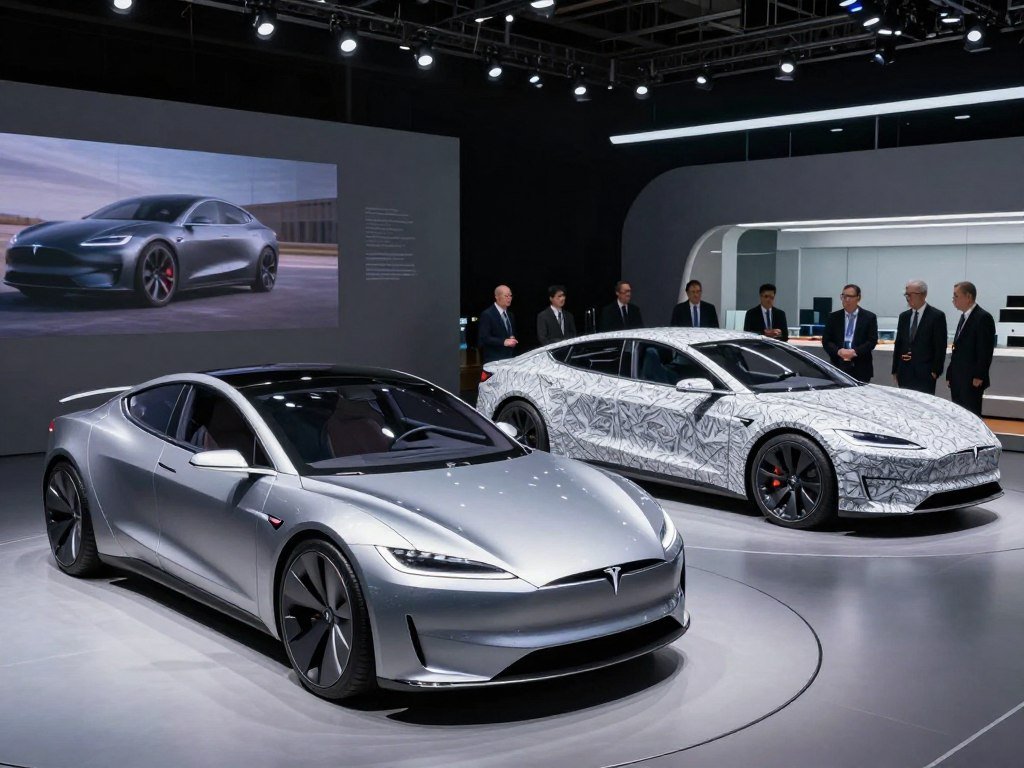
Earlier Performance and Range Figures
The four-seat layout and 620-mile range belonged to a prior concept. They were not range results from an independently tested production car. The same care applies to claims about speed, power, and acceleration.
A vehicle’s 0-60 mph time can depend on its tires, surface, temperature, battery state, and measurement method. Those details help explain why a number from a demo may not match a customer car. Buyers should look for the exact version and test setup.
What Production Testing Would Establish
A useful test report should make clear which car ran, how the result was timed, and what conditions shaped the run. A short checklist helps:
- Version tested
- Timing method
- Test conditions
Production status matters too. A prototype may differ from the car Tesla eventually sells, even when both carry the same model name. A claimed top speed or range becomes more meaningful when it comes from a finished vehicle tested in a clear, repeatable way.
That is why older numbers should stay attached to the version that carried them. A performance number is most useful when it identifies the exact version and the conditions under which it was measured.
How Do the Performance, Thrust, and Rocket Versions Differ?
Tesla lists three configurations, and their intended roles range from road-ready to race-ready to air-ready. The main difference is the hardware and intended use, not simply a faster figure on a spec sheet.
The Rocket is a specialized configuration, while Performance is listed as the road-ready version. Tesla describes the Roadster Rocket as having perimeter-mounted thrusters for forward and upward acceleration, plus lateral movement.
The listed seats and roles make the three versions easier to tell apart:
| Configuration | Seats | Listed role | Distinctive feature |
|---|---|---|---|
| Performance | Two | Road-ready | Conventional road-car configuration |
| Thrust | Two | Race-ready | Rear thrusters; under 0.9-second 0-60 mph listing |
| Rocket | One | Air-ready | Perimeter thrusters; under 0.59-second 0-60 mph listing |
Tesla lists the Performance configuration at 0-60 mph in under 1.6 seconds. It lists Thrust at under 0.9 seconds and Rocket at under 0.59 seconds. These are configuration claims, not matching results from production-car tests.
The Rocket’s air-ready label describes Tesla’s configuration, not a guarantee of practical flight. The listed information separates it from the two-seat Performance and Thrust versions. Buyers should compare the version name and its listed use, not assume every Roadster includes the Rocket hardware.
The listed Roadster configuration figures also show how Tesla assigns different roles to the three versions. Their names matter because the specialized equipment is not described as standard across the range.
What Do the Thrusters and Fan System Actually Do?
The Roadster’s two unusual systems solve different problems: thrusters create directional force, while fans create suction against a surface. A cold-gas thruster releases stored pressurized gas to push the vehicle without burning fuel, giving it a directional force.
The fan system is for suction and ground sealing, not airborne travel. Tesla says its multi-mode fan and ground-sealing system can hold the car upside down while stationary.
The Rocket’s perimeter-mounted thrusters are intended to support forward and upward acceleration, along with movement to the sides. Each direction of movement comes from thrust aimed to push the car that way.
That ability is different from sustained flight. A short push or a controlled lift does not show how a vehicle would stay airborne, steer, or travel over distance. The fan system also needs a surface to seal against, so its job differs from propulsion.
Fans and thrusters therefore serve separate roles. One system creates suction against a surface; the other releases gas to create force. Their presence does not make an ordinary road car a practical aircraft.
A stationary upside-down hold demonstrates suction and sealing, not the ability to travel through the air.
Can the Roadster Rocket Be Used on Public Roads?
No: Tesla says the Roadster is not approved for public-road use. That rule applies to the vehicle, while the Rocket’s availability limits are a separate matter.
Tesla describes the Roadster Rocket as invite-only and unavailable in all regions. Those limits describe who may access the configuration and where it is offered. They do not grant public-road approval.
The October demonstration took place at a SpaceX test site, not on a public street. A controlled stunt setting does not establish that the car meets rules for road use. It also does not show that every region allows the same vehicle configuration.
Buyers should separate a vehicle’s availability from its legal use. Invite-only access is not a road permit, and a demonstration is not evidence of approval by a local authority.
Tesla’s restriction concerns public-road approval, while regional availability can differ for the Rocket. Neither condition should be read as proof of the other. Check the intended configuration’s stated use and local availability separately from its performance claims.
Tesla Roadster 9 Year Delay EV Rivals 2026: How Do the Specifications Compare?
The Roadster’s listed Performance acceleration is quicker than the Nevera and Air Sapphire figures, but the cars’ range figures use different labels and test bases. Tesla’s numbers are listed claims, while the rivals’ ranges below are EPA estimates.
The three cars do not share one test basis, so the table compares published figures rather than equal-condition results. Tesla lists more than 230 mph top speed and more than 300 miles of range for the Roadster.
| Model | 0-60 mph | Top speed | Range |
|---|---|---|---|
| Tesla Roadster Performance | Under 1.6 seconds | More than 230 mph | More than 300 miles |
| 2026 Rimac Nevera | 1.85 seconds | 258 mph claimed | 174 miles EPA-estimated |
| 2027 Lucid Air Sapphire | 1.89 seconds | 205 mph | 427 miles EPA-estimated |
The 2026 Rimac Nevera has an estimated MSRP of $2.2 million to $3 million. Its claimed top speed is 258 mph, and its EPA-estimated range is 174 miles.
The 2027 Lucid Air Sapphire is listed at $249,000 fully equipped. Its three-motor powertrain produces 1,234 hp, with an EPA-estimated range of 427 miles. The Lucid Air Sapphire specifications give buyers a delivered-car comparison with a stated price and powertrain.
A comparison of the Tesla Roadster’s nine-year delay and 2026 EV rivals’ specs should distinguish Tesla’s listed claims from rivals’ EPA-estimated range figures. Read the table as a comparison of published specifications, not as a same-condition instrumented test.
How Has the Rimac Nevera Moved From Specs to Deliveries?
The Nevera makes the comparison concrete because production-spec cars reached customers before the Roadster did. Rimac limited production to 150 vehicles, giving its performance claims a customer-car record behind them.
Rimac delivered its first production-spec Nevera in August 2022 and began U.S. customer deliveries in June 2023. Four electric motors, one at each wheel, produce 1,888 hp.
Nevera Production and Customer Deliveries
A customer delivery shows that a production version exists outside a test site or display event. It does not prove every performance claim under every condition, but it gives buyers evidence of an actual finished vehicle.
The Nevera’s milestones and key attributes include:
- Production limited to 150 vehicles
- First production-spec delivery in August 2022
- U.S. customer deliveries began in June 2023
- The Nevera R reached 0-60 mph in 1.74 seconds in 2025
What the Nevera R Adds
The Nevera R is a distinct version, so its acceleration result should not be attached to the standard Nevera. The standard car’s listed time and the R’s 2025 result describe different versions.
Actual deliveries offer a different kind of evidence from a demonstration. A customer can take delivery of a production-spec vehicle, while a prototype display mainly shows what a maker intends to build. Keep the Nevera R’s 1.74-second result attached to the R, not the standard Nevera.
What Does a Tesla Roadster Reservation Require?
A U.S. Roadster reservation reopened in 2026 requires $50,000 in two payments, not a single card charge. Tesla’s payment sequence starts with a $5,000 card payment, followed by a wire transfer.
The reservation is not final until the $45,000 wire transfer clears. Tesla describes the initial credit-card payment as fully refundable, but that description does not apply to the wire transfer.
The three steps are:
- Pay $5,000 by credit card.
- Send $45,000 by wire within 10 days.
- Wait for the wire to clear before treating the reservation as final.
The two payments have different methods and terms. Tesla states that the card payment is fully refundable. The wire transfer is part of completing the reservation, and its terms should be read separately.
After nine years of shifting plans, the reservation amount represents a substantial commitment before a production car reaches customers. It does not itself confirm a delivery date or establish the final production specifications.
The reservation payment terms state the timing and payment steps. Read the reservation terms for each payment separately before committing funds.
How Can Buyers Judge Whether Production Is Really Close?
A Roadster production announcement becomes more convincing when it is followed by a production car and customer deliveries. The October 15, 2026 event featured a prototype, so the next proof should come from concrete production milestones.
Look for final specifications, a firm start-of-production milestone, and customer deliveries. A new demonstration can show a prototype’s abilities, but it cannot replace evidence that cars are being built for buyers.
Tesla has missed every targeted delivery date for the next-generation Roadster since it began taking deposits in 2017. That history makes a new date less useful on its own than a clear sign that production has begun.
Buyers can judge future launch news by checking what changed since the last announcement. Final specifications would show what Tesla plans to sell, while a start-of-production milestone would show whether assembly has begun.
Customer deliveries would provide the clearest sign that the planned car has reached buyers. Until then, a prototype remains a development vehicle, and a date remains a target.
Treat a new date as a milestone to verify, not as proof that the car is ready to ship.
Conclusion
The Roadster is a bold bet, but the buyer’s decision depends on the car Tesla ultimately builds. The new Roadster’s performance ambitions are striking, yet claims from a demonstration do not carry the same weight as specifications from a delivered production car.
The practical choice is to compare the finished model with EVs buyers can already assess. Price, range, comfort, and intended use matter as much as a headline speed claim.
Wait for final production specifications, then compare them with personal budget and driving needs. Revisit the comparison when production specifications and customer deliveries make the decision concrete.
FAQ
Does the under-one-second Roadster demo time apply to every configuration?
No, Tesla’s under-one-second timer result came from the demonstration, not every configuration. Tesla lists Performance at under 1.6 seconds from 0-60 mph, Thrust at under 0.9 seconds, and Rocket at under 0.59 seconds. Those are separate listed figures, and they should not be mixed with the event result or treated as independently tested production-car times.
How much is due after the initial Roadster credit-card payment?
$45,000 is due by wire transfer within 10 days after the initial $5,000 card payment. Tesla says the reservation is not final until that wire transfer clears. The card payment and wire transfer are separate steps, so the first charge alone does not complete the reservation or secure a final delivery date.
Is the entire $50,000 Roadster reservation refundable?
No, Tesla describes only the $5,000 credit-card payment as fully refundable. The other $45,000 is sent by wire transfer to complete the reservation, and the stated refund description does not cover that payment. Buyers should read the terms for each payment separately before sending funds.
What did Tesla originally claim for the second-generation Roadster’s range?
Tesla promoted the earlier concept with a 620-mile range claim. That figure belongs to the prior concept, not a tested production car or confirmed range for the redesigned model. Tesla’s later listed range for the new Roadster is more than 300 miles, which remains a company specification rather than a delivered-car test result.
How does the Nevera R’s acceleration figure differ from the standard Nevera’s?
The Nevera R reached 0-60 mph in 1.74 seconds in 2025, while the 2026 standard Nevera is listed at 1.85 seconds. The R is a separate version, so its result should not be presented as the standard car’s time. Both figures describe published specifications, not a same-condition test against the Roadster.
How many people can ride in the Roadster Rocket?
The Roadster Rocket is listed as a one-seat configuration. Tesla lists the Performance and Thrust versions with two seats each. That seating difference matches the Rocket’s specialized air-ready role, but the label does not guarantee practical flight or public-road approval.