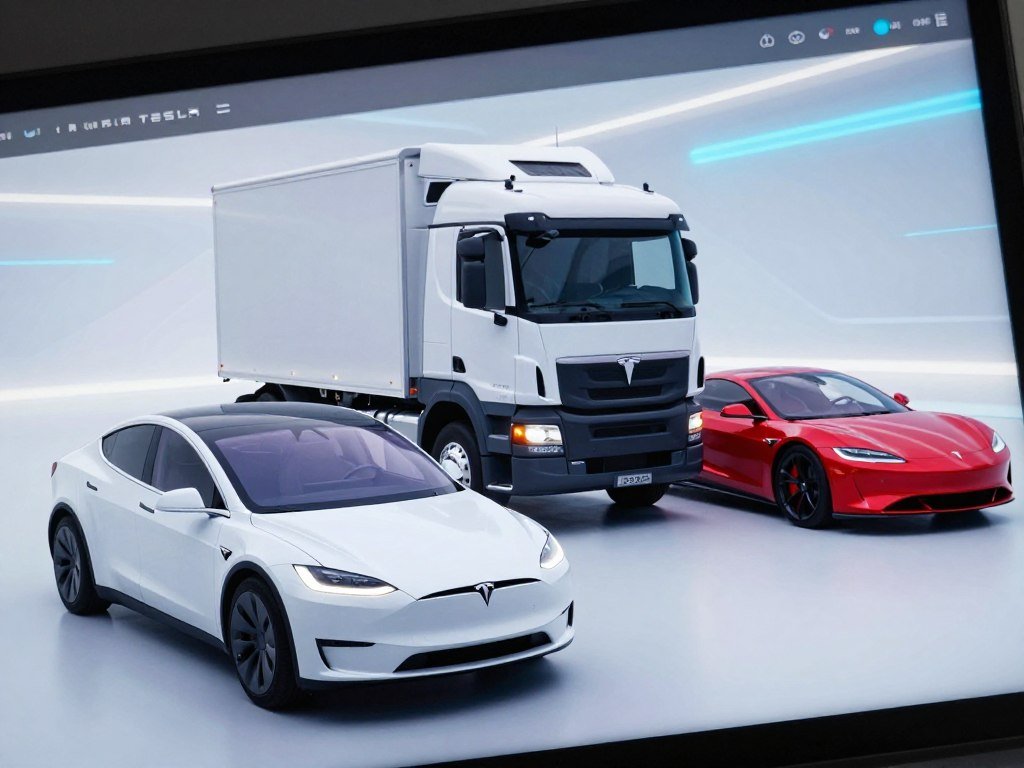
Tesla is bringing three very different vehicle bets into the same conversation: autonomous rides, freight and a high-performance sports car. Riders, fleet buyers and car enthusiasts need different facts to judge each one. A prominent website page can signal what the company wants visitors to notice, but it cannot show whether a service works across a whole city or a factory meets its goals. Unsupervised operation means driving without a human safety operator monitoring the vehicle from inside. Website prominence signals attention, not proof of readiness or scale.
The key question is what has started, what remains a plan and what Tesla has only announced. Those distinctions matter to a rider checking service, a business weighing a truck and a buyer considering a sports car. This technology news story separates Tesla’s mobility strategy from its public milestones, so readers can judge each program on its own terms.
Key Takeaways
- Tesla Robotaxi operates in limited areas of six Florida and Texas cities.
- The Robotaxi fleet includes Model Y and Cybercab vehicles.
- Tesla Semi has two rated ranges and began volume production in 2026.
- The second-generation Roadster has announced performance claims and reservation terms.
- Website placement does not prove production scale or service availability.
- Regulatory questions and operating milestones matter alongside product claims.
Treat a prominent page as a signal of attention, not as proof that a vehicle or service has reached its final scale.
What Does Tesla Website Robotaxi Semi Roadster Three Hardware Bets 2026 Mean?
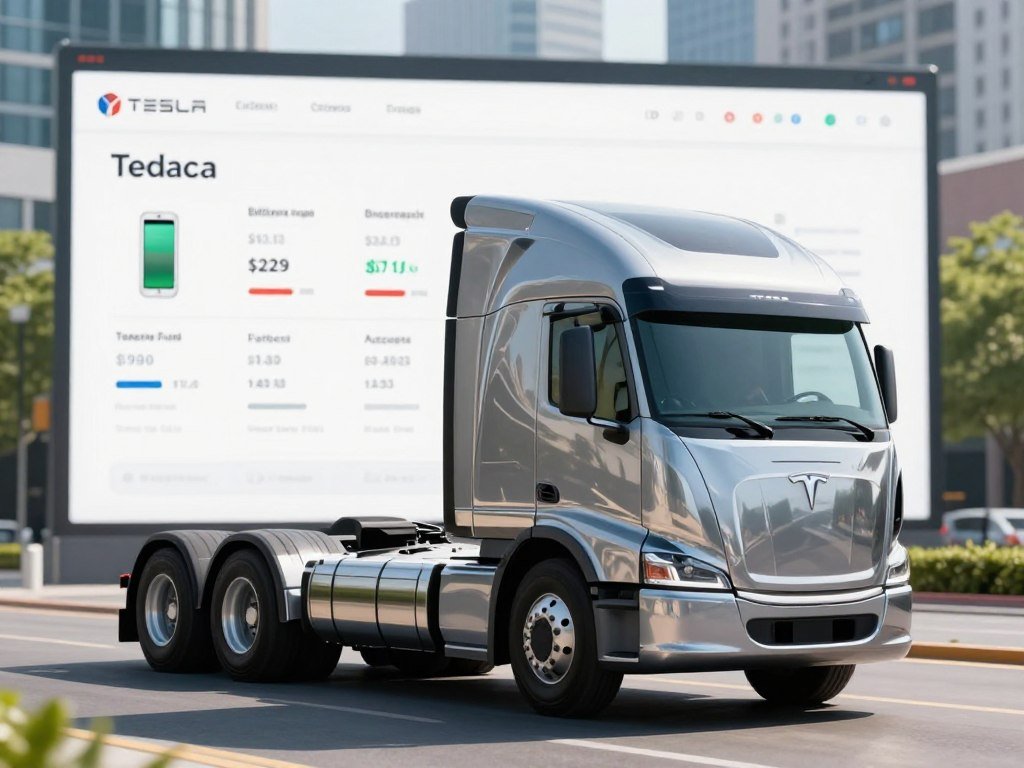
A service page and a truck page show two distinct customer paths on Tesla’s web presence. The official Tesla Robotaxi service page is titled “Robotaxi,” while its dedicated Tesla Semi page serves commercial truck shoppers. Different audiences need different product details, even when the same company sells or operates the vehicles.
The Semi page, located at /semi, launched on August 18, 2026. That date came before Tesla’s October 2026 Roadster reveal. A dedicated webpage tells visitors whom a product targets, but it does not prove production scale. A service page can explain how riders access an offering; a truck page can present a commercial product to fleet buyers.
Read the pages as product information, not as a substitute for delivery or service milestones.
That distinction helps explain why a polished page should not be confused with an operating fleet or a steady flow of delivered trucks. Website copy may describe a product’s intended use, while public service and production milestones show what has actually begun.
The pages also sit within a broader company presence that includes vehicles, energy products and Tesla accessories. Their position can draw attention to a business area, but page design alone does not confirm a formal strategy statement. Readers should look for clear announcements about what is offered, where it operates and when production begins.
A page can change while a product’s operating status stays the same. The service and truck pages therefore answer different questions from delivery reports, factory updates or service-area notices. Read the pages as product information, not as a substitute for delivery or service milestones.
Where Does Tesla Robotaxi Operate?
Tesla Robotaxi spans six named cities in Florida and Texas, but service runs only in limited areas. The city names identify markets, not blanket coverage of every neighborhood or address. Limited areas are the key condition for riders considering a trip.
Service is available in limited areas within each of these six cities:
Six named cities, with limited service areas
- Miami, Florida
- Orlando, Florida
- Tampa, Florida
- Austin, Texas
- Dallas, Texas
- Houston, Texas

A city listing does not mean the Robotaxi service reaches every part of its metro area. A pickup point outside the active service area may not be available, even when it uses a listed city name. Service coverage can also differ between addresses within the same city.
Model Y and Cybercab in the fleet
The Robotaxi fleet includes Model Y and Cybercab vehicles. These two models give riders a clear picture of which vehicles Tesla lists for the service, but they do not show how many of each operate locally.
A fleet name does not reveal its size, the mix of models in one city or which vehicle will serve a particular request. Those details matter because riders see a specific car only after a trip is matched. A listing of fleet models is not a count of vehicles or a promise about the next ride.
The same caution applies to service access: a listed city is not an address-level guarantee. A rider should confirm the pickup address in the service area before assuming a trip is available.
What Is the Cybercab Built to Do?
The Cybercab is designed around two passengers and a driverless layout rather than a conventional driver’s seat. It has no steering wheel, pedals, side mirrors or rear window. That unusual cabin reflects its intended role in autonomous ride-hailing.
The Cybercab uses a camera-only autonomous-driving system. It relies on cameras rather than a mix of cameras and other sensing hardware. That design choice is separate from whether the vehicle can handle every road situation without human oversight.
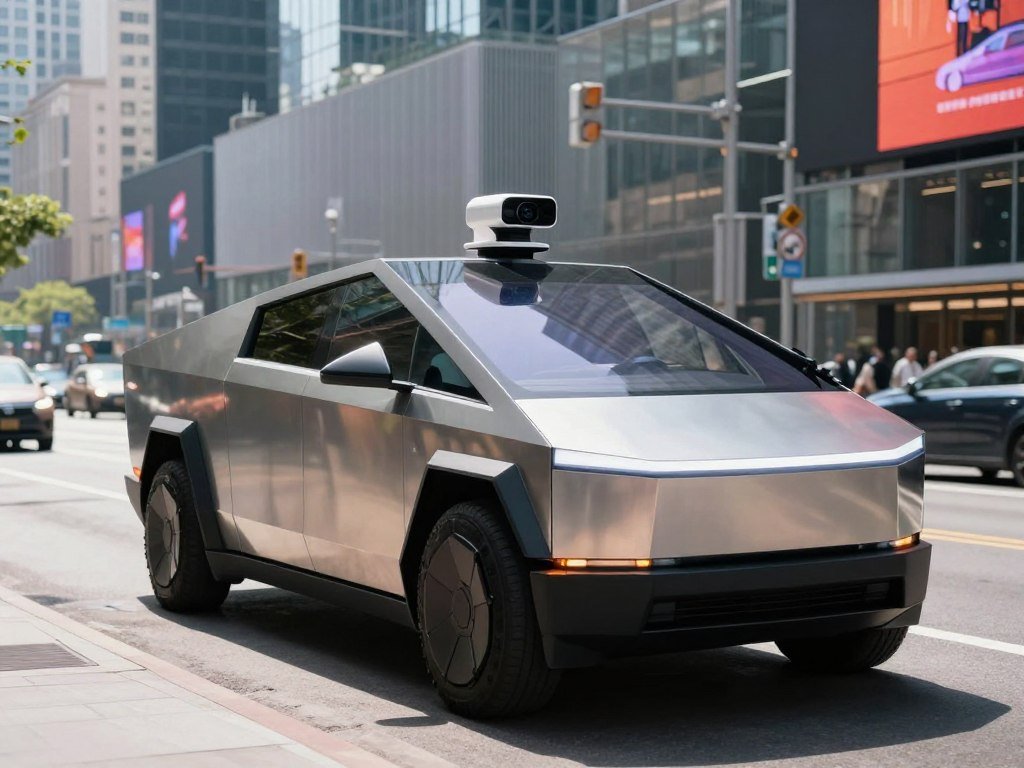
Its listed hardware figures include about 293 miles of range, 219 horsepower and a 47.6-kilowatt-hour battery. Those numbers describe the vehicle’s power and energy capacity, not a promise about real-world driving distance or passenger service.
EPA filing figures report 219 horsepower and a 47.6-kWh battery, with an estimated 292.7-mile range after an adjustment to the test figure. The EPA-based Cybercab specifications explain how that range estimate was derived.
A camera-only system still needs software to interpret what the cameras see and guide the vehicle. The cabin’s lack of conventional controls makes the autonomy system central to the intended design. A comfortable two-person layout does not by itself show how the vehicle handles complex traffic.
Keep the autonomy claim separate from the measurable hardware specifications when comparing the vehicle with other robotaxis.
What Can Fleet Operators Expect From the Tesla Semi?
The Tesla Semi comes in two rated-range versions, 325 miles and 500 miles. Both figures help fleet operators compare routes, but neither guarantees the same distance under every load or road condition. Route fit matters as much as the rating.
Rated range, payload and energy use
The truck can haul loads up to 45,000 pounds and has three electric motors. Tesla rates its energy use below 2 kilowatt-hours per mile. Those figures connect the Tesla Semi to freight work by pairing load capacity with a stated energy-use target.
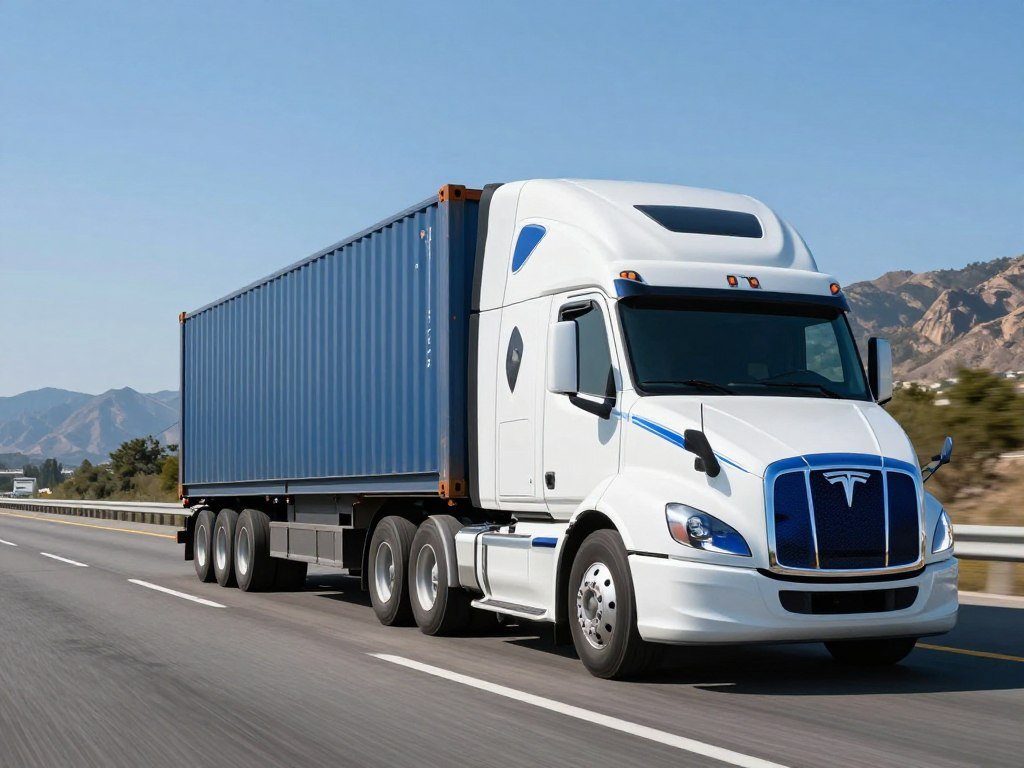
A 325-mile version may suit routes with shorter daily legs, while a 500-mile version offers a higher rated range. The best fit depends on route length, available charging stops and the load carried. Rated range is not a fixed promise for every shift.
Charging and planned production capacity
The Tesla Semi has a 1.2-megawatt charging system. That high-power setup is intended for commercial charging, where time spent waiting can affect a truck’s schedule. Charging speed in practice also depends on the site and charging conditions.
Tesla planned a facility adjacent to Gigafactory Nevada with annual capacity for 50,000 trucks. That number describes planned capacity, not actual yearly output. A factory’s stated capacity is different from trucks completed, delivered or put to work by fleet operators.
For buyers, a planned plant can signal an intended path to larger production, but its capacity should not be treated as a delivery count. Fleet operators must also match charging access to their routes. A truck’s rated range is useful only when the workday and charging plan fit together.
Fleet operators should match the range choice to route length, payload and charging access rather than treating rated range as a guarantee for every trip.
What Performance Did Tesla Announce for the Roadster?
Tesla’s headline figures for the redesigned Roadster are more than 300 miles of range and a top speed above 230 mph. Tesla also reported a 0-to-60-mph run in 0.81 seconds. The timing matters: the run was not independently timed.
Tesla’s 0.81-second result is a company-reported demonstration, not an independently verified time. The second-generation Roadster is a two-seat sports car with dual rear motors and rear-wheel drive. Its announced configurations have different access rules and road-use status.
| Configuration | Seats | Availability | Road-use status |
|---|---|---|---|
| Performance | Two | Available by reservation | Road-ready |
| Thrust | Two | Limited release | Race-ready |
| Rocket | One | Invite-only | Not approved for public-road use |
The table shows why the Roadster name does not point to one identical package for every buyer. Performance is the road-ready choice available by reservation. Thrust has a limited release and a race-ready label, while Rocket is invite-only and not approved for public-road use.
Those distinctions affect who can consider each version and where it can be driven. The performance figures describe Tesla’s announced claims, while the configuration details set different expectations for use. The Roadster is not simply one sports car with three interchangeable labels.
The configuration and road-use distinctions matter as much as the acceleration claims when judging which version is relevant to a buyer.
How Do Roadster Reservations Work?
A Roadster reservation starts with a refundable card payment and requires a second payment by wire within 10 days. The initial amount is $5,000, followed by a $45,000 wire transfer. The second step comes with a short deadline.
The Roadster reservation structure is $5,000 by credit card, then $45,000 by wire within 10 days. Tesla reopened reservations on October 15, 2026. These terms do not apply to Tesla Robotaxi or Tesla Semi, which serve different customers and do not share one price.
The initial $5,000 payment is refundable. The follow-up amount is due by wire transfer, rather than as another card payment. Tesla’s Roadster reservation terms describe that two-part payment process.
A reservation is a place in a process, not a delivered car. Paying the required amounts does not itself give the holder a delivery date or complete a vehicle purchase. A reservation holder should separate the payment commitment from any expectation about when a finished vehicle will arrive.
The timing of the transfer also matters. The 10-day period begins after the initial refundable credit-card payment, so the follow-up cannot be treated as an open-ended choice. Payment requirements are distinct from a production schedule and from a completed sale.
Read the payment deadline and refund conditions carefully before sending the follow-up transfer.
How Do the Three Products Serve Different Customers?
These three programs address riders, freight businesses and sports-car enthusiasts rather than one shared customer. Tesla Robotaxi is an operated ride-hailing service; Tesla Semi is a commercial truck; the second-generation Roadster is a sports car. Different users face different costs and choices.
The three products use distinct operating models, from booking a ride to running a freight fleet or reserving a car.
| Product | Immediate user | Operating model |
|---|---|---|
| Robotaxi | Riders using an operated ride-hailing service | Request and take a ride |
| Semi | Fleet operators using a commercial freight truck | Move freight in a business fleet |
| Roadster | Prospective reservation holders considering a sports car | Reserve a vehicle for personal use |
The Robotaxi model places the rider inside a service, rather than making every rider a vehicle owner. The Semi is aimed at businesses that manage freight and vehicles. Roadster reservation holders are considering a sports car, not a commercial vehicle or a ride service.
Tesla has targeted Cybercab operating costs below $0.30 per mile. That figure is a goal, not a demonstrated cost for every ride or market. Operating expenses can differ by location, fleet use and service needs.
Tesla has also explored selling Cybercabs to third-party fleet operators. That exploration does not establish general availability to outside companies or individual consumers. A vehicle sale would also differ from Tesla running a ride service itself.
A fleet operator should distinguish a target cost per mile from the cost of running a service in its own market.
Is Tesla a Good Stock to Buy in 2026?
Tesla had a Buy consensus among 26 analysts on October 28, 2026, but the ratings were not unanimous. Consensus is a snapshot, not a personal recommendation. The analyst price target was $429.69 on that date.
What the analyst snapshot says
The 26-analyst rating mix was 27% Strong Buy, 27% Buy, 38% Hold, 4% Sell and 4% Strong Sell. The $429.69 price target reflects analyst expectations at that time. A single target does not show what every analyst expects or what Tesla shares will do.
The ratings span positive, neutral and negative views. Investors can compare the snapshot with a broader guide to AI-related stocks, but Tesla’s rating does not settle whether its shares fit a specific portfolio.
What the snapshot cannot tell investors
Analyst ratings and price targets are opinions, not guarantees or recommendations for every reader. Forecasts depend on assumptions about the company and its market. A Buy consensus can coexist with meaningful uncertainty about sales, costs and execution.
Investors can assess the business through several separate checks:
- Delivery execution against company goals
- Expansion of the Robotaxi service
- Production progress across vehicle programs
- Assumptions behind analyst forecasts
A stock decision also depends on a person’s time horizon, ability to absorb losses and view of the wider market. A dated analyst consensus may help frame expectations, but it cannot replace a reader’s own assessment of risk. Broader stock research on growth and risk can add context without making a Tesla-specific choice for an investor.
Use the dated target as one input alongside personal risk tolerance and current company disclosures.
What Safety and Regulatory Questions Still Matter?
The Cybercab’s safety questions include both federal certification and what emergency crews can do with a stalled vehicle. NHTSA opened an audit of the Cybercab’s safety-standard self-certification on September 3, 2026. Certification evidence is part of the regulator’s review.
NHTSA issued a special order on September 10, 2026, after opening the audit. The order sought information about Tesla’s certification basis and technical evidence. The audit and order show that questions are under review, not that a final finding has been made.
The NHTSA special order asks how the vehicle addresses applicable safety standards and controls. It provides a concrete record of the regulator’s questions, while leaving the audit’s outcome unresolved.
Emergency response raises a separate practical issue. Austin firefighters said a stalled Cybercab can be moved using its touchscreen. That method matters when a vehicle has no conventional driver controls and crews need to clear a road or reach a safe location.
Readers can track four issues as the oversight and service questions develop:
- Evidence supporting safety-standard certification
- Emergency access and ways to move a stalled vehicle
- Operating limits for the autonomous system
- Public reporting about incidents
These are distinct questions: federal review concerns certification, while emergency access concerns what crews can do in the field. Separate the existence of an audit from any conclusion about its outcome.
When Will Each Program Reach Production or Public Service?
The three programs are at different stages: two had production milestones in 2026, while the Roadster production start is set for 2028. Cybercab production began in April 2026, and paid public rides began in Austin in September. Production and service are separate milestones.
A vehicle entering production does not mean public rides or customer deliveries have begun. Each program needs its own timeline because a factory milestone and an operating service measure different things.
| Program | Milestone | Timing |
|---|---|---|
| Cybercab | Production began; paid public rides began in Austin | April and September 2026 |
| Semi | Volume production began | April 29, 2026 |
| Roadster | Production is to begin, announced October 15 | 2028 |
The Cybercab has both a production milestone and paid public rides in Austin. Those dates mark different steps: building a vehicle is not the same as offering rides to paying passengers. Service availability also depends on where the ride can be taken.
The Semi reached volume production on April 29, 2026. That milestone concerns manufacturing, while fleet operators still need trucks to enter their own work plans. The Roadster’s 2028 production start is an announced future target, not a completed production milestone.
Announcements can set expectations, but a production date is not evidence that a later milestone has already happened. Buyers and operators can track what affects their plans, such as service access, truck rollout or a future car launch.
Track the milestone that matches your decision, whether that is a working ride service, a truck rollout or a future sports car.
What Website Changes Are Worth Watching?
Tesla’s website places the Roadster on the homepage and gives Robotaxi and Semi prominent navigation positions. That arrangement was in place as of October 25, 2026. Page placement can show what Tesla wants visitors to notice.
A homepage feature is not a production milestone. A prominent product page can tell visitors where to find information, while an operating update can establish that a service or factory step has occurred.
Treat a change in page placement as a signal to check, not a substitute for a dated operational update.
The distinction is useful when a homepage changes faster than a product’s real-world status. A new position may reflect a marketing choice or a fresh announcement; neither alone confirms delivery, wider service or production scale.
Readers can watch four parts of the site and company updates:
- Whether Tesla keeps the product pages prominent
- Whether service-area information changes
- Whether product milestones are updated
- Whether Tesla makes an explicit strategy statement
A change to a service map would have a direct meaning for riders, while a production update would matter to buyers and fleet operators. A strategy statement would offer a different kind of information from page layout. Readers looking for continuing technology and product updates can also choose topics through the newsletter signup.
Treat a change in page placement as a signal to check, not a substitute for a dated operational update.
Conclusion
Tesla’s three bets are easiest to assess when each is judged by the milestone that matters to its intended user. A rider needs evidence of usable service, while a freight buyer needs a truck rollout that fits its work. A sports-car reservation is a different commitment from either one.
For investors, an announced plan and a demonstrated operating milestone carry different weight. For fleet buyers, the next step is to compare the truck’s stated role with routes, charging access and business needs. That check is more useful than relying on a page’s visual prominence.
Before acting, compare the latest Tesla filings and operating updates with the specific milestone relevant to your decision.
FAQ
Can Tesla Robotaxi serve any address in its six operating cities?
No, Tesla Robotaxi serves only limited areas within Miami, Orlando, Tampa, Austin, Dallas and Houston. A city’s name does not mean that every neighborhood or address is covered. Pickup availability depends on whether the requested location falls inside the active service area. Riders should check that the exact pickup point is covered before planning around a trip.
How many passengers fit in a Cybercab?
The Cybercab is designed for two passengers. Its cabin layout centers on those two riders rather than a driver and a larger passenger group. That design aligns with the vehicle’s intended use in autonomous ride-hailing. The passenger count describes the planned seating layout, not the number of Cybercabs operating in a particular city.
Does the Cybercab have a steering wheel or pedals?
No, the Cybercab has neither a steering wheel nor pedals. Its design also lacks side mirrors and a rear window, which sets it apart from a conventional car. The vehicle uses a camera-only autonomous-driving system. That equipment and layout describe its design, but do not by themselves prove how it will perform in every road situation.
What does the Roadster reservation holder pay after the initial payment?
The reservation holder must send a $45,000 wire transfer within 10 days of the refundable $5,000 credit-card payment. The two payments are separate steps in Tesla’s reservation process. A reservation does not itself set a delivery date or complete a vehicle purchase. The deadline applies to the follow-up transfer, so holders should understand the terms before proceeding.
Was the Roadster’s 0-60 mph run independently timed?
No, Tesla reported a 0.81-second 0-to-60-mph run that was not independently timed. The result is a company-reported demonstration, not an independent test result. Tesla also announced more than 300 miles of range and a top speed above 230 mph. Those claims should be kept distinct from independently measured performance.
Can the Roadster Rocket configuration be used on public roads?
No, the Rocket configuration is not approved for public-road use and is invite-only. Its status differs from Performance, which Tesla lists as road-ready and available by reservation, and Thrust, which is described as race-ready. The three names therefore do not represent identical versions with the same access or legal use.
Is the Cybercab available for individual buyers?
Tesla has explored selling Cybercabs to third-party fleet operators, but that does not establish general consumer availability. The company’s Robotaxi service is an operated ride-hailing model, which is different from selling a vehicle to an individual. A plan to explore fleet sales should not be read as an offer for personal purchase.