
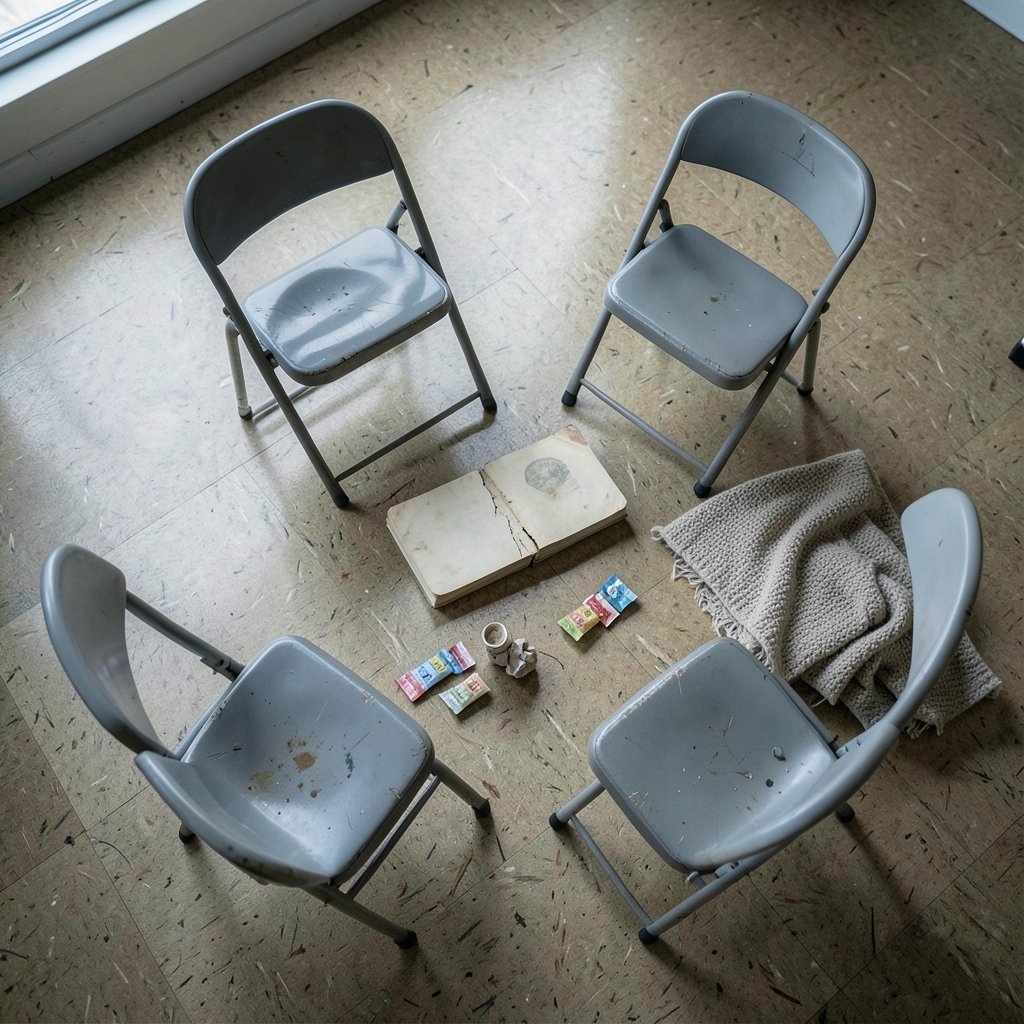
What would you say if someone asked you to hand over the steering wheel of your life, not knowing who would take it? That is the uncomfortable, honest question the Third Step Prayer raises. It is one of the most quoted passages in recovery literature. It is short. It is strange. And for many people sitting in a folding chair at their first Alcoholics Anonymous meeting, it is the moment the program stops being abstract and gets very personal.
This article breaks down what the prayer actually says, where it comes from, what each line is asking, and how people use it in real life. It also covers the objections, because plenty of sober people have them.
What Is the Third Step Prayer?
The Third Step Prayer is a short passage that appears in Chapter 5 of Alcoholics Anonymous, the book members call the Big Book, first published in 1939. It is read after a person takes Step Three, which reads: “Made a decision to turn our will and our lives over to the care of God as we understood Him.”
The prayer itself opens with “God, I offer myself to Thee—to build with me and to do with me as Thou wilt.” From there it asks for release from the bondage of self, for removal of difficulties so the person can better do the work in front of them, and for the willingness to do whatever is asked. It closes with a request to always win when faced with temptation and to be given freedom from self-will.
That is the whole thing. Roughly 100 words. No ritual, no special posture, no membership card required.
The prayer is generally attributed to AA co-founder Bill Wilson, who wrote the book’s early chapters. It sits alongside the Seventh and Eleventh Step prayers as one of the program’s three best-known prayers, and it is tied specifically to the word “decision” in Step Three. The Steps themselves are described in AA literature as suggestions rather than requirements, which matters more than it might seem at first glance.
Where the Prayer Comes From and Why That Matters

Context changes how you read a text. The Third Step Prayer was written for people who had already tried and failed to control their drinking through willpower. That is the audience. It was not written as a theological statement for general consumption.
The prayer’s placement is deliberate. Steps One and Two are about admitting powerlessness and coming to believe that help is possible. Step Three is the pivot, the first action step, and the prayer is the spoken form of that action. It is the moment a person stops describing their problem and starts describing their intention.
One thing worth knowing: the prayer’s wording has stayed stable across editions of the Big Book to the best of available knowledge, which is unusual for a text that has been reprinted for more than eight decades. Groups also read it aloud at meetings, often at the close of Step-study sessions, though practice varies by region and by group. There is no central rule about this.
Breaking Down the Prayer Line by Line
Reading the prayer slowly is a different experience from hearing it recited. Here is what each movement is actually asking for.
| Line or idea | Plain-language meaning |
|---|---|
| “I offer myself to Thee” | A voluntary handover, made without pressure |
| “To build with me and to do with me as Thou wilt” | Permission for a process the person does not control |
| “Relieve me of the bondage of self” | Asking to be freed from self-obsession and self-pity |
| “Take away my difficulties” | The request is for usefulness to others, not comfort |
| “May I do Thy will always” | A commitment to act on what is asked, rather than only feel it |
| “Victory over temptation” and “freedom from self-will” | Asking for steadiness when the urge returns |
Notice what the prayer does not ask for. It does not ask for a drink to be removed, for money, for health, or for happiness. That surprises people. The requests are all about character and usefulness. The difficulties are asked to be removed so the person can “bear witness” to others, which is a service-oriented request, not a comfort-oriented one.
Also notice the word “build.” It implies ongoing construction, not a finished product. Anyone who has watched someone rebuild a life after addiction knows that is the accurate word.
How People Actually Use It in Practice
In practice, the Third Step Prayer is used in about four ways. The first is the formal one: a person says it aloud with a sponsor or at a meeting after working through the first two steps.
The second is daily repetition. Some people say it every morning before checking their phone. The point is not magic; it is orientation. Starting the day with “relieve me of the bondage of self” tends to produce a different day than starting it with a scroll through notifications.
The third is in the moment of craving. A person who feels the pull toward a drink or a destructive decision can say it silently in a parking lot. It takes about 30 seconds. That is short enough to be realistic.
The fourth is written reflection. Some people journal one line at a time, asking what “bondage of self” looked like that week. This is where the prayer stops being words and becomes an inventory of behavior.
A practical tip that comes up again and again: do not wait until you feel sincere. Saying it flatly, while irritated, is still saying it. People who insist on perfect sincerity before they begin tend to never begin. The feeling often arrives after the action, not before.
A common mistake is treating the prayer as a transaction. Say the words, get the result. That is not how anyone who has worked the Steps describes it. The prayer is a statement of willingness, and willingness is the thing being practiced.
The God Question: “As We Understood Him”
This is where most objections live, and they deserve a fair hearing.
AA’s language is deliberately non-doctrinal. The phrase “God as we understood Him” appears in the Step itself, and AA literature states plainly that the Steps are suggested, not required. Members define their own Higher Power. For some, that is a traditional religious figure. For others, it is the group itself, nature, the universe, or simply the collective wisdom of people who got sober before them. Some members describe their Higher Power as “not me.”
The prayer’s language is theistic, and there is no way around that. Someone who is atheist or agnostic may find the “Thee” and “Thy” jarring. In practice, many such members rewrite the prayer in their own words or substitute “the group” or “my better self.” Others skip it entirely and focus on the underlying action: turning over control. The prayer is a tool, and tools can be adapted.
What the prayer is not: a requirement for membership, a test of belief, or a claim that one specific theology is correct. Anyone who presents it otherwise is adding something that is not in the text.
Common Misconceptions Worth Clearing Up
A few ideas circulate about the Third Step Prayer that do not hold up.
“You have to believe in God to use it.” Not according to AA’s own framing. The Steps are suggested, and the Higher Power is self-defined.
“Saying it once is enough.” Most people who work the Steps describe it as ongoing. Step Three is a decision that gets remade, sometimes daily.
“It removes the desire to drink.” It does not. It is not a treatment for withdrawal or a substitute for medical care. Anyone detoxing from alcohol should be under medical supervision, since alcohol withdrawal can be dangerous.
“It is only for alcoholics.” The prayer is used well beyond AA. People in other recovery programs, and people with no addiction at all, borrow it as a framework for getting out of their own head.
“It is a magic formula.” It is closer to a commitment device. It works the way a written goal works: not by itself, but by changing what a person pays attention to.
If you are working through the Steps and hit a technical snag with the tools around them, practical troubleshooting guides can help. For instance, if a meeting app or a recovery-related app keeps crashing on your phone, this walkthrough on how to boot android safe mode step by step fix crashing apps covers the fix. If unwanted calls from unknown numbers are interrupting your day, this guide to block spam calls android practical step by step guide walks through the settings. And if you are building a calmer, more private digital setup as part of a broader life overhaul, this plan for how to set up network segmentation practical step by step plan is a sensible starting point.
Does It Work? What the Evidence Suggests
Here is where honesty matters. There is no credible evidence that reciting any specific prayer produces sobriety. Anyone who tells you otherwise is overselling.
What does have support is the broader package: structured programs, social connection, accountability, and a sense of purpose. Twelve-step participation has been studied extensively, and the research generally points toward benefit for many people, though the mechanisms are debated and results vary widely by individual. Spirituality and meaning-making are recognized factors in recovery for a meaningful share of people, which is part of why the prayer resonates.
The prayer’s real function may be simpler than its reputation suggests. It interrupts rumination. It reframes a person as part of something larger than their own cravings. It provides a repeatable script for a moment when the mind is not producing good scripts on its own. Those are modest claims, and they are defensible ones.
It is also worth saying plainly: the prayer is not a substitute for professional care. Therapy, medical treatment, medication-assisted recovery, and peer support all have their place. The prayer is one tool in a toolbox, and a toolbox with one tool in it is not a toolbox.
Writing Your Own Version
Some people find the original language a barrier and write their own. This is more common than outsiders assume, and it follows the same logic as “God as we understood Him.”
A useful structure for a personal version keeps four elements: an opening handover, a request to be freed from self-focus, a request for usefulness to others, and a commitment to act. Keep it short enough to say from memory in a parking lot. That is the real test of whether a version will get used.
One warning from people who have done this: do not sand off the uncomfortable parts. The line about self-will is the one that stings, and it is also the one doing the work. A version that only asks for comfort is not really the same prayer.
Conclusion
The Third Step Prayer is 100 words of old-fashioned language that asks for something most people spend their lives avoiding: giving up control. It comes from a 1939 book written for people who had run out of other options, and it has been spoken aloud in church basements and community centers ever since. It is not magic, it is not required, and it is not a substitute for real treatment. What it is, for many people, is a daily reminder that the self is a poor manager and that asking for help is not weakness. Whether you say it exactly as written, rewrite it, or just borrow the idea of turning things over, the underlying move is the same. Hand over the wheel. See what happens next.
Frequently Asked Questions
What is the Third Step Prayer in full?
It begins “God, I offer myself to Thee—to build with me and to do with me as Thou wilt.” It goes on to ask for relief from the bondage of self, for difficulties to be removed so the person can better serve others, and for the willingness to do what is asked, ending with a request for victory over temptation and freedom from self-will. The full text appears in Chapter 5 of the book Alcoholics Anonymous.
Who wrote the Third Step Prayer?
It is generally attributed to AA co-founder Bill Wilson, who wrote the early chapters of the Big Book. A primary source confirming sole authorship has not been publicly verified, so it is fair to describe the attribution as widely accepted rather than proven.
Do you have to believe in God to say the Third Step Prayer?
No. AA’s own literature uses the phrase “God as we understood Him” and describes the Steps as suggestions rather than requirements. Members define their own Higher Power, and many atheist and agnostic members rewrite the prayer or focus on the underlying action of turning over control.
When is the Third Step Prayer said?
It is most commonly said after working through Steps One and Two, when a person formally takes Step Three with a sponsor or at a meeting. Many people also say it daily, or silently during a craving. Groups often read it aloud at the close of Step-study meetings, though practice varies by region.
Is the Third Step Prayer the same as the Serenity Prayer?
No, they are different texts. The Serenity Prayer is a separate short prayer widely used in recovery settings but not part of the Big Book’s Step instructions. The Third Step Prayer is specific to Step Three and appears in Chapter 5.
Does the Third Step Prayer actually help people stay sober?
There is no evidence that reciting a specific prayer causes sobriety. Research on twelve-step participation generally points toward benefit for many people, but the mechanisms are debated and results vary. The prayer is best understood as a commitment and reframing tool used alongside treatment, peer support, and accountability, not as a standalone cure.



