
What if the biggest tech stories of the week aren’t the ones making the most noise? That question matters more than usual right now. The news cycle is stuffed with product teasers, roadmap slides, and rumor threads, but only a handful of items will still shape buying decisions and engineering choices once 2027 arrives. The rest is filler.
This piece separates the two. It covers the 2027 stories with real substance: stacked transistors from IBM, Intel’s data-center bet, Bluetooth’s speed jump, Apple’s material U-turn, and the odd corners of the week that deserve a second look. Each one gets the same treatment: what was actually announced, what it means in practice, and what to watch next.
IBM’s Nanostack Node: Stacking Instead of Shrinking
The most technically important item of the week came from IBM, which announced a preliminary design kit for a “nanostack” technology it bills as a 0.7 nm node, or seven angstroms. The kit opens in early 2027. The premise is a genuine break from decades of habit: instead of chasing smaller transistors on a flat plane, IBM wants to stack them.
The history here is worth a sentence. The industry moved from planar transistors to FinFETs, then from FinFETs to nanosheets, and each step forced foundries and chip designers to rethink their work. The problem is simple arithmetic: floor space doesn’t grow. Stacking is one answer to that constraint.
What does this mean for anyone who doesn’t design silicon? A few practical things:
- Design kits drive timelines. When a kit lands, chip designers start prototyping, and products follow roughly two to three years later. Early 2027 kit access means real products are a late-decade story, not a 2027 one.
- “0.7 nm” is marketing as much as metrology. Node names stopped tracking physical dimensions years ago. Treat the number as a label for a generation, not a measurement.
- Stacking changes thermal math. Transistors piled on top of each other generate heat in tighter volumes. Cooling and packaging become the hard problems, not lithography alone.
The mistake people make with announcements like this is assuming a design kit equals a shipping product. It doesn’t. It equals a starting gun. If you follow semiconductor news closely, the useful skill is tracking kit dates, not node names.
Intel’s Diamond Rapids and the Hyperthreading Surprise
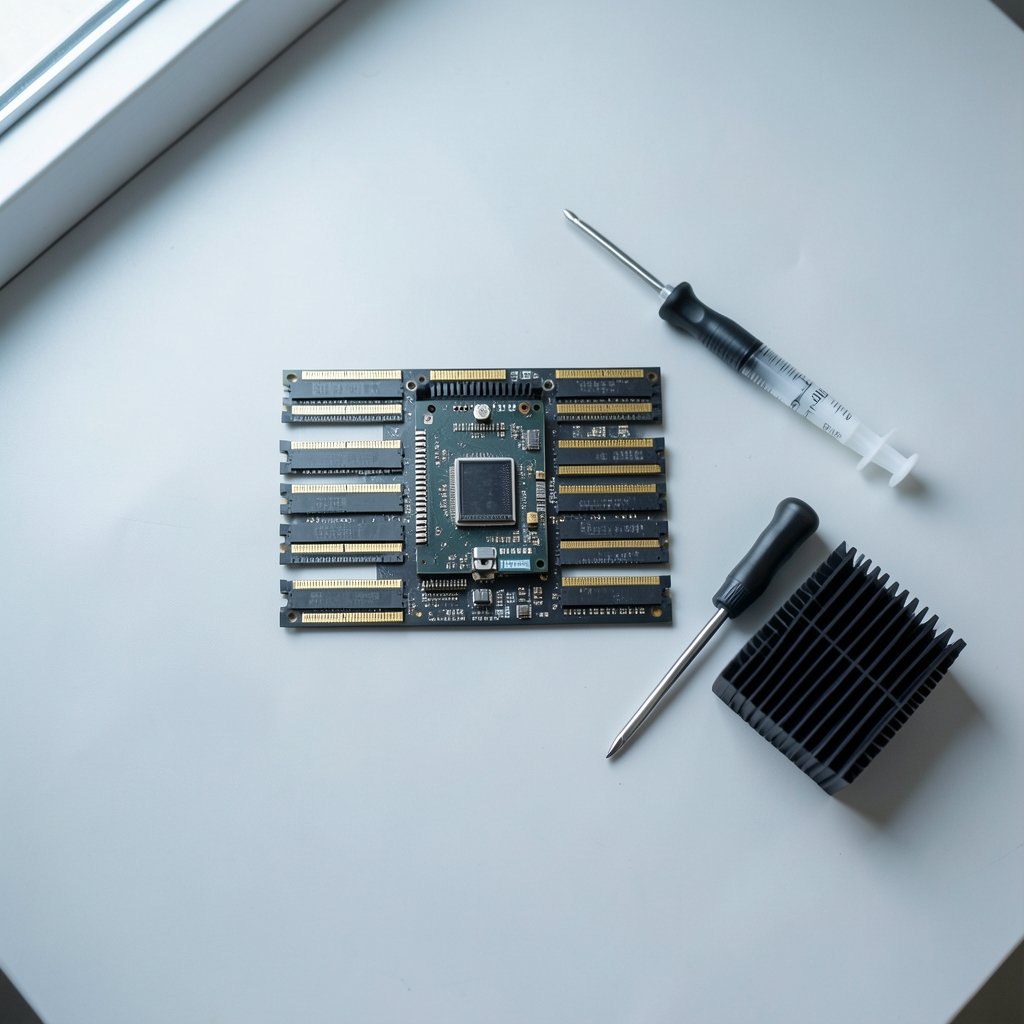
Intel confirmed Xeon 7 “Diamond Rapids” for 2027 on its 18A-P process, with up to 192 Panther Cove cores and 16-channel DDR5 support. That makes it a second consecutive data-center node built on Intel’s own foundry. The detail that raised eyebrows: Intel is retiring Hyperthreading on the P-core Xeon line for a single generation.
For server buyers, that combination cuts in two directions. More physical cores and more memory channels point toward higher throughput per socket. Losing simultaneous multithreading means the operating system sees one thread per core, which changes how workloads that lean on thread-level parallelism behave. Virtualization density planning, licensing math, and per-core software pricing all shift when thread counts change.
The practical advice for anyone planning 2027 infrastructure: don’t model Diamond Rapids as “more of the same, but faster.” Model it as a different core-count-to-thread-count ratio and re-run your capacity estimates. Teams that skip that step tend to discover the gap during a migration window, which is the worst possible time. If your architecture decisions span multiple languages and platforms, the same discipline applies to the broader r vs python 2027 architecture decisions that actually matter, where the tooling choice shapes long-term operating cost more than raw benchmark numbers do.
Bluetooth 7 Quadruples Speeds, and Audio Notices First
The Bluetooth Special Interest Group unveiled Bluetooth High Data Throughput, a flagship upgrade arriving as part of the Bluetooth Core 7.0 standard in 2027. The headline: speeds set to roughly quadruple, with audio called out as a primary beneficiary.
This is one of those quiet upgrades that changes daily experience more than spec sheets suggest. Faster throughput gives audio codecs more headroom, which means fewer compromises between latency and fidelity. For anyone who has fought with earbuds that drop sync during video playback, that headroom is the point.
Two cautions apply. First, standards arrive in phases: the spec lands, then chips ship, then devices appear, and the whole chain usually takes longer than the announcement implies. Second, both ends of a connection need the new hardware. A Core 7.0 phone paired with older earbuds will fall back to older behavior. Buyers who want the benefit should check both sides of the link, not only the device in the ad.
Apple’s Titanium U-Turn and the iPhone 20 Pro
Supply chain chatter reported this week points to titanium frames returning on the iPhone 20 Pro for Apple’s 2027 anniversary lineup, with the design borrowing from the slim iPhone Air but adding softer edges and quad-curved glass. Separate rumors describe displays around 6.41 inches and 6.96 inches with bezels near 1 mm.
The context makes this interesting. Apple made a point of titanium on the iPhone 15 Pro and 16 Pro, then switched to an aluminum unibody for the 17 Pro and kept that setup for the iPhone 18 Pro. The new reports frame aluminum as a short stopgap before titanium comes back.
How much should a buyer weigh this? Less than the rumor cycle suggests. Frame material affects weight, feel, and thermal behavior, but it rarely changes what a phone can do. The more consequential rumor in that report is the display sizing and the thinner bezels, because screen area and chassis dimensions are things users touch every day. The sensible approach is to treat material rumors as design signals and wait for announced specifications before planning an upgrade around them. If you’re mapping out a purchase or launch window, it helps to know where the calendar falls, and a look at the may 2027 calendar dates week numbers holidays that matter is a more reliable planning tool than a supply chain whisper.
The Restart, the Lawsuits, and the Bills
Three policy and infrastructure stories from the week deserve attention because they shape costs and access rather than headlines.
First, the Three Mile Island nuclear plant is set to restart a reactor in 2027 to help power Microsoft data centers. The plant was involved in a partial nuclear meltdown in the 1970s, which makes the restart a genuine milestone rather than a routine grid update. The underlying story is AI’s appetite for firm, always-on power, and how far operators will go to meet it.
Second, Meta won an AI copyright lawsuit against authors, a second legal victory for the AI industry in that dispute. Each ruling like this sets expectations for how training data gets treated, and those expectations eventually reach every company building on scraped or licensed material.
Third, a US bipartisan bill seeks to block Chinese AI systems from federal agencies. Procurement rules have a way of cascading into enterprise buying decisions, because vendors often build one compliance posture and apply it everywhere.
On the personnel side, Sam Altman acknowledged speaking with Microsoft’s Nadella about the future of their partnership after reported tensions between the firms. Partnership friction between a model developer and its largest backer is worth tracking, because it tends to show up later as pricing changes, exclusivity terms, or product splits that reach customers.
The SaaSpocalypse and What It Signals
A phrase circulating this week, “SaaSpocalypse,” describes an AI-driven selloff that wiped out billions in days as agents capable of performing complex tasks raised doubts about traditional software subscriptions. The logic is uncomfortable for anyone selling seats: if an agent can do the work of a subscription, the subscription’s pricing model has a problem.
The balanced read is that this is a repricing of expectations, not the end of software. Agents still need interfaces, permissions, audit trails, and someone accountable when they get things wrong. What changes is the unit of value. Per-seat pricing assumes humans occupy the seat. Agent-era pricing tends to move toward outcomes, usage, or work completed.
For buyers, that shift is leverage. Contracts up for renewal are the moment to ask what happens to pricing if half the work is automated. For builders, the lesson is blunter: if your product’s main function is moving data between screens, an agent is coming for that function. The 8 chatbot features that actually matter 2027 is a useful filter here, because it separates capabilities that hold up under agent pressure from features that were always decoration.
A Whistleblower, a Wind Turbine, and a Paint Flaw
Not every story that matters is a roadmap. Three smaller items earned their place this week.
An OpenAI whistleblower speaking on a podcast described the situation as “kind of on track for AI-2027,” while noting two surprises: government involvement arrived faster and more aggressively than expected, with export controls as the clearest example, and one lab’s trajectory diverged from predictions. Whistleblower accounts are testimony, not proof, but they’re a useful check on optimistic timelines.
A Danish startup called KiteX sold out its entire 2027 production run of the TWT-11, an anchor-based 5 kW wind turbine priced at 165,000 kroner, with roughly 100 pre-orders and spring 2027 delivery targeted for Denmark and northern Germany. It replaces concrete foundations with five screw-in anchors and a one-day install. The catch: IEC 61400 certification is still pending, so performance claims lack independent verification. Early adopters of uncertified hardware are effectively funding the test program.
And Microsoft Paint shipped a no-click security flaw that lets attackers inject malicious code without any user action, with reports that some PCs missed the patch. The practical takeaway is unglamorous and urgent: check update status on machines you’re responsible for, especially the ones nobody thinks about.
AI Hardware, AirPods With Cameras, and the Waiting Game
Two product categories spent the week in the “coming in 2027” bucket. OpenAI’s long-rumored AI hardware is reported to be on the horizon. AirPods with cameras were pushed to 2027 despite a demo video leak that had suggested a 2026 launch alongside the iPhone 18 Pro series. Those cameras reportedly won’t capture photos or video; they feed Siri and Visual Intelligence.
The pattern across both is identical, and it’s the most useful thing a reader can internalize from this week: leaked demos are not ship dates. A demo proves a concept works in controlled conditions. A launch requires manufacturing yield, battery life, privacy review, and app support. When a product slips a year, the slip usually reflects one of those four, not a marketing decision.
For gift planning, this matters. Anyone building a list around 2027 hardware should anchor on what ships now, and the cool tech gifts dad that he’ll actually use every week is a better starting point than a product that may slip again. The same logic applies to the best technology gift men actually gets used past week one: novelty fades, usefulness doesn’t.
How to Read a 2027 Roadmap Without Getting Fooled
The week’s stories share a structure, and once you see it, roadmap reading gets easier. Use this checklist:
- Find the date that has a mechanism behind it. A design kit opening, a certification filing, a production run selling out. These are commitments with consequences.
- Discount anything described as “expected” or “reportedly.” Rumors are inputs, not outputs.
- Check both ends of any standard. Bluetooth 7 needs new hardware on the phone and the earbuds.
- Separate the label from the measurement. A 0.7 nm node is a generation name.
- Ask who bears the risk. Uncertified turbines and unpatched software push risk onto the buyer.
Conclusion
The 2027 stories that actually matter share one trait: they change a constraint. IBM is attacking floor space by stacking. Intel is trading thread count for core count. Bluetooth is buying headroom for audio. Apple is cycling through materials while the display grows. Policy is reshaping power, data, and procurement. Everything else this week was noise with a press release attached.
The practical move is to pick two or three of these threads and follow them to their mechanism: the kit, the certification, the patch, the contract renewal. That’s where the real signal lives.
FAQ
What is IBM’s nanostack technology?
It’s a chip design approach that stacks transistors instead of only shrinking them. IBM calls it a 0.7 nm node and plans to open a preliminary design kit in early 2027.
Will Bluetooth 7 devices arrive in 2027?
The Bluetooth Core 7.0 standard with High Data Throughput is set to arrive in 2027. Actual devices depend on chip availability and require new hardware on both ends of a connection.
Is the iPhone 20 Pro confirmed to have a titanium frame?
No. Reports describe titanium frames in early engineering for the 2027 anniversary lineup, but these are supply chain rumors, not announced specifications.
What does Intel’s Hyperthreading removal mean for servers?
The Xeon 7 Diamond Rapids line reportedly drops Hyperthreading for one generation, so the operating system sees one thread per core. Capacity, licensing, and virtualization plans should be recalculated rather than carried over.
Why is Three Mile Island restarting in 2027?
A reactor at the plant is set to restart in 2027 to help power Microsoft data centers. The site was involved in a partial nuclear meltdown in the 1970s.
What is the SaaSpocalypse?
It’s a term for an AI-driven selloff that wiped out billions in days, driven by concern that AI agents performing complex tasks could make traditional software subscriptions obsolete.