

Could the loose change in your kitchen drawer be worth thousands of dollars? Every few months, a viral post promises that a “top 100 pennies worth money” list will turn spare change into a windfall. The truth is both more boring and more interesting. A small number of Lincoln cents really do sell for five and six figures. Most of the coins people hope are rare are worth exactly one cent. The gap between those two facts comes down to a handful of variables that collectors track obsessively: date, mint mark, die variety, and condition. (Best games nintendo switch 2 whats worth your time money)
This guide explains what actually separates a valuable penny from pocket change, which specific coins dominate serious want lists, and how to check a jar of coins without getting fooled by inflated online asking prices.
Why “Top 100” Lists Mislead More Than They Help
Search for valuable pennies and you will find dozens of numbered lists. Almost none of them agree with each other. That is not an accident. A “top 100” ranking depends entirely on which number you sort by, and the numbers are wildly different things:
| Value Type | What It Means | Why It Misleads |
|---|---|---|
| Catalog value | A guidebook’s estimate for a grade | Often a range, not a price anyone paid |
| Dealer asking price | What a seller hopes to get | Frequently 30-50% above what buyers pay |
| Auction realization | What a coin actually sold for | Depends on the specific coin and the day |
| Melt or face value | Metal content or spending power | Irrelevant for collectible cents |
A common copper cent in pristine mint state can outsell a genuinely rare cent that spent decades in circulation. Condition matters alongside rarity. Any list that ranks coins without stating the grade and the date of the price data is entertainment, not appraisal.
The Coins That Actually Anchor the Market
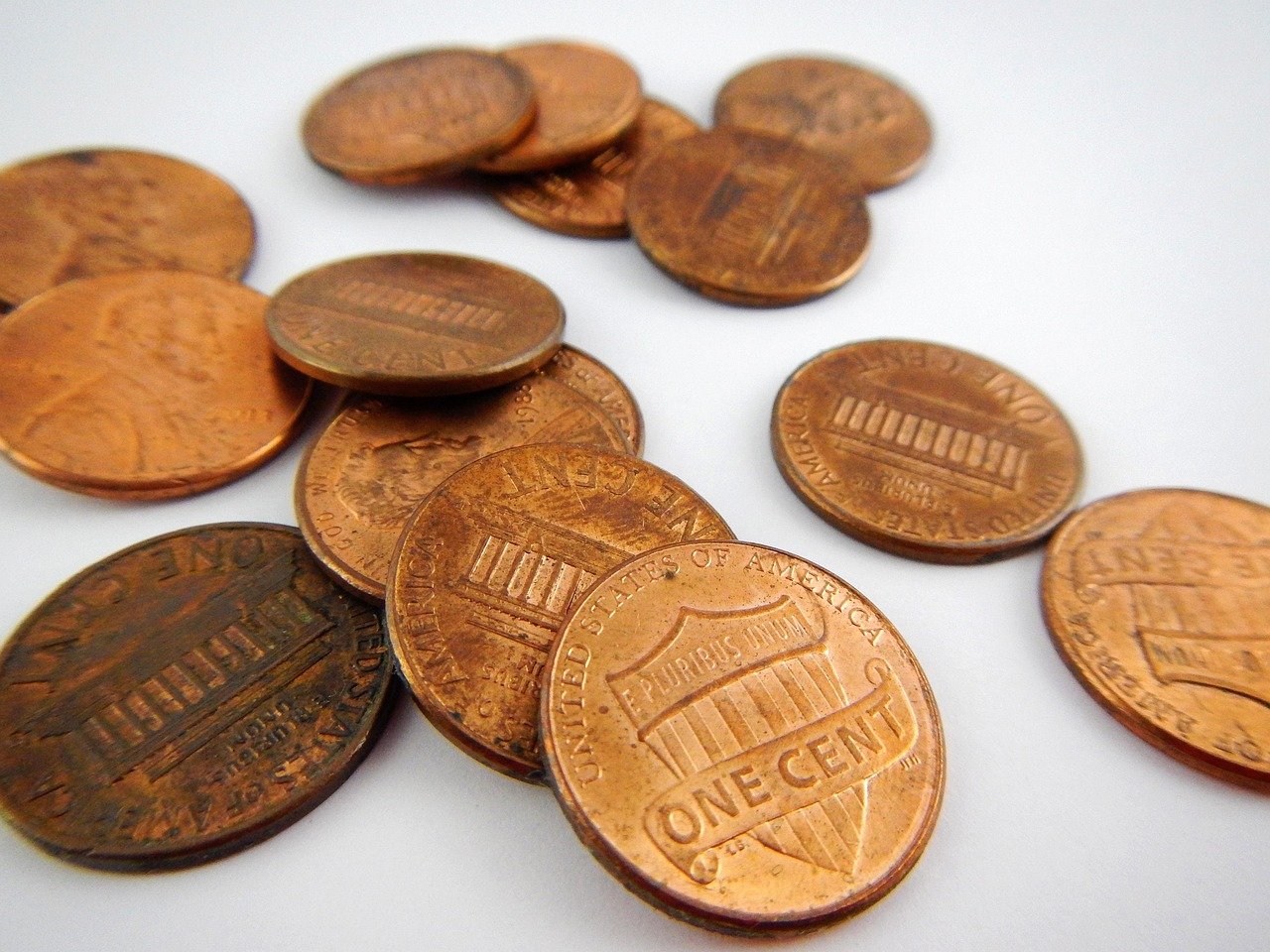
Strip away the clickbait and a consistent core of Lincoln cents shows up on every serious list. These are the coins dealers and auction houses argue about.
The 1909-S VDB
The most famous Lincoln cent. Designer Victor David Brenner’s initials appeared on the reverse, public outcry followed, and the Mint removed them. Only 484,000 were struck in San Francisco. Even heavily worn examples command four figures, and uncirculated pieces reach well into five figures.
The 1943 Bronze Cent
Wartime cents were supposed to be struck in zinc-coated steel. A tiny number were accidentally struck on leftover bronze planchets. These are among the most counterfeited coins in American numismatics, and authentication by a grading service is essentially mandatory before any sale.
The 1955 Doubled Die
A misaligned die created dramatic doubling on the date and the words “LIBERTY” and “IN GOD WE TRUST.” Roughly 20,000 to 24,000 were released into circulation, so worn examples turn up in estate jars more often than most people expect.
The 1877 Indian Head Cent
Not a Lincoln at all. Low mintage and heavy circulation wear make any 1877 Indian Head a desirable coin, and the series as a whole rewards anyone who learns its key dates.
The 1922 No D
A worn die erased the mint mark on some Denver cents, creating a variety collectors pay dearly for. It is a variety, not a date, which is exactly why variety knowledge matters more than memorizing a list.
The Variables That Decide Whether a Penny Is Worth $2 or $2,000
Four factors do almost all the work. Learn them and you can evaluate any coin yourself.
1. Mintage and Survival Rate
A low mintage helps, but survival is what really matters. Millions of 1909 VDB cents were saved as novelties, so they are common despite being old. Meanwhile, many 1931-S cents were melted during the Depression, making survivors scarcer than the mintage suggests.
2. Mint Mark
The letter under the date changes everything. Philadelphia cents carried no mint mark for most of the series, while Denver (D) and San Francisco (S) issues often have far lower production. A 1914 cent is a nice coin. A 1914-D is a major key date.
3. Grade and Condition
Grading runs on the Sheldon scale from 1 to 70. The jump from a grade of 65 to 67 can multiply a coin’s price several times over, because the population of top-grade survivors is tiny. This is why professional certification by a major grading service matters so much: an ungraded coin is a gamble, and buyers price that risk in. (Penny (United States coin)))
4. Variety and Errors
Doubled dies, repunched mint marks, and wrong-planchet errors create entire sub-markets. The hobby’s reference works catalog these varieties in detail, and specialist clubs maintain their own attribution guides for anyone who wants to go deep.
How to Check a Penny in Under Two Minutes
You do not need equipment to screen a coin. Follow this sequence:
- Flip the coin and read the date. Anything from 1909 to 1958 deserves a second look.
- Check for a mint mark directly below the date. No letter means Philadelphia.
- Look at the reverse for the letters VDB, just below the wheat stalks.
- Examine the date and lettering for doubling or odd thickness.
- Weigh the coin if you suspect a 1943 error. A bronze cent weighs noticeably more than a steel one.
- Set aside anything promising and do not clean it. Cleaning destroys value instantly.
That last point trips up more beginners than any other mistake. A scrubbed penny loses most of its collector premium, even if it looks better to an untrained eye.
Common Mistakes That Cost People Real Money
The most expensive error is not a rare coin. It is a bad decision made about a common one.
Cleaning a coin. Abrasive cleaning leaves hairlines that graders detect immediately. Never polish, never soak in vinegar, never scrub.
Trusting asking prices. A listing at $500 does not mean the coin sold for $500. Completed sales are the only honest benchmark.
Ignoring shipping and grading costs. Certification can cost more than a mid-grade coin is worth. Do the math before submitting anything.
Believing every “error” is valuable. Minor die cracks and slight misalignments are extremely common and add little or nothing.
Overlooking the rest of the collection. People hunting pennies often miss that the real money in an inherited box is sitting in the silver or the paper currency. If you are sorting an estate, it is worth understanding how scammers target people holding valuables, because the gift card scam playbook is exactly what fraudulent “buyers” use on inexperienced sellers.
If your sorting turns into a broader question of what to keep and what to sell, the same cost-benefit logic that applies to subscription services applies here: the best games on Nintendo Switch 2 guide is a useful model for thinking about value versus hype, and the same discipline helps when deciding whether a coin is worth grading. (Xbox game pass cost 2025 real prices whether its worth)
Where to Verify a Coin’s Value Before You Sell
Three sources matter, and they serve different purposes.
Price guides give you a baseline range by grade. They are estimates, not transactions.
Population reports from grading services show how many examples exist at each grade. A coin with only a dozen survivors at the top grade behaves very differently from one with thousands.
Auction archives show realized prices with dates attached. This is the closest thing to ground truth, and it is free to search.
Cross-reference all three. If a guide says $400, the population report shows hundreds of examples, and recent auctions closed at $150, believe the auctions.
What a Realistic Penny Collection Looks Like
Serious cent collectors rarely chase a “top 100” list. They build a date-and-mint-mark set, one coin per issue, and upgrade the keys over years. That approach has real advantages: it is structured, the reference literature is excellent, and every purchase has a clear place in the collection.
A practical starting framework:
- Common dates in circulated grades form the backbone and cost little.
- Semi-keys like the 1909-S, 1914-D, and 1931-S are the natural next targets.
- Major varieties such as the 1955 doubled die and 1922 No D are long-term goals.
- Top-grade registry coins are a different hobby entirely, with a different budget.
Budgeting for a collection works like any other financial goal. The zero-based budgeting versus net worth approach in the YNAB vs Monarch Money comparison is a surprisingly good mental model for collectors deciding whether to spend on one key date or spread money across many common ones.
The Practical Bottom Line on Penny Hunting
Pennies are the cheapest entry point in numismatics and one of the most rewarding, precisely because the series is so well documented. The coins worth real money are known, cataloged, and traded in public. That transparency cuts both ways: it means genuine finds are possible, and it means inflated claims are easy to check.
Sort with realistic expectations. Assume any promising coin needs authentication before it needs a buyer. Keep everything uncleaned. And treat viral lists as a starting point for research rather than a price sheet. The hobby rewards patience and knowledge far more than luck.
Frequently Asked Questions
Are there really 100 pennies worth over $1,000?
Not in the way viral posts imply. A few dozen Lincoln cent issues and major varieties routinely trade above $1,000 in high grades, but most of those same coins are worth a few dollars in worn condition. The number of coins that are valuable in any grade is much smaller than 100.
What is the single most valuable penny?
The 1943 bronze cent and the 1909-S VDB are the two names that come up most often, with exceptional specimens of either reaching six figures. Top-grade 1943 bronze cents are rarer, but the 1909-S VDB is more famous and more widely collected.
How can I tell if my 1943 penny is steel or bronze?
A bronze 1943 cent is copper-colored and weighs about 3.1 grams. A standard steel cent is gray, magnetic, and weighs about 2.7 grams. A magnet is the fastest test, but color plus weight is more reliable. Any suspected bronze example should be authenticated before sale.
Should I clean a dirty old penny before selling it?
No. Cleaning removes the original surface and leaves marks that graders detect easily. A cleaned coin can lose half its value or more. Rinse with distilled water at most, and leave everything else alone.
Does a mint mark really change a penny’s value that much?
Yes, often by a factor of ten or more. The 1914 Philadelphia cent is a modest coin. The 1914-D is a major key date. Always check the area directly below the date before assuming a coin is common.
Where should I look for accurate penny prices?
Use three sources together: a current price guide for ranges, grading-service population reports for rarity at each grade, and auction archives for actual realized prices with dates. If the three disagree, trust the auction records. For anyone building a broader collection, a tablet worth buying for beginners is a reasonable way to browse reference catalogs and auction archives without a laptop.
Conclusion
The phrase “top 100 pennies worth money” sells a fantasy, but the reality underneath is genuinely useful. A small set of dates, mint marks, and varieties carries almost all the value in the Lincoln cent series, and every one of them is documented in public references that cost nothing to check. The collectors who do well are not the ones who memorized a list. They are the ones who learned to read a date, spot a mint mark, respect original surfaces, and verify prices against completed sales instead of hopeful listings.
Start with a jar and a magnifying glass. Set aside anything old, anything with a mint mark, and anything that looks doubled. Do not clean a single coin. Then check the survivors against auction records before you get excited. Most will be worth a cent. A few might be worth a phone call to a grading service. And that possibility, however small, is exactly why people keep sorting.



