

What if the numbers on your wrist are telling you less than you think? Millions of people now wake up, tap their phone, and study a sleep score like it’s a stock price. They feel anxious when it drops and reassured when it climbs. Yet most of them have never checked whether that number means anything at all.
That’s the strange place sleep tracking sits in today. The tools have never been more available, and the science behind them has never been more nuanced. This guide cuts through the noise. It explains which methods hold up, which numbers deserve your attention, and how to build a routine that turns vague tiredness into something you can actually work with.
Why Track Sleep at All?
Sleep shapes memory, mood, immune function, and long-term heart health. But “I sleep badly” is too fuzzy to act on. A tracking habit gives that feeling structure. It answers specific questions: How long does it actually take you to fall asleep? Do you wake at 3 a.m. most nights? Does a late workout help or hurt?
The second reason is subtler. Sleep problems often hide in plain sight. People who wake briefly several times a night may not remember it. A written or digital record catches the pattern.
There’s a limit worth naming early. Tracking is a mirror, not a treatment. If the record shows something worrying, the next step is a professional, not a new gadget.
The Main Ways to Track Sleep, Ranked by Reliability
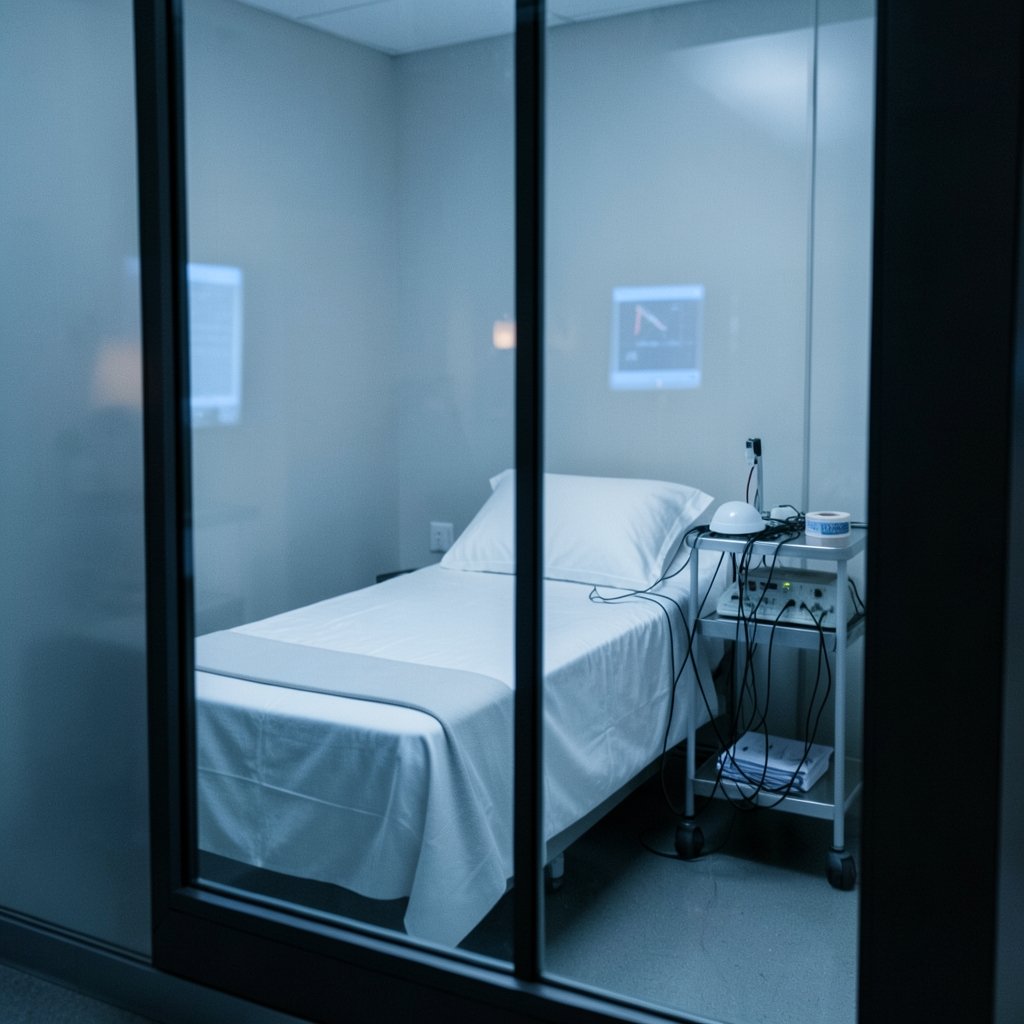
Not all tracking is created equal. Here’s how the common methods stack up.
| Method | What it measures | Strengths | Weaknesses |
|---|---|---|---|
| Polysomnography (PSG) | Brain waves, eye movement, muscle tone, breathing, oxygen | The clinical gold standard | Expensive, lab-based, one night only |
| Wrist actigraphy | Movement over days or weeks | Good for long-term patterns and clinical research | Infers sleep from stillness, not brain activity |
| Consumer wearables | Heart rate, movement, sometimes blood oxygen | Convenient, nightly data, trend-friendly | Weaker at detecting wakefulness and light sleep |
| Bedside phone apps | Sound and movement | Free, easy to start | Easily confused by partners, pets, and noise |
| Sleep diary | Your own reported times and feelings | Cheap, accurate for subjective experience | Depends on your memory and honesty |
The takeaway is simple. No single method is best. The strongest approach combines a subjective record with an objective one.
How Clinical Sleep Tracking Works
Laboratory sleep studies score sleep in 30-second blocks, labeling each one as wake, N1, N2, N3 (deep slow-wave sleep), or REM. That scoring framework comes from the AASM Manual for the Scoring of Sleep and Associated Events, the standard reference used by sleep clinicians. The manual has been revised repeatedly since its first edition in 2007, so the exact rules shift over time. (Sleep)
This matters for one reason. When a consumer device says you got “42 minutes of deep sleep,” it is guessing at a category defined by brain-wave patterns it cannot see. The guess may be reasonable, but it is a guess.
What Wearables Get Right and Wrong
Validation research generally finds that consumer wearables estimate total sleep time fairly well. They struggle more with wake after sleep onset and with telling light sleep apart from REM. A widely cited 2017 validation study by de Zambotti and colleagues in the journal Sleep Health found that many devices tended to overestimate sleep and underestimate wakefulness. (Sleep)
Practical translation: trust the big picture, mistrust the fine detail. A device that says you averaged seven hours across two weeks is probably close. A device that says you got exactly 18 minutes of REM is not giving you a precise measurement.
One more trap. Proprietary sleep scores are not standardized between brands. A score of 80 on one platform means nothing on another. Comparing them is like comparing two restaurants’ “spicy” ratings.
Building a Tracking Routine That Sticks
The best tracking setup is the one you’ll still be using in three weeks. Here’s a sequence that works.
- Start with a two-week sleep diary. Record bedtime, wake time, estimated time to fall asleep, and any night wakings. Note how you felt in the morning on a simple scale.
- Add one objective source. A wearable or a bedside app is fine. Don’t add both at first.
- Log the context alongside the numbers. Caffeine after 2 p.m., alcohol, late screens, stressful days, exercise timing. Without context, the data is just noise.
- Review weekly, not nightly. Patterns emerge over days. Obsessing over a single bad night creates anxiety, which worsens sleep.
- Change one variable at a time. If you want to test whether a cooler bedroom helps, change only that for a week.
Common mistake: checking the score at 3 a.m. during a wake-up. It spikes anxiety and makes falling back asleep harder. Turn the phone face down.
Another common mistake: buying a premium device before establishing any baseline. A free diary for two weeks tells you more than a $300 ring in week one.
The Metrics Worth Watching
Four numbers carry most of the signal, and all four come from standard diary and actigraphy practice.
- Sleep duration: total time asleep.
- Sleep efficiency: time asleep divided by time in bed. Under about 85 percent is often worth investigating.
- Sleep onset latency: how long it takes to fall asleep.
- Wake after sleep onset: total minutes awake during the night.
If you want a fifth, track consistency. A steady bedtime often matters more than a perfect duration. (Margo needs money phrase stumps searchers track it down)
How to Read Your Data Without Obsessing
Here’s where most tracking efforts go wrong. People collect data and then do nothing with it, or they collect data and panic about it.
Use a simple three-question filter each week. First, is there a pattern? Three nights of late bedtimes followed by poor mornings is a pattern. One rough Tuesday is not. Second, is there a lever? If late caffeine shows up before every bad night, you have something to change. Third, is the trend improving over a month? Trends beat single nights.
It helps to think of tracking as a diagnostic loop rather than a performance review. If you also follow metrics elsewhere in your life, the approach is familiar. Teams tracking multi cloud metrics across AWS, Azure, and Google Cloud use the same discipline here: choose a few useful indicators, watch them over time, and ignore vanity numbers.
There is also a real phenomenon called orthosomnia, where the pursuit of perfect sleep data itself causes insomnia. If checking the app makes you dread bedtime, the app is the problem. Take a two-week break from the device and keep only the paper diary.
When Tracking Points to Something Bigger
Some patterns deserve a doctor’s attention, not a better gadget.
Loud snoring with pauses in breathing, morning headaches, and daytime sleepiness together suggest sleep apnea. Insomnia that persists for more than three months despite good habits is worth a clinical conversation. So is falling asleep during the day despite adequate time in bed.
Regulatory status matters here too. In the United States, most consumer sleep trackers are not cleared as diagnostic devices, though some specific features, such as sleep apnea detection, have received clearance in recent years. A tracker can flag a concern. It cannot diagnose one.
If scents and wind-down routines are part of your evening experiment, it’s worth knowing what the research actually supports. A look at essential oils for sleep and what the evidence shows can save you money on remedies that don’t deliver.
Tools and Habits That Support Better Data
The setting shapes the numbers as much as the device does. A few practical adjustments make tracking more useful.
Keep the bedroom cool, dark, and quiet. If you use an air purifier, placement matters more than people expect, and a guide to where to place an air purifier in a bedroom for cleaner air while you sleep covers the practical details.
For travelers and campers, comfort is a variable too. A rundown of the best camping pillows for 2026 explains why neck support changes how quickly people fall asleep outdoors.
And if you rely on a laptop dock at a desk, you may have noticed that a laptop dock’s ethernet disconnecting after sleep is a fixable annoyance rather than a mystery. Small technical frustrations have a way of bleeding into bedtime routines.
A Realistic Weekly Review Template
Fifteen minutes once a week is enough. Sit down with your diary and device data and answer five questions in writing.
- What was my average sleep duration this week?
- What was my average sleep efficiency?
- Which nights were worst, and what was different about them?
- What is one thing I’ll change next week?
- Did tracking make me feel calmer or more anxious?
That last question is not a joke. It’s the single best test of whether your tracking habit is helping.
Conclusion
Learning how to track sleep well is less about the device and more about the questions you ask. Start with a two-week diary. Add one objective source. Watch four core metrics. Review weekly, change one variable at a time, and treat the whole exercise as a diagnostic loop rather than a scoreboard. The tools are useful, but they’re only as good as the habits around them. And if the data ever starts making sleep harder instead of easier, put the tracker down. That’s not failure. That’s reading the signal correctly.
Frequently Asked Questions
How accurate are wearable sleep trackers?
They’re reasonably good at estimating total sleep time and spotting broad trends across weeks. They’re weaker at detecting wakefulness during the night and at separating light sleep from REM. Treat the big picture as useful and the fine detail as approximate.
Is a sleep diary really necessary if I have a smartwatch?
Yes, and it’s the cheapest upgrade you can make. A diary captures how you felt, what you consumed, and what stressed you out, none of which a device records. Pairing the two gives context to the numbers.
What is a good sleep efficiency score?
Sleep efficiency is time asleep divided by time in bed. Many sleep clinicians look for roughly 85 percent or higher as a healthy target, though individual needs vary. Consistently lower numbers are worth discussing with a professional.
Can tracking sleep make insomnia worse?
It can. The pursuit of perfect sleep data has been linked to a phenomenon called orthosomnia, where anxiety about the numbers disrupts sleep itself. If checking your app makes bedtime stressful, take a break from the device and keep a paper diary instead.
How long should I track before drawing conclusions?
Two weeks is the usual minimum for spotting patterns, and a month is better. Single nights are noisy. Weekly averages and month-long trends are where the real signal lives.
Do I need a lab sleep study?
Only if there’s a clinical reason. Loud snoring with breathing pauses, persistent daytime sleepiness despite adequate time in bed, or insomnia lasting more than three months are all good reasons to ask a doctor. Consumer trackers can flag concerns but cannot diagnose them.
One last practical note: back up your data. Most apps store history only in their own cloud, and switching phones or brands can wipe months of baseline. Export a CSV monthly, or keep your paper diary as the master record. Consistency of method matters more than the sophistication of the tool, so if you change devices, overlap them for a week to keep the trend line unbroken. And revisit your setup each season; lighter mornings and warmer rooms shift sleep timing, and a routine built in winter may need small adjustments by summer. With that, you have everything needed to track sleep sensibly, learn from it, and know when to stop measuring and simply rest.



