
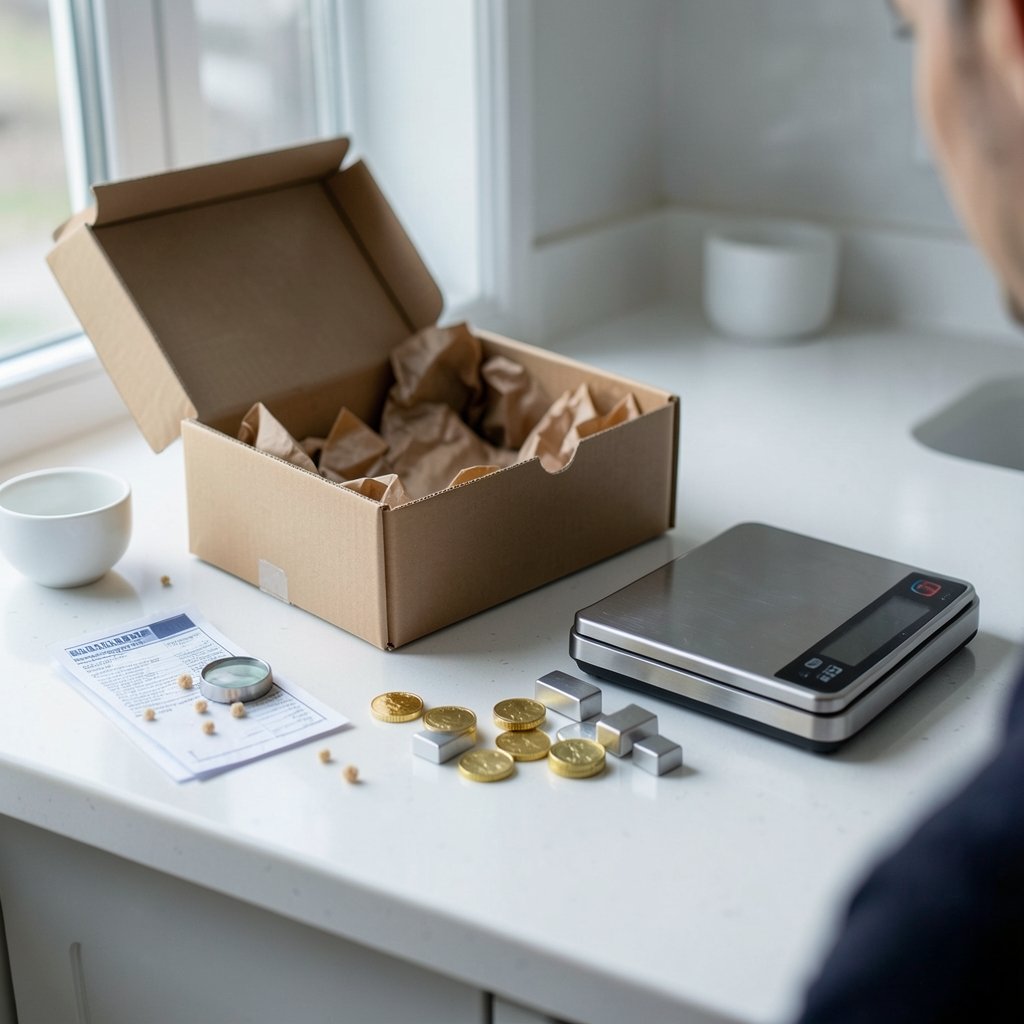
What do you really know about the company on the other end of that gold commercial? U.S. Money Reserve (USMR) is one of the loudest names in precious metals advertising, and its reviews are everywhere. Some praise the service. Others warn about markups. The honest answer is that “reviews” alone rarely tell you whether a dealer is right for you. What matters is knowing how to read those reviews, which questions to ask, and where the real costs hide. This guide walks through all three.
What US Money Reserve Actually Sells
U.S. Money Reserve is a private precious-metals dealer based in Austin, Texas. It sells gold, silver, platinum, and palladium coins and bars, largely through direct-response advertising, television spots, and phone-based sales. Much of its marketing centers on IRA-eligible metals, meaning coins and bars that meet Internal Revenue Service fineness standards for holding inside a self-directed retirement account. (Retirement Plans FAQs Regarding IRAs)
That business model matters for reviews. A dealer that sells mostly over the phone, with commissioned representatives, will generate a very different mix of feedback than a coin shop you walk into. Expect reviews to cluster around three things: the sales call experience, the price paid versus the spot price, and how smoothly delivery or IRA paperwork went.
Why Review Scores Are a Weak Signal on Their Own

Star ratings compress very different experiences into one number. A five-star review might reflect a friendly sales rep and fast shipping. It says nothing about whether the buyer paid 30 percent over melt value. A one-star review might reflect a shipping delay rather than a pricing problem.
There is also a structural issue. Happy customers who bought a coin and put it in a drawer rarely return to write reviews. Upset customers almost always do. That skews ratings in both directions depending on where you look, and it is why a single score should never be your deciding factor.
A more useful habit is to read reviews looking for specific numbers: the premium paid over spot, the length of the sales call, whether a “limited time” offer was actually limited, and whether the buyback price matched what was promised. Vague praise and vague complaints teach you little.
The Pricing Question That Reviews Rarely Answer
The single most important fact about any metals dealer is the premium, the amount charged above the live spot price of the metal. A one-ounce gold coin might carry a premium of a few percent at a competitive dealer and a much larger premium at a dealer selling heavily advertised “exclusive” or “limited mintage” coins.
Here is the practical problem. Premiums are rarely published on the sales page. They come up on the phone, after a representative has built rapport. That is why review sections fill up with buyers who later discovered their coin was worth far less than they paid if they tried to resell it.
| What to compare | Why it matters | How to check it |
|---|---|---|
| Premium over spot | Determines your real cost and break-even | Ask for the total price and compare to the live spot price yourself |
| Buyback policy | Sets what the dealer will pay to repurchase | Request the buyback terms in writing before buying |
| Product type | Common bullion vs. “collectible” coins | Ask whether the item is valued mainly for metal content |
| Fees | Shipping, insurance, storage, IRA setup | Get a full itemized quote, not a per-coin price |
Before spending money on any advertised offer, it helps to see how buyer-focused checks are done elsewhere. A Packdraw review buyers should check before spending money shows the same discipline: verify the seller, the true cost, and the refund path before committing.
The IRA Angle Deserves Extra Scrutiny
A large share of USMR’s marketing targets retirement savers who want to move part of an IRA into physical metals. This is legal, but it comes with layers that ordinary coin buyers never encounter.
First, the metals must meet IRS fineness requirements to be held in an IRA. Second, a self-directed IRA typically requires a custodian and often a depository, each of which charges fees. Third, the dealer may profit on the metal while the custodian and depository profit on the account. That means the total cost of a metals IRA is almost always higher than the sticker price of the coins.
When reading reviews of IRA purchases, look for whether the buyer mentions the custodian fees, the storage fees, and how long the rollover took. Those details separate a genuine account review from a review of a sales call. Anyone weighing a digital-asset or currency alternative should also understand how CBDC digital currency and central bank money going digital works, since it is often invoked in the same sales conversations as a scare tactic.
Common Mistakes Buyers Make
Most complaints trace back to a handful of avoidable missteps. The same missteps appear repeatedly in dealer reviews across the industry, at more than one company.
- Buying on the first call. High-pressure phone sales rely on urgency. Asking for a written quote and calling back a day later costs nothing and often changes the offer.
- Confusing collectible value with melt value. A coin marketed for its rarity may resell for far less than its purchase price because the dealer’s premium evaporates on the secondary market.
- Skipping the buyback question. Ask exactly what the dealer will pay to buy the item back, and whether that price is tied to spot.
- Not comparing three quotes. Getting quotes from multiple dealers on the same product is the fastest way to see how much of the price is premium.
- Paying by methods with no recourse. Wire transfers and crypto payments are hard to reverse. Credit cards offer dispute rights that wires do not.
That last point connects to a broader pattern in consumer fraud. A gift card scam works and victims rarely get their money back because the payment method removes the safety net. Precious-metals purchases rarely involve gift cards, but the underlying lesson is identical: the payment rail determines your leverage if something goes wrong.
What Regulators and Consumer Protection Bodies Say
Precious-metals investing has a long history of consumer complaints, and regulators have taken notice. The Federal Trade Commission has published consumer guidance warning about precious-metals investment scams, including high-pressure pitches and exaggerated claims about safety. State securities regulators have brought enforcement actions against metals dealers over misleading sales practices and unregistered investment advice. (Gold as an investment)
For retirement accounts specifically, the IRS publishes the rules on what qualifies for an IRA, including the minimum fineness standards for gold, silver, platinum, and palladium. Reading the primary source is more reliable than any review, because the rules do not change based on who is selling.
The Consumer Financial Protection Bureau maintains a searchable complaint database that covers many financial products and services. It is worth checking whether a company appears there, though not every dealer falls under its reporting scope, so absence of complaints is not proof of a clean record.
How to Read a Negative Review Without Overreacting
Not every bad review signals a bad company. Some reflect shipping delays during a metal price spike, when demand overwhelms every dealer in the industry. Others come from buyers who misunderstood what they purchased.
The reviews worth taking seriously share traits. They name specific dollar amounts. They describe a promise that was made and then broken. They mention a refusal to provide written terms. They describe a buyback offer far below what was verbally implied. When several reviews describe the same specific failure, that is a pattern rather than a mood.
Conversely, be skeptical of review clusters that appear within a short window, use identical phrasing, or praise the sales process without mentioning price. Review integrity is a real problem across retail categories, and metals is no exception.
A Practical Checklist Before You Buy
Use this sequence regardless of which dealer you choose. It takes about an hour and can save a great deal more than that.
- Look up the live spot price for the metal you want on a neutral source.
- Request a full written quote including premium, shipping, insurance, and any account fees.
- Ask for the buyback policy in writing, including how the buyback price is calculated.
- Confirm whether the product is bullion or a collectible, and which one the price reflects.
- Check the company against regulator guidance, complaint databases, and the Better Business Bureau.
- Pay with a method that gives you dispute rights if the product does not arrive as described.
- Keep every quote, email, and recording of the call.
The same cost-scrutiny mindset applies well beyond metals. If you are weighing side income to fund an investment, a clear-eyed look at how to make money with AI helps you separate real earnings from hype, just as a premium check separates real metal value from marketing.
Where USMR Tends to Fit
Based on the structure of its business, U.S. Money Reserve tends to appeal to buyers who want hand-holding: a phone conversation, help with IRA paperwork, and a familiar brand. That convenience has a price, and the price is usually a higher premium than a low-cost bullion dealer would charge.
Buyers who already understand metals and simply want the most ounces per dollar often do better elsewhere. Buyers who want guidance on a retirement rollover may find the service valuable, provided they confirm every fee in writing and understand that the representative is a salesperson, not a fiduciary advisor.
Neither path is wrong. What matters is that the choice is informed by the premium, the buyback terms, and the total cost, not by a commercial or a star rating.
Conclusion
Reviews of U.S. Money Reserve are best read as a starting point, not a verdict. The useful signal lives in the details: the premium paid over spot, the buyback terms, the fees layered onto an IRA, and whether promises made on the phone showed up in writing. A dealer can be perfectly legitimate and still be an expensive way to own metal. Do the one hour of homework, get three quotes, and put the terms in writing. That approach protects you far better than any star rating ever will.
Frequently Asked Questions
Is U.S. Money Reserve a legitimate company?
It is a real, operating precious-metals dealer based in Austin, Texas, that sells coins and bars and markets IRA-eligible metals. Legitimacy as a business is different from value as a purchase. The company can be entirely lawful while still charging premiums that are higher than a low-cost bullion dealer. Check current complaint records and always get written terms.
Why do precious-metals reviews complain about markups?
Because the premium over spot price is where dealers earn their margin, and it is often disclosed only during a phone call. Buyers who later try to resell discover their coin is worth its melt value, not what they paid. Comparing the quoted price to the live spot price yourself is the only reliable way to see the markup.
Are metals IRAs a good idea?
They can be, for a small slice of a diversified portfolio, but they carry extra costs. A self-directed IRA needs a custodian and usually a depository, each charging fees. The IRS sets fineness standards for qualifying metals. Confirm every fee in writing and understand that the dealer’s representative is a salesperson, not an advisor.
How can I verify a dealer before buying?
Check the company against regulator consumer guidance, the CFPB complaint database, and the Better Business Bureau. Request a written quote and buyback policy. Compare quotes from at least three dealers on the same product. Pay with a method that offers dispute rights, and keep records of every conversation.
What is a fair premium over spot price?
There is no single number, because premiums vary by metal, product, and order size. Common bullion typically carries a smaller premium than low-mintage or “collectible” coins. The practical test is comparison: get the same product quoted by several dealers and see how far apart the totals land.
Do positive reviews mean I should buy?
Not by themselves. Positive reviews often reflect friendly service and fast delivery, which are real but separate from cost. A pleasant buying experience can still be an expensive one. Weigh the review themes alongside the premium, the buyback terms, and the total fees before deciding.



