
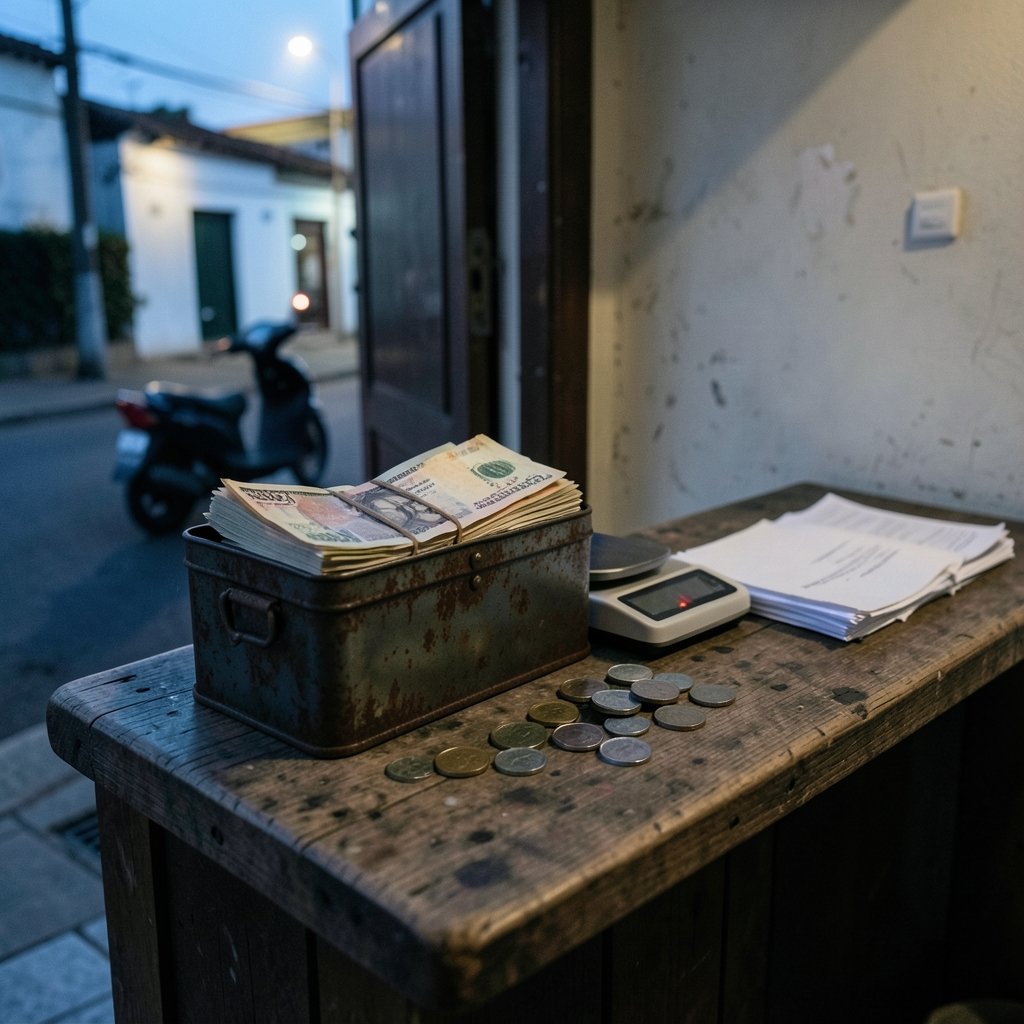
What happens to a country’s money when prices double every few weeks and the national currency becomes almost impossible to use? Venezuela has lived that question for more than a decade. Its currency has been redenominated three times, its central bank has gone quiet for long stretches, and US dollars now change hands in shops, taxis and corner stores across the country. Understanding Venezuela’s money today means understanding a currency that has been rebuilt from the ground up, a dollarized everyday economy, and a set of numbers that are genuinely hard to pin down.
From Bolívar to Bolívar Digital: A Currency Rebuilt Three Times
Venezuela’s currency troubles did not start overnight. The country spent much of the twentieth century as one of Latin America’s wealthier oil exporters, and the bolívar was a reasonably stable currency for decades. Oil revenue funded public spending, imports and subsidies. When oil prices fell and production declined, the government kept spending and printed money to cover the gap. That is the classic recipe for inflation, and Venezuela followed it closely.
The first visible fix came in 2008, when the government introduced the bolívar fuerte, cutting three zeros from the old currency. The idea was to simplify daily transactions and signal a fresh start. It did not last. Inflation kept climbing through the 2010s, and by 2018 the government tried again with the bolívar soberano, which removed five zeros.
Then came the most dramatic step. In 2021 the country introduced the bolívar digital, which stripped six more zeros. A single new bolívar replaced one million of the older notes. If you add up all three redenominations, fourteen zeros have been removed from the currency in roughly thirteen years. That is not a normal monetary event. It is what happens when a currency loses its role as a store of value and people stop trusting it.
For readers who want to see how governments handle money that is losing value, the broader discussion of central bank digital currencies and why money is going digital is a useful companion, because it shows how payment systems can be redesigned when cash becomes unreliable. (What is money? (Federal Reserve FAQ))
Why Redenominations Do Not Fix Inflation
A redenomination is cosmetic. It changes the numbers on the notes, not the underlying balance between money supply, goods and confidence. If the government keeps financing deficits by printing, prices keep rising, and the new currency eventually needs the same treatment as the old one. Venezuela’s three redenominations are a textbook illustration of that principle. Each one bought a little convenience and a little time, but none addressed the root cause.
The Hyperinflation Years and the Data Blackout

The worst stretch came around 2017 to 2019, when Venezuela experienced hyperinflation, generally defined as inflation exceeding 50 percent per month. At the peak, the International Monetary Fund projected inflation above 1,000,000 percent for 2018 in a mid-2018 update. That figure is widely quoted, but it is a projection, not a measured outcome.
That distinction matters. The Venezuelan central bank stopped publishing regular inflation data during the crisis, and independent economists began producing their own estimates. Different groups using different baskets of goods and different methods arrived at different numbers. Any single figure you see for Venezuelan inflation in those years should be treated as contested. This is not a case where one authoritative dataset settles the question.
The practical effect on ordinary people was severe. Wages lost value faster than they could be spent. Savings evaporated. People learned to convert bolívares into dollars or goods almost immediately after being paid. When money stops working as a store of value, it stops working as money in the full sense, and households adapt fast.
The Dollarized Reality of Everyday Life
Walk through a Venezuelan city today and you will see prices in dollars alongside bolívar prices. Since roughly 2019, the economy has become substantially dollarized in practice. US dollar cash circulates widely, and many transactions, from rent to electronics to restaurant meals, are quoted in dollars. The bolívar still exists and is used for small purchases, wages and official transactions, but it shares the stage. (Venezuelan bolívar (Wikipedia))
It is important to be precise here: dollarization in Venezuela is estimated, not officially measured. There is no clean official statistic saying exactly what share of transactions happen in dollars. The general picture, widely reported by journalists and economists, is that dollar use is extensive but uneven, heavier in border areas and urban commerce, lighter in rural areas and state employment.
This creates a two-tier money system with real friction. People who earn in bolívares and face dollar prices are exposed to exchange-rate swings. People with access to dollars have more stability. The gap between the two groups is one of the quiet drivers of inequality in the country.
Cash, Cards and the Limits of Payment
Dollarization in practice runs on physical cash. Card payments in dollars are limited by banking infrastructure and sanctions-related constraints, so a lot of commerce depends on banknotes. That makes the supply of physical dollars, and the safety of carrying them, a daily concern. It also means that when people talk about Venezuela money, they are often literally talking about what is in their pocket.
Exchange Rates, Official and Otherwise
Venezuela has had multiple exchange rates for years, and the gap between the official rate and the rate people actually get has been a persistent feature of the economy. The central bank, the Banco Central de Venezuela, publishes exchange rates and some monetary statistics, but releases have been irregular. Anyone tracking the bolívar should check the central bank’s own series directly rather than relying on secondary reporting, because the numbers move and the publication schedule is not dependable.
For most households, the rate that matters is the one they can actually trade at, not the one printed on an official page. That gap is where a lot of economic distortion lives. Importers, exporters and ordinary savers all make decisions based on which rate they can access, and those decisions shape prices across the economy.
Sanctions and the Money That Cannot Move
Venezuela’s access to international finance and oil revenue is constrained by sanctions, including programs administered by the US Treasury’s Office of Foreign Assets Control and measures adopted by the European Union. The scope of these sanctions has changed repeatedly, with licenses issued, narrowed and revised over time. Anyone doing business with Venezuelan entities needs to check the current rules rather than rely on older summaries.
Sanctions matter for ordinary money in indirect ways. They affect the government’s dollar income, which affects spending and imports. They complicate banking relationships, which makes international payments harder for businesses and families. They also shape how aid and remittances flow. Remittances from Venezuelans abroad have become an important source of household income, and the channels used to send them are shaped by banking restrictions.
The cost side of these security and financial pressures is worth understanding. A detailed look at where the money really goes in identity threat detection shows how organizations budget for financial crime defenses, which is relevant context for anyone thinking about how sanctions compliance and fraud prevention consume resources.
Fraud, Scams and the Risks Around Money
Economic stress is a breeding ground for financial crime. When people are desperate to protect savings, they become targets for schemes that promise safe returns or easy currency conversion. Common patterns include fake exchange offers, advance-fee requests, and gift card scams in which victims are pressured to pay with cards that are hard to trace or reverse.
The mechanics of the gift card scam and why victims rarely get their money back are a useful warning for anyone sending money across borders or dealing with unfamiliar counterparties. The core lesson applies everywhere: once value moves through an irreversible channel, recovery is unlikely.
For Venezuelans specifically, the combination of currency uncertainty and limited banking access raises the stakes. Informal exchange carries counterparty risk. Online offers that look too good usually are. The safest habits are unglamorous: verify the other party, avoid irreversible payment methods, and treat urgency as a red flag.
What Venezuela Money Looks Like for Households and Businesses
For a household, managing money in Venezuela today means juggling currencies and timing. A few practical patterns show up repeatedly in reporting and in advice from people on the ground:
- Convert income into a stable store of value quickly, because holding bolívares is risky.
- Keep a small amount of local cash for daily purchases and transport.
- Track the exchange rate you can actually get, rather than only the official figure.
- Diversify where savings sit, since no single channel is fully reliable.
- Budget for price changes, because prices can move faster than paychecks.
For businesses, the challenges are different but related. Pricing in dollars while paying some costs in bolívares creates constant reconciliation work. Importing requires navigating exchange access and sanctions rules. Payroll involves decisions about which currency to use and how to protect employees from inflation. Many firms have learned to keep operations lean and flexible, because planning long-term in an unstable monetary environment is difficult.
There is a broader lesson here about automation and cost control that applies to firms anywhere. A practical guide to using AI business automation without wasting money covers how companies can adopt tools carefully rather than buying into hype, which is a useful mindset for businesses operating under financial pressure.
How to Read Venezuelan Money Numbers Without Being Misled
Venezuela is a case where data literacy matters enormously. A few rules help:
| Claim you will see | What to check |
|---|---|
| A precise inflation figure for a crisis year | Whether it is a projection or a measured outcome, and who produced it |
| An official exchange rate | Whether it is the rate people can actually trade at |
| A dollarization percentage | Whether it is an estimate, and from which source |
| A sanctions summary | Whether it reflects the current rules or an older version |
| A redenomination date | Whether it matches the official gazette notice |
The pattern across all five rows is the same. Venezuela’s monetary data is incomplete, contested or fast-changing, so the source and the date matter as much as the number. A figure without a date and a method is close to useless.
The Road Ahead for the Bolívar
Where does Venezuela’s money go from here? The honest answer is that it depends on things money cannot fix on its own: oil production, fiscal discipline, institutional credibility and political stability. A currency stabilizes when people believe it will hold value. That belief is built slowly and lost quickly.
There are scenarios worth watching. One is gradual stabilization, in which the bolívar regains some ground as inflation cools and the government avoids fresh money printing. Another is continued dollarization, with the bolívar retreating further into a minor role. A third is renewed instability, which would bring another cycle of redenomination and improvisation. None of these is guaranteed, and the outcome will be visible in the data long before it is visible in official statements.
What is clear is that Venezuela’s experience is a case study in what happens when a currency loses trust. The zeros on the notes are a symptom. The underlying story is about deficits, expectations and the everyday ingenuity of people who found ways to keep trading when the official money stopped working.
Conclusion
Venezuela’s money is not one story but several stacked on top of each other: a currency redenominated three times and stripped of fourteen zeros, a hyperinflation episode whose true scale is still debated, a dollarized everyday economy that no official statistic fully captures, and a set of external constraints that shape what money can cross the border. For anyone trying to understand the country, the lesson is to hold the numbers loosely and the sources tightly. Check the central bank directly, treat projections as projections, and remember that behind every exchange rate is a household deciding what to do with a paycheck before it loses value.
Frequently Asked Questions
What is the currency of Venezuela called today?
The current currency is the bolívar digital, introduced in 2021 when six zeros were removed from the previous bolívar soberano. In everyday speech, people often still say bolívar or bolívares. The currency has been redenominated three times since 2008, and the official name has changed with each round.
How many zeros has Venezuela removed from its currency?
Fourteen zeros in total across three redenominations. The 2008 bolívar fuerte removed three, the 2018 bolívar soberano removed five, and the 2021 bolívar digital removed six. Each change made daily transactions simpler but did not address the underlying inflation that caused the loss of value.
Is Venezuela a dollarized country?
In practice, largely yes, though not officially. Since roughly 2019, US dollars have been widely used for many transactions alongside the bolívar. The extent of dollarization is estimated rather than officially measured, and it varies by region and type of business. The bolívar still circulates and remains the official currency.
Why did Venezuela experience hyperinflation?
The main driver was sustained government spending financed by money creation, combined with falling oil revenue and declining production. When more money chases fewer goods, prices rise. Confidence in the currency eroded, people rushed to convert bolívares into dollars or goods, and that behavior accelerated the cycle. The exact inflation figures from the worst years are disputed because official data publication became irregular.
Can I use US dollars in Venezuela?
In many urban shops, hotels and service businesses, yes. Dollar cash is widely accepted, and some prices are quoted in dollars. However, acceptance is uneven, small purchases often still happen in bolívares, and carrying cash raises safety concerns. Visitors and residents alike should expect a mixed system rather than a clean one.
Where can I find reliable data on Venezuela’s money?
Start with the Banco Central de Venezuela for official exchange rates and monetary statistics, but expect irregular releases. Independent groups publish their own inflation and monetary estimates, and international organizations publish periodic projections. Because figures are contested, always note the source, the date and whether a number is a projection or a measurement.



