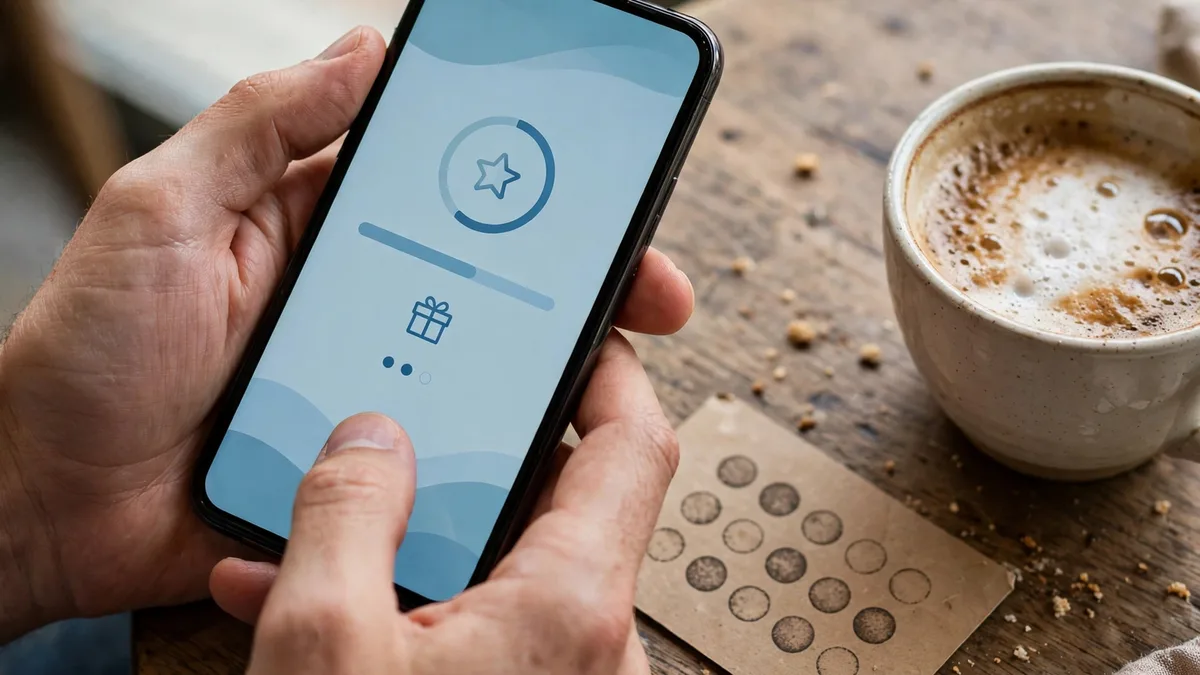
A business website loyalty program is a system that rewards customers for coming back. A customer buys, books, or visits, and the website records that activity. After enough activity, the customer earns a reward, such as a free item, a discount, or early access to a new product. The program costs the customer nothing to join, and it runs on the website the business already has.
Small businesses use loyalty programs because repeat customers are cheaper to keep than new customers are to win. A customer who has already bought once needs no introduction to the business, no advertising to reach, and no long sales pitch. A small reward at the right moment is often enough to bring that customer back a second, third, and tenth time.
This explainer covers the idea in plain language. It explains what a loyalty program is, how it works, the main types, how it differs from the tools it gets mixed up with, what it costs, and when a small business should add one.
Key takeaways
- A loyalty program rewards past purchases, and joining is free for the customer.
- It covers repeat business: points, stamps, tiers, or credit earned through buying, booking, or visiting.
- It differs from a membership area, which sells access to content, and from a gift card, which is prepaid credit.
- Most small businesses can start with a plugin or hosted tool, with no custom code.
- A program only works when the reward is easy to understand, easy to claim, and worth the effort of earning it.
A loyalty program in plain language
Think of a loyalty program as a thank-you note that keeps score. Every time a customer buys, the business adds a mark to that customer record. When the marks reach a set number, the business gives something back. A coffee shop gives a free drink after nine paid drinks. A salon gives a discount after five visits. An online store gives credit after a set amount of spending. The reward is the thank-you, and the record is what makes it fair.
The website holds that record in the customer account, so the balance is there at checkout and on the phone.
The program has three parts, and all three must be visible to the customer. The earning rule says what counts, such as one point per dollar or one stamp per visit. The reward says what the customer gets, such as a free item or a discount. The balance says how close the customer is to the next reward. If any of the three is hidden, the customer will not trust the program, and a program nobody trusts is a program nobody uses.
How a loyalty program works

The flow starts with joining. A customer creates an account or adds an email address at checkout, and the program opens a balance for that customer. Signup should ask for an email address only.
Next comes earning. Each purchase, booking, or visit adds points or stamps to the balance, automatically, through the checkout or the booking system. The account page shows the balance and the distance to the next reward, so the customer can see the progress without asking staff.
Then comes redemption. When the balance reaches the set level, the customer claims the reward with one click at checkout or one scan at the counter. The reward applies to something the customer wants, such as a free item, a discount on the next order, or early access to a new product.
Behind the scenes, the tool keeps the records, sends the reminders, and tracks the numbers. The owner sees how many members joined, how often they return, and what the rewards cost. AI tools can help with that tracking and with spotting members who have gone quiet, and our guide to the best AI tools for customer loyalty programs looks at the options that fit a small business budget.
The main types of loyalty program
Points are the most common type. A customer earns points for spending, and points convert into rewards at a fixed rate, such as one hundred points for a five dollar reward. Points suit shops with varied prices, because a small purchase still earns something.
Stamps are the simplest type. A customer earns one stamp per visit or per item, and a full card earns a free item. Stamps suit cafes, bakeries, salons, and any business where the visit itself is the unit.
Tiers add levels to points or stamps. A customer who reaches a spending level unlocks a higher tier with better rewards, such as a bigger discount or early access to new products. Tiers suit businesses with a wide range of customers, from occasional buyers to regulars who spend far more.
Cashback is the most direct type. A customer earns a small percentage of each order as credit toward the next order, applied automatically at checkout. Cashback suits online stores, because there is no extra step.
Loyalty program, membership area, gift card, and portal: what is different
The confusion starts because these tools all sit on the same website and all ask the customer to sign in. A loyalty program rewards past purchases, and joining is free. The customer pays nothing to join, and the reward comes after spending.
A membership area sells access to content, such as lessons, videos, downloads, or a community, charged by the month or the year. A business can run both.
A gift card is prepaid credit. A customer, or a friend of the customer, pays in advance, and the card holds that value until it is spent. A loyalty reward is earned, not bought, and it only appears after real purchases. Our guide to what a business website gift card is for small businesses covers the gift card side in detail.
A customer portal is a signed-in self-service area where customers manage their own accounts. It shows invoices, appointments, orders, and messages. A portal serves people who already paid for a service, and it shows their records. A loyalty program shows rewards, not records. The test is simple: a reward for past purchases means a loyalty program, prepaid value means a gift card, and customer records alone mean a portal. Our guide to what a business website customer portal is for small businesses explains the portal in full.
The caveats that matter
A loyalty program creates obligations that a simple discount does not. Members expect their points to be there when they return, so lost balances and broken checkout links become trust problems rather than minor bugs. Member data must be stored with care, with a clear privacy notice.
Cost is the question most owners ask first. The tool fee is only part of it. The free items and discounts add up, and staff time for support in the first month adds more. The total stays small next to the profit from repeat visits, but the business should add up the full number before choosing a reward value.
Fraud is a real risk, and it grows with the value of the reward. Expiry also matters. Points that never expire build up into a liability the business owes forever, so a twelve month expiry after the last visit is standard, with reminders before the balance disappears.
| Detail | What is known |
|---|---|
| What it is | A free-to-join system that rewards repeat purchases with points, stamps, tiers, or credit |
| What it is not | Not a discount for everyone, not a membership area, not a gift card, and not a customer portal |
| Core parts | An earning rule, a reward, and a visible balance on the customer account page |
| Typical cost | A plugin often costs 100 to 500 dollars per year, plus the cost of rewards; a hosted tool often costs 30 to 150 dollars per month |
| Setup time | A simple program takes two to four weeks from decision to launch, including testing |
| Expiry | Twelve months without a visit is standard, with reminders at thirty days and seven days before expiry |
| When to skip it | A business with few repeat customers, or one where every sale is a single one-off purchase, may not need one yet |
| Key numbers | Join rate, repeat visit rate, and the cost of rewards redeemed, checked every month |
Checklist: is a loyalty program right for the business
Run through this list before choosing a tool. If most items are true, a loyalty program is likely to pay for itself.
- Customers already return more than once, or would return if given a reason.
- The average order earns enough profit to cover a small reward after several visits.
- The business can name one simple earning rule in a single sentence.
- Checkout or booking already runs through the website, so points can be earned automatically.
- The team can answer signup questions and fix a missing balance without waiting for the owner.
- The budget covers the tool, the reward cost, and the first month of support time.
Frequently asked questions
What is a loyalty program for a small business?
It is a free-to-join system on the business website that rewards repeat customers. A customer earns points, stamps, or credit through buying, booking, or visiting, and claims a reward, such as a free item or a discount, after reaching a set level.
How is a loyalty program different from a discount?
A discount cuts the price for everyone, including first-time buyers who may never return. A loyalty reward only goes to customers who have already spent, so the cost lands on proven repeat business rather than on strangers.
How much does a loyalty program cost?
A plugin often costs between 100 and 500 dollars per year, plus the cost of the rewards themselves. A hosted tool often costs between 30 and 150 dollars per month.
Do customers have to pay to join?
No. Joining a loyalty program is free for the customer. The customer pays nothing to join, and the reward comes after spending. A program that charges to join is a membership, not a loyalty program.
Should loyalty points expire?
Yes, in most cases. A twelve month expiry after the last visit keeps the liability under control and gives inactive customers a reason to return. Reminders should go out before expiry, so no balance vanishes without warning.
Can a loyalty program work without an app?
Yes. A website program works through the customer account, with no app to install. An app is optional for most small businesses.
The bottom line
A business website loyalty program is a free-to-join system that rewards customers for coming back. It covers the repeat business that keeps a small business alive: points, stamps, tiers, or credit earned through buying, booking, or visiting, and claimed as a free item, a discount, or early access.
For a small business, the decision comes down to repeat visits. When customers already return, or would return with a small nudge, a program pays for itself in saved advertising and steadier sales. Start with one simple rule, one reward that is easy to claim, and a signup that takes under a minute.
Note: Prices and tool features change often, so check the current pricing page of any plugin or hosted tool before buying, and test every reward flow with a small real transaction before inviting customers.