
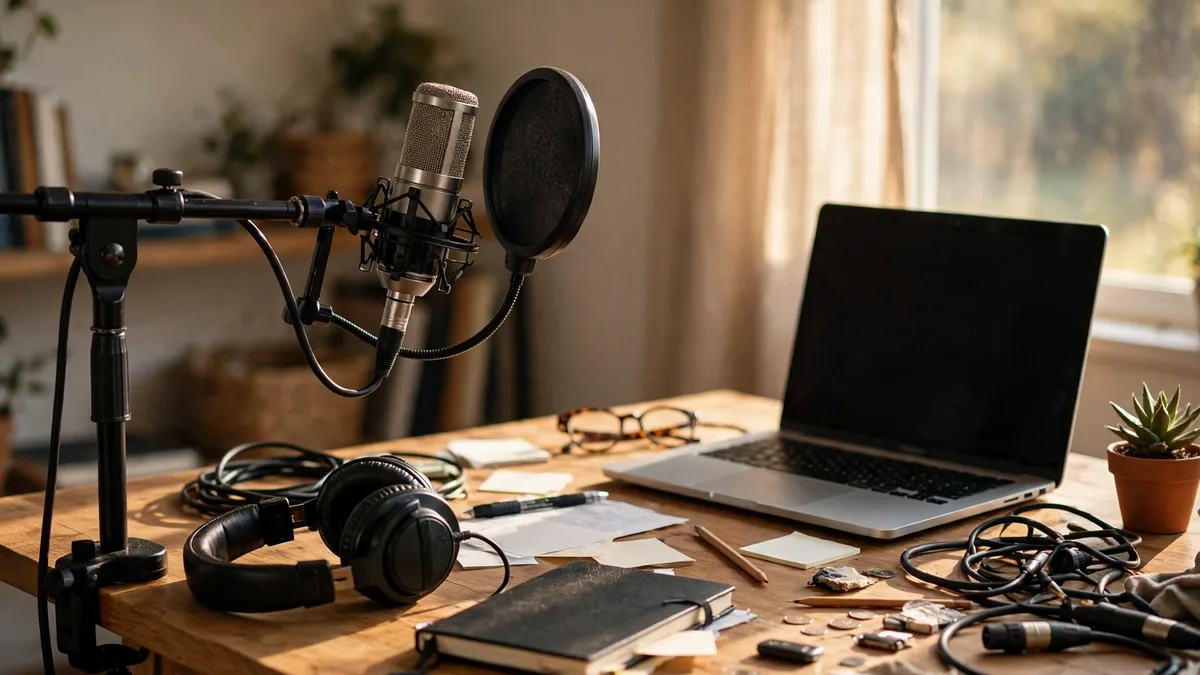
A microphone is a device that turns sound into an electrical signal. It listens to the pressure changes in the air that we hear as sound, and converts them into a signal that a computer, a phone, or a recording device can store, send, or play back. Every voice call, podcast, song, and video you have ever heard started with a microphone doing exactly that job.
The idea is older than most people expect. The first practical microphones appeared in the 1870s, inside early telephones, and they were crude: a carbon button that changed its resistance as sound pressed on it. A century and a half of refinement has produced devices that can hear a whisper across a quiet room or survive a singer shouting into them on a stage, and the best ones still work on the same basic principle of turning movement into electricity.
Today a microphone is everywhere and mostly invisible. There is one in your phone, several in your laptop, one in your earbuds, and one in the remote control for your television. This guide explains how microphones work, the main types and what each is good for, and how to choose and use one so your voice comes through clearly instead of thin, boomy, or buried in room noise.
Key takeaways
- A microphone converts sound waves in the air into an electrical audio signal.
- Dynamic microphones are tough and handle loud sound; condenser microphones are sensitive and detailed.
- USB microphones plug straight into a computer, while XLR microphones need an audio interface.
- Distance, angle, and room noise change the sound more than the price of the microphone does.
- A pop filter, a quiet room, and speaking close to the microphone fix most bad recordings.
Microphones at a glance
| Detail | What to know |
|---|---|
| What it does | Turns sound waves in air into an electrical signal |
| Main types | Dynamic, condenser, ribbon, and small electret microphones |
| Connections | USB for direct computer use; XLR for mixers and interfaces |
| Pickup patterns | Cardioid hears the front, omnidirectional hears all around |
| Best for calls | A headset or a small USB microphone close to the mouth |
| Best for recording | A large condenser microphone in a quiet, soft-furnished room |
| Common problem | Room echo and background noise, not the microphone itself |
| Simple fix | Move closer, use a pop filter, and close windows and doors |
What a microphone is
Sound is movement. When you speak, your vocal cords push the air, and those pushes travel outward as waves of slightly higher and lower pressure. A microphone is a device that feels those waves and turns them into an electrical signal that rises and falls in the same pattern. Record that signal, and you have recorded the sound. Play it back through a speaker, which does the reverse, and you hear the sound again.
Every microphone has two parts that matter. The first is a thin surface that moves when sound hits it, usually called a diaphragm. The second is a mechanism that turns that movement into electricity. The mechanism is what separates one type of microphone from another, and it decides how sensitive the microphone is, how much loud sound it can take, and how it colours the sound.
How a microphone works

In a dynamic microphone, the diaphragm is attached to a small coil of wire sitting inside a magnet. Sound pushes the diaphragm, the coil moves inside the magnetic field, and that movement generates a tiny electrical current. The current is an exact copy of the sound wave: louder sound moves the coil further and makes a stronger signal, higher pitch makes it move faster. It is the same idea as a loudspeaker running backwards, and it is why dynamic microphones are simple, tough, and need no battery or external power.
In a condenser microphone, the diaphragm is one plate of a tiny capacitor, sitting a hair’s breadth from a fixed back plate. Sound moves the diaphragm, the distance between the plates changes, and the electrical charge stored between them changes with it. That change is a very small signal, so a condenser microphone needs power, usually 48 volts sent down the cable and called phantom power, and a small amplifier inside the microphone body. The reward is detail: the diaphragm is light and thin, so it reacts to small, fast changes in sound that a heavier dynamic diaphragm smooths over.
That electrical signal is analogue, a continuously varying voltage. To store it on a computer or send it over the internet, it must be turned into numbers, a process called analogue-to-digital conversion. A converter samples the signal tens of thousands of times a second, usually 44,100 or 48,000 times, and records the level at each instant. More samples and finer levels mean a more faithful copy, which is why recording settings mention sample rates and bit depth.
Types of microphones
Dynamic microphones are the workhorses. They handle loud sound without distorting, they survive being dropped, they ignore much of the room around them, and they need no power. That makes them the standard choice for live singing, drums, guitar amplifiers, and podcasting in a room that is not perfectly quiet. Their trade-off is sensitivity: they need the sound source close, and they can make a quiet voice sound a little dull.
Condenser microphones are the studio choice. Their light diaphragm hears fine detail, breath, and the upper sparkle of a voice or an acoustic guitar, which is why most singing and voice-over recording uses them. They also hear everything else, including the hum of a refrigerator and the echo of a bare room, so they belong in a quiet, soft-furnished space. Large-diaphragm condensers suit voices; small-diaphragm condensers suit instruments.
Electret condenser microphones are the tiny ones inside phones, laptops, earbuds, and headsets. They work like a condenser but carry a permanent charge, so they need very little power. Their sound is thinner than a large microphone, but they are small, cheap, and good enough for calls, voice notes, and video, especially when they sit close to the mouth.
Benefits and risks
The benefits
A good microphone makes communication easier in a way people notice without knowing why. A clear voice on a call means fewer repeated sentences, less listener fatigue, and more confidence from the person speaking. For a teacher, a podcaster, or a salesperson, that clarity is not a luxury; it is the difference between being understood and being tuned out.
The risks
The main risk is also the simplest: a microphone that is always listening. Smart speakers, phones, and laptops carry microphones that can be switched on by software, and a hot microphone on a call has embarrassed more than one person who thought they were muted. The habit that prevents it is dull but effective: check the mute indicator, and use a physical mute switch or unplug the microphone when the call ends.
Microphone vs speaker
A microphone and a speaker are close relatives. A speaker takes an electrical signal and turns it into sound by moving a diaphragm; a microphone takes sound and turns it into an electrical signal by moving a diaphragm. The parts are similar enough that a speaker can work as a crude microphone, and a microphone can work as a tiny, quiet speaker, though neither does the other’s job well.
Where microphones are used
Podcasts are the most visible use. A podcaster speaks into a microphone a few inches from their mouth, and the intimacy of that sound, close, warm, and detailed, is part of why the format works. Anyone thinking of starting a podcast should choose the microphone first and the recording software second, because no amount of editing fixes a recording made in a noisy room with the microphone a metre away — and the best smart speakers will let you hear the finished recording the way your listeners will.
Calls and meetings are the everyday use, and the microphone in a headset or a laptop is doing quiet work there all day. Voice assistants, dictation, and video narration are close behind. A newer use is creating AI voiceovers, where a clean human recording is the raw material that a voice model learns from, and a noisy recording teaches it the noise as well as the voice. In every case, the rule is the same: the microphone hears the room as well as the speaker, so the room is part of the equipment.
Checklist: choosing a microphone
- Decide the use first: calls need a headset or small USB microphone, recording needs a larger one.
- Pick dynamic for a noisy room or loud sounds, condenser for a quiet room and detailed voices.
- Choose USB for simplicity, XLR with an interface if you want to upgrade microphones later.
- Check the pickup pattern: cardioid for one speaker, omnidirectional only for a group around a table.
- Budget for a pop filter and a stand or boom arm, which improve the sound more than a pricier microphone.
- Test it in your actual room, with your actual voice, and listen back on headphones before keeping it.
Frequently asked questions
What is the difference between a USB and an XLR microphone?
A USB microphone has its analogue-to-digital converter built in and plugs straight into a computer. An XLR microphone sends an analogue signal to an audio interface or mixer, which converts it. USB is simpler and cheaper; XLR gives better control and an upgrade path.
Do I need phantom power?
Only for condenser microphones, which need 48 volts to charge their plates. Dynamic microphones do not need it, and most audio interfaces have a clearly labelled phantom power switch. USB microphones get their power from the computer.
Why does my microphone pick up so much background noise?
Because it hears everything in the room, and a condenser microphone hears more of it than a dynamic one. Move closer to the microphone, switch to a cardioid pattern, close windows, and add soft furnishings. A noise gate in software can help, but it cannot recover a voice buried under a fan.
How far should I be from the microphone?
For a podcast or a voice recording, about 15 centimetres, roughly a hand’s width, from a large microphone, and closer for a dynamic one. Too far and the room takes over; too close and every breath and lip sound is exaggerated, which a pop filter softens.
Can I use my phone as a microphone?
Yes, and for short recordings it works well. A phone’s microphone is small but well engineered, and a recording app or a video call app can use it directly. For long sessions, a dedicated microphone is more comfortable and more consistent, and it leaves your phone free.
What microphone should a beginner buy?
A well-reviewed USB dynamic microphone is the safest first buy for most people: it is forgiving of a normal room, simple to set up, and good for calls and podcasts alike. The best wireless earbuds are a useful next step once the recording itself sounds clean, so you can listen back and check it properly.
The bottom line
A microphone is a translator between two worlds: the moving air we hear as sound and the electrical signals our devices can store and send. Dynamic, condenser, ribbon, and electret designs all do that translation differently, trading toughness for detail, simplicity for control, and size for sound. None of them is the best in every situation, and the right one is the one that suits your voice, your room, and the way you will actually use it.
The practical lesson is the same as with any tool: the setup matters more than the price. Speak close, keep the room quiet, use a pop filter, and listen back on headphones. Do those four things and even a modest microphone will sound clear and professional, and your listeners will hear what you meant to say instead of the room you said it in.



