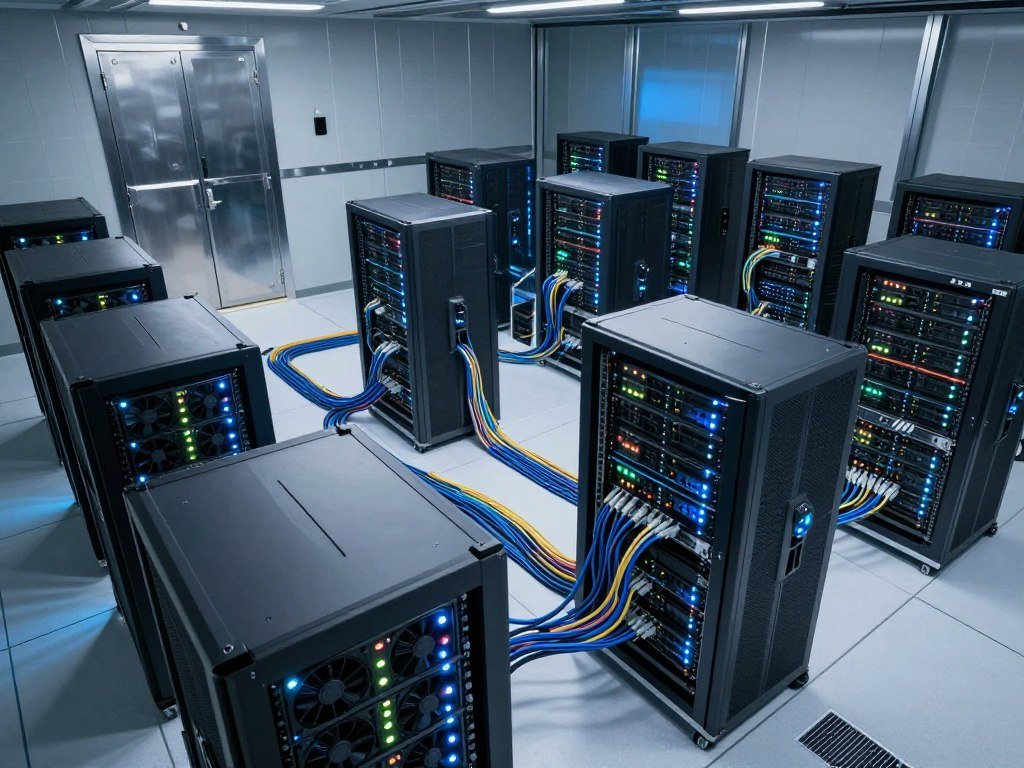
A chatbot response may feel weightless, but an AI data center depends on racks of hardware moving data and producing heat. AI models need specialized computing infrastructure for training and for answering requests. That physical layer affects performance, scale, and the resources behind services you use. Understanding the facility behind an AI service makes its speed, scale, and resource demands easier to judge.
These systems support workloads that ordinary computers may not handle efficiently. Their design also shapes how quickly applications respond and how much capacity they can serve. As AI becomes part of daily tools, the infrastructure behind it matters more to users, businesses, and communities.
Key Takeaways
- AI data centers combine specialized computing with power, cooling, storage, and network systems.
- Training and inference place different demands on hardware and response time.
- AI-focused facilities may pack more computing power into a smaller space.
- Electricity, water, location, and equipment choices shape environmental effects.
- Organizations can build, lease, or colocate capacity instead of owning a whole facility.
What Is AI Data Center Infrastructure?
An AI data center combines computing hardware with the systems that feed it data, connect its servers, and keep it running. Its infrastructure includes compute, storage, networking, power, cooling, and security systems. The parts must work together for processors to stay busy and services to remain available.
Five core elements support most AI facilities:
- GPU servers with graphics processing units and other accelerators for parallel computing.
- Fast storage and high-bandwidth memory, including solid-state drives, for quick data access.
- High-speed networking that moves data between servers with little delay.
- Power distribution equipment that supplies electricity to computing and support systems.
- Cooling equipment that removes heat and helps hardware operate within safe limits.
Security systems also control access to the building, server rooms, networks, and stored information. Those safeguards can include cameras, locks, identity checks, and digital controls. Facility design and security needs vary, but both physical and network access need attention.
The accelerators do the calculations, but the network and storage determine whether they receive data fast enough to stay useful.
AI-ready data means information prepared and accessible for model use. It is different from the infrastructure that stores and processes it. A data set may be well organized, yet still need suitable servers and network access before a model can use it.
Data centers also depend on software that manages jobs and monitors equipment. Operators track system health, storage use, and network traffic to spot problems. The accelerators do the calculations, but the network and storage determine whether they receive data fast enough to stay useful.
How Does an AI Data Center Work?
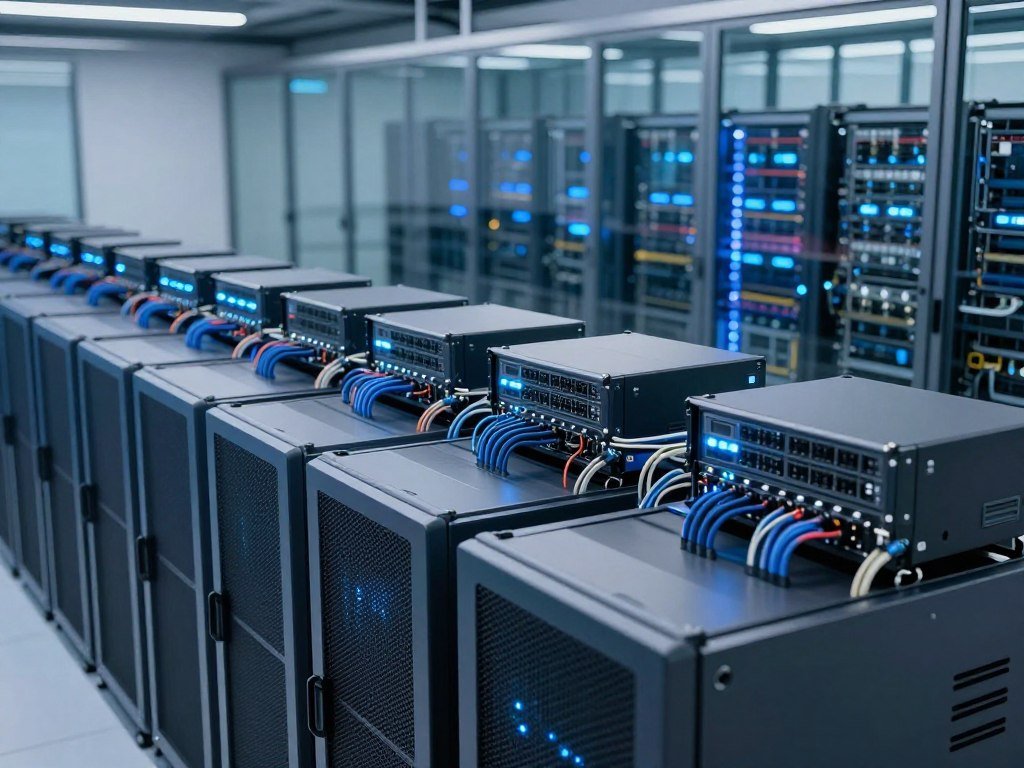
A model-training job divides calculations across connected machines, while an inference request uses a trained model to produce a result. Both workloads move data through storage, memory, processors, and networks. The route and timing depend on the job’s size.
Fast links between machines matter because stalled data can leave costly processors waiting. Training jobs may spread a model’s calculations across many servers, while smaller jobs can run on fewer machines.
Training Turns Examples Into Model Weights
Training uses examples to adjust a model’s internal values, called weights. Data moves from storage into memory, then reaches groups of GPUs for calculations. A model compares its results with the examples and updates its weights over many rounds.
Large jobs divide calculations across servers. The machines must exchange results as they work, so fast interconnects help reduce waiting between them. If a network link slows, one group may finish late and hold up other machines.
Training data must also be stored and prepared before a job begins. Cloud services can hold files and make them available to computing systems. The data a model learns from is not the same thing as the facility that processes it.
Readers comparing the chip and network companies behind this equipment can review AI infrastructure suppliers across the supply chain.
Inference Delivers Each New Result
Inference is running a trained model on new input to produce an output. A request reaches the service, the system retrieves needed data, and processors calculate a response. The network then sends that response back to the user or application.
Storage and cloud services support more than a model’s immediate calculations. They can keep files, logs, and other information that services need. A model may use only a small part of that data for each request.
Not every AI request needs a giant model or a hyperscale facility. Workload size and response-time needs affect the infrastructure required. A small model that answers occasional requests can need far less capacity than a large service handling many users.
A provider may also offer a managed model service or rented accelerator capacity, which gives organizations different levels of control. Whatever the setup, when data cannot reach the processors quickly enough, expensive compute capacity can sit idle.
What Does an AI Data Center Look Like?
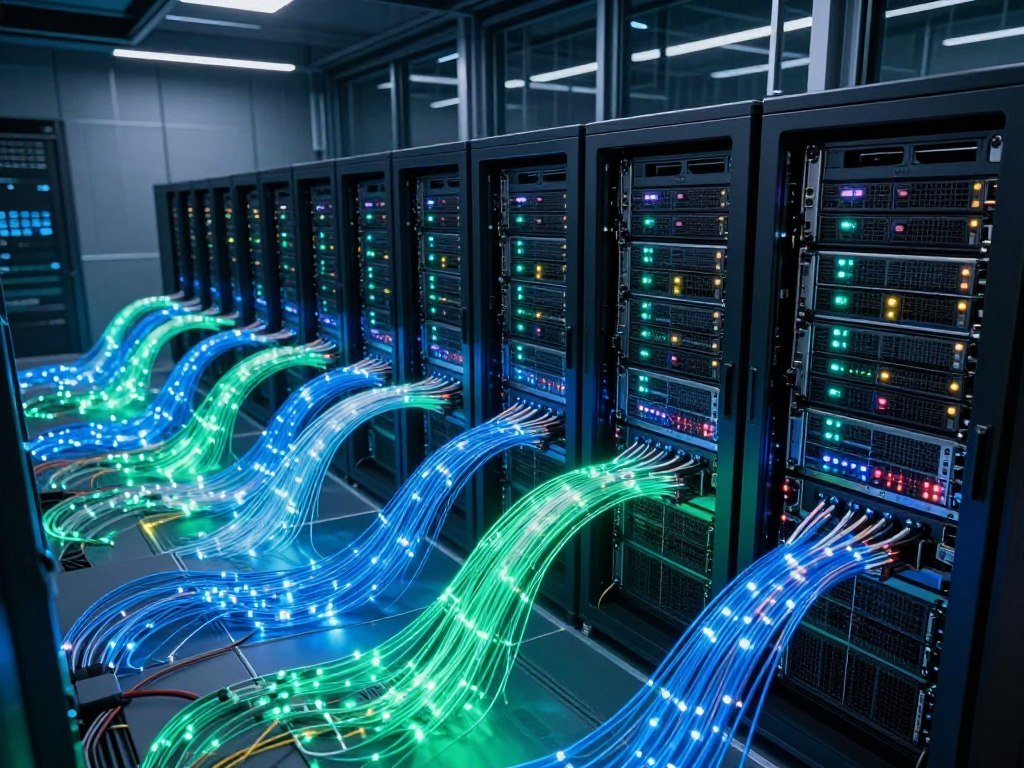
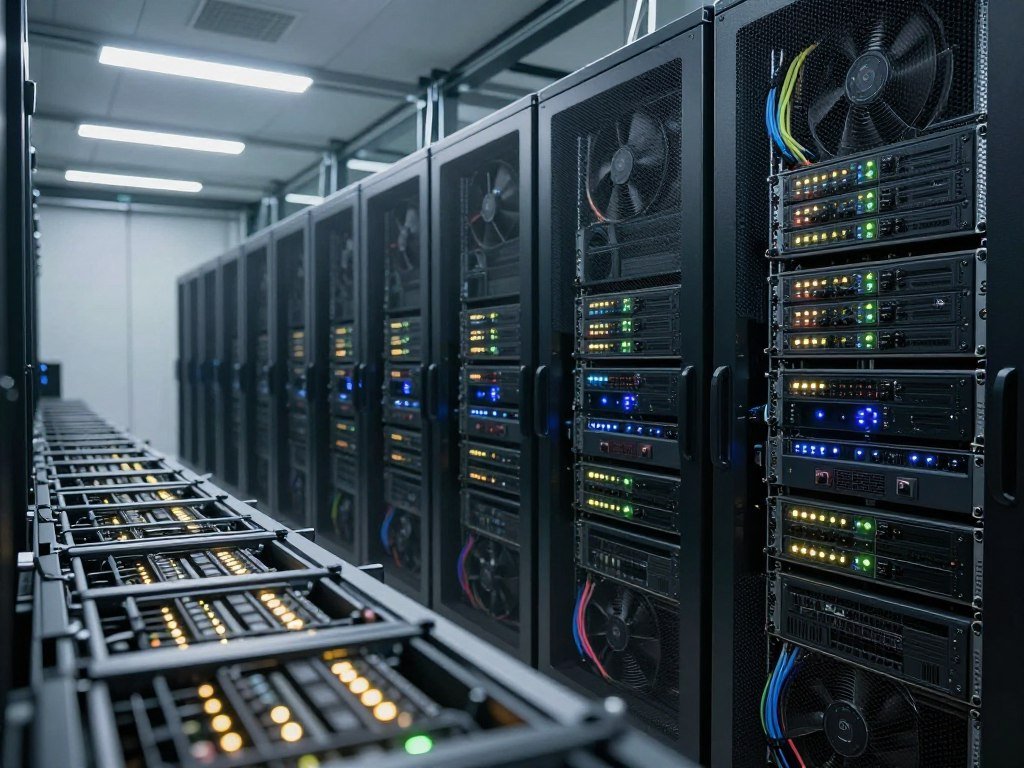
From the outside, a large facility can resemble a windowless industrial campus; inside, racks, cables, and cooling systems fill carefully controlled spaces. Some sites fit one room, while others span campuses covering millions of square feet. Data centers operate around the clock.
Nearly all electricity used by a data center ends up as heat, so equipment needs continuous cooling. The [facility cooling demand] shapes the room layout and the systems operators install.
| System | What it looks like | Its job | AI-specific need |
|---|---|---|---|
| Compute racks | Rows of cabinets holding servers | Run computing jobs | Support dense GPU hardware |
| Storage | Drive shelves and storage servers | Keep data ready for use | Feed large jobs quickly |
| Networking | Switches, cables, and fiber links | Connect servers and systems | Move data between machines fast |
| Power and cooling | Electrical gear, chillers, and pipes | Supply power and remove heat | Support high equipment density |
Inside a server room, rows of racks connect through overhead or underfloor cables. Power distribution equipment and backup systems support steady operations. Security controls limit who can enter the building and the rooms holding equipment.
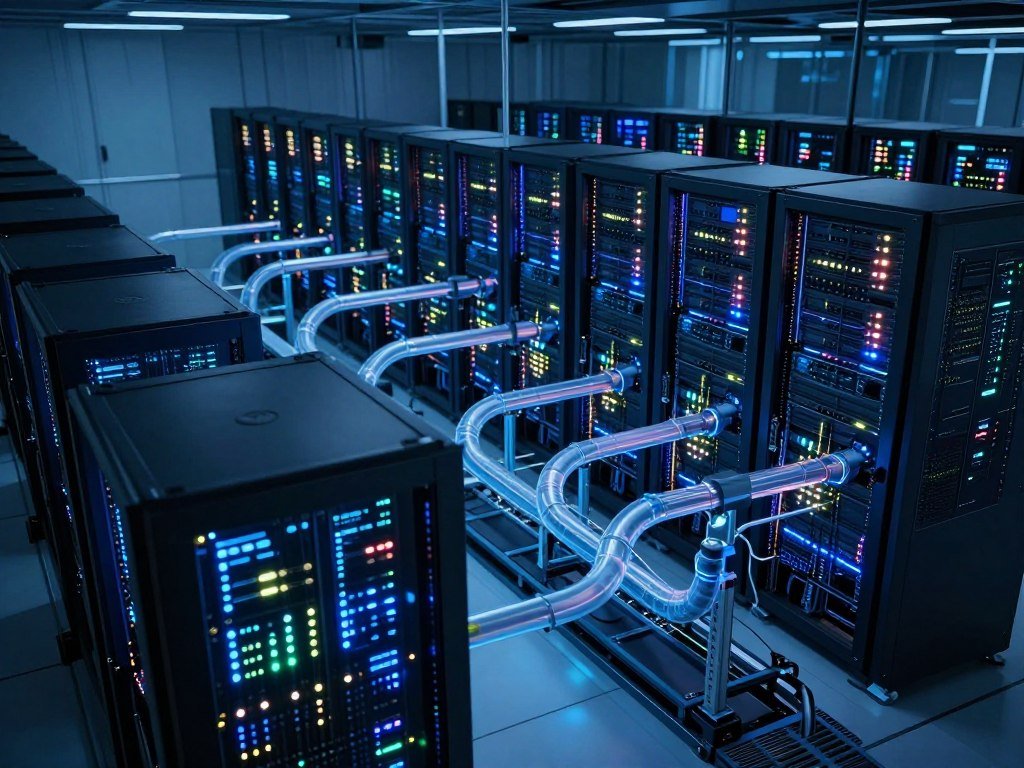
Some dense AI equipment uses liquid cooling, which moves heat through pipes near the hardware. Other facilities carefully control hot and cold aisles, directing cool air toward server intakes. Designs differ, so neither method describes every AI site.
A facility’s size can hide the amount of equipment inside. A compact room may hold a large amount of computing hardware, while a broad campus can support many kinds of work. A striking exterior tells you little about a site’s actual workload or cooling design.
How Does an AI Data Center Compare With a Traditional Data Center?
The key difference is the degree of coordination and density required, not simply whether a facility contains a GPU. Traditional data centers support broad computing needs, while AI-focused sites are built to serve demanding workloads. The boundary between them is not absolute.
A traditional facility may still run lighter AI workloads if its systems meet the job’s needs. The right fit depends on compute, memory, networking, and cooling requirements.
General-Purpose Facilities Prioritize Broad Computing Needs
A traditional data center commonly uses central processing units, or CPUs, for general-purpose computing. It can support business applications, websites, and data storage. These jobs need reliable systems, but they do not all require dense parallel computing.
That does not make traditional facilities unable to run AI. Smaller models or lighter inference jobs may fit existing systems. A facility may also use GPUs for specific tasks without being designed around large AI workloads.
AI-Ready Facilities Coordinate Dense Compute
AI-ready facilities coordinate accelerators with high-speed storage, networking, power, and cooling. GPUs handle many calculations in parallel, but their performance depends on other systems keeping pace. A weak connection or slow data access can limit the value of fast processors.
The label “AI-ready” describes a facility’s ability to meet a workload’s needs, not a fixed design. Some cloud or hyperscale sites support mixed workloads, while dedicated AI facilities focus on high-density computing.
| Facility type | Processor approach | Infrastructure priority | Typical fit |
|---|---|---|---|
| Traditional enterprise | Mostly CPUs | Broad business systems | Websites, storage, and business apps |
| Cloud or hyperscale | CPUs and GPUs | Flexible, large-scale capacity | Cloud services and mixed workloads |
| AI-focused | Dense GPUs and accelerators | Fast compute, data, and cooling | Demanding AI training and inference |
For example, a business may run a small inference service in an existing cloud account, then move larger training jobs elsewhere. That choice can avoid paying for equipment the smaller service does not need. Compare the workload’s compute, memory, network, and cooling requirements before deciding that an existing facility is unsuitable.
What Is an AI Data Center Used For?
AI data centers are used both to build models and to run AI services after those models are trained. Some jobs take hours or longer, while others must return an answer quickly. A single facility can support several applications at once.
Training and inference place different demands on computing and response time. Training may use large batches of data, while an interactive service must respond when a user sends a request.
- Training large language models on examples so they can learn patterns in text.
- Running chatbot and other generative AI inference for user requests.
- Analyzing images and video to find objects, events, or patterns.
- Processing sensor data for real-time decisions in connected systems.
- Supporting cloud services that store and serve data to applications.
Video workloads can involve large files and frequent processing. A system may scan footage for specific events, then send results to another application. The amount of data and the speed needed shape the computing setup.
Some applications need a quick response near the device that collects data. Others can send work to a distant cloud facility without a noticeable delay. Data sensitivity and latency needs can affect where a task runs.
A data center can support multiple services, but that does not mean every service shares the same equipment or schedule. Operators allocate capacity based on demand and system limits. A workload that needs immediate local decisions may need a different setup from a long-running model-training job.
Why Do We Need AI Data Centers?
AI data centers are needed when model workloads exceed the practical capacity of ordinary business computing systems. Large training jobs and widespread inference need connected computing capacity that can scale. Cloud services and other digital work also use data centers.
Available capacity is tight while planned development is large. North American data center capacity under construction exceeded 66 gigawatts in 2026, with 77% being built in frontier markets.
In the first half of 2026, North American data center vacancy was 1% for the third consecutive year. The Americas had 50.3 gigawatts of operational capacity, and 94.1% was in the United States.
The Americas’ planned data center development pipeline reached 285 gigawatts in the first half of 2026. Those figures help explain why data centers are popping up across the country: AI and cloud demand meet limited open capacity and a large construction pipeline.
The number of U.S. data centers more than doubled between 2018 and 2021, then doubled again by 2026. The planned build-out is also part of a wider AI investment rush, involving chip, cloud, and network companies. A guide to AI-related companies shows how varied that supply chain can be.
Low vacancy does not mean every proposed site will move forward. Projects can change as power access, financing, land, and local approval conditions shift. A development pipeline measures planned capacity, not a guarantee that every project will be built.
AI Data Centers vs. Traditional Data Centers: Power Consumption
U.S. data centers used 176 terawatt-hours of electricity in 2023, and individual AI-focused sites can demand much more than conventional facilities. One national measure covers electricity used across U.S. data centers, while a site’s peak load describes its highest power demand.
These measures are different and should not be compared as if they were the same. The 2023 total was roughly equal to Ireland’s national electricity use.
A conventional data center can draw as much electricity as 10,000 to 25,000 households. A newer AI-focused hyperscale data center can use as much power as 100,000 homes or more. These household comparisons are illustrations, not direct measures of annual electricity use.
Some large facilities under construction are slated to use three gigawatts or more of peak electricity. That is more than 75 times Yale University’s peak demand. Peak capacity describes a possible high point, not the amount consumed throughout a year.
Based on the 2023 estimate, U.S. data center electricity consumption was expected to double or even triple as soon as 2028. That is a projection, not a measured outcome. The Deloitte analysis of power demand also estimates that U.S. AI data center demand could rise from four gigawatts in 2024 to 123 gigawatts by 2035.
Large facilities can affect power planning because they may need substantial capacity from the grid. Electricity demand also depends on how much equipment runs and how often it operates. Check whether a power figure refers to peak capacity, annual electricity use, or an estimate before comparing facilities.
What Is the Environmental Impact of AI Data Centers?
An AI facility’s footprint depends not only on how much electricity it uses, but also on where that power comes from and how it is cooled. Location matters because grids, water supplies, and local land conditions differ. Equipment and construction also add to the impact.
A facility’s label alone does not determine its environmental effects. Workload, grid mix, cooling method, location, and equipment life all shape the comparison between AI and traditional data centers.
| Impact pathway | What drives it | What changes the effect |
|---|---|---|
| Electricity emissions | Power used by computing and support systems | Grid mix and time of use |
| Cooling and water | Heat removal and water supply | Cooling method and local water stress |
| Equipment and grid construction | Servers, chips, buildings, and power systems | Equipment life and construction needs |
Greenhouse gas emissions depend on when and where a facility uses electricity. A coal- or gas-heavy grid can have a different impact from a grid with more low-carbon power. Yet low-carbon electricity does not always mean low water or land use.
Some large data centers require up to five million gallons of water per day, comparable to the daily water use of a city of 50,000 people. Water can be used for cooling and upstream electricity generation. A water-stressed region may face a different burden than a water-abundant one.
Impacts also arise from making and replacing servers, chips, cooling equipment, buildings, backup power systems, and grid infrastructure. The UNU-INWEH report on AI’s environmental footprint examines carbon, water, and land impacts.
Two sites with similar computing capacity can affect their surroundings in different ways. The local water supply and the source of electricity are part of that difference. A site in a water-stressed area can pose a different local concern from an equally demanding facility in a water-abundant region.
Why Are AI Data Centers Controversial?
The AI data center controversy is about who bears the local costs when a large facility needs land, power, water, and supporting infrastructure. Residents may raise concerns before a project is built, especially when details about resource use are limited.
In 2026, state and local officials were considering data center moratoriums amid concerns about:
- Household electricity rates.
- Water availability.
- Air quality.
- Drought.
- Noise.
- Light pollution.
These concerns do not have the same weight at every site. Effects depend on facility design, energy supply, local conditions, and the terms of approval. A project with a different cooling plan or power source may create a different set of local questions.
Residents may also seek clear details about how a site will operate. If information arrives late, people may have less time to understand likely effects or weigh proposed changes. Local groups and officials may disagree about what counts as enough information.
Some disputes involve broader questions about public benefits and costs. A project may bring jobs or tax revenue, while residents focus on services and resources affected nearby. Those outcomes depend on the project and the terms set for it.
A community can assess a proposal more clearly when its expected resource use and mitigation commitments are public. Clear figures can help residents compare proposed safeguards with the site’s expected needs.
How Are Local Data Center Rules Changing?
Local governments have used temporary moratoriums to pause approvals while they revise zoning rules or other development requirements. A pause can create time for officials to study how local codes apply to large projects.
Statewide proposals and local pauses are different actions. In 2026, 14 state bills across 11 states proposed statewide construction moratoriums; none had passed its originating chamber as of March 13.
Temporary Moratoriums Create Time for Rule Updates
By July 28, 2026, at least 15 states had weighed development pauses, and at least 100 localities had approved their own. Local governments have used temporary moratoriums to update municipal codes, zoning rules, and other regulations.
The North Star Data Center Policy Toolkit recommends a moratorium of at least 180 days, with clear requirements for lifting it. That approach gives officials a defined period to review rules and tells developers what must happen before approvals resume.
Zoning and Permits Set Project Conditions
Local zoning rules can set setbacks and distance requirements, depending on local and state law. A conditional-use permit can set requirements before approval. It can also be revoked if the owner fails to meet those conditions during the property’s lifespan.
Local governments can request details such as:
- Expected water use.
- Noise levels and steps to reduce noise.
- Energy use and planned mitigation.
- On-site emissions.
- Tax abatements.
- Jobs and environmental impacts.
These tools can help officials assess a site and set enforceable terms. Which tools are available depends on local and state law. Residents can compare a proposal with its permit terms once the conditions are public.
A pause is more useful when its duration and the standards for lifting it are clear from the start.
How Can Organizations Access AI Data Center Capacity?
Most organizations can use AI infrastructure without designing and operating a data center of their own. Build, lease, and colocation offer different levels of control and responsibility. The best fit depends on the workload and the team’s ability to run specialized systems.
A modest or uncertain AI workload may not need a dedicated facility. Cloud services can provide managed models or rented computing capacity, while larger needs may call for more control.
| Approach | Who owns the servers | Who provides the facility | Suitable situation |
|---|---|---|---|
| Build | Organization | Organization | Long-term need for control and capacity |
| Lease | Provider or organization, by contract | Provider | Rented capacity in a prepared site |
| Colocation | Organization | Shared-facility operator | Own servers, use operator’s site systems |
Building offers the most control, but the organization must take responsibility for the facility. Leasing rents capacity in a prepared site, which can avoid running the building. With colocation, the organization owns its servers while the operator provides space and supporting systems.
Hybrid cloud can connect on-premises systems with cloud capacity. That can help teams keep some data or systems close while using outside computing when demand rises. The setup still needs a plan for how data moves between locations.
Organizations comparing major cloud providers should test real workloads and consider storage, data transfer, support, and operating needs. This AWS, Azure, and Google Cloud comparison outlines factors businesses can weigh.
Match the access model to the workload’s scale, control needs, and ability to operate specialized systems.
Conclusion
The right AI infrastructure is the setup that fits the workload, not automatically the largest facility available. Compute, storage, networking, power, and cooling must support the performance and reliability users need.
Before choosing a facility or provider, document expected training and inference workloads, data sensitivity, response-time needs, and growth assumptions. Those details can help your team compare capacity options and avoid paying for systems it cannot use well.
Start by writing down what the models must do and the performance your users actually need.
FAQ
What is in an AI data centre?
An AI data center contains GPU servers, storage and memory, networking, power distribution, cooling, and security systems. GPU servers handle many calculations at once, while storage and memory keep data ready for use. Networks connect the equipment, and power and cooling support its operation. Layouts vary with the workload, site size, and equipment density.
What is meant by data in AI?
AI data includes examples used to train a model and new inputs processed during inference. Training examples help the model adjust its internal weights. During inference, a new prompt, image, or other input is sent through the trained model to produce an output. The term can also mean stored files, logs, or records that a service keeps but does not process for every request.
What are the downsides of AI data centers?
AI data centers can use large amounts of electricity and, in some designs, substantial water. Their emissions depend partly on the electricity grid that serves them. Making and replacing equipment, buildings, and grid systems also has environmental effects. Nearby residents may have concerns about noise or air quality, though the risks depend on site design and local conditions.
Why are data centers popping up everywhere?
Data centers are expanding as AI, cloud services, and other digital workloads need more computing capacity. Low vacancy means less ready space is available in some markets, while companies plan new construction. Those plans do not guarantee that every project will be completed. Sites still depend on factors such as power access, financing, land, and local approvals.
How far away should you live from a data center?
There is no single nationwide setback distance for homes near data centers. Local zoning rules and state law set the requirements for a specific site, and some areas use setbacks or distance rules. The facility’s design and its permitted conditions can also shape nearby effects. Check the local rules that apply to the property and project.
Which US state has the most data centers?
Virginia has the most data centers, with Northern Virginia serving as the leading U.S. market. Rankings can differ depending on whether they count facilities, total capacity, or market boundaries. A state with many smaller sites may rank differently by count than by computing capacity. The exact comparison also depends on how a market is defined.
What states are not allowing data centers?
No state was shown to have passed the listed statewide moratorium bills as of March 13, 2026. Fourteen bills across 11 states had been proposed, but none had passed its originating chamber by that date. By July 28, 2026, at least 100 localities had approved local pauses. Local rules can differ even when a statewide ban is not in place.
How much electricity do data centers consume?
U.S. data centers consumed 176 terawatt-hours of electricity in 2023. That was roughly as much as Ireland used nationally. Based on the 2023 estimate, U.S. data center electricity use was expected to double or even triple as soon as 2028. That projection is not a measured outcome, and an individual facility’s peak power is different from annual national use.