
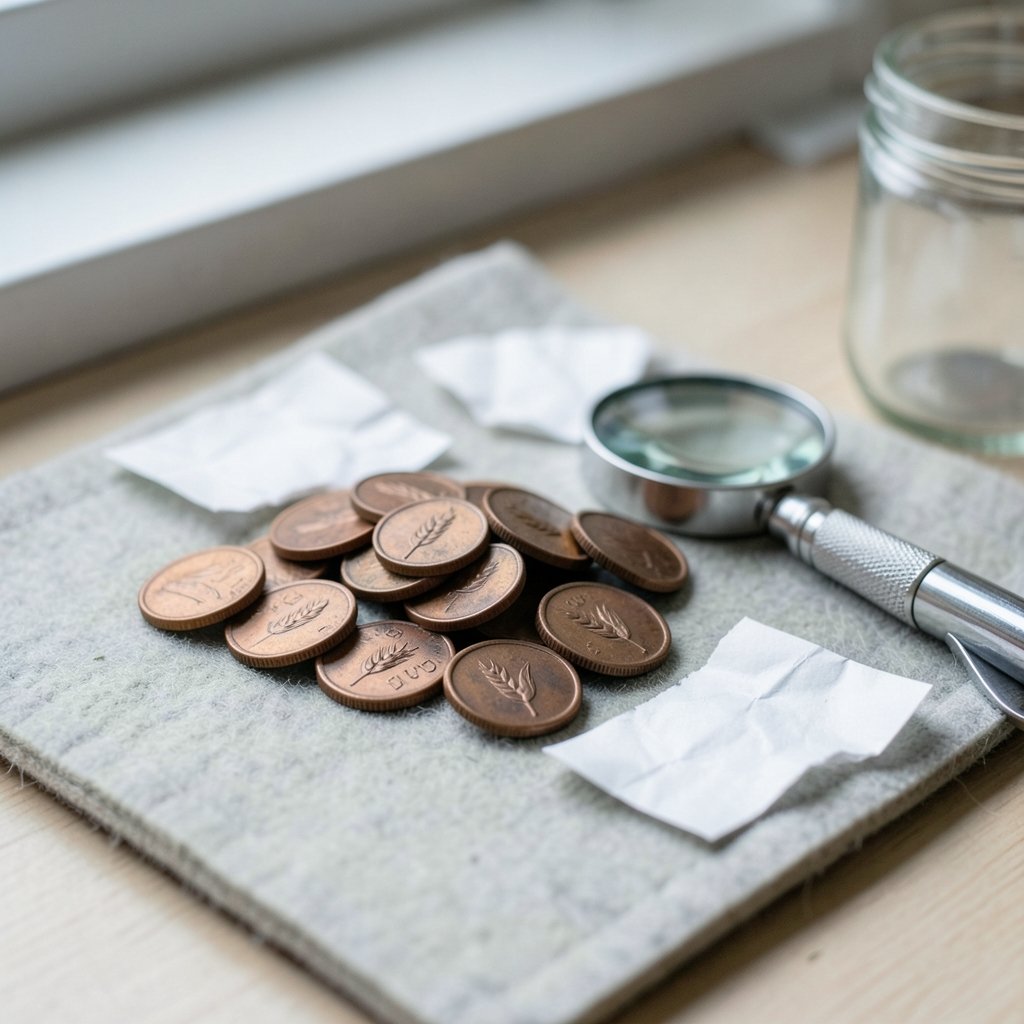
Quick Answer: What wheat pennies are worth money?
Most wheat pennies are worth only a few cents to a few dollars in circulated condition, so the honest answer is that the average jar of pocket change will not fund a vacation. The coins that carry real value are specific dates, low-mintage branch-mint issues, famous error varieties, and pieces that survive in unusually high grades. A 1909-S VDB, a 1914-D, a 1931-S, a 1955 doubled die, or a genuine 1943 copper cent sits in a completely different category from a worn 1944 Philadelphia cent. Before assuming a coin is valuable, check the date, the mint mark, the grade, whether the surface has been cleaned or damaged, and whether the piece has been authenticated or certified. Those five factors decide nearly everything.
A wheat penny’s value also depends on the market at the moment of sale, so any dollar figure is a snapshot rather than a permanent fact. Two coins with the same date can differ in price by orders of magnitude once wear, color, and authenticity enter the picture.
Why the Wheat Cent Still Fascinates Collectors
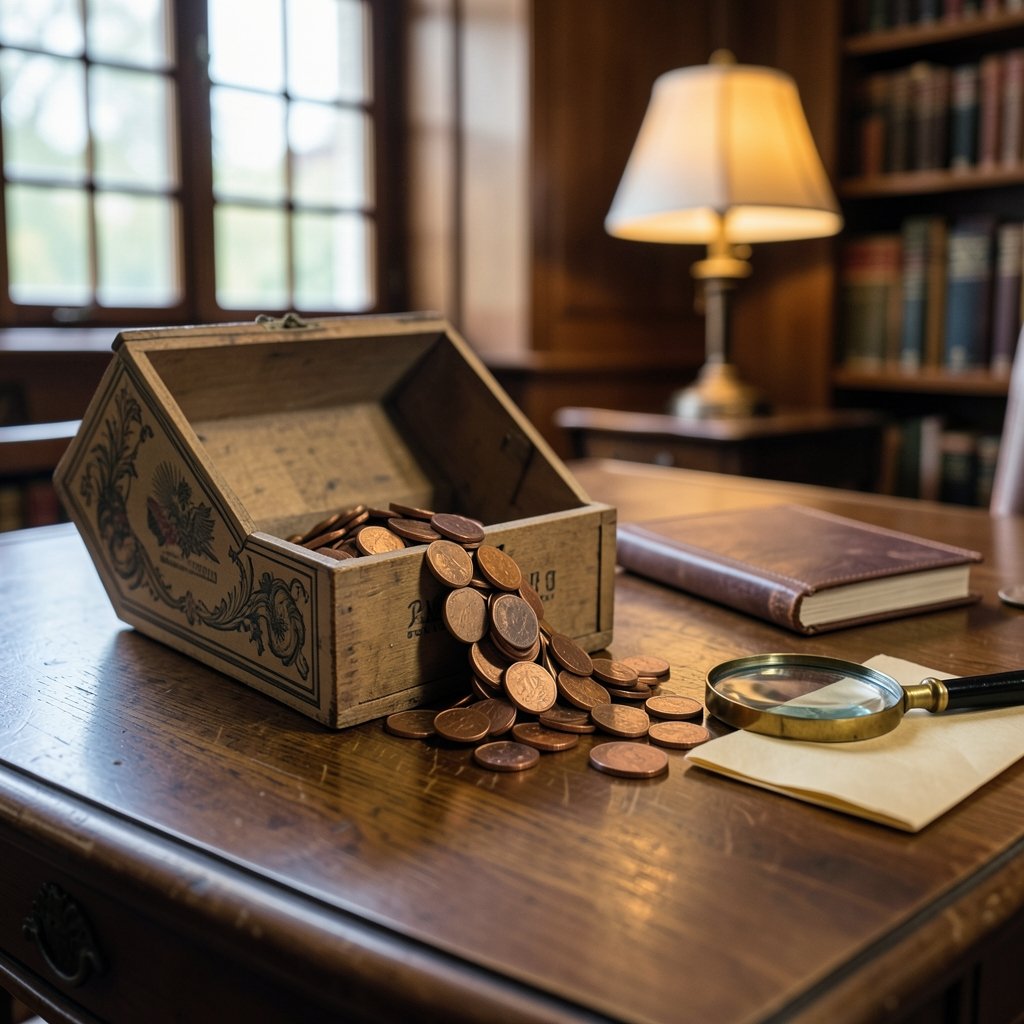
A jar of old coins may contain a dull brown cent worth a hundred dollars. Millions of Americans have a coffee can, a cigar box, or a sandwich bag of wheat pennies inherited from a grandparent, and nearly all of them do not know what is inside.
The wheat penny is the Lincoln cent struck from 1909 through 1958, named for the two stylized wheat stalks that flank “ONE CENT” on the reverse. In 1959 the design gave way to the Lincoln Memorial reverse, which closed the door on the series and turned every wheat cent into a finite, closed-set collectible. That matters for value: no more will ever be made, but enormous numbers were made, so scarcity is the exception rather than the rule.
The series also sits at a sweet spot for beginners. It is affordable, well documented, and full of dramatic stories, from World War II metal shortages to a designer’s initials that were pulled from the coin mid-year. If you enjoy low-stakes collecting with a genuine chance of a find, this series delivers. If you are weighing hobby spending against other entertainment costs, the same discipline that applies to a game pass subscription in 2025 applies here: know what you are buying before you commit.
The Key Dates That Actually Carry Premiums
Key dates are the backbone of wheat penny value. These are the issues with low mintages or low survival rates, and they command strong prices even in heavily worn grades.
| Date and Mint | Why It Matters | Typical Market Standing |
|---|---|---|
| 1909-S VDB | First-year San Francisco issue with designer initials; famously low mintage | The series’ headline key date |
| 1909 VDB (Philadelphia) | Same initials, far higher mintage | Modest premium over common cents |
| 1909-S | Low San Francisco mintage without initials | Solid key date in any grade |
| 1914-D | Low Denver mintage, heavily circulated | Major key date, scarce in high grade |
| 1931-S | Depression-era low mintage | Key date, prized in circulated grades |
| 1922 plain (no D) | Denver Mint error with a weakly struck mint mark | Specialized variety with strong demand |
Notice the pattern. The mint mark does most of the work. “S” means San Francisco, “D” means Denver, and no mark means Philadelphia. Philadelphia struck cents in enormous quantities, which is why a 1944 with no mint mark is pocket change while a 1914-D is a genuine prize. Branch-mint issues from the early decades simply did not survive in the same numbers.
The 1909-S VDB Story
The 1909-S VDB is the coin that launches a thousand treasure hunts. Designer Victor David Brenner placed his initials at the bottom of the reverse, and public complaints about their prominence led to their removal partway through 1909. The initials returned in 1918, smaller and tucked onto the shoulder. Because the San Francisco run was short, the 1909-S VDB became the series’ most famous rarity, and it is also one of the most counterfeited. Altered mint marks and added “S” punches are a constant problem, which is why authentication matters more here than anywhere else in the series.
The 1943 Steel Cent and the 1943 Copper Myth
In 1943 the Mint struck cents in zinc-coated steel because copper was needed for the war effort. These gray steel cents are extremely common and are usually worth very little. The coin everyone dreams about is the 1943 copper cent, struck by mistake on leftover bronze planchets. Only a handful are believed to exist, and the market is flooded with fakes made by copper-plating steel cents or altering dates. A magnet is your first test: steel cents stick, copper cents do not. That single trick eliminates most fakes in seconds.
The 1944 Steel Cent: The Mirror Rarity
The 1944 steel cent is the reverse situation. A small number of 1944 cents were struck on leftover steel planchets, and those pieces are genuinely rare and valuable. Here the magnet test flips: a 1944 cent that sticks to a magnet is the interesting one. This is the kind of detail that separates a serious searcher from someone who only knows the famous dates.
The 1955 Doubled Die Obverse
The 1955 doubled die is the classic error coin of the series, with dramatic doubling visible on “LIBERTY” and “IN GOD WE TRUST.” It is valuable, widely recognized, and frequently faked by tooling a normal coin. Real doubling comes from the die itself and looks crisp and raised under magnification; a fake often looks carved or mushy. If you suspect you have one, do not clean it and do not rub it.
How Grading Changes Everything
Grading is the single biggest multiplier in wheat penny value, and it is the part most beginners underestimate. Coins are graded on the Sheldon 1 to 70 scale, where 70 is flawless and lower numbers describe increasing wear. A common date in a low grade might be worth cents, while the same date in a high mint-state grade can be worth many times more. The jump is not gradual; it is a cliff.
Practical grading tips that actually work:
- Look at the wheat stalks first. On a high-grade coin the lines are sharp and complete; on a worn coin they blur into flat shapes.
- Check the “LIBERTY” lettering on the obverse. If the letters are merged or faint, the coin has seen real circulation.
- Examine Lincoln’s cheek and jaw for flat spots, which indicate wear.
- Weigh the coin if you suspect an alteration. A genuine cent should weigh close to the standard specification for its composition.
- Use a loupe for mint marks and doubling. Many “finds” evaporate under ten-power magnification.
The most common mistake people make is cleaning a coin. A quick polish with baking soda or a commercial dip can strip a coin’s original surface and cut its value dramatically, sometimes by more than half. Never clean a coin you think might be valuable. The second most common mistake is overgrading by wishful thinking. A coin that looks “really nice” to a hopeful eye is often just mid-grade.
What Common Wheat Pennies Are Actually Worth
Here is the part that stings a little. The vast majority of wheat pennies in circulation are common dates in worn condition, and dealers buy them in bulk by the pound or the thousand rather than by the piece. A 1940, 1941, 1942, 1944, 1945, 1946, or 1957 Philadelphia cent in average circulated condition is not a payday.
That does not mean they are worthless. Common wheat cents have steady demand from date-and-mintmark set builders, crafters, and casual collectors. The realistic expectation is modest: a few cents each in bulk, somewhat more if you sort and sell individual nicer pieces. The honest framing is that the value in a jar of common cents is mostly in the fun of the search, not the payout. If you want a realistic model for weighing a small recurring cost against real enjoyment, the same logic behind whether ChatGPT Plus is worth it in 2026 applies: small amounts add up, so be clear about what you are getting.
Where common cents do pay off is in set building. A complete circulated wheat cent set, including the key dates, is a genuine accomplishment and holds real collector value as a whole, even when the individual common pieces are cheap.
Where to Check Values Without Getting Burned
Price guides are useful, but they are snapshots. A printed guide reflects the market when it was written, and coin prices move with demand, bullion sentiment, and auction results. Treat any single number as a starting point, not a guarantee.
A few practical rules keep you out of trouble:
- Compare sold prices rather than asking prices. Anyone can ask anything.
- Buy certified coins for key dates. Third-party grading slabs reduce counterfeit risk substantially.
- Avoid deals that feel urgent. Rarity plus pressure is the classic setup for a bad purchase.
- Keep raw coins in holders and handle them by the edges.
Counterfeit and altered key dates are widespread enough that consumer protection guidance from collector organizations is worth reading before any significant purchase. The same caution applies to everyday money handling: scams that target cash and gift cards rarely return money to victims, as this look at how gift card scams work and why victims rarely get their money back makes clear. Coin fraud follows the same pattern of irreversible loss.
A Sensible Approach for Beginners
If you have inherited a box of wheat pennies, start with sorting rather than selling. Separate by decade, then pull out the key dates and anything with an unusual color or surface. Check for mint marks on the reverse, just below the date area. Run a magnet over every 1943 and 1944 cent. Set aside anything that looks sharply struck or unusually clean, because those are the candidates worth grading.
Then decide what you actually want. Some people want to complete a set, some want to flip a few key dates, and some just want to keep grandpa’s coins in the family. All three are legitimate. What matters is that you do not sell a key date cheaply because you did not check the mint mark, and you do not pay a premium for a common coin because a listing called it rare.
Budgeting for a collection works like any other hobby. Set a limit, track what you spend, and do not let a single exciting find pull you into overspending. The discipline behind zero-based budgeting versus net worth tracking translates directly: give every dollar a job, whether it goes to a coin or to savings.
Conclusion
Wheat pennies are worth money in a narrow, specific sense: the key dates, the famous errors, and the high-grade survivors carry real premiums, while the overwhelming majority of circulated common cents are worth very little. The gap between those two worlds is not luck. It is date, mint mark, grade, condition, and authenticity, checked carefully and without wishful thinking.
The good news is that the series rewards attention. A magnet, a loupe, a date-and-mintmark guide, and a refusal to clean anything will put you ahead of most people who inherit a jar of old cents. Check the mint marks, respect the grade, verify before you buy or sell, and enjoy the hunt for what it is. The next 1909-S VDB is out there somewhere, and it is almost certainly sitting in a box that someone has not looked through in forty years.
FAQ
Are all wheat pennies worth more than face value?
No. Many common dates in worn condition trade at or barely above face value in bulk. Value comes from scarcity, grade, and variety, not from the fact that a coin is old. Age alone is a weak signal in this series because hundreds of millions of wheat cents were struck.
How can I tell if a 1943 penny is steel or copper?
Use a magnet. Genuine 1943 steel cents are zinc-coated steel and stick firmly to a magnet, while a true 1943 copper cent will not. Most “copper” 1943 cents offered online are steel cents that have been plated or painted, so the magnet test plus a careful look at the surface catches most fakes.
Does cleaning a wheat penny hurt its value?
Yes, often severely. Cleaning strips the original surface, leaves hairline scratches, and removes the natural color that graders look for. A cleaned key date can lose a large share of its value compared with an uncleaned example in the same detail grade. Leave any coin you suspect is valuable exactly as you found it.
What is the most valuable wheat penny?
The 1909-S VDB is the most famous key date, and the 1943 copper cent is the most celebrated rarity, but “most valuable” depends on grade and the specific sale. A high-grade key date can outperform a low-grade rarity, which is why certification and grading matter so much when real money is on the line.
How do I identify the mint mark on a wheat penny?
Look at the reverse, just below the date area between the wheat stalks. An “S” means San Francisco, a “D” means Denver, and no letter means Philadelphia. Philadelphia issues are by far the most common, which is why the branch-mint key dates carry the premiums.
Is it worth sending a wheat penny in for professional grading?
Only if the coin is a recognized key date, a known variety, or unusually sharp. Grading fees can exceed the value of a common circulated cent, so the math only works on coins with real premium potential. For everything else, a good loupe and a reliable price guide will do the job.



