
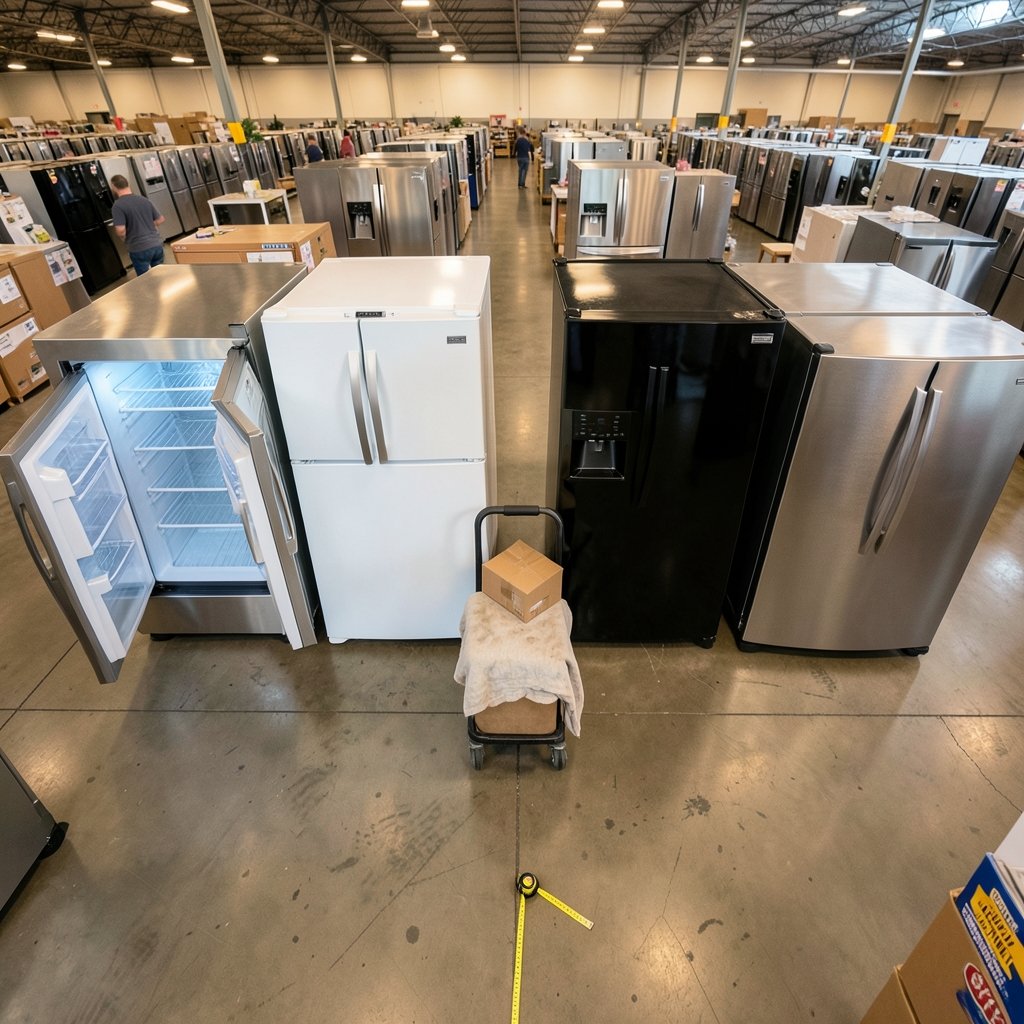
Quick Answer: Where is the best place to buy a refrigerator?
There is no single best store for everyone; the right place depends on whether you value the lowest price, fast delivery, professional installation, or strong after-sale service. Most buyers choose between big-box chains, warehouse clubs, local independent dealers, and online retailers, and each channel wins on different priorities.
Big-box stores and warehouse clubs usually lead on price and promotional financing, while specialty and local dealers often lead on delivery care, installation quality, and repair support. Online retailers can be convenient but may outsource delivery and haul-away to third parties.
Before buying, compare total delivered price, delivery and installation terms, haul-away of the old unit, the return window, warranty coverage, energy use on the EnergyGuide label, and any available rebates.
Why the “Best” Store Depends on What You Actually Need

Walk into any appliance showroom and you will hear the same promise: lowest price, best service, fastest delivery. All three at once is rare. That is why the question “where is the best place to buy a refrigerator” has no universal answer. The honest answer is that the best place is the one that matches your priorities.
Think about what could go wrong. A refrigerator is one of the few purchases where the delivery experience matters almost as much as the product. A scratched door, a botched water line, or a unit that will not fit through the doorway can turn a great deal into a headache. So before comparing sticker prices, decide which of these matters most to you:
- Lowest total cost, including delivery, installation, and haul-away
- Delivery speed, especially if your old fridge has already died
- Installation quality, particularly for water lines and tight spaces
- After-sale service, meaning who answers when something breaks in month eight
- Selection, if you want a specific brand, width, or finish
Once you rank those, the right retailer usually becomes obvious. A buyer who needs a fridge tomorrow shops differently from one remodeling a kitchen over three months.
The Main Places to Buy a Refrigerator, Compared
Appliance retail is split between big-box chains, warehouse clubs, specialty appliance dealers, and online retailers. Here is how the channels generally stack up.
| Channel | Typical strengths | Typical weaknesses | Best for |
|---|---|---|---|
| Big-box chains | Wide selection, frequent sales, bundled delivery and installation | Service quality varies by store and region | Most buyers who want one-stop shopping |
| Warehouse clubs | Competitive pricing, membership perks, extended warranty bundles | Limited models and finishes | Members who value warranty extras |
| Local independent dealers | Personal service, careful delivery, repair relationships | Narrower selection, sometimes higher prices | Buyers who prioritize installation and service |
| Online retailers | Convenience, easy price comparison, broad inventory | Delivery often outsourced, harder installation support | Research-first shoppers in strong delivery areas |
The practical lesson: the channel matters less than the specific store’s delivery crew and service reputation in your area. A big-box store with a great local delivery team can beat a specialty dealer with a poor one, and vice versa.
Big-Box Chains
These stores win on breadth. You can see dozens of models in person, compare finishes side by side, and often bundle delivery, installation, and removal of the old unit into one transaction. The catch is variability. Policies and service quality can differ significantly from one location to the next, so it pays to read recent local reviews rather than national ones.
Warehouse Clubs
Warehouse clubs appeal to buyers who want predictable pricing and membership perks, often including extended warranty coverage. Selection is limited, though, and the models rotate. If you find the size and finish you want, this can be an excellent value. If you need a very specific width for a tight cabinet opening, you may strike out.
Local Independent Dealers
Independent dealers often compete on delivery, installation, and service rather than price. In markets where big-box delivery is unreliable, a good local dealer can be worth a small premium. They may also have direct relationships with repair technicians, which matters when a warranty claim comes up. The trade-off is narrower selection and sometimes higher prices.
Online Retailers
Online shopping makes price comparison easy and inventory feel endless. The weak link is usually the last mile. Delivery and installation are frequently handled by third-party contractors, and scheduling can be less flexible. If you buy online, confirm in writing who installs the unit, who hauls away the old one, and who you call if the door arrives dented.
The Costs Nobody Advertises
Sticker price is only part of the story. Delivery fees, installation charges, haul-away fees, water-line kits, and extended warranties can add a meaningful amount to the final bill. Some retailers bundle these services; others charge for each one separately. Ask for an itemized out-the-door quote before you commit.
Energy is the other quiet cost. The EnergyGuide label required on most new refrigerators shows estimated annual energy use and cost, which lets you compare models on more than purchase price. Over a decade, an efficient model can narrow or erase a price gap. Efficiency certification programs identify models that meet defined criteria, and utilities and state programs sometimes offer rebates for efficient appliances. Rebate programs change often, so check what is currently available in your area before you buy.
One more hidden cost: fit. Measure your doorway, hallway, and cabinet opening before you shop. A refrigerator that does not fit is the most expensive mistake in this category, and restocking fees on large appliances can be steep. If you are planning the surrounding space, the same planning mindset that applies to placing a water leak sensor under a washing machine applies here: a few minutes with a tape measure prevents most disasters.
Delivery, Installation, and Haul-Away: Where Deals Are Won
Ask experienced buyers what separated a good purchase from a bad one, and the answer is rarely the fridge itself. It is the delivery. Delivery and haul-away are often the deciding factor, not sticker price, and terms vary by store and region.
Before you buy, get clear answers to these questions:
- Who actually performs the delivery, store employees or a third-party contractor?
- Is installation included, and does it cover connecting the water line for ice makers and dispensers?
- Is haul-away of the old unit included, and is there a fee?
- What is the delivery window, and will they call ahead?
- What happens if the unit arrives damaged?
Write the answers down or save the chat transcript. Verbal promises are hard to enforce later. Return windows for major appliances are often shorter than for small items, commonly measured in weeks rather than months, so inspect the unit thoroughly on delivery day and report problems immediately.
How to Judge a Refrigerator Before You Buy It
Marketing claims are a poor guide to reliability. Independent testing and reliability surveys are better than brochures for judging brands, because manufacturer specs alone do not predict repair rates. Look for owner-satisfaction data and repair histories rather than feature lists.
Practical checks that actually work:
- Measure twice. Confirm width, height, and depth, plus clearance for doors and hinges.
- Read the EnergyGuide label. Compare estimated annual energy cost between the two or three models on your shortlist.
- Check the return policy and warranty terms before purchase, not after.
- Search local reviews for the specific store’s delivery crew as well as the brand.
- Ask about price-matching, which is usually time-limited and comes with conditions.
If you are also setting up a smart home alongside the new kitchen, placement details matter more than people expect; the same care that goes into where to place your router for the best signal applies to planning appliance connectivity and outlet access.
Smart Timing and Money-Saving Tactics
Timing can matter as much as the store. Major appliance promotions cluster around holiday weekends and end-of-model-year clearance cycles, when floor models and outgoing finishes get discounted. If you can wait a few weeks, you often can.
Other tactics that work in practice:
- Check rebate finders for utility and state incentives on efficient models.
- Ask about open-box and scratch-and-dent units, which can carry steep discounts with full warranties.
- Compare the total delivered price, not the sticker, across at least three retailers.
- Consider financing only if the terms are genuinely interest-free for the full payoff period.
A word of caution on extended warranties: they are not automatically a bad deal, but they are frequently overpriced. Compare the cost against the manufacturer’s warranty and your credit card’s purchase protection before adding one.
Common Mistakes Buyers Make
The same errors show up again and again. Skipping measurements tops the list, followed by ignoring delivery terms until after the sale. Another frequent mistake is buying on brand reputation alone without checking current reliability data. Buyers also forget to confirm who handles warranty service in their area, which can mean weeks of waiting for a technician.
Finally, many people underestimate how much planning goes into the spaces around a refrigerator. A fridge with a water dispenser needs a functioning supply line and a sensible shutoff valve location. If you are also organizing a basement or utility area during the project, the logic behind where to place a dehumidifier for maximum drying power is a useful reminder that placement and airflow decisions deserve thought before equipment arrives.
When a Local Dealer Beats the Big Box
Local independent dealers can be the best option for service and installation in some markets, especially where big-box delivery is unreliable. They may have narrower selection and higher prices, but the difference often shows up in the details: a two-person crew that knows how to navigate a narrow stairwell, a direct line to a technician, and a willingness to make things right.
The catch is that no universal ranking exists. A dealer that is excellent in one city may be mediocre in another. Ask neighbors, check local review volume, and visit the showroom in person. If the staff can answer detailed questions about installation and service without checking a script, that is a good sign.
Conclusion
The best place to buy a refrigerator is not a single store; it is the retailer whose delivery, installation, service, and total price best match your priorities. Big-box chains offer selection and convenience, warehouse clubs offer value and warranty extras, local dealers offer service, and online retailers offer easy comparison. Measure your space, read the EnergyGuide label, confirm delivery and haul-away terms in writing, and compare the out-the-door price rather than the sticker. Do that, and the “best place” question answers itself.
Frequently Asked Questions
Is it cheaper to buy a refrigerator online or in a store?
It depends on the model and the moment. Online retailers make price comparison easy, but delivery and installation fees can erase the savings. In-store purchases often bundle delivery, installation, and haul-away, so compare the total delivered price before deciding.
How long should a refrigerator last before I need to replace it?
Most refrigerators last roughly a decade or more, though usage, maintenance, and model quality all affect lifespan. If repairs approach half the cost of a new unit, replacement usually makes more financial sense than another repair.
Should I buy an extended warranty on a refrigerator?
Not automatically. Compare the warranty cost against the manufacturer’s coverage and any protection your credit card provides. Extended warranties can be worthwhile on expensive models with complex features, but they are often overpriced for basic units.
What size refrigerator do I need?
Measure your cabinet opening, doorway, and delivery path first, then choose capacity based on household size. As a rough guide, allow about 4 to 6 cubic feet of capacity per adult in the household, and confirm door clearance before buying.
Do refrigerator rebates actually save money?
They can. Utilities and state programs sometimes offer rebates for efficient appliances, and the amounts vary widely by location. Check current programs before purchase, since rebate offers change frequently and often require specific certified models.
What should I check on delivery day?
Inspect the exterior for dents and scratches, confirm the model number matches your order, verify the water line works if applicable, and test that doors seal properly. Report any damage immediately, because return windows for major appliances are usually short.



