
Quick Answer: Where can i withdraw money from my ebt card for free?
You can usually withdraw money from an EBT card for free at ATMs that are part of your state’s EBT network, at many store checkout lanes through cash-back, and sometimes over the counter at banks your state contracts with. The catch is that “free” depends on which machine or counter you use, not on the card itself.
Two big distinctions matter. First, only the cash portion of an EBT account can be withdrawn, while SNAP food benefits stay locked to food purchases. Second, an ATM outside your state’s network can add a surcharge that you pay out of pocket.
Before you swipe, compare the ATM network, the surcharge, the cash-back policy, the teller rules, the balance-inquiry fees, and the monthly free-withdrawal limit.
Why “Free” Is a Moving Target
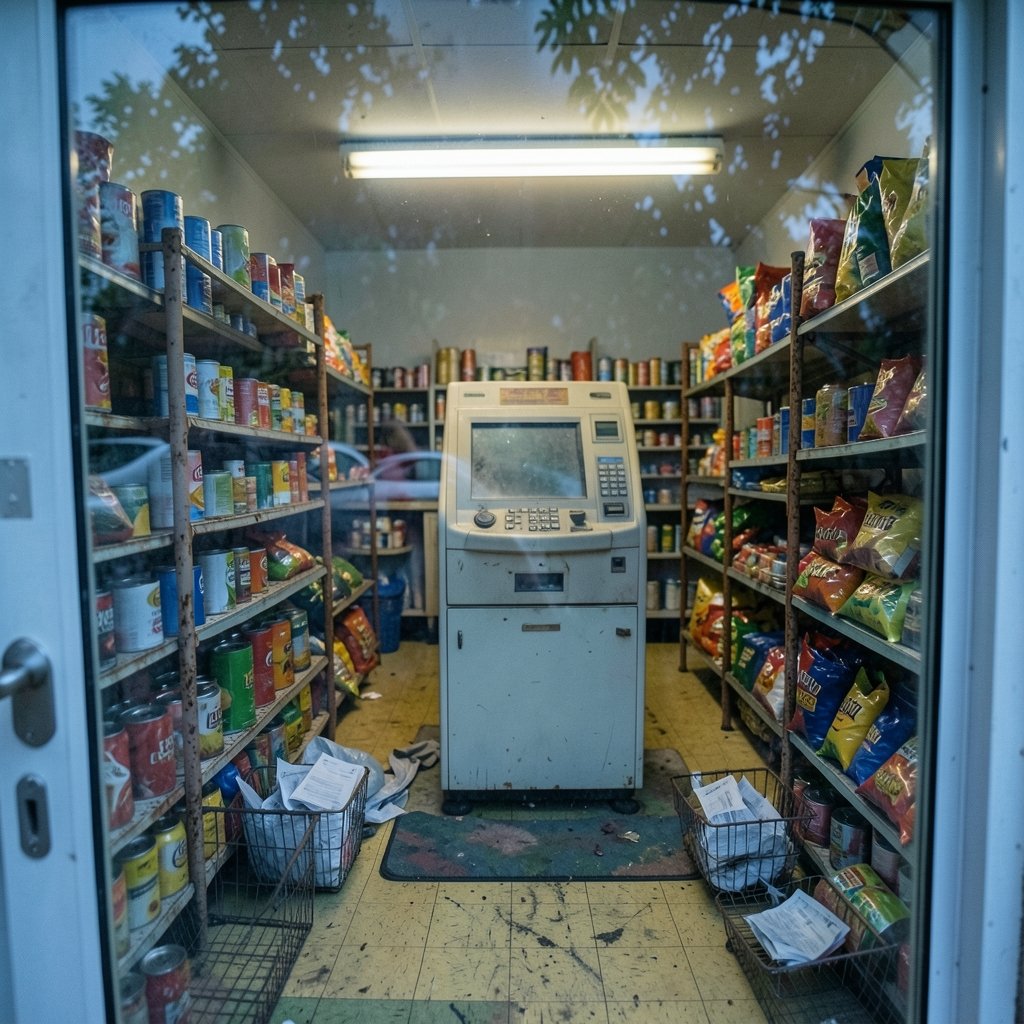
Here is the frustrating part about this question: there is no single national answer. Two people in different states, holding cards that look identical, can face completely different fee schedules. One might pull cash at a corner store with no charge, while the other pays a dollar or two at the same kind of machine. (FDIC consumer resources on bank accounts and cards)
The reason is that EBT is a federal program run through state contracts. The federal government sets the broad rules, but each state negotiates its own deal with a card processor. Those contracts decide which ATMs are in-network, how many free withdrawals you get each month, and whether a teller will hand you cash without a fee.
So when someone asks where they can withdraw for free, the honest answer is: it depends on your state, your card, and the machine in front of you. The good news is that a few reliable patterns hold almost everywhere, and once you know them, you can stop paying fees you never needed to pay.
The Three Places You Can Usually Get Cash Without a Fee
Most free withdrawals happen in one of three settings. Each has its own quirks, and each works better for some people than others.
In-network ATMs
Your state’s EBT processor maintains a network of ATMs that do not add a surcharge. These are often inside grocery stores, convenience stores, and pharmacies rather than at stand-alone bank branches. The processor publishes a list or map of these machines, and it is worth saving that page to your phone.
The trick is that “in-network” is not the same as “any ATM that accepts the card.” A machine can read your card and still charge you. The network list is the only reliable guide.
Cash-back at the register
Many retailers let you request cash back when you pay with your EBT card, and this typically avoids ATM surcharges entirely. You buy something small, ask the cashier for cash back, and the amount comes out of your cash benefit balance.
This is often the easiest route for people who shop at the same store every week. Availability is a matter of store policy, though, not a federal guarantee, and some states place limits on it. If a cashier says no, it is usually a store rule rather than a problem with your card.
Over-the-counter at contracted banks
Some states allow free withdrawals at the teller window of banks that hold the state’s EBT contract. Others do not. This is one of the most state-specific details in the whole system, so it is worth checking your cardholder agreement before you stand in line.
How the Two Balances Work, and Why It Matters
A lot of confusion comes from treating an EBT card like a debit card. It is not. The card can hold two separate pools of money, and they follow different rules.
| Balance type | What it is | Can you withdraw cash? | Where it can be spent |
|---|---|---|---|
| SNAP food benefits | Money for groceries | No | Eligible food items at participating retailers |
| Cash benefits | TANF and state cash assistance | Yes | ATMs, cash-back, and teller windows, subject to state rules |
SNAP benefits are restricted to eligible food purchases and cannot be pulled out as cash. That rule is built into the program itself, and it is the single most common source of misunderstanding. Someone checks their balance, sees a healthy number, walks to an ATM, and discovers the machine will only dispense the smaller cash portion. (Supplemental Nutrition Assistance Program (SNAP) overview)
If your card only carries SNAP benefits, no ATM will give you cash from it, free or otherwise. The withdrawal question only applies to the cash side of the account.
What Actually Drives the Fees
Fees rarely come from the state. They come from the machine, the moment, and the habit.
ATM surcharges. An ATM operator outside your network sets its own surcharge, and you pay it. This is the number one reason a “free” withdrawal turns out not to be free. The fee is set by whoever owns the machine, not by the government or your state.
Out-of-network use. Every swipe at a machine outside the network is a small gamble. Some charge a flat fee, some charge more, and a few charge nothing at all. You cannot tell by looking at the machine.
Balance inquiries. Some states charge for ATM balance inquiries after a set number of free ones each month. Others do not. Checking your balance three times at a random ATM can quietly cost more than the withdrawal you were planning.
Declined transactions. Fee schedules for declined transactions vary by state contract. It sounds trivial until you try to take out more than you have and get charged for the privilege.
Replacement cards. The card itself is issued free, but replacement card fees vary by state. This does not affect where you withdraw, but it belongs in your mental budget.
There is a broader lesson here that applies well beyond EBT. Small, repeated fees quietly drain accounts, which is why it pays to understand where the money actually goes in identity threat detection costs — the same logic of hidden line items applies to any fee schedule you are handed.
A Practical Routine That Avoids Most Fees
Theory is nice, but a routine is what saves money. Here is a sequence that works for most cardholders.
- Find your state’s official EBT cardholder page and save the surcharge-free ATM list to your phone.
- Pick two or three in-network ATMs near home and near the places you already shop.
- Withdraw larger amounts less often rather than small amounts weekly, since each trip is a chance to hit a fee.
- Ask your regular grocery store whether it offers cash-back on EBT purchases.
- Check your balance through the state’s app or phone line instead of at random ATMs.
- Keep your card and PIN separate, and treat the card like cash.
That last point is not paranoia. Card skimming and gift card scams are common, and recovering money is often difficult once it is gone. The pattern behind a gift card scam and why victims rarely get their money back is a useful reminder that a card in your pocket deserves the same caution as cash.
Common Mistakes People Make
The same handful of errors shows up again and again. Avoiding them is most of the battle.
Assuming every ATM is free. A machine that displays your balance is not necessarily in-network. Check the list.
Trying to withdraw SNAP benefits. The machine will refuse, and in some states a declined transaction carries a fee. Know which balance you are drawing from.
Chasing a “free” ATM across town. A two-dollar bus fare to save a one-dollar surcharge is not a saving. Convenience has a price too.
Ignoring the monthly limit. Many states allow a set number of free withdrawals per month and charge after that. Track how many you have used.
Skipping the cardholder agreement. It is dull reading, but it is the only document that tells you your state’s actual rules on teller withdrawals, inquiry fees, and cash-back.
If you want a broader sense of how small recurring costs add up before you commit to a purchase or a plan, the same reasoning shows up in where your money actually goes in a budget gaming PC build — the headline price is rarely the real price.
When It Makes Sense to Pay a Small Fee
Free is not always the right goal. Sometimes paying a dollar is the smarter move.
If the nearest in-network ATM is a long trip away and you need cash today, a small surcharge at the store next door may cost less than the trip. If you are withdrawing a large amount once, a single surcharge spread across the whole withdrawal is trivial. And if a teller withdrawal is free in your state but the line is an hour long, your time has value too.
The point is to pay fees on purpose rather than by accident. A cardholder who knows the network, knows the monthly limit, and knows which store offers cash-back is in control. A cardholder who swipes wherever is convenient is paying a small tax every month without noticing.
Conclusion
Free EBT cash withdrawals are real, but they are local. The reliable path runs through your state’s in-network ATMs, cash-back at the register, and, in some states, a contracted bank teller. SNAP food benefits never come out as cash, no matter which machine you try. Surcharges, inquiry fees, and monthly limits are set by contracts and machine owners, so the only authoritative source is your own state’s cardholder page. Learn your network, pick a couple of regular stops, withdraw in larger amounts less often, and check your balance through the official app rather than at random machines. Do that, and the fees mostly disappear.
Frequently Asked Questions
Can I withdraw cash from my EBT card at any ATM?
No. You can use any ATM that accepts the card, but only in-network machines are reliably surcharge-free. An out-of-network machine can add its own surcharge, which you pay.
Why does the ATM say I have a balance but refuse to give me cash?
Your visible balance probably includes SNAP food benefits, which cannot be withdrawn as cash. Only the cash portion of the account can come out of a machine.
Is cash-back at the store always free?
It usually avoids ATM surcharges, but availability is set by the retailer and some states place limits on it. Ask your regular store what its policy is.
Can I get cash from a bank teller with my EBT card?
In some states, yes, at banks that hold the state’s EBT contract. In others, teller withdrawals are not offered. Your cardholder agreement is the place to check.
Does checking my balance at an ATM cost money?
It can. Some states charge for ATM balance inquiries after a set number of free ones each month, while others do not. Using the state’s app or phone line usually avoids the question entirely.
What happens if I try to withdraw more than my cash balance?
The transaction is declined, and depending on your state’s fee schedule, a declined-transaction fee may apply. Check your cash balance first, not your total balance.
Which is cheaper, an out-of-network ATM or a cash-back purchase? Usually cash-back, since it avoids the machine’s surcharge entirely, but confirm your store allows it on EBT purchases and that your state permits it. Do fees change over time? Yes. State contracts and ATM surcharges are renegotiated, so a machine that was free last year may not be today. Recheck the list occasionally. Who do I call if I am charged a fee I did not expect? Start with the customer service number on the back of your card; they can explain your state’s fee schedule and whether a refund applies.



