
Quick Answer: Who invented money?
No single person invented money. Several societies developed it independently as a practical way to handle trade, beginning with commodity goods such as grain, cattle, and weighed metal before coins. The earliest stamped coins appear in Lydia, in western Anatolia, around the 7th century BCE, and China developed its own bronze money separately at roughly the same time. (Bank of England: What is money?)
Money is best understood as a convergent development rather than a single invention. Different cultures arrived at similar answers, from metal lumps stamped with a mark to cast bronze tools and, much later, paper notes.
Before trusting any “invented by” claim, check the date range being cited, whether the source distinguishes coins from earlier commodity money, whether it separates state coinage from private trade tokens, and how it handles the barter-versus-credit debate among economists and anthropologists.
A Simple Question With a Surprisingly Messy Answer

Who invented money? It sounds like the setup for a clean, satisfying answer. A name, a date, maybe a country. But ask a historian, an economist, and an anthropologist that same question and you will get three different answers, delivered with three different levels of confidence.
The truth is that money was not invented the way the telephone or the light bulb was invented. There was no eureka moment, no patent, no single genius who woke up one morning and decided that little metal discs should rule the world. Instead, money grew. It evolved in fits and starts, in multiple places, for reasons that had as much to do with taxes, trust, and bookkeeping as with convenience.
This article walks through what we actually know, separates the evidence from the folklore, and explains why the question keeps producing such different answers.
Why There Is No Single Inventor
Money is what scholars call a convergent development. That means different societies, with no contact between them, arrived at similar solutions because they faced similar problems. Trade needs a common measure. Debts need a record. Governments need a way to collect.
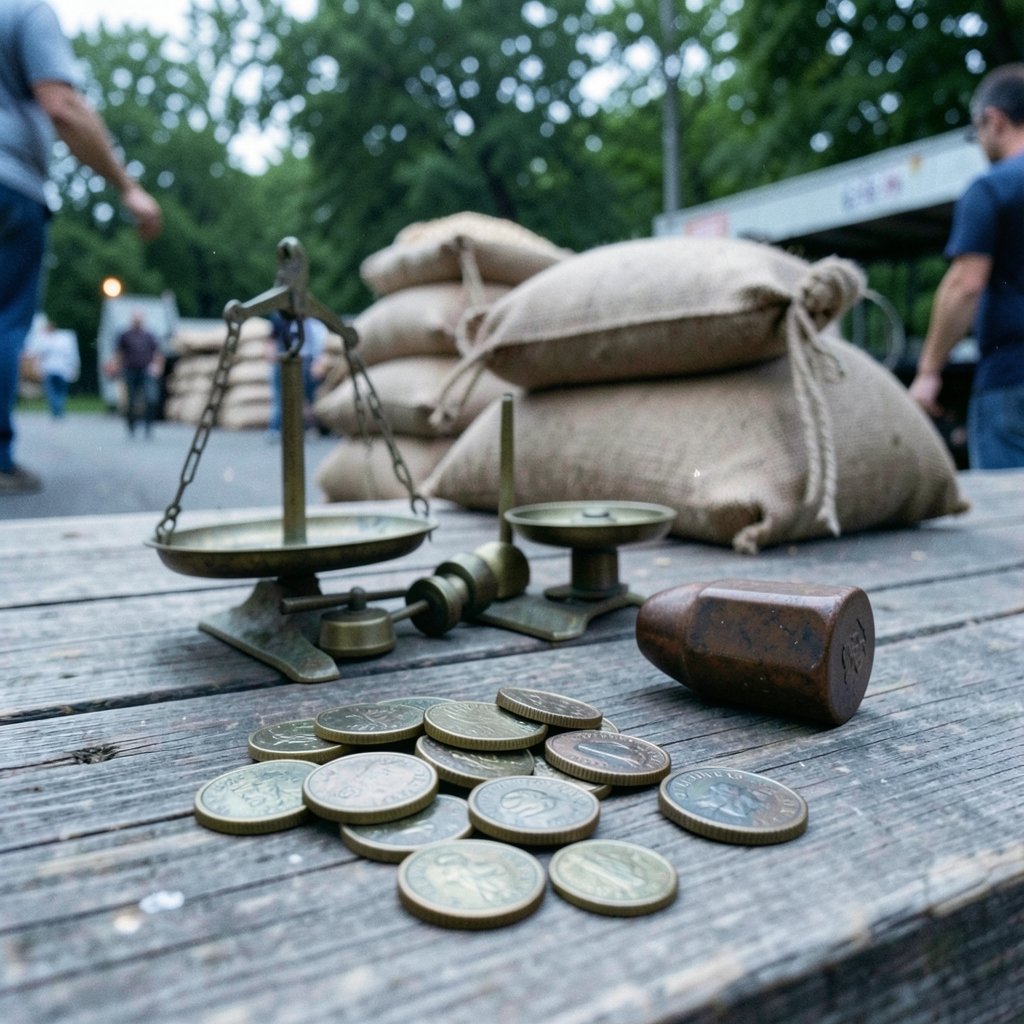
The earliest well-evidenced forms of money were commodity monies: grain, cattle, salt, shells, and metal weighed out on scales. These were not coins. They were useful goods that happened to double as a medium of exchange. A farmer with surplus barley could trade it for a tool, and everyone involved understood roughly what a measure of grain was worth.
Because these systems developed gradually and left few written records, there is no documented “first inventor.” What we have instead are the moments when money becomes visible in the archaeological and textual record, which is a very different thing from the moment it was conceived.
The First Coins: Lydia and the 7th Century BCE
If you want the closest thing to a starting line, it is Lydia. This kingdom in western Anatolia, in what is now Turkey, produced the earliest known coins: lumps of electrum, a natural alloy of gold and silver, stamped with a mark to certify weight and authenticity.
The dating is genuinely debated. Estimates for the first Lydian coins range from roughly 650 to 600 BCE, and scholars do not agree on a precise year. The Encyclopaedia Britannica entry on the history and origins of coinage lays out this range and explains why pinning down an exact date is so difficult.
The stamp mattered more than the metal. A mark from a recognized authority told a trader that this lump had been weighed and guaranteed, which saved everyone the trouble of hauling out a scale at every transaction. That is the conceptual leap that turned metal into money in the modern sense.
Croesus and the Gold-Silver Standard
The Lydian king Croesus, who reigned roughly from 560 to 546 BCE, is traditionally credited with issuing coinage in both gold and silver. This bimetallic system is often treated as a milestone in standardized state money. As the Britannica profile of Croesus and his reign notes, some of the attributions to him are partly traditional rather than fully documented, so it is wise to treat the “Croesus invented coins” story as a useful shorthand rather than a hard fact.
What Herodotus Actually Said
The Greek writer Herodotus, working in the 5th century BCE, is the earliest surviving author to credit the Lydians with inventing coinage. That sounds like strong evidence, and it is often quoted as such. But it is a near-contemporary claim, not proof. Herodotus was writing generations after the events and repeating what his sources told him.
You can read the passage yourself in Book 1 of the Histories of Herodotus, which is a useful exercise in seeing how ancient testimony actually reads. It is confident, conversational, and not especially careful about the kind of sourcing a modern historian would demand.
China’s Separate Path to Money
Lydia gets most of the attention in Western accounts, but China developed money on its own timeline. Bronze imitations of cowrie shells gave way to cast bronze coins, including the famous spade and knife money, from roughly the 6th to 5th century BCE. The exact dates are debated, and precise claims should be treated with caution.
China also got to paper money first. Paper notes are documented in Song-dynasty China in the 11th century CE, centuries before anything comparable appeared in Europe. The Britannica overview of the origins and spread of paper money traces that development and explains how the idea eventually traveled westward.
This parallel history is the strongest argument against any single-inventor story. Two great civilizations, separated by thousands of miles, both figured out that certified tokens beat raw barter.
Where the Word “Money” Comes From
Here is a detail that surprises almost everyone. The English word money traces back to the Latin moneta, which is linked to the temple of Juno Moneta in Rome, where coins were traditionally struck from around the 3rd century BCE. The Online Etymology Dictionary entry on the origin of the word money follows the trail from Latin through Old French into English.
This is an etymological fact, not an invention claim. Nobody “invented money” by naming it. But it does explain why so many European languages share similar words, and why the goddess Juno ended up with an unexpected side career in finance.
Barter or Credit? The Debate Economists Keep Having
Ask an economist where money came from and you will often hear a tidy story. People bartered. Barter was inefficient, because the person with grain might not want your chickens. So everyone agreed on a common medium, and money was born.
That story is a model, not a historical record. Adam Smith popularized it, and it remains a useful teaching tool. But anthropologists have pushed back hard. In Debt: The First 5,000 Years (2011), David Graeber argued that credit and accounting systems predate coinage in many societies. People kept tabs on each other long before they stamped metal.
The broad Britannica overview of what money is and how it developed presents the standard economic account of money‘s functions and history, which is worth reading alongside the anthropological critique. The honest answer is that the dispute is unresolved. Economists tend to model money as a fix for barter. Anthropologists tend to find evidence of credit and obligation first. Both camps have real evidence.
How Standardized Coinage Spread
Once the idea of certified coinage existed, it moved fast. Greek city-states adopted it, each with its own designs and weight standards. Rome followed, introducing the denarius around 211 BCE, a date that is conventional and approximate rather than exact.
| Period | Development | Region |
|---|---|---|
| c. 650–600 BCE | First stamped electrum coins | Lydia, Anatolia |
| c. 560–546 BCE | Bimetallic gold and silver coinage under Croesus | Lydia |
| c. 6th–5th century BCE | Cast bronze coins, spade and knife money | China |
| c. 211 BCE | Denarius introduced | Rome |
| 11th century CE | Documented paper money | Song China |
The pattern that emerges is not a single invention radiating outward from one clever kingdom. It is a set of overlapping experiments, some of which stuck and some of which did not.
Practical Tips for Reading “Who Invented X” Claims
If you go looking for the answer online, you will run into a lot of confident, tidy claims that fall apart under scrutiny. A few habits will keep you out of trouble.
- Check whether the source means coins or money. Many pages say “invented money” when they mean “minted the first coins.” Those are different claims with different evidence.
- Look for a date range, not a date. Reputable sources hedge on Lydian and Chinese dates because the evidence genuinely does not support precision.
- Separate state coinage from private trade. A king’s stamp and a merchant’s tally are not the same institution.
- Be suspicious of single-name answers. If a page credits one person with no caveats, it is probably repeating folklore.
- Read the primary source when you can. Herodotus is short, readable, and a good reminder that ancient testimony is testimony, not proof.
The most common mistake is treating the Lydian coins as the moment money was invented, when they are really the moment money became visible in a form archaeologists can dig up and date.
Why the Question Still Matters
Money feels permanent, almost natural, like weather. But the history shows it is a human institution that has been redesigned repeatedly: weighed metal, stamped coin, paper note, ledger entry, and now something closer to a database record than a physical object.
Understanding that money was never invented by one person, and never settled into a final form, makes the current moment easier to read. Debates about digital currencies, payment apps, and who controls the ledger are not a break from history. They are the latest round in a very old argument about trust, authority, and who gets to certify value.
The same instinct shows up in modern fraud, where criminals exploit the trust people place in familiar payment systems. The mechanics of a gift card scam and why victims rarely recover their money are a reminder that money’s power has always rested on belief, and that belief can be turned against people. On the security side, the real costs of identity threat detection and where the money actually goes show how much of modern finance is really about verifying who is on the other side of a transaction.
For anyone setting up a small business or a home office, protecting the digital side of money is now part of the basics. Beginners often ask about free Microsoft Defender alternatives worth trying before paying for extra protection, which is a sensible first step.
Conclusion
So who invented money? The most accurate answer is that nobody did, at least not in the sense the question usually implies. Money emerged independently in multiple societies as a response to the practical problems of trade, debt, and taxation. The Lydians gave us the first stamped coins around the 7th century BCE, China developed its own bronze money and later paper notes, and Rome standardized coinage across a vast empire.
What we can say with confidence is that money is a technology of trust. Every form it has taken, from a weighed lump of electrum to a line in a digital ledger, works only because people agree to believe in it. That agreement was never invented once. It is renegotiated constantly, which is why the story of money has no clean ending.
Frequently Asked Questions
Did one person invent money?
No single inventor is documented. Money appears to have emerged independently in several societies, so historians treat it as a convergent development rather than the work of one individual. The earliest well-evidenced forms were commodity goods and weighed metal, not coins.
When were the first coins made?
The earliest known coins date to roughly the 7th century BCE in Lydia, in western Anatolia. They were made of electrum, a natural gold and silver alloy, and stamped with a mark. The precise start date is debated, with estimates ranging from about 650 to 600 BCE.
Did China invent money before Lydia?
China developed its own early money independently, with bronze cowrie imitations and cast bronze coins appearing from roughly the 6th to 5th century BCE. The dates for the earliest Chinese coins are debated, so it is safer to describe the two traditions as broadly parallel rather than to rank them.
Who was Croesus and why does he matter?
Croesus was a Lydian king who reigned roughly from 560 to 546 BCE and is credited with early bimetallic coinage in gold and silver. This is often cited as a milestone in standardized state coinage, though some attributions to him are partly traditional rather than fully documented.
Why do economists and anthropologists disagree about money’s origins?
Economists often model money as a fix for the inefficiency of barter, a useful theoretical story. Anthropologists point to evidence that credit and accounting systems predate coinage in many societies. Both camps have real evidence, and the dispute remains unresolved.
What does the word money come from?
The word money derives from the Latin moneta, linked to the temple of Juno Moneta in Rome, where coins were traditionally struck from around the 3rd century BCE. It is an etymological fact rather than a claim about who invented money.



