Aldi’s ownership can be confusing because the familiar name connects two separate grocery groups behind Aldi grocery stores. That shared name can make shoppers think one worldwide company runs every store. In fact, the groups have separate histories and roles. For U.S. shoppers, the key question is which group operates a local store and how Trader Joe’s fits into the picture.
A private family foundation is a privately controlled legal entity that holds ownership interests for a family. That structure can make a company’s ownership harder to spot than a familiar store sign. Still, knowing the group behind the name can help customers understand which businesses are related and which are not.
This article will clarify which group runs U.S. Aldi stores and explain Trader Joe’s connection to the Aldi name. The distinction matters most when you are checking who operates a store in the United States.
Key Takeaways
- Aldi’s shared name connects two separate German grocery groups.
- The groups have distinct business roles in the United States.
- Trader Joe’s is part of the wider ownership story.
- A foundation can hold family ownership interests in a company.
- Check the group name when a business relationship is unclear.
Who Owns Aldi Grocery Stores in the United States?
Aldi Süd operates the Aldi grocery stores across the United States, including its locations in California and Texas. The answer stays the same whether you shop in the West, South, Midwest, or another state.
Aldi Süd operates every ALDI U.S. store. ALDI U.S. opened its first store in Iowa in 1976, then grew into a chain serving customers across the country.
For a U.S. Aldi location, Aldi Süd is the group to identify as the operator.
The company and store name may be easy to recognize, but the group behind the U.S. grocery business is less obvious. That matters when you compare Aldi with other retailers that share part of its history or name.
Here are three useful facts to keep separate:
- Aldi Süd operates ALDI U.S.
- The U.S. chain began with an Iowa store in 1976.
- Aldi Nord owns Trader Joe’s, not ALDI U.S.
So, the answer to who owns Aldi grocery stores near California or Texas is the same as the answer for any other state. The state does not change which group operates the chain. For a U.S. Aldi location, Aldi Süd is the group to identify as the operator.
How Did Aldi Split Into Aldi Nord and Aldi Süd?
The Aldi story began with a family grocery shop in Essen, Germany, before the brothers created two separate businesses. The Albrecht family built a small shop into a growing grocery business over several decades.
Karl and Theo Albrecht split the Aldi business into two groups in 1960. The Aldi and Trader Joe’s stories later crossed, but the retailers did not split from one another.
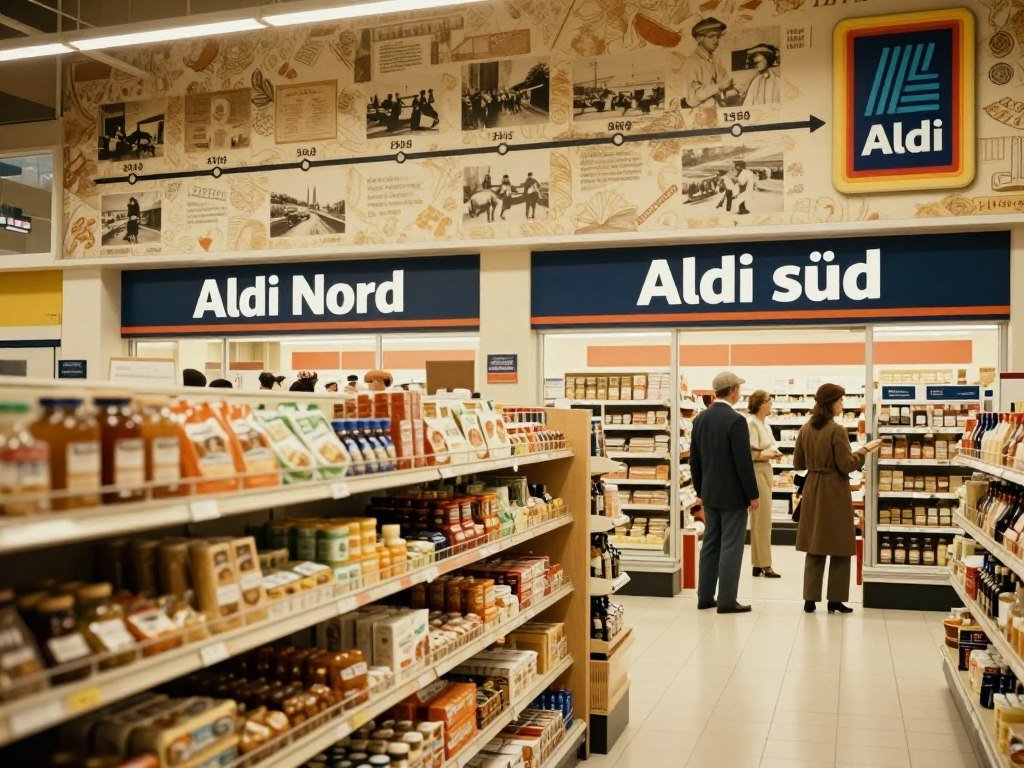
From the Essen shop to the Aldi name
The Albrecht family opened a grocery shop in Essen in 1913. Karl Albrecht and Theo Albrecht took over the business in 1946, then opened their first self-service store in Essen-Schonnebeck in 1954.
The name Aldi comes from Albrecht Discount, a shortened form of the family name and the store’s low-price approach. The name took hold as the business grew beyond its original shop.
The 1960 split and separate groups
In 1960, the brothers divided the business into northern and southern operations. They adopted the names Aldi Nord and Aldi Süd in 1962, and the groups became financially and legally separate in 1966.
| Year | Development | People or name |
|---|---|---|
| 1913 | Family shop opens in Essen | Albrecht family |
| 1946 | Brothers take over the business | Karl and Theo Albrecht |
| 1960 | Operations split into two groups | Karl and Theo |
| 1962 | Aldi name is adopted | Aldi Nord and Aldi Süd |
| 1966 | Groups become financially and legally separate | Aldi Nord and Aldi Süd |
Aldi and Trader Joe’s did not split. Karl and Theo divided Aldi, and Theo later bought Trader Joe’s, which Joe Coulombe founded in 1967. Theo Albrecht’s 1979 purchase came after the Aldi split. The split created Aldi Nord and Aldi Süd, not a break between Aldi and Trader Joe’s.
Who Owns Aldi Nord and Aldi Süd Today?
Each Aldi group is held by private family foundations, but the foundation names and ownership shares differ. Neither group has one public parent company that owns both businesses.
Foundations hold the ownership interests in Aldi Nord and Aldi Süd. A private family foundation is a legal entity controlled for a family that holds ownership interests. This setup keeps each group’s ownership distinct from its stores and daily business work.
Aldi Nord’s family foundations
The Markus-Stiftung, Jacobus-Stiftung, and Lukas-Stiftung together hold 100% of Aldi Nord. Their combined share means the three foundations hold the full ownership interest in the northern group.
Aldi Nord operates as a separate group, with its own business structure. Its foundation ownership does not extend to Aldi Süd, even though both groups use the Aldi name in parts of the world.
Aldi Süd’s family foundations
The Siepmann-Stiftung holds 75% of Aldi Süd. The Oertl-Stiftung and Elisen-Stiftung together hold the other 25%.
Those shares describe ownership of the group, not the way a grocery store runs from day to day. Store operations involve employees, store leaders, and the wider company. A family foundation can hold ownership without acting as the public face of a retailer.
The two ownership structures also help explain why a shared name does not mean one company controls every Aldi business. Private ownership can sit behind a well-known store brand without being visible to customers at checkout. Keep the two foundation structures separate when describing ownership, since neither group’s listed foundations own the other group.
Are Aldi and Trader Joe’s Owned by the Same Company?
Aldi Nord owns Trader Joe’s, while Aldi Süd operates the Aldi grocery chain in the United States. They are related through ownership history, but they do not run as one U.S. grocery company.
Trader Joe’s operates separately from Aldi Nord and has no business or ownership relationship with Aldi Süd. That distinction also answers who owned Aldi grocery stores in 2021: Aldi Süd operated the U.S. Aldi stores, while Aldi Nord owned Trader Joe’s.
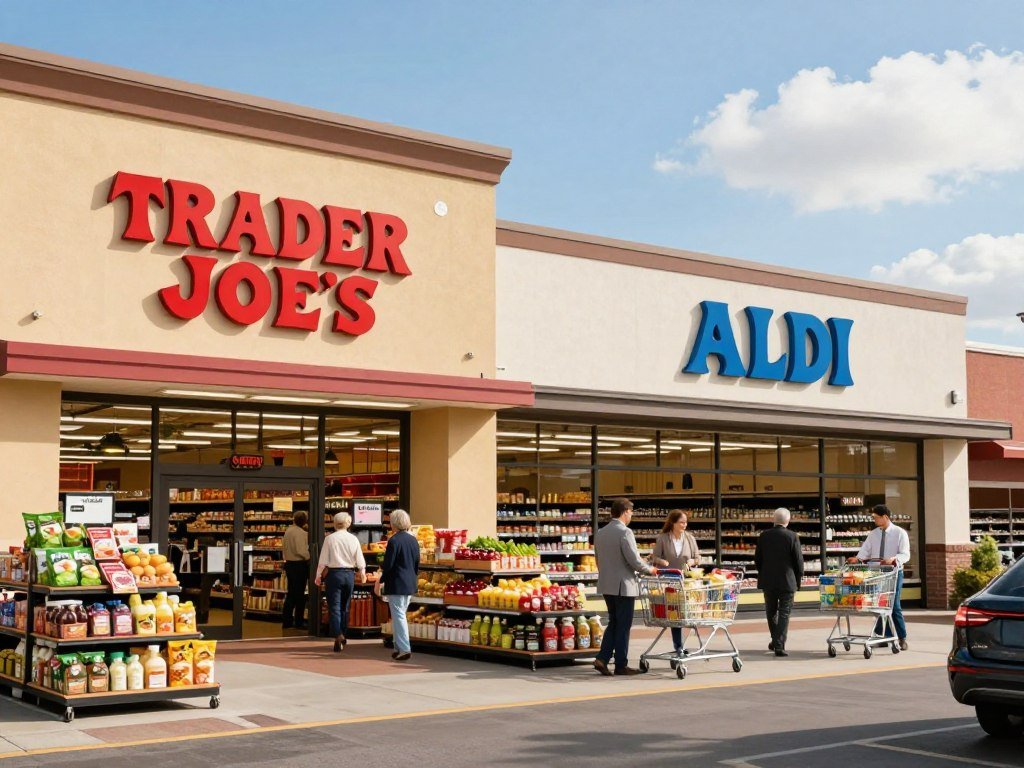
The three names have different roles in the U.S. grocery market. This table separates the store businesses from the groups that own or operate them.
| Entity | U.S. grocery business | Ownership or operating relationship |
|---|---|---|
| Aldi Süd | ALDI U.S. stores | Operates the U.S. Aldi chain |
| Aldi Nord | Owns Trader Joe’s | Separate from Aldi Süd |
| Trader Joe’s | Trader Joe’s stores | Owned by Aldi Nord; operates separately |
The relationship is easy to mix up because both grocery chains have a connection to the Albrecht family. Yet ownership of Trader Joe’s does not put Aldi Süd in charge of its stores. Likewise, ALDI U.S. is not the same operating business as Trader Joe’s.
For shoppers, the distinction is practical: one familiar name does not tell you that two store chains share daily operations. The shared Albrecht history does not make Trader Joe’s and ALDI U.S. one operating company.
What Does Aldi Sell, and How Does Its Store Model Work?
Aldi sells groceries and consumer goods, with most of its in-store products carrying Aldi-exclusive brands. That mix gives the chain a clear store identity without relying mainly on national brands.
More than 90% of the products Aldi sells in its stores are Aldi-exclusive brands. These private label products are made for a retailer’s own brand rather than sold under a national brand name. Aldi’s range includes everyday grocery products as well as other items customers may need.
Aldi-exclusive brands
Aldi-exclusive brands let the company set much of its own product range. Private label products can make a store’s selection feel different from a supermarket built around many national brands.
The share of exclusive products does not mean every item has the same taste, ingredients, or quality as a national brand. Each product stands on its own, so shoppers can judge it by its label and their needs.
A limited-assortment store format
Aldi stores carry about 1,500 SKUs, or distinct products for sale. A limited assortment can fit into a smaller store layout, where shoppers see fewer versions of many common items.
Some products sit in their shipping boxes on shelves or displays. That approach keeps items visible and can make restocking simpler for store workers. It also gives the store a more direct, no-frills feel than a large supermarket aisle.
The main product groupings include:
- Groceries, including food and drinks for daily meals.
- Consumer goods, such as useful household products.
- Weekly special offers, including seasonal or household items.
Weekly offers can change the selection from one visit to the next, so a shopper may find seasonal goods alongside familiar pantry items. The limited assortment and emphasis on exclusive brands are defining features of the Aldi store model.
How Is Aldi Expanding Across the United States?
Aldi’s U.S. expansion plan combines new store openings, conversions, and investment in its supply chain and online shopping. The plans cover more than just new grocery store sites.
ALDI U.S. planned more than 180 store openings across 31 states in 2026. The company projected nearly 2,800 stores by the end of 2026 and set a goal of 3,200 stores by the end of 2028.
Those totals are targets and projections, not completed store counts. The company’s ALDI history and growth page describes plans for more than 180 openings in 2026 and nearly 3,200 U.S. stores by 2028.
Three parts of the growth plan stand out:
- Open more than 180 stores across 31 states in 2026, ALDI U.S.’s 50th year in the country.
- Convert more than 200 Southeastern Grocers locations to the ALDI format by the end of 2027.
- Invest $9 billion in the United States through 2028 for stores, supply chain strength, and online shopping upgrades.
The conversion plan brings existing grocery locations into the ALDI format rather than counting each one as a new building. ALDI’s 2026 store expansion plans include openings across 31 states and a projected total near 2,800 stores that year.
For customers, store growth can mean more locations in markets where the chain is expanding. It can also involve changes to how the company moves products and serves online orders. Treat the 2026 and 2028 store counts as targets, not as confirmation that those totals have already been reached.
How Did the Albrecht Family Pass Control of Aldi?
The Albrecht brothers retired from leadership in 1993, and control passed to private family foundations. The shift changed who held control, not the need for people to run stores and business operations each day.
Aldi remains privately held through family foundations rather than being a publicly traded grocery chain. Karl and Theo Albrecht had led the company as CEOs before retiring. Their departure marked a move from founder leadership to foundation control.
Ownership and store operations are different jobs. Foundations hold ownership interests, while the companies manage the business and store teams serve customers. A foundation does not need to run a checkout lane or set a shelf each morning to hold an ownership stake.
Private foundations hold the groups, while each group operates its own business.
The privately held structure also differs from a public company, whose shares trade on a stock market. Aldi’s groups do not sell public shares as a way to transfer ownership. That keeps control within the foundation structure instead of placing it in the hands of public shareholders.
For shoppers, the visible part of the business is the store, its employees, and the products on its shelves. The owners work farther behind the scenes. This separation helps explain how a family can hold a retailer without directing every daily store decision.
The essential distinction is that private foundations hold the groups, while each group operates its own business.
Conclusion
For U.S. shoppers, the short answer is Aldi Süd for Aldi stores and Aldi Nord for Trader Joe’s. The shared name can blur the difference, but the two chains have separate operating roles.
Aldi Süd operates ALDI U.S., and Aldi Nord owns Trader Joe’s as a separate operation. Those are the two points to keep in mind when you compare the businesses or read about their ownership.
When a company relationship is unclear, look for the name Aldi Nord or Aldi Süd in the ownership statement. That check is more useful than relying on the shared Aldi name alone. Check the group named in a company ownership statement whenever the shared Aldi name leaves the relationship unclear.
FAQ
Are Aldi and Trader Joe’s owned by the same company?
Aldi Nord owns Trader Joe’s, but Trader Joe’s operates separately; Aldi Süd runs ALDI U.S. The two grocery chains share a connection to the Albrecht family, yet they do not operate as one U.S. business. Trader Joe’s has no ownership or business relationship with Aldi Süd. That makes the group name important when you compare their ownership.
What does Aldi sell?
Aldi sells groceries and consumer goods, and more than 90% of its in-store products are Aldi-exclusive brands. Stores also carry weekly special offers, which can include seasonal or household items. The chain uses a limited assortment, so shoppers find about 1,500 distinct products in a typical store. Product quality can differ by item, just as it does with other brands.
What do you know about Aldi?
The Albrecht family business began as a grocery shop in Essen, Germany, and later split into two separate groups. The groups became Aldi Nord and Aldi Süd, with distinct ownership and business roles. In the United States, Aldi Süd operates ALDI U.S. stores. That is the key detail for shoppers trying to identify the group behind a local store.
Why did Aldi and Trader Joe’s split?
Aldi and Trader Joe’s did not split from each other. Karl and Theo Albrecht divided the Aldi business into Aldi Nord and Aldi Süd. Theo later bought Trader Joe’s in 1979, after Joe Coulombe founded the chain in 1967. The two retailers have separate operations, so the history is a connection, not a shared split.
Who owns Aldi Nord?
The Markus-Stiftung, Jacobus-Stiftung, and Lukas-Stiftung together hold 100% of Aldi Nord. These private family foundations hold ownership interests, while the company handles its business operations. Aldi Nord is separate from Aldi Süd, whose ownership rests with different foundations. This distinction matters because the two groups share the Aldi name but are not one company.