BMW Group is a publicly traded company owned by its shareholders, with Stefan Quandt, Susanne Klatten and public investors holding its major disclosed stakes. That matters to anyone trying to understand who owns the BMW luxury vehicle brand, or how the company differs from the cars it sells. A familiar badge does not always reveal who owns the business behind it.
The public float means shares available for public trading rather than held by named anchor shareholders. Investors can buy and sell those shares on the stock market, while named shareholders hold their own stakes. The group also operates other brands and businesses, each with a different role in its company structure.
Readers can understand the ownership picture by separating the company’s shareholders from the brands and businesses it operates.
Key Takeaways
- BMW Group is publicly traded and shareholder-owned.
- Stefan Quandt and Susanne Klatten are named major shareholders.
- Public investors hold shares through the public float.
- BMW, MINI, Rolls-Royce and BMW Motorrad are group brands.
- BMW AG is a German company based in Munich.
- The company is not owned by Volkswagen.
Who Owns BMW Group?
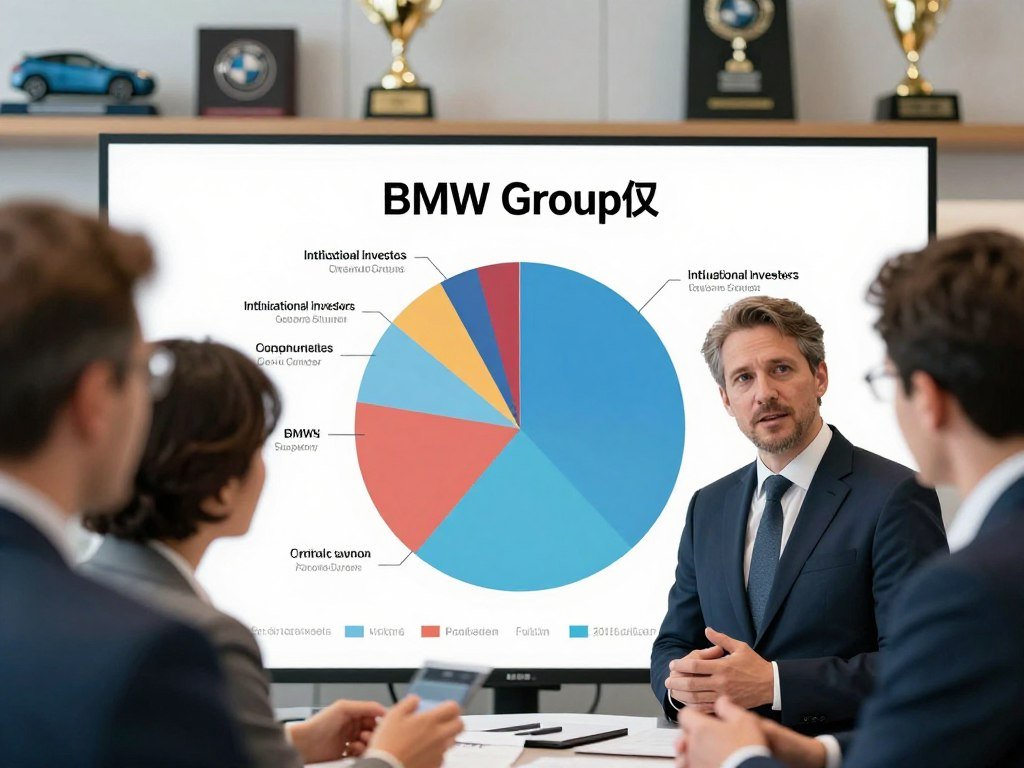
BMW Group is owned by shareholders, with Stefan Quandt, Susanne Klatten and public investors holding the disclosed stakes. No single parent corporation sits above the company as its owner. The Quandt family’s holdings are substantial, while public investors also own a major portion.
The major disclosed stakes are split among two named individuals and the public float. The public float includes shares available to public investors, rather than shares held by named anchor shareholders.
| Shareholder category | Shareholding | What the category represents |
|---|---|---|
| Stefan Quandt | 27.7% | Named individual shareholder |
| Susanne Klatten | 22.5% | Named individual shareholder |
| Public float | 48.5% | Shares held by public investors |
BMW Group has no single corporate owner above it. Its shares belong to named shareholders and public investors.
These categories describe who holds the company’s shares, not who owns a particular car or factory. A shareholder’s stake gives that person an ownership interest in the company, but it does not make the shareholder the direct owner of every vehicle or business unit.
The figures identify the major holders, while the public float represents shares held by investors beyond the two named individuals.
How Does BMW’s Public-Company Structure Work?
BMW is not owned by Volkswagen; BMW AG is a separately traded German company. AG stands for Aktiengesellschaft, a German incorporated company owned by shareholders. BMW is a German company headquartered in Munich.
BMW trades on the Frankfurt Stock Exchange under the ticker BMW and is a DAX component. The legal entity’s full name is Bayerische Motoren Werke AG. A brand owned by another automaker is different from a publicly traded company with its own shares.
The company’s 2025 results offer context about its size and activity. They do not measure the personal wealth of any shareholder. Revenue records sales and other income, while operating income reflects earnings from core business activity.
| Measure | 2025 figure | What the measure describes |
|---|---|---|
| Revenue | €133.453 billion | Income from business activity |
| Operating income | €10.236 billion | Income from core operations |
| Net income | €7.451 billion | Income after expenses and taxes |
| Total assets | €265.967 billion | Resources owned or controlled |
| Total equity | €97.906 billion | Assets remaining after liabilities |
These figures describe the company’s finances during 2025, not the value of its stock or the value of an individual’s shares. The distinction matters because business revenue and personal wealth measure different things.
The Frankfurt listing and DAX membership are useful checks when distinguishing BMW AG from other automakers and their brands.
Why Does the Quandt Family Hold a Major Stake?
The Quandt family became central to BMW’s ownership story after investing when the company was in serious financial trouble in 1959. The investment helped keep BMW independent at a time when it was close to being taken over. Herbert Quandt and Harald Quandt both invested that year.
The 1959 investment was a major part of BMW’s survival as an independent company. It gave the struggling business support during a period when its future was in doubt. That history helps explain why the family remains closely linked with the company.
BMW’s full German name is Bayerische Motoren Werke Aktiengesellschaft. The name belongs to the company, not to one family. The Quandts did not found the modern company, and their historical role does not mean they own all of it today.
The 1959 rescue and the present-day shareholding structure are separate parts of the story. One explains how the company survived a difficult moment; the other describes who holds its shares now.
The 1959 rescue helps explain the family’s long-term connection to BMW, but today’s ownership still includes public investors.
Which Brands Are Part of BMW Group?
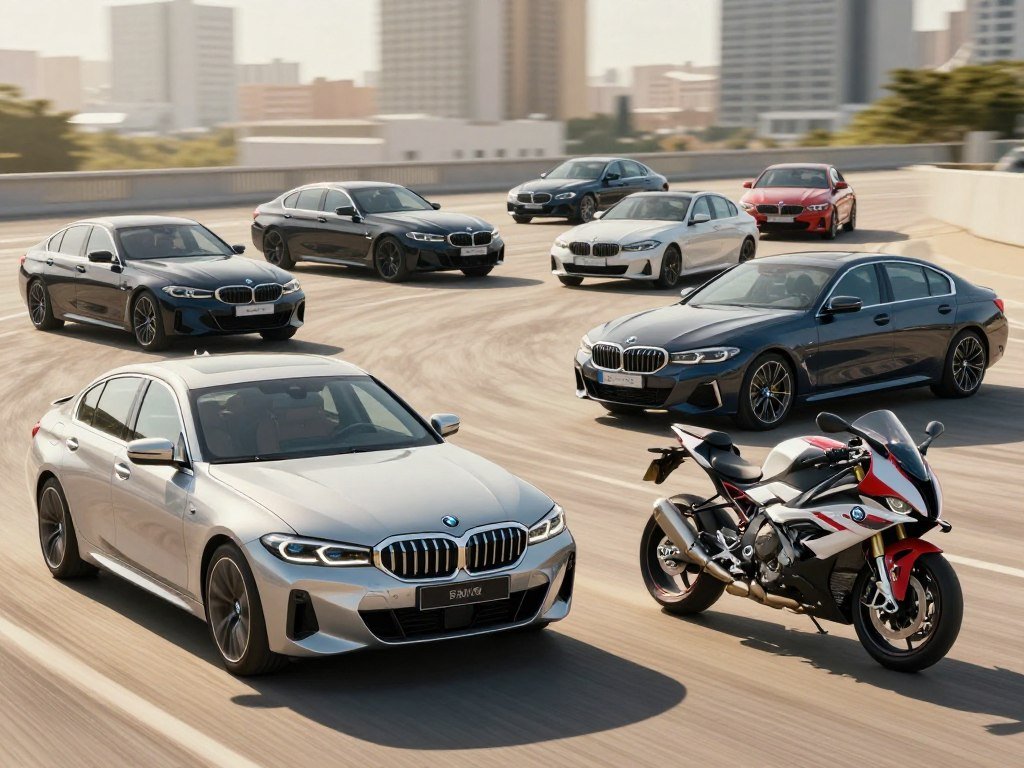
BMW Group has four brands: BMW, MINI, Rolls-Royce and BMW Motorrad. Three are automobile brands, and BMW Motorrad is the group’s motorcycle brand. BMW owns Rolls-Royce Motor Cars through BMW Group.
Each brand serves a different vehicle category within the group. BMW, MINI and Rolls-Royce make automobiles, while BMW Motorrad focuses on motorcycles. The names may appear to stand alone, but they sit within the same corporate portfolio.
| Brand | Vehicle category | BMW Group portfolio |
|---|---|---|
| BMW | Automobile | Automobile brand |
| MINI | Automobile | Automobile brand |
| Rolls-Royce | Automobile | Automobile brand |
| BMW Motorrad | Motorcycle | Motorcycle brand |
Brand ownership and company shareholding are different ideas. BMW Group owns brands and businesses as part of its operations, while shareholders own shares in BMW AG. A brand does not become a separate shareholder just because it has its own name, products or customers.
That distinction can be useful when a vehicle badge and a corporate name differ. Rolls-Royce Motor Cars is the automobile marque within the group, while BMW Group is the shareholder-owned company behind it.
The key distinction is that the first three are automobile brands, while BMW Motorrad represents the group’s motorcycle business.
What Businesses Sit Alongside BMW’s Vehicle Brands?
BMW Group’s corporate structure also includes businesses for fleet management, financing, design, venture investment and technology integration. These units serve different customers and support work beyond vehicle sales. They are businesses or subsidiaries within the group, not additional automobile brands.
The group’s non-brand businesses cover services, creative work and business technology. Fleet and finance services can support corporate customers, while design and investment units work across industries and markets.
Fleet, financing and design services
Alphabet Fleet Management is a subsidiary focused on corporate customers and fleet management. Its work centers on helping businesses manage vehicle fleets rather than selling a separate car brand.
BMW Group Financial Services has about 8,500 employees worldwide. Designworks is the group’s design studio, with studios in North America, Europe and Asia. Its design work extends beyond the group’s own vehicles.
Venture investment and technology for business customers
BMW i Ventures invests in start-ups. In April 2026, it launched its third fund with USD 1.1 billion in capital under management. The firm has invested in more than 90 start-ups and realized more than 30 exits.
BMW Technology Solutions provides technologies, vehicle solutions and integration capabilities for third-party businesses. That work lets other companies use the group’s technology and vehicle expertise in their own operations.
- Alphabet Fleet Management: fleet services for corporate customers.
- BMW Group Financial Services: financial services for customers and businesses.
- Designworks: design studios in North America, Europe and Asia.
- BMW i Ventures: investment in start-ups, with more than 90 investments.
- BMW Technology Solutions: technology and integration for third-party businesses.
The fund launch and investment record show that the group also puts capital into companies outside its vehicle lineup. These units broaden the group’s activities without changing the four-brand lineup.
Where Are BMW Group Vehicles Made?
BMW Group makes vehicles across an international production network, rather than at a single German factory. Munich is its headquarters, but production also takes place across Europe, the Americas, Africa and Asia. The group has more than 30 production sites worldwide.
BMW Group produced 2,463,681 cars and 202,563 motorcycles in 2025. Those output figures show the scale of its manufacturing work across its global network. A production site is not the same thing as a sales location.
The group has a sales network in more than 140 countries. That wider reach helps put the factory count in context: sales can span more countries than the locations where vehicles are built.
Production locations include these eight countries:
- Germany
- United Kingdom
- United States
- Brazil
- Mexico
- South Africa
- India
- China
Where a vehicle is assembled depends on the group’s production network, not just on the brand shown on its badge. The same brand can be made at different sites for different markets or models.
A vehicle’s brand identifies the company behind it, while its assembly location can vary across the group’s global network.
What Was BMW’s First Car?
BMW’s first car was the 3/15, first produced under the Dixi name. Its early history began with an existing car business, not with a BMW-built design appearing from nowhere. The 3/15 grew from the Austin Seven and its licensed production in Germany.
BMW acquired the Automobilwerk Eisenach business in October 1928. That purchase brought the Dixi car operation into the company. BMW then began making the 3/15 under its own name in July 1929.
The companies and people behind early BMW
BMW’s history grew from earlier German engineering and automobile businesses. Franz Josef Popp, Karl Rapp, Gustav Otto, Max Friz and Camillo Castiglioni were figures associated with its founding.
The early company’s roots involved aircraft engines and industrial engineering before its automobile work developed. The Automobilwerk Eisenach business supplied the link to the Dixi and the 3/15. That history explains why BMW’s first car carried a different name at first.
The Dixi and BMW 3/15
The Dixi 3/15 was produced from 1927 to 1929, with 9,307 cars made. BMW-branded 3/15 cars followed from July 1929 to March 1932, with 18,976 made. The model had a 747 cc four-cylinder side-valve engine and a three-speed manual transmission.
The key dates trace the change from Dixi to BMW:
- 1927-1929: Dixi 3/15 production, with 9,307 cars made.
- October 1928: BMW acquired the Automobilwerk Eisenach business.
- July 1929-March 1932: BMW-branded 3/15 production, with 18,976 cars made.
The 3/15 DA-3 Wartburg roadster became BMW’s first sports car. Its engine made 18 PS, or 13 kW, at 3,500 rpm. The series used an Austin Seven-based design under license.
BMW’s account of the car’s Dixi and 3/15 history traces its Austin Seven roots and the change to BMW branding. BMW ended the Austin-based 3/15 series before its Austin Seven manufacturing license expired in March 1932.
What Do BMW’s M Models Show About Its Current Cars?
The 2027 BMW M5 pairs a V-8 with an electric motor, while the M4 range offers different power and transmission configurations. The M5 is a plug-in hybrid, while the M4 lineup includes a manual base coupe and more powerful Competition versions.
The M4 base coupe offers a six-speed manual, while the all-wheel-drive Competition uses an automatic. Their different setups show how BMW offers performance cars with varied power and driving layouts.
The 2027 BMW M5 plug-in hybrid
The 2027 M5 combines a 4.4-liter V-8 and one electric motor for 717 horsepower. All-wheel drive and an eight-speed automatic transmission come standard.
A 14.8-kWh battery gives the M5 an EPA-estimated electric-only range of 29 miles. Its starting price of $124,750 puts it in the high-priced performance sedan class. The model recorded a 3.0-second 0-60-mph time.
The 2027 BMW M4 coupe range
The base 2027 M4 coupe makes 473 horsepower and is available with rear-wheel drive and a six-speed manual. The M4 Competition raises output to 503 horsepower.
The all-wheel-drive M4 Competition makes 523 horsepower and comes only with an eight-speed automatic. Recorded 0-60-mph times are 3.8 seconds for the M4 Coupe and 2.8 seconds for the M4 Competition Coupe.
Those acceleration times belong to the specific models tested, not every car in every setting. Tires, road surface and conditions can affect a vehicle’s actual run.
The useful comparison is not just horsepower: the M4 base coupe offers a manual, while the M5 and all-wheel-drive M4 Competition use automatics.
What Is BMW’s Neue Klasse?
Neue Klasse is the architecture behind BMW Group’s next generation of production models. It is an electric-vehicle architecture that sets the base for new vehicles. Its first production model, the BMW iX3, launched in 2025.
The iX3 is already on sale as the first production model built on Neue Klasse. The BMW i3 Sedan is scheduled to follow in 2026 as the architecture’s second production model. The launch dates describe two different stages: one model has launched, and one is still scheduled.
BMW iX3: the first production model
The BMW iX3 is a Sports Activity Vehicle, or SAV, and the first production model on the Neue Klasse architecture. It launched in 2025, marking the first completed production step for this vehicle platform.
The architecture gives BMW Group a shared base for its next generation of models. The iX3 is the first vehicle in that program, rather than simply a renamed version of an earlier car.
BMW i3 Sedan: the scheduled second model
The BMW i3 Sedan is scheduled to follow in 2026 as the second production model on the architecture. Its timing is a planned future step, unlike the iX3’s completed 2025 launch.
That order makes the two model names easier to place: the iX3 arrived first, and the i3 Sedan is next on the schedule. The Neue Klasse name refers to the architecture, not to a separate vehicle brand.
The iX3 marks the first production step, with the i3 Sedan scheduled to follow in 2026.
The iX3 marks the first production step, with the i3 Sedan scheduled to follow in 2026.
Conclusion
BMW Group is a shareholder-owned company, not a brand owned by Volkswagen or another automaker. Stefan Quandt, Susanne Klatten and public investors are among its major holders. Its shares and the businesses it operates are separate parts of the ownership picture.
The company operates BMW, MINI, Rolls-Royce and BMW Motorrad, but those brands are not the same thing as its shareholders. For the latest ownership breakdown, check BMW Group’s investor-relations shareholder structure page.
FAQ
What is BMW short for?
BMW stands for Bayerische Motoren Werke, commonly translated as Bavarian Motor Works. The German name is the company’s registered name, while BMW is the shorter form used around the world. “Bayerische” refers to Bavaria, the German state where Munich is located. The name appears on the company’s vehicles and in its corporate identity.
What is BMW iDrive?
BMW iDrive is the company’s in-car infotainment and vehicle-control interface. Drivers use it to manage functions such as navigation, audio and vehicle settings, depending on the model. The system’s screen layout and controls vary by model and model year. Some cars rely more on touch controls, while others also offer a rotary controller or voice commands.
How do you pronounce Bayerische Motoren Werke AG?
An approximate pronunciation is “BYE-uh-rish-uh moh-TOH-ren VEH-kuh,” followed by the separate letters “A-G.” The German sounds may not match English speech exactly, so this guide gives a practical approximation. Bayerische Motoren Werke is the company name, and AG is its legal form. In speech, say the letters separately rather than as one word.
What car companies does BMW own?
BMW Group’s four brands are BMW, MINI, Rolls-Royce and BMW Motorrad. BMW Motorrad is the motorcycle brand, while the other three are automobile brands. These names form part of one corporate group, but they serve different markets and buyers. BMW Group is the shareholder-owned company behind the portfolio, rather than another brand in the lineup.
Is Rolls-Royce owned by BMW?
Yes, BMW Group owns the Rolls-Royce Motor Cars brand. Rolls-Royce Motor Cars is the automobile marque, while BMW Group is the larger shareholder-owned company that operates it. The distinction matters because the Rolls-Royce name refers to the cars and brand, not to the whole BMW Group. The group also operates other vehicle brands and businesses.