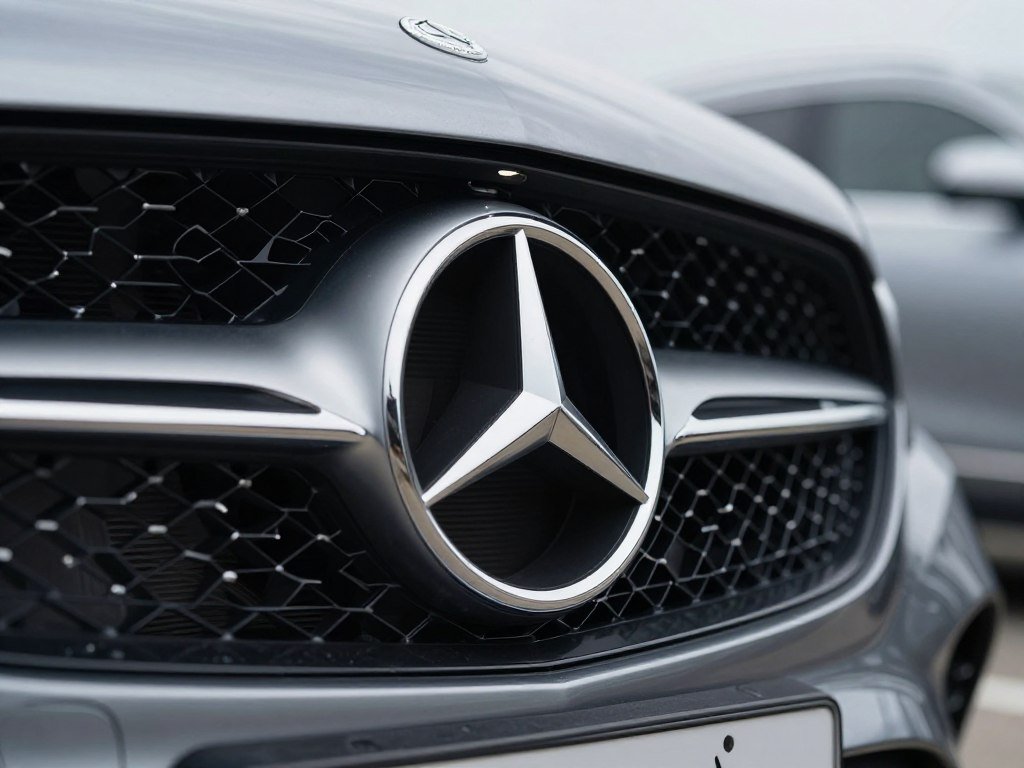
The name on a Mercedes grille is a brand, while the company behind that brand has a more layered structure. You may see Mercedes-Benz, Mercedes-Benz AG, and Mercedes-Benz Group AG used in different places. Those names point to related parts of the business, but they do not mean the same thing.
If you are shopping for a car, the difference can help you read a sales contract, compare vehicle details, or understand who owns company shares. A publicly traded company is a company whose shares investors can buy and sell on a stock exchange. That may sound like a lot of corporate information for a car shopper, but the basic ownership answer is clear once you know which name refers to what.
This guide connects the company structure to everyday questions about vehicles, financing, and buying a car. It also gives you a few checks to use during your research today. Knowing which name refers to the brand and which refers to the company makes the ownership answer much easier to follow.
Key Takeaways
- Mercedes-Benz is the vehicle marque, or brand.
- Mercedes-Benz Group AG is the publicly traded parent company.
- Mercedes-Benz AG is responsible for the cars and vans businesses.
- Investors own shares in the parent company, not individual cars.
- A car purchase does not make you a company shareholder.
Who Owns Mercedes?
Mercedes-Benz is part of Mercedes-Benz Group AG, a publicly traded company owned through shares held by investors. Many investors hold shares, so no single individual owns the whole company. A publicly traded company makes shares available to investors through a stock exchange.
Mercedes-Benz Group AG is the parent company behind the Mercedes-Benz marque. Investors who buy its shares become shareholders in the company. They do not become owners of a specific car or receive rights to a vehicle simply by holding shares.
Buying shares in Mercedes-Benz Group AG makes you a shareholder in the company, not the personal owner of one of its vehicles.
The company is listed on the Frankfurt Stock Exchange under ticker MBG and is a DAX component. The ticker identifies the company’s shares in market listings. A company profile and trading information for Mercedes-Benz Group AG shares also use the market ticker MBG.DE.
The wording can cause confusion because people may call the brand, the company, or the car “Mercedes.” The name Mercedes-Benz Corporation may also appear in informal discussion, but the parent company’s full legal name is Mercedes-Benz Group AG. When someone asks who owns Mercedes-Benz Corporation, the useful answer is that investors hold shares in the listed parent.
That structure differs from owning a vehicle outright or leasing one. Your relationship with the company depends on the transaction you make, not just the name printed on a grille. For a car shopper, the key distinction is that the brand is Mercedes-Benz and the company whose shares investors own is Mercedes-Benz Group AG.

How Do Mercedes-Benz Group AG and Mercedes-Benz AG Fit Together?
Mercedes-Benz Group AG sits above Mercedes-Benz AG, the company responsible for Mercedes-Benz cars and vans. The parent company and the operating company have different jobs within the same corporate structure.
Mercedes-Benz AG is the operating company responsible for both cars and vans. Mercedes-Benz Group AG is its parent. The relationship helps explain why both names may appear in business records about the same vehicle operation.
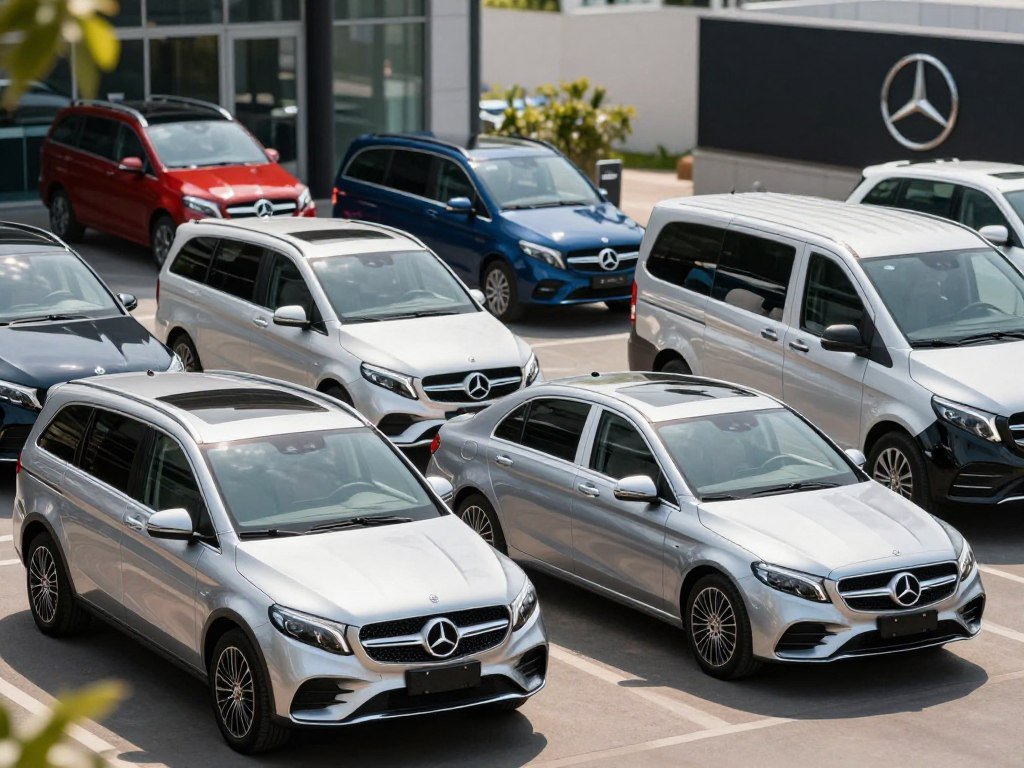
The parent company and its cars and vans business
The parent company sits at the group level, while Mercedes-Benz AG handles the cars and vans businesses. The two names describe companies, not different vehicle models. This distinction matters when a document refers to a business unit, a contract party, or a corporate owner.
When people ask who owns Mercedes and Mercedes-Benz, the corporate answer is Mercedes-Benz Group AG, the parent of Mercedes-Benz AG. The cars and vans business operates through Mercedes-Benz AG. A company profile also describes the Group’s cars, vans, and financial services activities.
The operating relationship does not turn every car buyer into a company owner. A purchase gives you a vehicle under the marque, while a shareholder owns part of the parent company through shares. Those are separate relationships, even when the paperwork uses related names.
What the two company names mean for a shopper
In everyday speech, “Mercedes” and “Mercedes-Benz” can mean the marque. Neither short form should replace a company’s full legal name when corporate ownership matters. A sales document or business record may name one company rather than the other for a specific reason.
For example, a document naming Mercedes-Benz AG identifies the cars-and-vans operating company. A document naming Mercedes-Benz Group AG refers to the parent company. The Mercedes-Benz Group company profile lists the parent and its business activities.
The parent-and-operating-company relationship is part of the Mercedes-Benz cars and vans structure. When a contract or company document matters, check whether it names Mercedes-Benz AG or Mercedes-Benz Group AG rather than relying on the shorter brand name.
Who Are the Major Mercedes-Benz Shareholders?
The biggest named shareholder in the latest dated breakdown is BAIC Group, with 9.98% of registered capital stock on 30 June 2026. Several investors hold stakes, so the company is not owned by one person or firm.
These percentages describe shares of registered capital stock, not sole ownership. The figures below apply as of 30 June 2026. Tenaciou3 Prospect Investment Limited’s holding route or identity is Li Shufu.

| Shareholder | Stake | Holding route or identity |
|---|---|---|
| BAIC Group | 9.98% | BAIC Group |
| Tenaciou3 Prospect Investment Limited | 9.69% | Li Shufu |
| Kuwait Investment Authority | 5.33% | Kuwait Investment Authority |
About one billion Mercedes-Benz Group AG shares are in circulation worldwide. That rounded figure gives a broad sense of the company’s market ownership. It is different from the exact capital-stock count recorded on a particular date.
The capital stock consisted of 962,903,703 shares from 13 December 2024. This dated count and the approximate number in circulation describe share totals from different points or with different levels of precision. Keep the date attached when comparing such figures.
Each named investor holds a portion of the registered capital stock. The largest stake in the table is still well below half. Treat each percentage as a shareholding stake, not as proof that the investor controls the company on its own.
Is Mercedes Owned by Volkswagen or Another Automaker?
No, Volkswagen does not own Mercedes-Benz; Mercedes-Benz Group AG is the parent company behind the brand. Volkswagen Group and Mercedes-Benz Group AG are separate automobile companies.
Daimler Truck is also not the parent of Mercedes-Benz Group AG. It became a separate listed company after the commercial vehicle business separated from the Mercedes-Benz Group. The corporate names reflect different companies today.
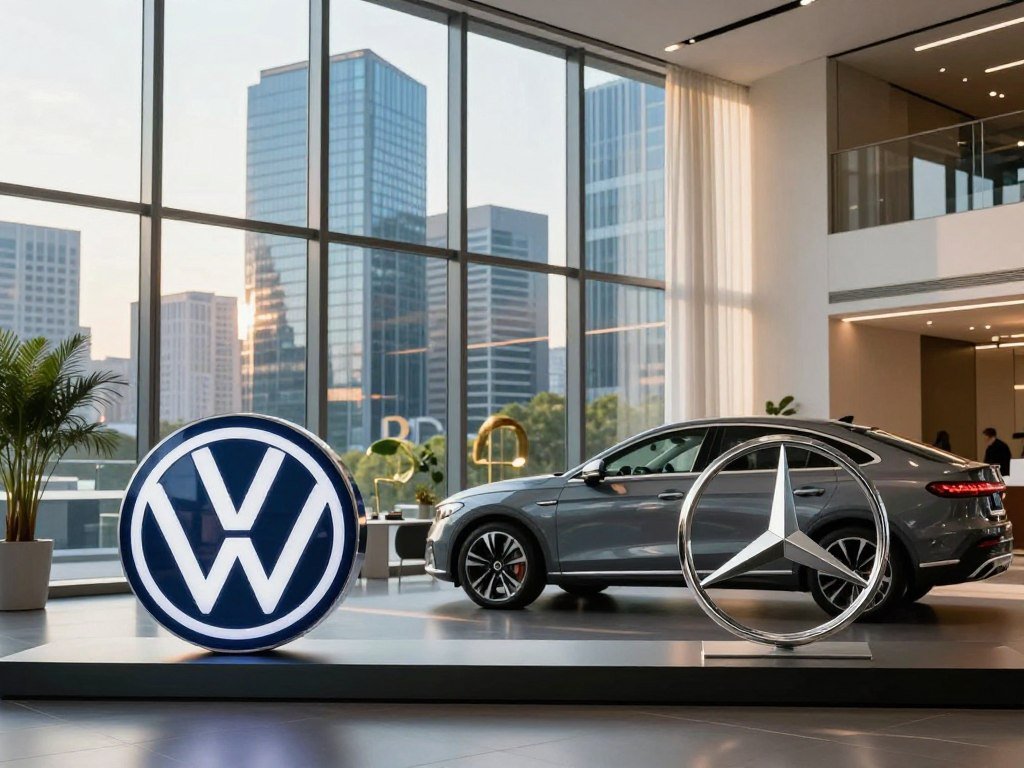
Three mistaken assumptions can blur the picture:
- Mercedes-Benz is owned by Volkswagen.
- Daimler Truck is still the parent of Mercedes-Benz.
- The Mercedes-Benz brand and its listed parent are the same legal entity.
None of those statements describes the current company structure. Volkswagen Group is another automobile group in the world market, while Mercedes-Benz Group AG is the publicly traded parent behind its own marque.
Daimler Truck has its own listed-company status, so it should not be treated as a division that still owns the Mercedes-Benz parent. Similar names can linger in news stories, old records, and discussions about the automobile industry. A past company relationship does not prove a current one.
If an online seller or business page uses an unclear company name, check its details before sharing information or paying. A few simple steps can help you spot a fake website before you enter personal or payment details. If a company name includes “Daimler,” check the date and corporate entity before assuming it refers to today’s Mercedes-Benz parent.
Which Brands and Businesses Sit Under Mercedes-Benz Group?
The group’s portfolio includes the Mercedes-Benz marque, its Mercedes-AMG and Mercedes-Maybach names, and G-Class. Those names cover different types of brands and vehicle lines.
Mercedes-AMG and Mercedes-Maybach are part of the Mercedes-Benz Group portfolio. G-Class is also included in the portfolio. A name in a portfolio does not automatically identify a separate legal company.
Mercedes-Benz, Mercedes-AMG, Mercedes-Maybach, and G-Class
Mercedes-Benz is the main marque on the vehicles. Mercedes-AMG is associated with performance, while Mercedes-Maybach marks a luxury offering. G-Class is a vehicle line within the group’s portfolio, not proof by itself of a separate company.
For a shopper, the names can help describe what kind of vehicle or trim you are viewing. They do not all work as corporate names. A model or line may carry a distinct badge while remaining part of a larger brand portfolio.
It can help to learn Mercedes-Benz naming by separating the badge from the legal seller. A performance label may describe the vehicle’s focus, while a contract identifies the company in the transaction. The name on the vehicle alone does not tell you the full corporate structure.
Smart and its shared ownership
Smart is different from a simple wholly owned brand list. The business is a 50/50 joint venture with Geely, so Mercedes-Benz Group does not own it outright on its own.
A joint venture is a business shared by partners under an agreed ownership structure. In this case, Geely shares ownership equally with Mercedes-Benz Group. That makes Smart an exception when describing names and businesses connected to the group.
The word “brand” can refer to a marque, a model line, or a business identity. Those labels do not always map to one wholly owned company. Check whether a name is a marque, model line, subsidiary, or joint venture before describing it as a company the group wholly owns.
The Mercedes-Benz Group portfolio also includes Mercedes-AMG, Mercedes-Maybach, and G-Class. Smart’s shared ownership means it should be described separately from names wholly within that portfolio.
How Did Daimler Become Mercedes-Benz Group?
The current name follows a chain of mergers and renamings that began with two separate German automobile companies. Older records may use names that no longer identify the present parent company.
Benz & Cie. and Daimler Motoren Gesellschaft agreed to cooperate in 1924, then merged in 1926. Earlier company names help explain why the name Daimler appears in accounts of automobile history.
| Year | Company name or event | Why it matters |
|---|---|---|
| 1924 | Agreement of Mutual Interest | Benz & Cie. and Daimler Motoren Gesellschaft agreed to cooperate |
| 1926 | Daimler-Benz AG | The companies merged |
| 1998 and 2007 | DaimlerChrysler AG, then Daimler AG | The parent’s name changed |
| 2021 and 2022 | Daimler Truck separated, then Mercedes-Benz Group AG | The commercial vehicle business separated and the parent took its current name |
Benz & Cie. was founded in 1883, and Daimler Motoren Gesellschaft was founded in 1890. Those early firms formed separate parts of automobile history years ago. The 1924 agreement set out cooperation before the later merger.
The 1926 merger created Daimler-Benz AG. Later, the parent became DaimlerChrysler AG in 1998 and Daimler AG in 2007. In 2021 Daimler Truck became a separate listed company, and the parent changed its name to Mercedes-Benz Group AG in 2022.
Gottlieb Daimler and Wilhelm Maybach are names tied to early automobile history and the development of engines. Older references to Daimler Motoren Gesellschaft can point to the earlier company, while later references may mean a different corporate entity. A historical name alone does not settle current ownership.
The sequence matters when you research an old vehicle record or news story. A company name can mark a past point in the lineage rather than the current parent. Use the date beside an old Daimler reference to tell whether it means the former parent, the separated truck company, or today’s Mercedes-Benz Group AG.
What Does “AG” Mean in Mercedes-Benz Group AG?
AG is short for Aktiengesellschaft, the German legal form named at the end of Mercedes-Benz Group AG. It describes a company form, not a vehicle badge.
Mercedes-Benz Group AG is headquartered in Stuttgart, Germany. The letters AG identify the legal form used in the company’s name. They do not point to one individual owner.
Aktiengesellschaft as a legal form
Aktiengesellschaft means a German stock corporation with share ownership. The company’s capital is divided into shares, which can belong to investors. The form is part of the legal name, much as a company type may appear in a business name elsewhere.
The German term may look unfamiliar if you are used to U.S. company names. You do not need to read it as a car feature or a model class. It tells you about the legal entity behind the name.
The older name Daimler Motoren Gesellschaft also used German words for a company. Motoren Gesellschaft roughly means an engine company, but that phrase does not define the current legal form. The word Aktiengesellschaft is the key term behind AG.
What the abbreviation does and does not tell you
The letters do not name one shareholder, a vehicle model, or a separate Mercedes-Benz brand. Nor do they tell you which investor holds the largest stake. They are simply part of the company’s formal name.
These three points keep the abbreviation clear:
- Aktiengesellschaft is the German legal term.
- AG is its abbreviation.
- The legal entity is different from the Mercedes-Benz marque.
Use the full company name when a business record needs to identify the parent. In casual talk, people may shorten the name, but that can blur the line between a brand and a legal company. Read AG as part of the company’s legal name, not as a clue that one person owns Mercedes-Benz.
Who Leads Mercedes-Benz Group?
Ola Källenius was chairman of Mercedes-Benz Group AG’s Board of Management in the 2025 annual report. That role is a senior management position, not an ownership stake.
The Board of Management runs the company, while the Supervisory Board provides oversight. The two board titles describe different duties. A company leader is not automatically a shareholder.
| Role | Name | What the title refers to |
|---|---|---|
| Board of Management chairman | Ola Källenius | Chairs the management board |
| Supervisory Board chairman | Martin Brudermüller | Chairs the supervisory board |
| Board of Management | Executive management body | Responsible for managing the company |
Källenius’s role in the 2025 annual report places him at the head of the management board. That is the company’s senior executive body. It does not mean he owns all, or any set amount, of the shares.
Martin Brudermüller chaired the Supervisory Board in the company information provided. The board’s title signals oversight, rather than the day-to-day management role. The difference between the two boards matters when you read leadership news.
The Mercedes-Benz Group annual report archive provides company reports, including the 2025 annual report. Those reports identify leadership roles in a dated corporate context.
Titles can change over time, so keep the year attached when discussing a leader’s role. A chairman of one board does not hold the same job as a chairman of the other. Match a leader’s title to the Board of Management or Supervisory Board before treating it as an ownership role.
What Does Ownership Mean for Mercedes Car Shoppers?
Buying a Mercedes vehicle makes you its customer, not an owner of Mercedes-Benz Group AG shares. Your purchase gives you rights tied to the vehicle and its sale terms.
A car purchase, a financing deal, and a share investment are three different transactions. The car carries the Mercedes-Benz marque, while Mercedes-Benz AG is responsible for the cars and vans businesses.
Mercedes-Benz Mobility provides financial services. A loan or other financing arrangement creates a relationship with a lender or financial-services provider. It does not give you a stake in the parent company.
These practical points help separate the transactions:
- The car carries the Mercedes-Benz marque.
- Share ownership belongs to investors in Mercedes-Benz Group AG.
- Financing services create a separate business relationship.
A car can feel like a direct connection to the company, especially when you choose a luxury model with a focus on performance, technology, or a particular engine. Still, the vehicle sale and the company’s share market operate on different terms. Buying a car does not enroll you as an investor.
Financing documents may name a financial-services provider rather than the company that runs the cars and vans business. That distinction can matter if you are checking who receives payments or handles your account. A brand name on the vehicle does not identify every business involved in the deal.
Investing means buying shares through a brokerage account, subject to the account’s trading rules. Financing means borrowing money or arranging another payment plan for a vehicle. Read the paperwork to identify whether you are buying a vehicle, arranging financing, or investing in company shares.
Which Mercedes Vehicles Belong to the Brand?
A Mercedes-Benz SUV, sedan, van, or electric model is a vehicle under the Mercedes-Benz marque, not a separate owner. Each model name identifies a type of vehicle within the brand.
A model name identifies a vehicle, not its corporate shareholder. A Mercedes SUV such as the GLS belongs to the Mercedes-Benz brand. It is not a separately owned SUV company.
| Example | Vehicle type | Ownership connection |
|---|---|---|
| 2021 Mercedes-Benz GLS | SUV | Mercedes-Benz marque |
| Mercedes-Benz Sprinter | Van | Mercedes-Benz marque |
| Mercedes-Benz EQS | Electric vehicle model | Mercedes-Benz marque |
The GLS shows how a model name can sit within a larger marque. A 2021 Mercedes-Benz GLS remains an SUV under the brand, while “2021” identifies its model year. That year does not name a company or shareholder.
The Mercedes-Benz Sprinter is a van, so it differs from an SUV in both type and use. The Mercedes-Benz EQS is an electric vehicle model. Sedans, SUVs, vans, and electric vehicles can all carry the same marque without becoming separate companies.
When you compare Mercedes-Benz vehicles, use the exact model name and year. That makes it easier to tell a GLS apart from a Sprinter or an EQS. Use the full model name when comparing vehicles, but use Mercedes-Benz Group AG when discussing the listed parent company.
What Should a New Shopper Verify Before Buying a Mercedes?
Before paying for any used or new Mercedes, match the vehicle identification number on the car to the documents. The VIN identifies one individual vehicle.
Confirm the exact vehicle and its paperwork before you complete the deal. A 2021 Mercedes-Benz GLS is an SUV, while a Mercedes-Benz Sprinter is a van. The Mercedes name alone does not tell you which vehicle or terms you are getting.
Use this five-point checklist:
- Match the VIN on the vehicle with the VIN on every document.
- Confirm the exact model and model year.
- Review the title and ownership history.
- Read the warranty and service terms for that specific vehicle.
- Check whether financing papers name a lender or financial-services provider.
The VIN can help distinguish two vehicles with the same model name. Model and year details also matter because a Sprinter van and a GLS SUV serve different needs. Check the actual paperwork rather than relying on a badge or a sales description.
If the VIN or title details do not match, resolve the discrepancy with the seller before completing the purchase.
Financing papers describe your payment arrangement, not the automaker’s shareholder records. A lender or financial-services provider may handle the account. That relationship does not make you a shareholder in the parent company.
When buying online, use care before you share personal details or send payment. Check the site’s full address and confirm the seller’s contact information independently. If the VIN or title details do not match, resolve the discrepancy with the seller before completing the purchase.
Conclusion
The short answer is that Mercedes-Benz is the marque, while Mercedes-Benz Group AG is the publicly traded parent company behind it. Mercedes-Benz AG is responsible for the Mercedes-Benz cars and vans businesses.
For you as a shopper, the brand name identifies the vehicle, while the company names describe parts of the business. That distinction helps when you read a sales agreement, financing terms, or a company record.
Take one practical step before you buy: match the vehicle’s model and VIN to its paperwork. Before you buy, match the vehicle’s VIN and model details to its paperwork.
FAQ
Which car companies are owned by Mercedes-Benz?
Mercedes-Benz Group AG is the parent of Mercedes-Benz AG, which handles the cars and vans businesses. The Mercedes-Benz marque, Mercedes-AMG, Mercedes-Maybach, and G-Class are portfolio names, but each name does not automatically mean a separate company. Smart has a different structure: it is a 50/50 joint venture with Geely, so it is not wholly owned by Mercedes-Benz Group AG.
Who is the CEO of Mercedes-Benz?
Ola Källenius was chairman of Mercedes-Benz Group AG’s Board of Management in the 2025 annual report. The Board of Management is the company’s executive management body. This title refers to leadership, not ownership of the company’s shares. Martin Brudermüller chaired the Supervisory Board, which is a separate board role with a different focus.
Who actually owns Mercedes?
Mercedes-Benz Group AG is publicly traded, with shares held by institutional and individual investors rather than one sole owner. Investors who hold shares own a portion of the parent company. The Mercedes-Benz name on a vehicle is a marque, not a person or a single company shareholder. A buyer owns or leases a vehicle under its own contract.
Can an individual buy shares in Mercedes-Benz Group AG?
Yes, an individual can buy Mercedes-Benz Group AG shares through a brokerage account, subject to applicable trading rules. The company is listed on the Frankfurt Stock Exchange under ticker MBG. A brokerage account gives you access to eligible market trades, while the number of shares you buy determines your stake. Owning shares does not give you ownership of a particular car.
Does Mercedes-Benz Group own Daimler Truck?
No, Daimler Truck became a separate listed company in 2021 after the commercial vehicle business separated. It is not the parent company of Mercedes-Benz Group AG. The similar corporate history can make the names confusing, especially in older reports. Check the date and legal company name when a document refers to Daimler or Daimler Truck.



