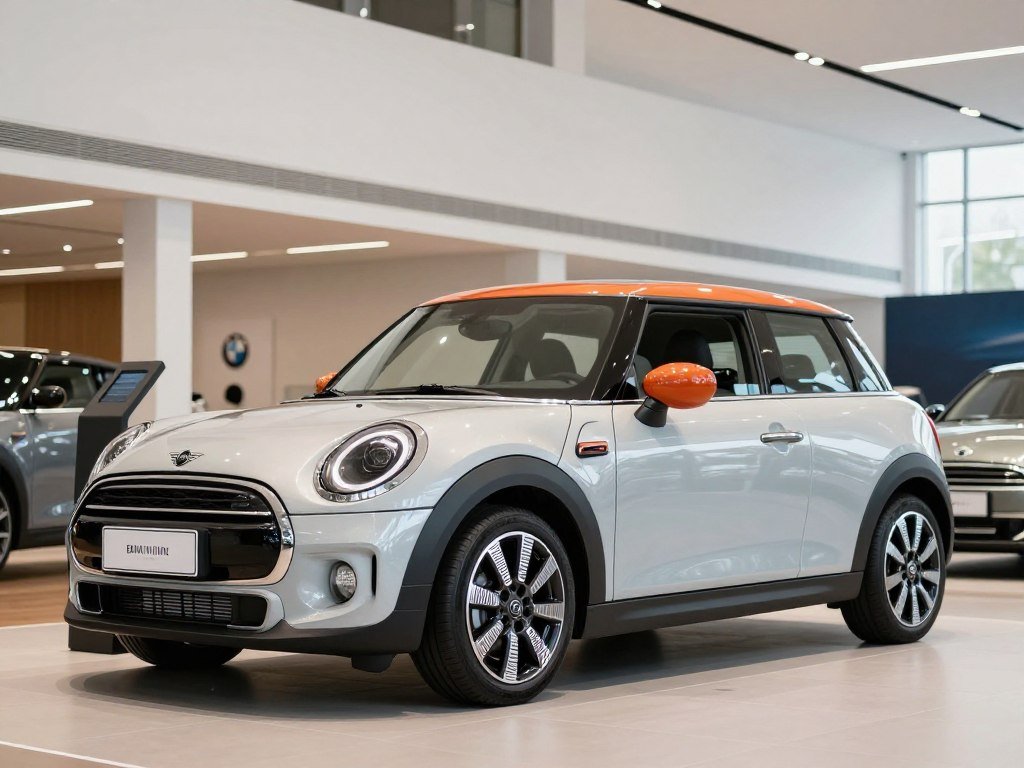
BMW Group owns MINI, a British-rooted marque that has kept its own identity within a larger automaker. A marque is an automobile brand marketed under its own name. That distinction matters when you compare the badge on a car with the company behind it.
BMW ownership links the brand to a global company, but it does not erase its British roots. MINI has its own models, design cues, and place in the market. The brand’s name also has a history that began before its current owner took charge.
If you are looking at one of its cars, ownership can help explain who runs the brand and who handles U.S. sales. It can also help you separate brand identity from the details of a specific vehicle. This overview puts those facts in context without treating the badge as a buying guide.
The key to understanding MINI is to separate where the brand began from who owns it today.
Key Takeaways
- BMW Group owns the brand.
- BMW AG has held the legal brand ownership since 2000.
- The marque has British roots and a distinct identity.
- MINI USA handles U.S. business operations.
- Vehicle features, prices, and recall status vary by model.
Who Owns MINI?
BMW AG has owned the MINI brand since 2000, while MINI operates as a distinct marque in the BMW Group. A MINI Cooper is a MINI model, not a BMW model with a different name. That distinction keeps the car’s identity separate from its parent company.
BMW owns MINI Cooper through its ownership of the brand. Mercedes does not own MINI, and the two automakers are separate companies. The BMW Group includes several brands, while MINI keeps its own name, products, and customer-facing identity.

| Entity | Relationship | U.S. role or coverage |
|---|---|---|
| BMW AG | Legal owner of MINI since 2000 | Owns the brand |
| BMW Group | Parent group | Houses MINI as an independent brand |
| MINI USA/BMW of North America, LLC | U.S. business unit | MINI USA began U.S. sales in 2002 |
| Authorized dealer network | Sales and service channel | 105 full passenger-car sales and service dealers |
Brand ownership and U.S. sales are different roles: BMW AG owns the brand, while MINI USA runs its U.S. business.
MINI USA began selling vehicles in the United States in 2002, with the MINI Cooper and MINI Cooper S Hardtops. Its place within BMW of North America, LLC does not make every MINI a BMW vehicle. The dealer network covers sales and factory service for MINI owners.
For U.S. sales and factory service, MINI USA’s authorized dealer network is the practical point of contact.
How Did MINI Move From British Roots to BMW Ownership?
In 1959, MINI appeared as a car model name, before it became a marque of its own. Its British design grew from a need for a small, economical car that could still carry four adults. The original Mini’s compact layout helped shape its familiar style.
Sir Leonard Lord challenged designer Alec Issigonis to create that car after fuel prices rose during the 1957 Suez Crisis. Issigonis placed the wheels near the corners and mounted the engine sideways. Those choices made room for passengers within a small body.
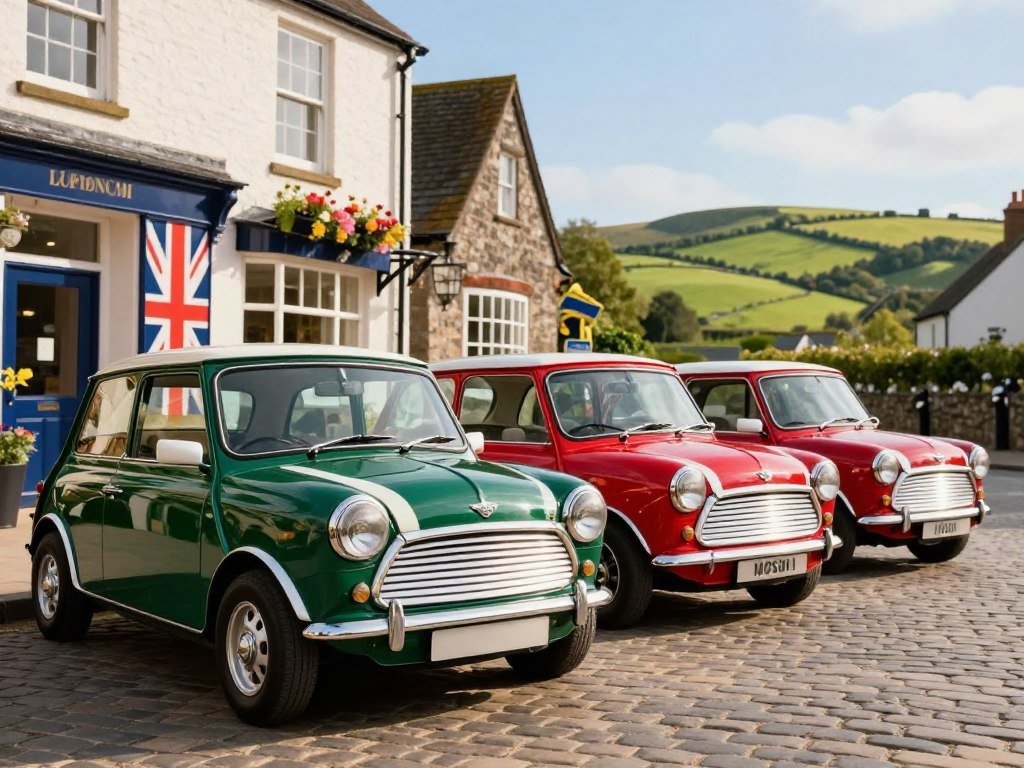
- 1957: Lord set Issigonis the design challenge after fuel prices rose during the Suez Crisis.
- 1959: The Mini launched as a car model, beginning a new chapter in small-car design.
- 1961: John Cooper added performance changes and introduced the classic Mini Cooper 997.
- 1964, 1965, and 1967: MINI won the Monte Carlo Rally in each of those years.
- 1969: MINI became a marque in its own right, after the name had served as a model name since 1959.
- 1994-2001: BMW acquired the brand with Rover Group in 1994; original Mini production ended in 2000, and the new MINI launched in 2001.
John Cooper’s work gave the small car a sportier role, while rally wins raised its profile beyond everyday driving. The Mini’s production run continued through the shift in ownership. BMW bought Rover Group in 1994 and gained the MINI brand as part of that deal.
The original car remained in production until 2000. BMW then launched the modern MINI successor in 2001, with a new plant and a fresh range of models. The company retained the name while making the new car part of a larger automaker’s lineup.
The model-name-to-marque shift is why MINI’s British beginnings and its later ownership are separate parts of the same history.
What Does BMW Ownership Mean for MINI Cooper Vehicles?
The 2026 MINI Cooper makes 161 horsepower, while the Cooper S makes 201 horsepower. Both use a turbocharged 2.0-liter four-cylinder engine and a seven-speed dual-clutch automatic transmission. BMW ownership explains the brand’s corporate home, not who developed or supplied each engine.
The cars remain MINI Cooper vehicles, with their own model names and driving character. The standard Cooper uses front-wheel drive. That layout sends engine power to the front wheels.
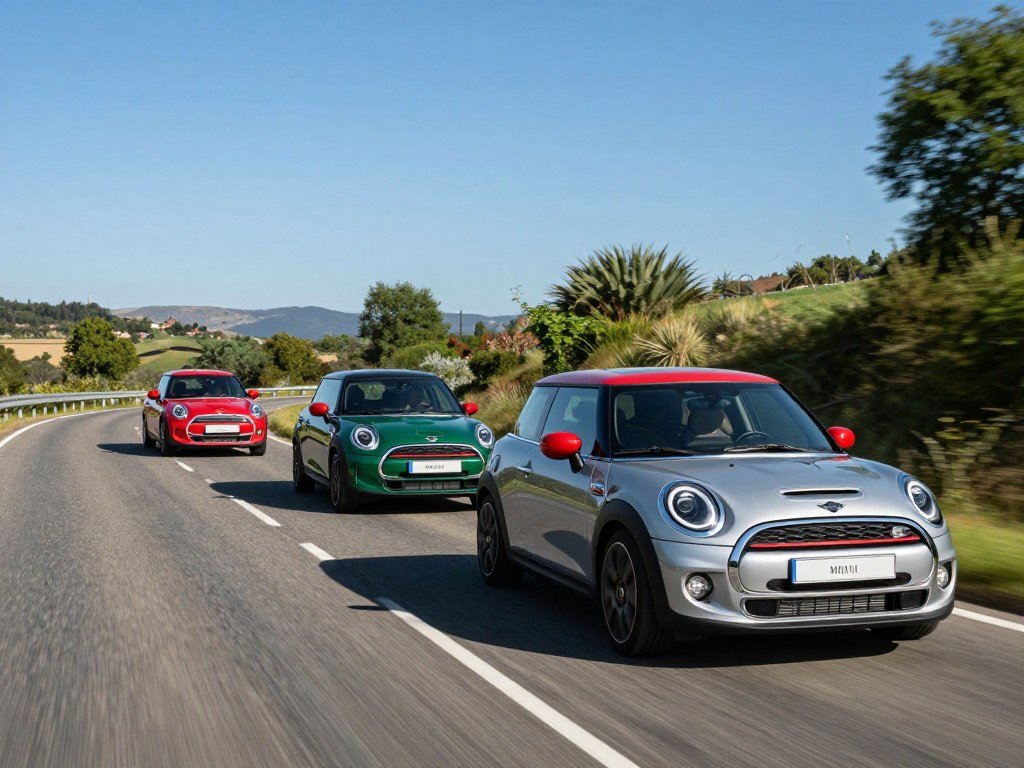
Engine, transmission, and drive
The 2026 Cooper’s 161 horsepower suits daily trips and city streets. The Cooper S raises output to 201 horsepower for drivers who want quicker response. Both models pair their turbo four-cylinder engines with the same seven-speed dual-clutch automatic transmission.
Front-wheel drive is standard on the 2026 MINI Cooper. These details describe the listed models, not every MINI vehicle across all years. A used car may have different equipment based on its model and year.
Fuel economy and acceleration
The 2026 MINI Cooper earns EPA ratings of 28 mpg city, 39 mpg highway, and 32 mpg combined. Convertible models are rated up to 27 mpg city and 37 mpg highway. EPA ratings are standardized estimates for comparing fuel use, not a promise of each driver’s real-world mileage.
Car and Driver recorded a 5.8-second 0-to-60-mph time for the 2026 Cooper S. That test result gives a sense of its acceleration, though road, weather, and driver can affect a car’s performance.
Warranty and scheduled maintenance
MINI’s new passenger-car limited warranty covers four years or 50,000 miles, whichever comes first. The limit applies to time or mileage, so coverage ends when either threshold is reached.
MINI complimentary scheduled maintenance covers up to three years or 36,000 miles, whichever comes first. Scheduled service covers planned maintenance, not every repair or part that may need attention. Check the terms for the specific vehicle and coverage period.
A back-to-back drive of the Cooper and Cooper S is the clearest way to decide which power level suits your daily routes.
What Do 2026 MINI Models Cost in the U.S.?
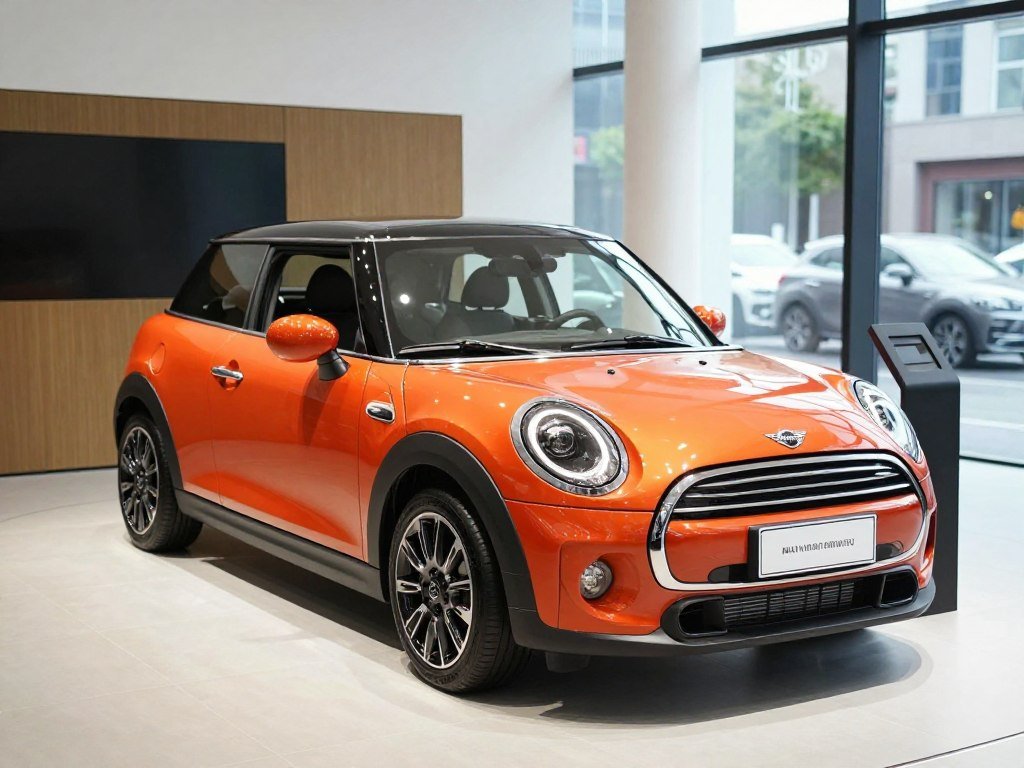
The 2026 MINI Cooper Hardtop 2 Door starts at $29,500 before destination and handling. Listed model-year 2026 base prices range from $29,500 to $49,400, before the extra charge. Trim levels and body styles shape the price across the MINI lineup.
These prices are MINI USA’s starting prices for the 2026 model year. The official 2026 MINI lineup pricing announcement lists the trims and package updates.
| Model | Signature | Signature Plus | Iconic |
|---|---|---|---|
| Cooper Hardtop 2 Door | $29,500 | $31,900 | $33,600 |
| Cooper S Hardtop 2 Door | $32,800 | $35,200 | $36,900 |
| JCW Hardtop 2 Door | $38,900 | $41,300 | $43,300 |
| Cooper Hardtop 4 Door | $30,500 | $32,900 | $34,600 |
| Cooper S Hardtop 4 Door | $33,800 | $36,200 | $37,900 |
The MINI Cooper 2026 4 Door starts at $30,500 for the Cooper and $33,800 for the Cooper S. Signature Plus prices are $32,900 and $36,200, respectively. Iconic prices are $34,600 for the Cooper and $37,900 for the Cooper S.
The 2026 Convertible lineup starts at $34,600 for the Cooper, $37,900 for the Cooper S, and $44,600 for the JCW. Signature Plus and Iconic versions cost $37,000 and $38,700 for the Cooper, $40,300 and $42,000 for the Cooper S, and $47,000 and $49,000 for the JCW.
The Countryman S ALL4 starts at $38,900 with Signature Plus and $42,300 with Iconic. The JCW Countryman ALL4 starts at $46,900 with Signature Plus and $49,400 with Iconic. Those are the listed Countryman trims and prices.
MINI USA’s base prices exclude a $1,175 destination and handling charge. The Countryman SE ALL4 remained a 2025 model-year vehicle in MINI USA’s June 2025 pricing announcement. For 2026, the JCW Style package became available for all S models, priced at $1,200 for the Cooper and $1,400 for the Countryman.
Optional sport stripes cost $250. The 2025 MINI Cooper price belongs to that model year and should not be treated as a 2026 price. Compare the listed year and trim when reviewing an offer.
Ask for an itemized out-the-door quote that separates the chosen trim, add-ons, and destination charge.
What Should Buyers Check Before Choosing a MINI?
The recall concerns apply to certain vehicles, so a model name alone cannot confirm whether an individual MINI is affected. Check the vehicle identification number, or VIN, before relying on a model-year label. Two recalls involve different parts and different vehicle groups.
Integrated brake system recall
A 2026 recall involved certain 2025 MINI Cooper S vehicles with a possible integrated-brake-system malfunction. The issue could reduce power brake assist or affect ABS and stability-control operation.
The recall covered 428 vehicles across the listed BMW, MINI, and Rolls-Royce models. It does not mean every 2025 Cooper S has the problem. A VIN check identifies whether a specific vehicle is part of the recall.
Front seat-belt retractor recall
A 2025 recall involved certain 2025-2026 MINI Cooper vehicles. The torsion bar in both front seat-belt retractors may have been damaged during production.
The seat-belt-retractor recall listed 1,571 potentially affected vehicles across the listed MINI and BMW models. That count covers the listed models together, not every car with a MINI badge. Use these steps when reviewing a used vehicle:
- Run the VIN through the NHTSA recall lookup.
- Confirm whether any open recall repair is complete.
- Review available service records.
- Arrange an independent pre-purchase inspection.
If a vehicle has a brake warning or a change in braking behavior, have it assessed before relying on normal brake assist.
Recall status and service history can differ between two cars of the same model year. A careful inspection can also reveal wear or damage unrelated to a recall.
Conclusion
MINI combines a distinctly British brand history with a place inside BMW Group. The brand keeps its own identity, while its parent group provides the larger corporate home. That makes brand identity and legal ownership two separate facts.
Match a chosen model and trim to your budget and driving needs. If you are considering a used car, check its vehicle-specific recall status and service history. MINI USA’s website has current model information and authorized-dealer contact details.
Compare the model and trim that fit your needs, then confirm the details with an authorized MINI dealer.
FAQ
Is the MINI Cooper using a BMW engine?
The 2026 MINI Cooper uses a turbocharged 2.0-liter four-cylinder engine that makes 161 horsepower. BMW owns the MINI brand, but that fact alone does not show who developed or supplied the engine. The Cooper S uses a version of the same engine type and makes 201 horsepower. Both listed models use a seven-speed dual-clutch automatic transmission.
What car is the poor man’s BMW?
“Poor man’s BMW” is not an official model designation. MINI is a distinct BMW Group brand, not a BMW model sold under another name. The phrase may be used casually because the brands share a parent group, but it does not describe MINI’s legal status or identify a specific vehicle. Compare each model’s features and price on its own.
What is the price range for a new MINI Cooper?
Listed model-year 2026 MINI prices range from $29,500 to $49,400 before destination and handling. The extra $1,175 charge is not included in those base prices. The range covers several models and trims, from the Cooper Hardtop 2 Door to the JCW Countryman ALL4. Optional packages and accessories can add to the price.
Which MINI is not to buy?
No single MINI model should be ruled out without looking at its condition and history. For a used vehicle, run its VIN through the NHTSA recall lookup and check whether repairs are complete. Review service records and arrange an independent inspection. Those steps help you judge the specific car, rather than relying on a broad claim about every vehicle in one model line.
What is the most common problem with a MINI Cooper?
The listed brake-system and seat-belt-retractor recalls do not establish the most common everyday problem. They concern certain vehicles and different parts, and neither recall applies to every MINI Cooper. A recall count also is not a ranking of repair issues. For a particular used car, its repair records and inspection can show more about its condition than a general label.
What is the best year of MINI to buy?
For a new-car buyer, the 2026 passenger-car warranty lasts four years or 50,000 miles, whichever comes first. Complimentary scheduled maintenance lasts up to three years or 36,000 miles, whichever comes first. For a used MINI, prioritize condition, service records, and completed recalls over a single model year. The car’s upkeep and current state matter to its next owner.
Which engine in a MINI Cooper is the most reliable?
Horsepower figures do not show which engine is most reliable. The 2026 MINI Cooper has a turbocharged 2.0-liter four-cylinder engine with 161 horsepower, but that specification is not a reliability rating. For a used car, look at its service history and condition. Regular records, inspection findings, and signs of prior repairs give useful context for that vehicle.
What year of MINI Cooper to stay away from?
Do not condemn an entire model year without checking the specific vehicle. Certain 2025 Cooper S vehicles were involved in a brake-system recall, and certain 2025-2026 Cooper vehicles were involved in a front seat-belt-retractor recall. Run the VIN through the recall lookup and confirm whether repairs are complete. A model-year label by itself cannot show whether a car is affected.



