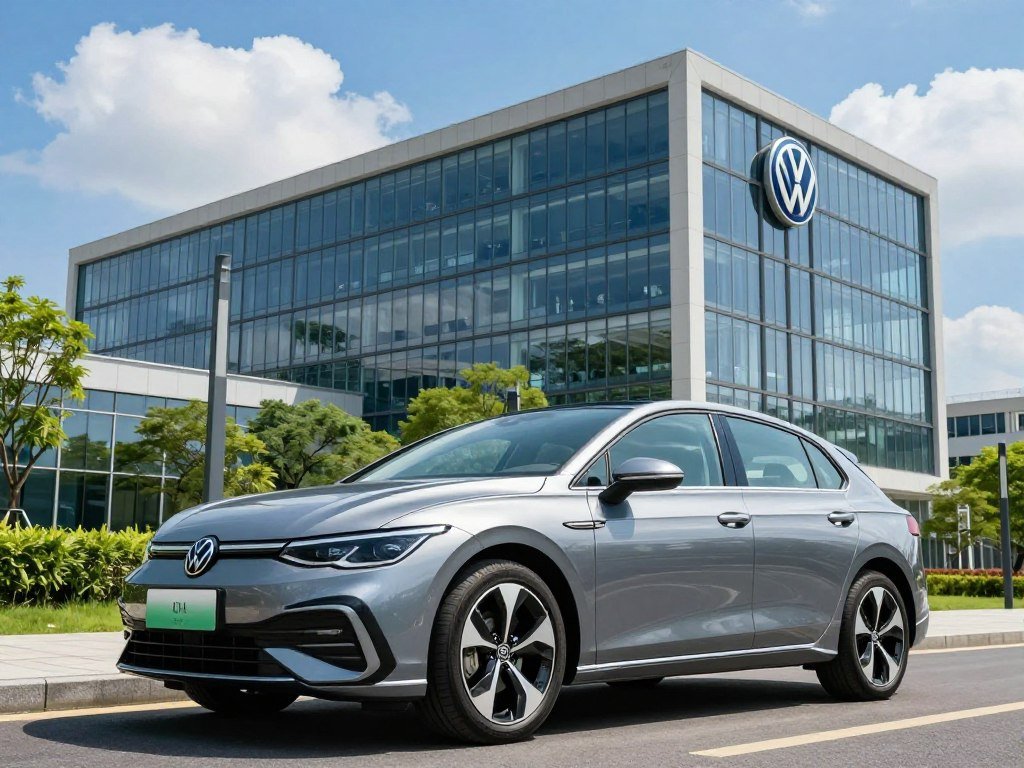
Volkswagen is a car brand, while Volkswagen AG is the publicly traded company behind the broader Volkswagen Group. A driver may see the badge on a car, while investors and governments hold influence over the company behind it. Those are different kinds of ownership. Voting rights are the votes attached to shares that give shareholders influence at company meetings.
The company’s history began in Germany in 1937, and its structure has since grown beyond one marque. Today, public investors, Porsche SE and the German state of Lower Saxony all have a place in its ownership picture. Their roles are not the same, and the cars themselves do not explain those differences.
Key Takeaways
- Volkswagen AG is the publicly traded parent company.
- Volkswagen Group is the wider corporate group.
- The Volkswagen brand is one marque within that group.
- Porsche SE holds the largest voting block in the parent.
- Lower Saxony and public investors also hold shares.
Keep the brand and the corporate group separate when reading ownership claims.
Who Owns Volkswagen Today?
The Volkswagen Group is the automotive group managed by publicly traded Volkswagen AG. Volkswagen AG is the company whose shares investors can buy on the stock market. The group name refers to its wider set of automotive brands and businesses, not to one car marque.
A Volkswagen SUV is made under the Volkswagen brand within the group; it is not a separate company owned apart from its parent. BMW is not owned by Volkswagen, either. BMW AG is a separate automaker with its own company structure.
BMW remains outside Volkswagen Group, even though both companies sell cars around the world.
Volkswagen AG was founded on May 28, 1937, and is headquartered in Wolfsburg, Germany. Its publicly traded status means investors can own shares, while the company’s largest voting blocks shape influence at meetings. A car buyer does not become a shareholder by buying a vehicle.
The distinction matters when a claim says that one company “owns” a car or brand. A car is a product made and sold under a marque. Shareholders own shares in a company, and those shares can carry different rights.
A vehicle badge identifies a brand, not the full list of shareholders in its parent company.
Who Controls Volkswagen AG’s Voting Rights?
Porsche Automobil Holding SE held the largest share of Volkswagen AG’s voting rights at the end of 2025, with Lower Saxony and Qatar Holding also holding substantial blocks. Voting rights show influence at meetings, rather than the full count of every share. The figures below are dated December 31, 2025.
Porsche Automobil Holding SE held 53.3% of voting rights, more than any other holder. Lower Saxony held one-fifth, while Qatar Holding held 17.0%. Public investors, grouped as free float, held the remaining 9.7% of voting rights.
| Shareholder | Voting rights | Shareholder type |
|---|---|---|
| Porsche Automobil Holding SE | 53.3% | Holding company |
| State of Lower Saxony | 20.0% | State |
| Qatar Holding | 17.0% | Investment company |
| Free float | 9.7% | Public investors |
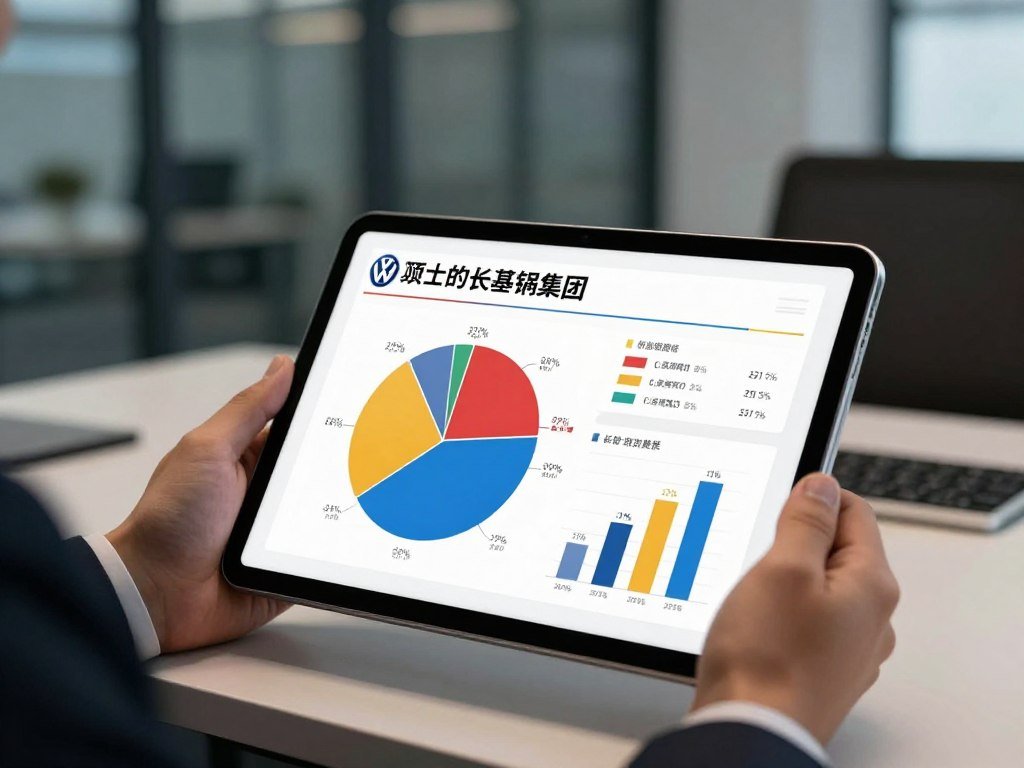
Those voting percentages are not the same as percentages of all company shares. Volkswagen AG had 295,089,818 ordinary shares and 206,205,445 preferred shares outstanding on that date. The share-class counts and voting split describe two related but different parts of its structure.
Ordinary shares carry voting rights in the listed share structure. Preferred shares do not carry voting rights there, so their count does not translate directly into voting power. This distinction helps explain why share totals and voting percentages can look unlike each other.
The State of Lower Saxony is a government shareholder, not a private investor. Its voting block gives the state influence at company meetings, though that does not make Volkswagen AG a state-owned company in full. Qatar Holding is an investment company, while free float covers shares held by public investors.
Shareholders can vote on matters put before company meetings, but a vote does not mean that each holder manages daily operations. Company management handles ordinary business decisions. A large voting block still gives its holder a strong say in major shareholder matters.
Read the voting-rights figures separately from the counts of ordinary and preferred shares.
How Are Porsche SE, Porsche AG, and Volkswagen Related?
Porsche SE and Porsche AG are different companies, and their relationship to Volkswagen runs in two directions. The similar names can hide distinct roles. Porsche SE is a holding company and a major Volkswagen AG shareholder; Porsche AG is the sports-car company.
Volkswagen AG holds Porsche AG shares indirectly through Porsche Holding Stuttgart GmbH. That is not a simple direct link from Volkswagen AG to Porsche AG. Porsche SE also has an indirect place in Porsche AG’s ordinary-share structure.
| Entity | Role in the relationship | Relevant shareholding detail |
|---|---|---|
| Porsche SE | Holding company | Major Volkswagen AG shareholder; indirect Porsche AG ordinary-share holder |
| Volkswagen AG | Publicly traded parent company | Indirect Porsche AG shareholder |
| Porsche Holding Stuttgart GmbH | Intermediate holding company | Holds Volkswagen AG’s Porsche AG shares indirectly |
| Porsche AG | Sports-car company | Has ordinary and preferred shares |
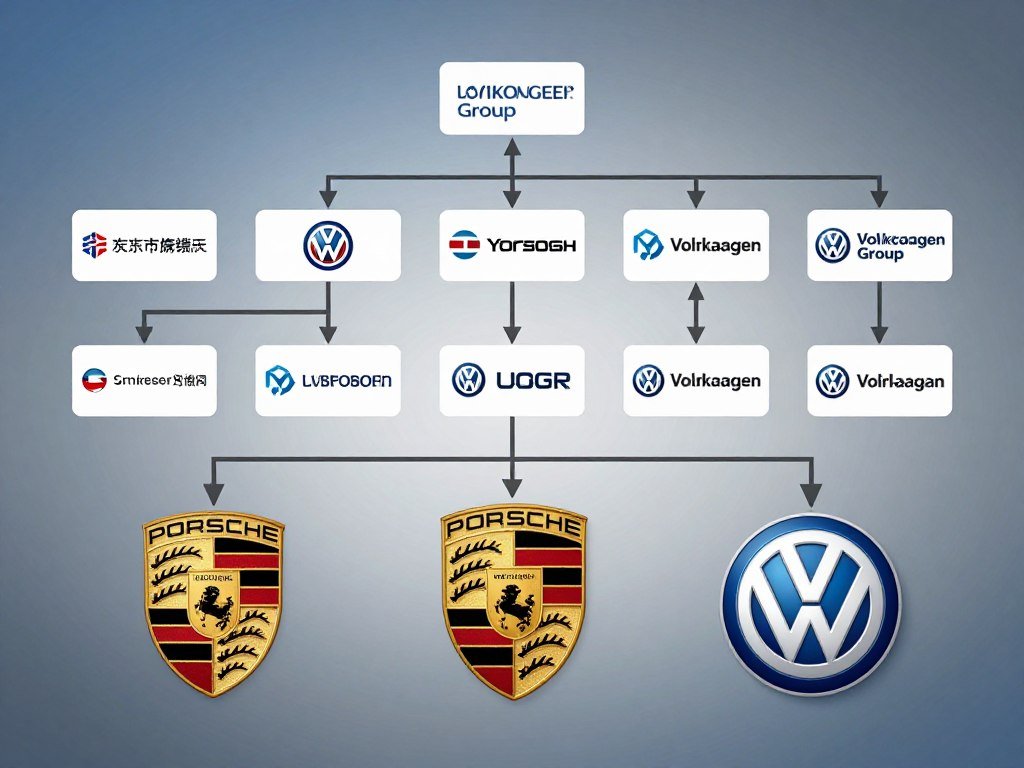
As of December 31, 2025, Porsche AG had 911,000,000 shares. It had 455,500,000 unlisted ordinary shares and 455,500,000 listed, non-voting preferred shares. The Porsche AG share structure separates share classes from the companies that hold them.
Volkswagen AG indirectly held its Porsche AG shares through Porsche Holding Stuttgart GmbH. Porsche AG’s ordinary shares were held indirectly by Volkswagen AG and Porsche SE. Volkswagen AG also indirectly held most of Porsche AG’s preferred shares.
The share classes matter because ordinary and preferred shares do not have the same rights. Porsche AG’s preferred shares are listed and non-voting, while its ordinary shares are unlisted. A share count alone does not show which holder can vote.
Porsche SE’s role as a Volkswagen AG shareholder does not make it the same company as Porsche AG. The first is a holding company; the second makes sports cars. Their names share a family history, but their legal roles differ.
That distinction answers both sides of the ownership question: Porsche SE owns Volkswagen AG shares, while Volkswagen AG indirectly holds Porsche AG shares. Neither statement turns the two Porsche entities into one business.
Treat Porsche SE, Porsche AG and Porsche Holding Stuttgart GmbH as three distinct entities when following the ownership chain.
What Brands Does Volkswagen Group Include?
Volkswagen Group’s ten core brands range from its namesake marque to Audi, Porsche and Ducati. The brands serve different drivers and markets. The group places them in three brand groups: Core, Progressive, and Sport & Luxury.
The ten core brands sit across three groups, with five in Core, four in Progressive, and one in Sport & Luxury. Volkswagen, Volkswagen Commercial Vehicles, ŠKODA, SEAT and CUPRA make up Core. SEAT and CUPRA are separate brands within that same group.
| Brand group | Brands | Number of brands |
|---|---|---|
| Core | Volkswagen, Volkswagen Commercial Vehicles, ŠKODA, SEAT, CUPRA | 5 |
| Progressive | Audi, Bentley, Lamborghini, Ducati | 4 |
| Sport & Luxury | Porsche | 1 |
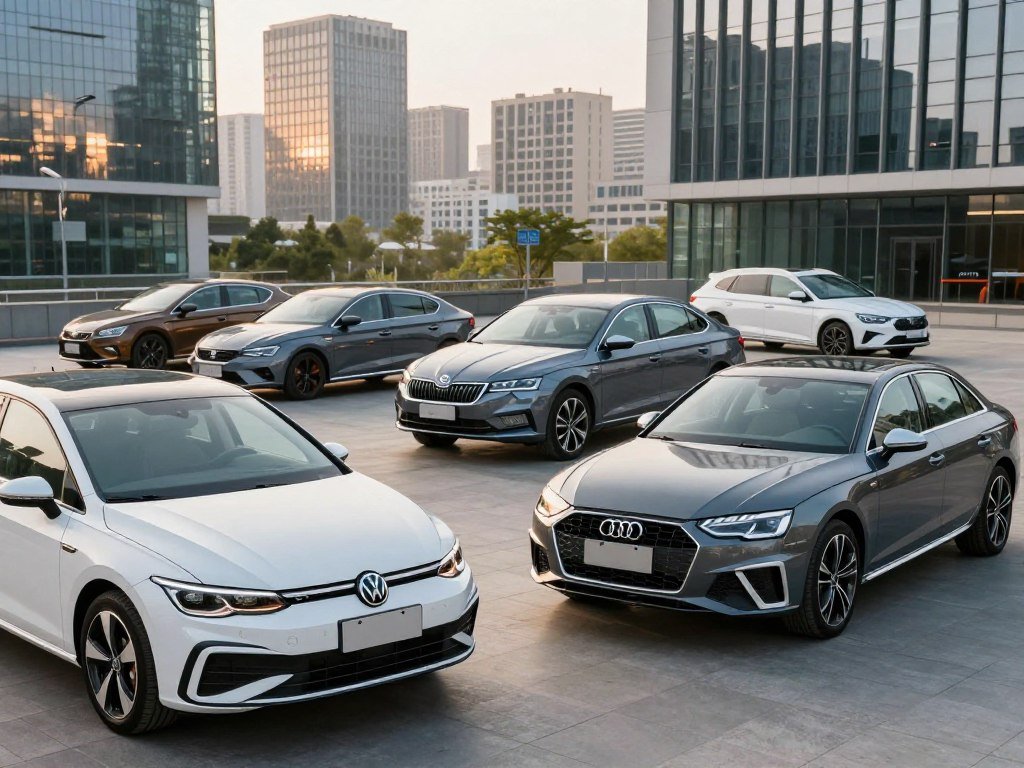
Volkswagen Group describes Volkswagen, Škoda, SEAT/CUPRA and Volkswagen Commercial Vehicles as members of its Core group. Its Brand Group Core overview explains how those marques work together on shared areas of business.
The other groupings bring together brands with different products and customer needs. Audi, Bentley, Lamborghini and Ducati are in Progressive. Porsche is the sole brand in Sport & Luxury.
These ten core brands do not make up a full list of every subsidiary or business unit. A brand is a marque used to sell products, while a subsidiary is a separate legal company owned by another company. One legal company may also support more than one brand.
SEAT and CUPRA show why the distinction is useful. They count as two brands, even though Volkswagen Group places them together in Core. A count of brands does not reveal the number of companies, plants, sales offices or other units behind them.
The group’s brand-group labels describe how it organizes the marques, not a measure of their separate legal ownership. That structure can change as the business evolves, so the labels describe a corporate grouping rather than a fixed legal chart.
Use the group’s brand-group labels to understand how it organizes the marques, not as a measure of their separate legal ownership.
How Does Volkswagen Group Extend Beyond Its Core Brands?
Volkswagen Group’s ten core brands do not represent a count of all the companies and business units under its umbrella. A brand count and a company count answer different questions. Subsidiaries and business units support vehicle sales, finance, service and other work.
Ten is the count of core brands, not the total number of legal entities the group owns. A legal entity is a company formed under law, while a business unit can be part of a company rather than a separate company.
Financial services are one major part of the group beyond car marques. They help customers, dealers and fleet operators manage the cost and use of vehicles. The services include:
- Dealer and customer financing
- Leasing
- Banking
- Insurance
- Fleet management
These services support the car business without becoming additional car brands. A finance unit may work with several marques, and a brand may rely on more than one legal entity across different markets.
That is why a single answer to “how many companies” can mislead. A count may include only major subsidiaries, or it may include local sales and service firms. The number also depends on whether business units are counted as companies.
For example, leasing describes a way to use a vehicle under a contract, while a leasing company is a legal organization. The service and the entity that provides it are not the same thing. The group’s businesses can include both.
Check whether a number refers to brands, subsidiaries or business units before comparing company counts.
Who Owns Volkswagen China and What Is It Developing?
Volkswagen Group China is wholly owned by Volkswagen Group, with a separate wholly owned technology company based in Hefei. The regional business and the technology firm are distinct subsidiaries. Their roles connect local operations with vehicle development for China.
Volkswagen Group China and its Hefei technology company
Volkswagen Group China is the group’s wholly owned regional subsidiary. It provides the corporate base for the group’s activities in the Chinese market. Its ownership links it to the wider corporate group.
Volkswagen China Technology Company is a separate, 100%-owned subsidiary based in Hefei. It focuses on technology work, rather than serving as another name for the whole regional business. Hefei gives the company a local base for development work tied to China.
The difference is practical: one name refers to the regional subsidiary, and the other refers to a technology company within the group’s China operations. Both are wholly owned, but they are not interchangeable names for one entity.
China-focused vehicle and electric-model plans
Volkswagen Group said it was investing €2.5 billion in its Hefei innovation hub. It planned to start production in 2026 for the first of two Volkswagen models developed with XPENG. The planned start date does not mean those cars were already in production.
The planned models are part of a broader effort to develop cars for Chinese buyers. Local teams can shape vehicles around local needs, while a partner such as XPENG brings a separate role in the development work. The stated plan names two models, not a completed production record.
In 2024, Volkswagen Group said it planned to offer more than 30 all-electric models from its brands in China by 2030. That is a target for the future, not a count of models already available. It covers the group’s brands in the Chinese market.
Planned start dates and model targets describe intentions, not completed production or deliveries. Keep planned start dates and model targets framed as plans, not as proof that production or delivery has already occurred.
Does Volkswagen Own Lamborghini and Bugatti?
Lamborghini is part of Volkswagen Group through Audi, while Bugatti has a different relationship after joining Bugatti Rimac. The legal paths are not identical. Lamborghini sits in the group through another group company, while Bugatti is part of a joint venture arrangement.
A brand’s place in the group portfolio does not by itself prove that Volkswagen AG owns it directly. Lamborghini’s link runs through Audi. Bugatti became part of Bugatti Rimac in 2021, and Volkswagen Group retained an indirect interest through Porsche’s stake.
The three relationships can be set out plainly:
- Lamborghini is part of Volkswagen Group through Audi.
- Ducati sits within the group through Lamborghini.
- Bugatti belongs to Bugatti Rimac, with an indirect Volkswagen Group interest through Porsche.
Bugatti Rimac began in 2021, when Rimac took control of the joint venture and Porsche held the other stake. The 2021 Bugatti Rimac deal kept the Bugatti and Rimac marques distinct within the new company.
That arrangement differs from Lamborghini’s place within Audi. A parent company can hold a stake in an intermediate company, which then owns or operates a marque. The brand may appear in a group portfolio even when the legal chain includes several companies.
Ducati’s relationship also passes through another marque rather than a direct line from Volkswagen AG. This makes brand lists useful for showing group membership, but not enough to map every shareholding link.
Check the intermediate company in the ownership chain before describing a marque as directly owned by Volkswagen AG.
Where Are Volkswagen Vehicles Made, Including in the United States?
Volkswagen Group’s production network spans 100 facilities in 27 countries, including U.S. production in Chattanooga, Tennessee. The cars are built across several regions, so a Volkswagen-badged vehicle does not always come from Germany. Assembly sites depend on the model.
Volkswagen Group vehicles are made in multiple countries, not at one German plant. The global network supports production for different markets and brands. The United States has a plant in Chattanooga that serves North American customers.
Volkswagen broke ground on the Chattanooga facility in 2009. The company’s Chattanooga plant page describes the site’s role and its place in the local community.
Chattanooga production has included several well-known Volkswagen models. The Atlas, Atlas Cross Sport and ID.4 have been among them. The Passat was also produced there, but that model’s Chattanooga production was discontinued.
- Atlas
- Atlas Cross Sport
- ID.4
- Passat, discontinued at Chattanooga
The model list can change over time as production plans shift. A plant may build a vehicle for a run of model years, then stop making it. That is why a past assembly location does not prove where a newer vehicle was built.
Check a specific vehicle’s model year and assembly location rather than assuming every Volkswagen-branded car is built at one plant.
What Do Volkswagen Group’s Latest Financial Results Show?
Volkswagen Group sold 9.0 million vehicles worldwide in 2025 and reported €321.9 billion in sales revenue. Those figures show the group’s scale, while its operating result gives a separate view of business performance.
The 2025 operating result was €8.9 billion. That is not the same as sales revenue, which measures money earned from sales before costs are taken out. The distinction matters when comparing financial results.
2025 results and 2026 nine-month figures
In the first nine months of 2026, Volkswagen Group sold 5.9 million vehicles, 11% fewer than in the same period of 2025. Sales revenue was €233.4 billion, compared with €238.7 billion during those 2025 months.
The group forecast 2026 sales revenue of around €315 billion and an operating return on sales of up to 1%. These are forecasts, not final results. The nine-month figures describe a set period, while the forecast covers the full year.
For context, the 2025 result covered the full calendar year. A nine-month figure should not be compared with a full-year total as though both periods were equal. Vehicle sales and revenue also measure different things.
What “net worth” means for a public company
“Net worth” can refer to different measures for a public company. Volkswagen AG reported total assets of €644.467 billion and total equity of €203.054 billion for 2025. Assets are what the company owns or controls; equity is the value left after liabilities are subtracted.
Market capitalization is different: it changes with the company’s share price and the number of shares counted. It is a market value, not a balance-sheet total. The 2025 sales and operating results also do not measure net worth.
Never treat assets, equity and market capitalization as three names for the same financial measure.
Total assets and total equity describe Volkswagen AG’s balance sheet, while market capitalization reflects how investors value its shares. Each figure answers a different question, and they can move for different reasons.
Compare the reporting period and the financial measure before treating two different “net worth” figures as equivalent.
Conclusion
Volkswagen AG is the publicly traded parent, while Volkswagen is one brand within the wider Volkswagen Group. Porsche SE holds the largest voting block, but shareholders, brands and subsidiaries have different roles in the corporate structure.
That distinction helps separate claims about a car badge from claims about a legal company. The group’s brands and business units can sit inside a larger ownership chain, so a brand name alone may not identify the direct owner.
When checking a claim about a particular marque or vehicle, identify the legal entity involved and the model year. For a specific car or marque, confirm the named legal entity and model year before relying on a broad ownership label.
FAQ
Is Lamborghini 100% owned by VW?
Lamborghini is part of Volkswagen Group through Audi, rather than being held directly by Volkswagen AG. The group relationship is indirect because Audi sits in the ownership chain. That distinction matters when “owned by VW” could mean direct ownership by the parent or membership in its wider corporate group. The brand’s place in the group does not make Audi and Volkswagen AG the same legal company.
What are the 12 brands owned by Volkswagen?
Volkswagen Group has 10 core brands, not 12. They include passenger-car, commercial-vehicle, sports-car and motorcycle marques. The count applies to brands, not every subsidiary or business unit. A company may support several marques, and local operating firms can exist separately from the brands customers see on vehicles. That is why a brand total should not be used as a count of all companies in the group.
Are VW using Ford engines?
There is no group-wide rule that Volkswagen vehicles use Ford engines. Engine supply and design depend on the exact vehicle, model year and engine code. A shared part or partnership in one case would not establish a rule for every Volkswagen car or SUV. Check the specific engine code when identifying what powers a vehicle, since a model name alone may cover more than one engine.
Does VW still own BMW?
No. BMW AG is a separate automaker, not a Volkswagen Group company. The two companies compete in the automotive market and have their own shareholders and business structures. BMW’s cars do not become part of Volkswagen Group because both companies sell vehicles in similar markets. A BMW badge identifies a different automaker from the Volkswagen brand.
Is Audi still owned by VW?
Yes. Audi is a Volkswagen Group core brand. Its place in the group connects it to the wider corporate structure, but the Audi brand and Volkswagen brand remain distinct marques. Audi sells vehicles under its own name and model range. Group membership describes its corporate relationship, while the Audi badge identifies the brand customers see on the car.
Does Volkswagen own Porsche?
Volkswagen AG indirectly holds Porsche AG shares through Porsche Holding Stuttgart GmbH. Porsche AG’s ordinary shares are also indirectly held by Porsche SE, and Volkswagen AG indirectly holds most preferred shares. Porsche SE is a holding company, while Porsche AG is the sports-car company. Those names refer to separate legal entities, even though their ownership links connect them.
Is Bugatti still owned by Volkswagen?
Bugatti became part of Bugatti Rimac in 2021, rather than remaining a simple direct Volkswagen AG brand. Volkswagen Group retains an indirect interest through Porsche’s stake in the arrangement. That is different from saying Volkswagen AG directly owns Bugatti. The intermediate company matters because it shows how the brand connects to the wider corporate group.