
Gasoline prices are falling fast across the United States, surprising even seasoned fuel analysts. The national average for regular gasoline plunged by 50.5 cents between October 29 and November 19, 2026, the biggest three-week decline outside the 2008 financial crisis, according to a CNN review of AAA data back to 2000. By that Thursday, the average had reached $3.72 a gallon, its lowest since March 16, after 26 straight days of declines.
On a percentage basis, prices tumbled by about 12 percent, the largest percentage drop since the Covid-19 lockdowns of early 2020. Gasoline had peaked at $4.56 a gallon in mid-May and climbed back to $4.50 in late September. By November 21, the average had fallen further, to approximately $3.66 a gallon, according to Forbes contributor Robert Rapier.
Yet the relief comes with a twist. Diesel, which powers the trucks and farm machinery that move almost everything Americans buy, has stayed far more expensive than gasoline. The gap between the two fuels, how refineries are responding to it, and the fall in crude oil prices together explain why gasoline prices are falling so fast.
Key takeaways
- The national average fell 50.5 cents in three weeks to $3.72 a gallon on November 19, 2026, the biggest three-week drop outside 2008 in AAA data back to 2000.
- Crude oil is the main driver: Brent crude fell from above $100 a barrel in mid-October to the low $80s by November 19.
- Seasonal demand is fading as colder weather cuts driving, and refineries have switched to cheaper winter blends that use more butane.
- Diesel averaged $5.94 a gallon in the week of November 16, against $3.81 for regular gasoline.
- Gasoline inventories rose 5.2 million barrels in the week ending November 13 to 215.9 million, about 3 percent above the five-year average.
| Measure | Figure | Source |
|---|---|---|
| National average, regular gasoline, November 19 | $3.72 per gallon | AAA, via CNN |
| Three-week change, October 29 to November 19 | Down 50.5 cents, about 12 percent | AAA data reviewed by CNN |
| National average, November 21 | Approximately $3.66 per gallon | Forbes / SHALE Magazine |
| National average one year earlier | $3.09 per gallon | AAA, via CNN |
| Diesel average, week of November 16 | $5.94 per gallon | U.S. Energy Information Administration |
| Crude oil by November 19 | Low $80s per barrel | AAA, via Forbes / SHALE Magazine |
| Gasoline inventories, week ending November 13 | 215.9 million barrels, up 5.2 million | U.S. Energy Information Administration |
Crude Oil Is Doing Most of the Work
The most direct explanation is falling crude oil prices. Crude is the largest single cost in a gallon of gasoline, so when oil falls, pump prices usually follow, although not instantly. According to AAA, crude had retreated into the low $80s by November 19, after Brent crude, the international benchmark, slid from above $100 a barrel in mid-October.
Several developments pushed crude lower at once. Diplomacy between the United States and Iran intensified, and traders welcomed signs that the war that began on February 28 might move toward negotiations. Oil kept flowing out of the Strait of Hormuz, a Libyan pipeline reopened, and the International Energy Agency said on November 13 that the global market would return to a surplus in the current quarter.
Geopolitics remains the biggest wildcard. Patrick De Haan, head of petroleum analysis at GasBuddy, told CNN prices could slide into the mid-$3 range in the coming weeks and months, unless the Iran war seriously heats back up. Jorge León, head of geopolitics at Rystad Energy, warned renewed escalation could quickly reverse much of the oil price decline. For now, that reescalation has not happened, and its absence has been enough to keep crude drifting lower.
Autumn Demand Fades and Winter Gasoline Arrives
The calendar is the second major force behind the drop. Demand for gasoline almost always declines when the days get shorter and temperatures fall. As De Haan put it, the colder the weather gets, the less Americans drive. Once summer ends, fewer miles driven means less fuel demand, which pushes prices down when everything else is held equal.
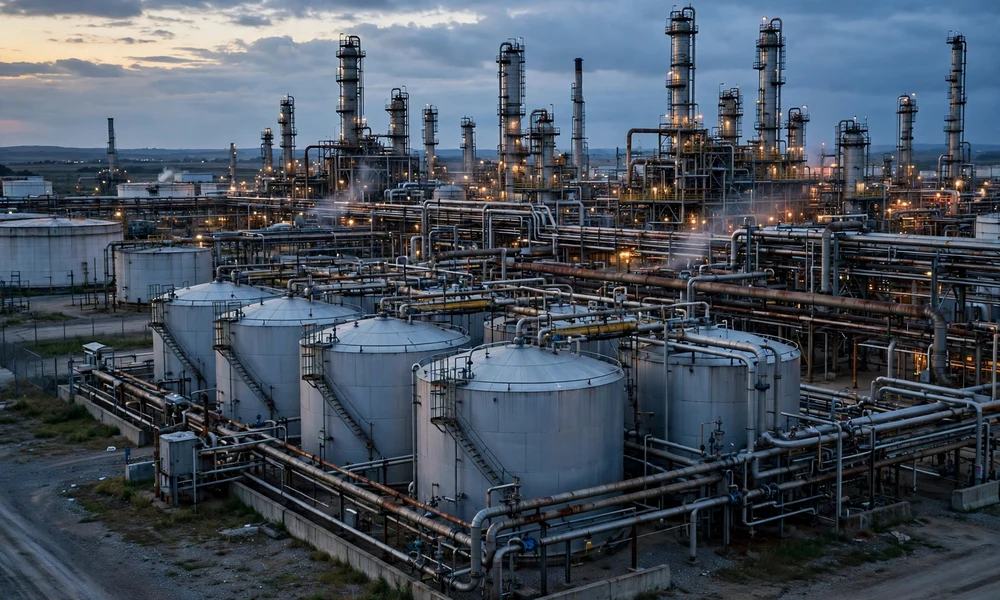
Refineries also finish annual maintenance by late fall, adding a little more gasoline to the market. Just as important is the fuel itself: the summer blend evaporates less quickly and produces less smog, while the winter blend helps engines start in freezing weather and uses more butane, which is cheaper, lowering production costs while increasing supply.
Normally the switch happens around September 15. This year the Environmental Protection Agency and the Department of Energy brought it forward to September 1, citing gasoline prices driven up by the war in Iran. By mid-November, the EIA average had fallen for eight straight weeks, with the last three drops the biggest of the run. Even so, the $3.72 average on November 19 was still well above the $3.09 level of a year earlier.
The Diesel Paradox: Why Refineries Are Running Flat Out
The most surprising part of this price drop is inside American refineries. Diesel has also declined, but it remains much higher than gasoline: the EIA put diesel at $5.94 a gallon in the week of November 16, against $3.81 for regular gasoline. That gap reflects fuel specifications, global demand, refinery economics and tight distillate supplies, and it has changed how refineries choose what to make.
Refiners earn money on the difference between what they pay for crude oil and what they receive for the products they sell, after operating and other costs. One common measure is the crack spread, which compares the market price of a refined product with the cost of crude oil. When diesel crack spreads are substantially higher than gasoline crack spreads, refiners have a strong incentive to maximise diesel production, shifting output away from gasoline and toward diesel and jet fuel.
An EIA analysis published on November 5 showed gasoline yields averaged less than 45 percent from January through August 2026, below the previous five-year low in every one of those months. Historically, United States refineries have produced roughly 45 to 50 barrels of gasoline for every 100 barrels of crude processed. Yet gasoline prices fell anyway, because a refinery can cut gasoline’s share of each barrel while producing more gasoline overall if it processes more crude. According to an October 22 EIA report, utilisation averaged more than 95 percent of capacity between May and September, the highest for those months since 1998. High diesel margins keep refineries busy, and busy refineries keep making gasoline even while they favour diesel.
Inventories Tell the Same Two-Sided Story
Inventory data confirms that gasoline supplies are relatively comfortable while diesel supplies are not. For the week ending November 13, the EIA reported United States gasoline inventories up 5.2 million barrels to 215.9 million, about 3 percent above their five-year seasonal average. Gasoline stocks built again the following week, rising 1.7 million barrels to 217.7 million. Distillate stocks told a different story: up 1.6 million barrels, they stood at just 104.9 million, about 7 percent below their five-year average.
One weekly report should not carry too much weight alone. Still, the contrast between comfortable gasoline supplies and tight distillate inventories matches the price divergence consumers are seeing. Regional factors helped too: refinery outages that pushed up prices in the Great Lakes region subsided, and new fuel tax cuts in Georgia and Ohio deepened the drop there.
What Falling Gasoline Prices Mean for Drivers and the Economy
For drivers, the effect is straightforward: filling a tank costs less than it did a month ago, just as many households travel for Thanksgiving. GasBuddy data put the all-time Thanksgiving Day high at $3.55 a gallon, set in 2022, and AAA said on November 19 that the average could fall another 15 cents by the holiday. But the saving only returns a fraction of what higher fuel prices have cost since the war began: Americans have spent an extra $162 billion on gasoline and diesel since it started, according to Brown University, more than $1,200 per household.
The wider economy is where the story gets complicated. Cheaper gasoline does not mean the energy crisis is over, because diesel supplies remain tight and refiners keep favouring middle-distillate production. Trucks, farm machinery and freight transport all depend heavily on diesel, and when it stays expensive, those costs can eventually feed into the prices of food, building materials and other products.
How to Make the Most of Cheaper Gasoline
Lower prices are a good moment to lock in sensible habits rather than driving more simply because fuel is cheaper.
- Fill up when local prices dip, and compare stations along your regular route instead of defaulting to the nearest pump.
- Keep tyres at the recommended pressure, since under-inflated tyres waste fuel.
- Remove roof boxes and heavy items when not needed, because extra weight and drag raise consumption.
- Plan errands into fewer, combined trips, since short cold-start journeys use more fuel.
- Use the manufacturer-recommended grade of fuel rather than paying for premium unless your car requires it.
- Track mileage and spending for a month, to see whether the price drop is actually lowering your fuel bill.
Drivers thinking about a vehicle change should weigh the wider picture: the canceled Cybertruck becoming America’s fastest-selling used truck shows how quickly sentiment can turn, and fuel is only one part of running a car.
Frequently Asked Questions
Why are gasoline prices falling so fast?
Three forces are at work: crude oil has fallen from above $100 a barrel in mid-October to the low $80s, seasonal demand is fading as colder weather cuts driving, and refineries have switched to cheaper winter gasoline blends, while inventories sit comfortably above average.
How big was the recent drop in gasoline prices?
The national average plunged by 50.5 cents between October 29 and November 19, 2026, to $3.72 a gallon, the biggest three-week decline outside the 2008 financial crisis in AAA data back to 2000. By November 21 it had fallen further to approximately $3.66 a gallon.
Why is diesel still so much more expensive than gasoline?
Diesel averaged $5.94 a gallon in the week of November 16, against $3.81 for regular gasoline. Global distillate supplies are tight, inventories are about 7 percent below their five-year average, and strong diesel margins encourage refiners to favour diesel and jet fuel over gasoline.
Will gasoline prices keep falling?
Patrick De Haan of GasBuddy told CNN prices could slide into the mid-$3 range in the coming weeks and months, unless the Iran war seriously heats back up. Any sudden reescalation would likely stop or reverse the decline, and geopolitics remains the biggest wildcard.
Are gasoline prices actually low now?
No. The $3.72 average on November 19 was well above the $3.09 level of a year earlier, and Americans have spent an extra $162 billion on gasoline and diesel since the Iran war started, according to Brown University. Prices have fallen fast from a high level, not to a low one.
Does cheaper gasoline mean lower prices for everything else?
Not necessarily. Diesel powers trucks, farm machinery and freight transport, and elevated diesel costs can feed into the prices of food, building materials and other goods. The link between fuel markets and the wider economy is one reason how AI is affecting the economy from Wall Street to Main Street is worth watching, and why buyers weighing a filling station should read the gas station buyer guide for Indiana before acting on a price swing.
The Bottom Line
Gasoline prices are falling fast because crude oil has fallen, autumn demand has faded, winter blends are cheaper to make, and refineries are running at their highest May-to-September utilisation since 1998, producing plenty of gasoline while they chase far more profitable diesel.
For now, the pump is kinder than it was a month ago. How long that lasts will be decided less by the seasons than by crude prices and events far from any filling station.