
A quiz tool promises a simple deal. A visitor answers a few questions, the business learns something useful, and a lead walks in warm. The deal sounds so clean that most small businesses sign up for the first tool they see, then the second, then the third. Each one solves a slightly different problem, and each one adds a slightly different monthly bill.
The trouble starts quietly. One quiz lives on the website, another lives inside the email tool, and a third lives in a slide deck for live events. Nobody remembers which quiz feeds the customer database, which one feeds the mailing list, and which one has not been opened in six months. The business now owns a small museum of quizzes instead of one working funnel.
This is my view, formed from watching small teams pour hours into quiz settings that customers never see. Optimizing for every quiz tool feels like marketing discipline. In practice it is a tax on attention, and the tax grows with every new template, scoring rule, and integration added without removing an old one.
Key takeaways
- Quiz sprawl starts with small, reasonable choices that add up to a system nobody fully understands.
- Every quiz template, scoring rule, and integration carries a maintenance cost that never appears on an invoice.
- One quiz that matches the real sales conversation beats five quizzes tuned for edge cases.
- Bad quiz data is worse than no quiz data, because it sends the sales team after the wrong people.
- The fix is a freeze on new tools, a cull of unused quizzes, and one owner for the whole quiz setup.
What quiz tool sprawl actually looks like
Sprawl rarely announces itself. It arrives as a second tool for a second use case. The marketing lead wants a product finder quiz for the website. The sales lead wants a qualification quiz for inbound leads. The events lead wants a live trivia quiz for a conference booth. Each request sounds reasonable on its own. Together they turn one simple idea into three subscriptions, three logins, and three dashboards that never agree with each other.
The questions start to duplicate. A visitor who takes the product finder quiz gets asked about budget. A visitor who takes the lead quiz gets asked about budget in slightly different words. A visitor who takes both ends up answering the same question twice, and the business stores two different answers to it. Neither answer is wrong on its own. The pair of them is useless, because nobody knows which one to trust when the sales call starts.
Scoring rules multiply the same way. One tool scores a lead out of ten. Another tool sorts leads into four personality types. A third tool assigns points per answer and hides the total from the team. The marketing report counts a hot lead one way, the sales report counts it another way, and the monthly meeting spends twenty minutes arguing about definitions instead of talking to customers.
Then there is the quiet cost that nobody budgets for: the time spent keeping all of it working. A tool updates its embed code and the website quiz breaks on mobile. If the business is still choosing a tool, our guide to the best AI tools for creating quizzes for small teams ranks the options by what a small team actually needs, and the ranking rewards simplicity over depth. Pick one, commit to it, and resist the urge to tune the runner up as well.
Why one good quiz beats five tuned ones
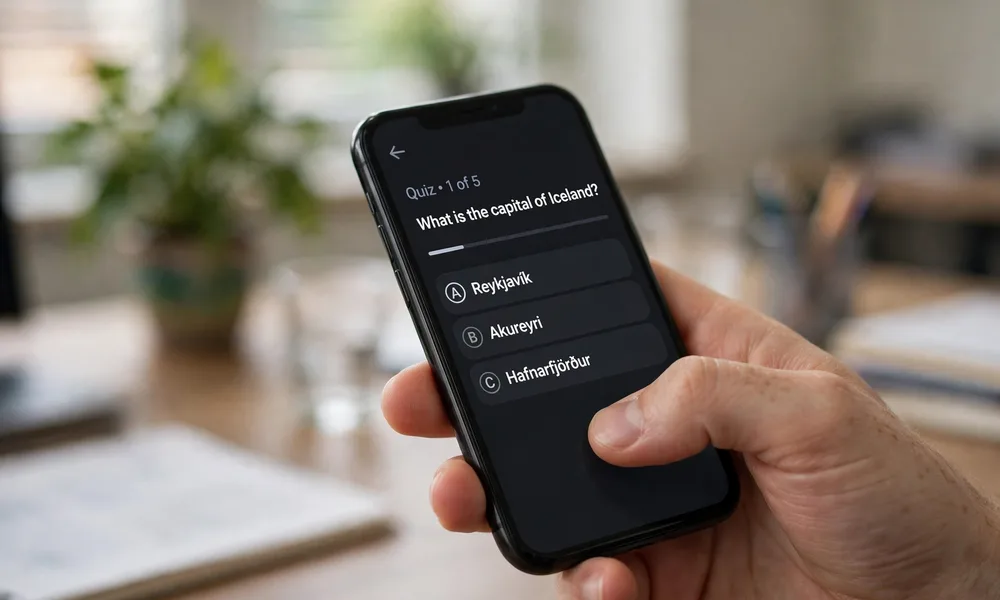
Depth beats breadth because mastery compounds. A team that knows one quiz tool well can answer a question in seconds: which quiz is live, what it asks, where the answers go, and what happens next. A team spread across three half tuned tools has to check each one, and the answer still comes with a caveat. The difference shows up in the numbers that matter. One tool means one set of completion rates, one drop off point to fix, and one results page to improve. Three tools mean three half finished analyses that nobody trusts enough to act on.
A single quiz also forces a useful argument. When the team can only run one product finder, it has to agree on the five questions that matter most. Five questions chosen with care will always beat twenty questions spread across four tools, because a visitor who faces twenty questions leaves.
One tuned quiz is also easier to test. Change the first question, watch completion for two weeks, keep the winner. Change the results page headline, watch the email opt in rate, keep the winner. Testing works when there is one variable and one baseline. Testing across three tools at once is guesswork dressed up as data, because the audience, the placement, and the questions all differ at the same time. A small team that tests one quiz properly will learn more in a month than a team that runs five quizzes and never changes any of them.
There is a cost that never shows up in a software budget: the cost of deciding. Every extra tool is a decision a marketer has to make before doing any real work. Which tool holds this quiz, which template matches, which integration carries the lead. The quiz tool is a means to a conversation, not a craft to perfect.
The human cost inside the team
Ask a marketer what happens when the quiz stack grows another layer and the answer is always the same: more admin, less marketing. An hour a week per tool does not sound like much until the stack reaches four tools and the month loses two full working days to settings screens, broken embeds, and exports that need cleaning by hand. Those are two days that did not go to writing better questions, talking to customers, or following up with the leads the quizzes already produced.
Sales teams pay too, in a subtler currency. When quiz data is messy, every lead needs a footnote and every handover needs a caveat. A sales rep who cannot trust the quiz score starts ignoring the score entirely, and then the whole point of the quiz is gone. The rep goes back to cold calling the full list, the marketing team wonders why nobody uses its carefully scored leads, and the two teams drift apart over a tool that was supposed to bring them together.
The comparison trap feeds the whole cycle. A team reads that a rival uses a different quiz platform and assumes its own setup must be missing something, or the reverse. The same trap shows up with CRM platforms, and the argument there is identical: the tool is rarely the constraint, and the habit of tuning every platform is usually the problem. Our view on why a business should stop optimizing for every CRM platform makes the same case for the sales system, and the lesson transfers directly. Pick the tool that fits, learn it properly, and spend the saved hours on customers.
The caveats that matter
| Detail | What is known |
|---|---|
| Pricing | Most paid plans start at around 8 to 50 dollars per month, and the useful features often sit on higher tiers. |
| Lead capture | Email capture, scoring, and branching logic are often paid features, so check the plan before building. |
| Scoring and logic | Simple scoring suits most small teams, while complex logic needs testing time the team may not have. |
| Results pages | A results page that matches the brand converts better than a default template with the tool logo on it. |
| Integrations | The quiz must send leads to the email tool and the customer database without manual exports. |
| Mobile experience | Most visitors take quizzes on a phone, so test every question and button on a small screen first. |
| Analytics | Completion rate and drop off by question matter more than total starts, so the tool must show both. |
| Data ownership | The business should be able to export every answer and every email address without paying extra. |
Checklist: judging a quiz tool honestly
- One quiz tool owns the whole job, from the first question to the results page and the lead handover.
- Every live quiz has a named owner, a clear purpose, and a review date on the calendar.
- The quiz asks no more than six questions, and every question earns its place by changing the result.
- Lead capture, scoring, and branching are included in the plan the team will actually pay for.
- The results page matches the brand, loads fast on a phone, and asks for the email address once only.
- Completion rate and drop off by question are checked every month, and the worst question gets fixed first.
Frequently asked questions
How many quiz tools does a small business need?
One. A single quiz tool covers product finders, lead capture quizzes, training quizzes, and live quizzes well enough for most small teams.
Is a free quiz tool enough to start?
Yes, for a first quiz. Free tiers cover small quizzes with basic scoring and a handful of responses, which is enough to learn whether visitors will take a quiz at all.
Do quizzes still convert visitors into leads?
Yes, when the quiz is short and the result feels personal. A quiz that asks five good questions and returns a useful recommendation will beat a static form on the same page, because the visitor gets something back for the effort.
Should the quiz live on the website or on a separate landing page?
On the website, on the page where the question it answers already lives. A product finder belongs on the product pages, and a lead quiz belongs near the offer it supports.
What makes a quiz question bad?
A question the business already knows the answer to, a question with no wrong answer that still changes the result, and a question that asks for personal detail before trust is earned. Bad questions also include double questions that ask two things at once, and clever questions that confuse the visitor.
When is it time to switch quiz tools?
When the current tool cannot do a job the business now needs every week, such as lead capture at volume or an integration with the email platform, and the paid tier does not fix it. A tool that loses leads, breaks embeds, or hides exports behind a price the business cannot pay is a reason to switch, and the switch should move one quiz at a time.
The bottom line
Quiz tools are cheap, and that is exactly why they multiply. A ten dollar subscription never triggers a budget meeting, so nobody asks whether the fourth quiz tool is earning its keep. But the cost was never the subscription. A business that owns one good quiz, knows it deeply, and improves it every month will get more from it than a business that owns five and understands none of them.
Stop optimizing for every quiz tool. Pick one, build the quiz the sales conversation actually needs, and spend the hours saved on the follow up that turns a quiz answer into a customer. Our guide to the best tools for managing a small business website surveys covers the neighbouring job of asking visitors what they think, and the same rule applies there: one tool, used properly, beats a shelf full of them.
Note: Prices and plan limits change often, so check the current pricing page of any quiz tool before buying. The argument here is about focus, not about any single product.