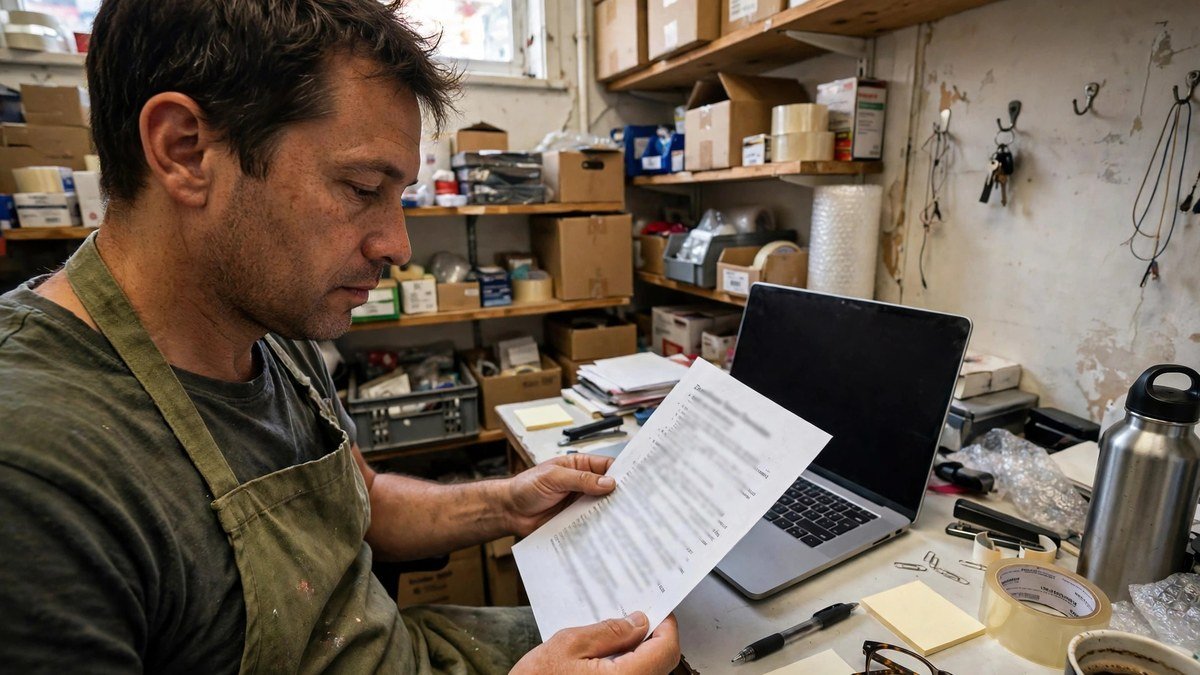
A small business owner opens a laptop on a Monday morning and faces five dashboards that all claim to describe the same team. One lists four people. A second lists six. A third shows a role that changed three months ago. A fourth shows a photo of a person who left last year. Each holds a different slice of the truth, and the owner spends the morning deciding which slice to trust instead of doing the work.
This is my view, and it is a hard one: a small business should stop optimizing for every team tool. The team is five people, or eight, or twelve at most, and it does not need a separate tool for the directory, the page, the profiles, the rota, and the feedback. It needs one clear way to show who does what, one person who keeps it true, and one place where a visitor can find it. Everything past that point is clutter with a monthly fee.
The rest of this piece explains why the pile grows, what it costs, and how a small team can cut it back without breaking anything that matters. The argument is not against tools. A good tool earns its place. The argument is against adding a new tool for every small friction, and then optimizing each tool as if the stack itself were the business.
Key takeaways
- A team of a dozen people needs one clear way to show who does what, not five tools describing it differently.
- Each new team tool adds a fee, a login, a dashboard, and a copy of the same facts that then drifts out of date.
- Conflicting copies delay decisions, because the team argues about which record is right instead of doing the work.
- A freeze on new tools, a cull of the tools that add no decision, and one named owner restore a single true record.
- One stable workflow, checked once a month, beats a stack of tools that nobody fully understands.
What the team tool pile actually shows
A team tool pile rarely starts with a bad decision. A business picks a builder to put the team page online, and the builder does the job well. Then a second tool arrives to keep a live directory of people and roles, because the builder page goes stale when a role changes. Then a third arrives for short profiles, and a fourth for a feedback round. Each arrival makes sense on its own. Together they form a pile that no single person can hold in mind.
The pile shows up first in the numbers that do not match. The builder page lists the team as it stood when the page was built. The directory lists the team as it stood when the last sync ran. The profile tool lists the team as it stood when each person last logged in, which for some people was months ago. A visitor who checks two places finds two different teams, and trusts neither one. The explainer on what a business website team page is for small businesses puts the point plainly: the page exists so a visitor can match a face to a role, and a page that shows the wrong faces fails at the one job it has.
The pile also shows up in the fee stack. A monthly fee of 11 dollars looks modest. A second fee of 9 dollars looks modest. A third fee charged per person per month looks modest until the team grows from five people to twelve and the fee triples without anyone approving the rise. Add the profile and feedback tools, and the total can pass 120 dollars a month. That is money spent on describing the team rather than paying the team.
There is a quieter cost, and it shows up in the calendar. Every tool needs an update, a password reset, and a support ticket at some point, and every tool needs someone to check whether the facts inside it are still true. When five tools hold the same facts, the check has to happen five times, so it usually happens zero times. That is how a team page ends up showing a person who left and a role that changed.
Why one more tool never fixes a weak workflow
A weak team workflow has a small number of real causes, and none of them is a missing tool. The roles are unclear, so nobody knows who answers for what. The record lives in three places, so nobody trusts any of them. The photos are old, so visitors doubt the faces. The update has no owner, so it never happens. A new tool adds a layer over these causes rather than fixing one of them. A directory tool can sync roles, but it cannot decide what they should be. A profile tool can collect prettier bios, but it cannot make a vague bio honest.
There is a second reason the extra tool fails, and it concerns ownership. When one tool holds the team record, one person can answer for it. When five tools share the record, nobody can answer for it. The builder says the page is current. The directory says the sync ran last night. The profile tool says the bios are complete. Each claim is true inside its own small world, and the team page is still wrong. The roundup of the best AI tools for creating team pages for small teams in 2027 shows how wide the choice has become, and that width is part of the trap. Eight strong tools can each suit a different team, and that makes it easy to believe owning several at once will cover every case.

Freezing new tools does not mean freezing improvement. It means improving the workflow first, with the tools already in place, and only then asking whether a gap remains that no current tool can fill. Most small teams find that the gap is not a missing tool. The gap is a missing decision about who owns the record and a missing hour each month to check it.
The human cost inside a small team
Talk to a small team that runs on a pile of tools, and the pile shows up first as fatigue. The person who answers support email checks three dashboards before lunch to find who handles a complaint. The person who updates the team page also explains to a new hire why the directory says one thing and the page says another. None of these jobs is hard on its own. Together they form a second job that nobody applied for.
The fatigue turns into caution. A team that has been burned by a tool change will avoid changing the team page at all, even when the change is simple and clearly needed. The fear is reasonable: a small change in one tool once broke the sync for a whole weekend, and nobody noticed until a visitor asked for a person who had left months earlier. A team that fears its own tools will leave the page frozen rather than risk another break, and a frozen page goes stale in weeks.
The same pattern appears in the argument about project tools, and the companion opinion on why a business should stop optimizing for every project tool makes the same case from the project side: more options do not create more clarity, and each new option adds a place where the truth can drift. When the record of the work matters more than the work itself, the business has mistaken the shelf for the shop.
The cull that matters
If a team can answer every row with one name, one place, or one number, the stack is under control.
| Detail | What is known |
|---|---|
| Team size | Five to twelve people, one record, one owner |
| Source of truth | One place holds the team facts, the rest copy from it |
| Monthly fees | One or two fees, reviewed every quarter |
| Logins | One login for the owner, one for the editor, no more |
| Update rhythm | One check a month, ten minutes, same day each month |
| Photos | Real photos, retaken when a person changes role or look |
| New tool test | A new tool must replace an old one, never sit beside it |
| Success sign | A visitor finds the right person in under a minute |
Checklist: cutting the pile back
Use this list once, in order.
- Freeze new team tools for ninety days and list every tool the team already pays for.
- Name one owner for the team record and one place that counts as the source of truth.
- Delete or cancel every tool that no decision depends on, and watch whether anyone misses it.
- Match the team page against the real team, face by face and role by role, and fix every drift.
- Set one monthly check, ten minutes, same day each month.
- Before any new tool is bought, name the tool it will replace.
Frequently asked questions
Is one tool really enough for a whole team?
For a team of a dozen people, yes. One builder or directory holding names, roles, photos, and short bios covers everything a visitor needs. The work that matters is keeping that one record true.
What if the team grows past a dozen people?
A larger team may need a directory that stays current as roles change, yet it still needs one source of truth and one owner. Growth is a reason to replace a tool, not to add a second one beside it.
Does a freeze mean the team page never changes?
No. A freeze stops new tools, not new facts. Roles, photos, and bios should change whenever the real team changes. The freeze only stops the habit of buying a new tool to avoid making a decision about the old ones.
How do I choose which tools to cut first?
Cut the tool that no decision depends on. If nobody has opened it in a month, it is already gone in practice. Cancel it and see whether anyone notices within thirty days.
What about the tool a single person loves?
Ask what decision that tool improves. If it improves a real decision that no other tool covers, keep it. If it only feels nicer to use, the feeling is not worth a second copy of the same facts.
When is a new team tool ever justified?
When a gap remains after the workflow is fixed, the record has one owner, and the current tool cannot fill the gap at any price. Then the new tool replaces the old one the same week, and the count of tools stays the same.
The bottom line
My view is simple, after watching small teams wrestle with this pile for years: stop optimizing for every team tool. Pick one record, one owner, and one place where the truth lives. Cut the rest. Spend the saved money and the saved hours on the team itself and on the visitors who want to find the right person without a hunt. A team page that is true beats a stack that is clever.
The test takes one minute. Open the team page, then open the directory, then open the profile tool. If all three show the same people in the same roles with the same faces, the stack is working. If they do not, the stack is not a system. It is a pile. Admit it, freeze it, cull it, and start again with one true record checked once a month.
Note: this piece is an opinion, not a review. No tool is named as a recommendation, and no price quoted here is a promise. Fees change, and the right single tool for one business may be the wrong one for the next. The argument is about the count of tools, not about any one product.