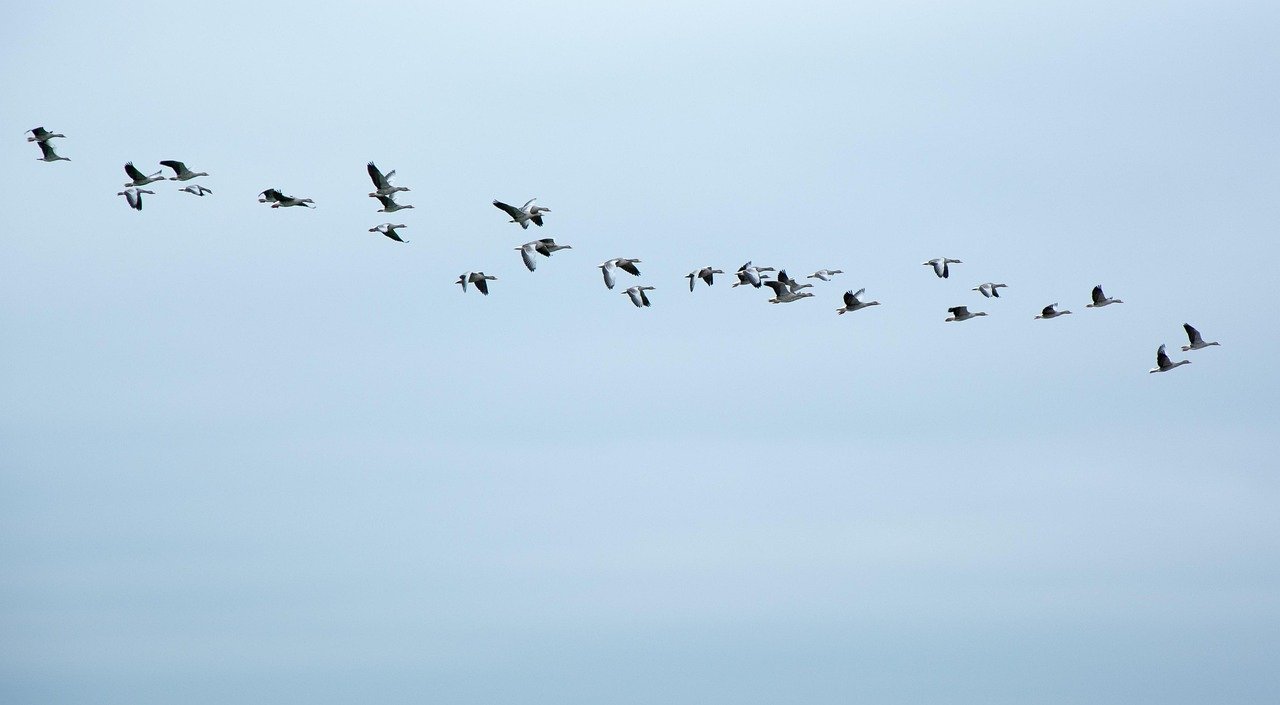
Have you ever stood outside on a cold autumn evening and heard that faint, far-off honking before you saw anything at all? Then a ragged line of birds appears, wings beating in rhythm, and you realize you’re watching one of the oldest travel stories on Earth. Wild geese have been making these journeys for far longer than humans have been writing about them, and they still do it with a precision that leaves engineers taking notes.
This article looks at wild geese as birds first: what they are, how they fly so far, why they honk, and where they run into trouble with people. It also touches on the other meaning of the phrase, because “wild geese” carries a second life in history and poetry that’s worth knowing about.
What exactly counts as a wild goose?
Wild geese are waterfowl in the family Anatidae, the same broad group that includes ducks and swans. Within that family, geese sit in the subfamily Anserinae. Most wild geese fall into two genera: Anser, the grey geese, and Branta, the black geese. Greylag, pink-footed, and bean geese are grey geese. Canada geese and barnacle geese are black geese.
The exact number of species depends on which checklist you follow. Roughly ten to eleven species are usually placed in Anser and about six in Branta, but taxonomists disagree at the edges, and genetic work has shifted some boundaries over the years. If you need a firm count, check a current official checklist rather than a field guide from twenty years ago.
It helps to know that “wild goose” isn’t a single animal. It’s a category. A greylag goose grazing in a Scottish field and a lesser white-fronted goose crossing the Arctic are doing very different things, and their fortunes are very different too.
Why do geese migrate so far?
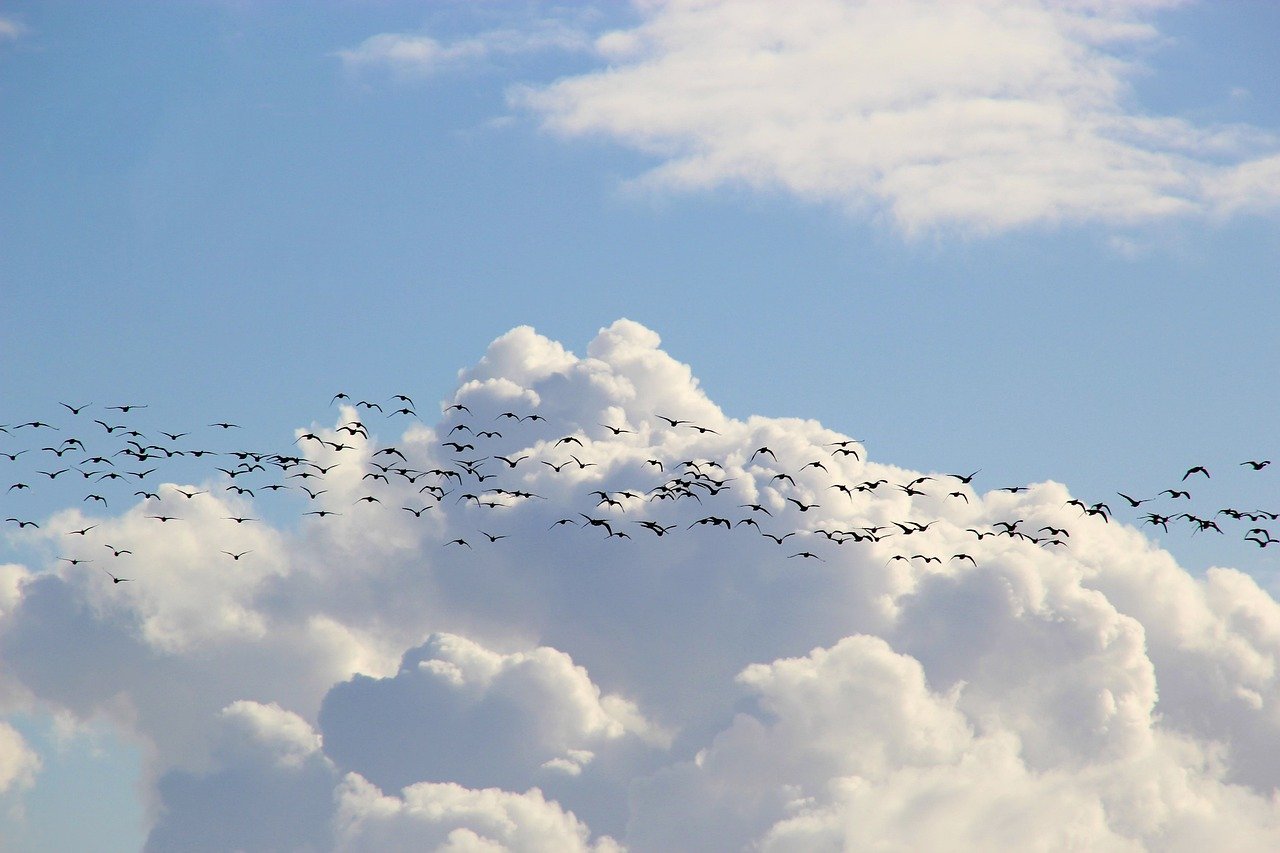
Many wild goose populations are long-distance migrants. They breed in Arctic and subarctic regions during the short northern summer, then move south to spend winter in temperate zones where food stays accessible and water doesn’t freeze solid.
The barnacle goose and the pink-footed goose are among the best-studied examples. Researchers have tracked both across thousands of kilometers, and their routes are remarkably consistent from year to year. Young birds learn the path by flying it with their parents, which is one reason losing experienced adults from a population can cause real problems.
Migration isn’t a single flight. It’s a series of stops at staging grounds, wetlands, and farmland where the birds rest and refuel. That’s why protecting a single nature reserve often isn’t enough. The whole chain of stopover sites has to hold together.
The science behind flying in a V
The V formation is the image everyone knows, and the aerodynamic explanation is solid. A bird flying slightly behind and to the side of another catches upwash, the upward flow of air off the leading bird’s wingtips. Riding that rising air reduces the effort needed to stay aloft.
The best-known experimental work on formation flight looked at northern bald ibises, not geese, so it’s worth being precise about that. The study found that birds carefully timed their wingbeats to exploit upwash and avoid downwash from the bird ahead. The same principle is widely applied to geese, whose V formations are visible to anyone with a pair of binoculars.
What’s often oversimplified is the idea that the lead bird rotates by some exact rule. In practice, position changes happen, but the details vary between flocks and studies. The energy savings are real. The tidy rulebook is mostly storytelling.
Do geese really honk to encourage each other?
This is one of those claims that sounds lovely and spreads fast. The honest answer is that the popular version is folklore. Calls during flight are thought to help birds maintain formation and coordinate the flock, but there’s no established science showing geese honk to cheer on the leader.
That doesn’t make the sound less wonderful. It just means the heartwarming explanation is something people added, not something the birds are doing.
How geese are doing, species by species
Conservation status for wild geese is not one story. It’s a set of very different stories, and lumping them together gives a false picture.
| Species | General situation | Why it matters |
|---|---|---|
| Greylag goose | Widespread, increasing in places | Often the goose people see on local ponds and parks |
| Lesser white-fronted goose | High conservation concern, assessed as Vulnerable in recent assessments | Small, declining populations need targeted protection |
| Barnacle goose | Well studied, populations have grown in parts of its range | Shows how protection and land use change can shift numbers fast |
| Canada goose | Abundant, expanding well beyond its native range | The main source of human-goose conflict in many areas |
The lesson from that table is simple. Some goose populations are thriving so well that they’ve become a management headache, while others are hanging on by a thread. A policy that treats “geese” as one thing will get both cases wrong.
Conservation categories are reassessed periodically, so if you’re citing a status, check the current assessment date rather than an older summary.
When geese and people collide
Growing populations of resident Canada geese in North America and Europe have created a set of familiar conflicts. They graze on crops and pasture, foul beaches and ponds with droppings, and create bird-strike risk at airports. Anyone who has tried to walk across a park lawn in early summer knows the problem intimately.
Management tends to combine several approaches rather than relying on one. Scaring devices, habitat modification, and regulated hunting all play a role, and the mix depends on local rules and local tolerance. In the UK, wild geese are protected under the Wildlife and Countryside Act 1981, with licensing for certain kinds of control. In the US, migratory geese fall under the Migratory Bird Treaty Act of 1918 and federal hunting regulations. Specific species and seasons differ, so the statute or the relevant agency guidance is the place to look, not a summary online.
Practical tip: if geese are causing problems on private land, the first step is almost always a call to the relevant wildlife agency. People often start with deterrents they bought online, get frustrated, and only later discover that the legal options and the effective options were both documented all along. The second common mistake is assuming that a resident flock will move on by itself. It usually won’t.
The same pattern of human-wildlife friction shows up in plenty of other areas, from air quality to consumer products, where a cheap fix seems obvious until you look at the details. If you enjoy reading about how people sort good solutions from bad ones, this piece on picking an air purifier for wildfire smoke that actually cleans makes a similar point about marketing outrunning evidence.
The other wild geese: soldiers, not birds
There’s a second meaning that surprises a lot of readers. The Wild Geese is a term from Irish history, referring to Irish soldiers, mainly Catholic, who served in continental European armies. The movement is usually dated from the Flight of the Earls in 1607 and especially from the Treaty of Limerick in 1691, after which large numbers of Irish soldiers left to fight for France, Spain, and other powers.
Historians don’t fully agree on the exact scope or periodization of the term, which is normal for a label that grew up around a centuries-long phenomenon rather than being coined on a single day. But the phrase stuck, and it carries a lot of weight in Irish memory.
The phrase also shows up in poetry and idiom. “Wild-goose chase” dates back to the sixteenth century and has nothing to do with migration. If you’re researching “wild geese” and the results feel strangely divided between ornithology and military history, that’s why.
Watching wild geese without doing harm
For anyone who wants to see geese properly, a few practical habits make a real difference.
- Keep your distance and stay quiet. Geese are wary, and a noisy approach mostly gets you a view of departing tail feathers.
- Don’t feed them bread. Handouts create dependency, draw birds into roads and car parks, and worsen fouling problems.
- Watch the formation as well as the birds. Notice how the V shifts, how the birds swap positions, and how the line reforms after a disturbance.
- Time your visit to dawn or dusk. Movement between roosts and feeding areas peaks early and late.
- Keep dogs on leads near roosts. Disturbance during cold weather costs birds energy they can’t spare.
The most common mistake beginners make is chasing a photograph. The most rewarding approach is the opposite: find a spot, settle down, and let the flock come to you. Geese are creatures of habit, and a quiet observer at the edge of a field often gets closer views than a person walking briskly toward the birds.
There’s also a historical angle worth knowing for anyone interested in how trust in institutions rises and falls. The story of unregulated banknotes that built and then broke public trust is about a different kind of wildcat entirely, but it’s a good reminder that labels borrowed from animals tend to travel far from their origins.
And for readers who like following how affordable technology and everyday decisions intersect, this look at the Lenovo Xiaoxin 14 SE and the budget laptop market is a useful example of how a single component choice can reshape what buyers get for their money.
Conclusion
Wild geese are one of the few wildlife spectacles that most people can experience without traveling anywhere exotic. A park pond, a coastal marsh, or a harvested field at the right time of year will do. What makes them worth paying attention to isn’t just the sight of a V crossing a grey sky. It’s the fact that the same birds connect Arctic breeding grounds, farmland, airports, and legal statutes across several countries.
They also resist easy summary. Some populations are booming while others are in serious trouble. The aerodynamics of their flight are genuinely well understood, while some of the most repeated facts about them are pure folklore. And the phrase itself splits in two, pointing at both a migrating bird and a centuries-old chapter of Irish history.
The next time a flock passes overhead, the honking will sound a little different once you know what’s actually going on up there.
Frequently asked questions
What is the difference between a wild goose and a domestic goose?
Domestic geese descend mainly from the greylag goose and have been bred for size, meat, and egg production over many generations. Wild geese are undomesticated species shaped by migration and natural selection. Domestic birds are typically heavier, less migratory, and far less wary of people.
Why do geese fly in a V formation?
Flying in a V lets birds behind and to the side of the leader catch upwash from its wingtips, which reduces the effort of staying airborne. Studies of formation flight in other large birds found that individuals carefully timed their wingbeats to exploit that rising air and avoid the downward flow behind the leader.
Do geese honk to encourage the lead bird?
No, that’s folklore. Calls in flight are thought to help maintain formation and coordinate the flock, but there is no established evidence that geese honk to encourage or motivate the leader. The idea is appealing, which is probably why it spreads so easily.
Are wild geese protected by law?
In many countries, yes. In the UK, wild geese are protected under the Wildlife and Countryside Act 1981, with licensing available for certain control. In the US, migratory geese fall under the Migratory Bird Treaty Act of 1918 and federal hunting rules. Species and seasons vary, so check the current statute or agency guidance.
Which wild goose species is most at risk?
The lesser white-fronted goose is among those of highest conservation concern and has been assessed as Vulnerable in recent assessments. That contrasts sharply with species such as the greylag goose, which is widespread and increasing in parts of its range. Status is reassessed periodically, so check the current assessment.
What does “the Wild Geese” mean in Irish history?
It refers to Irish soldiers, mainly Catholic, who served in continental European armies, especially after the Flight of the Earls in 1607 and the Treaty of Limerick in 1691. Historians differ on the exact scope and dating of the term, but it remains a significant phrase in Irish historical memory.