
What actually separates Wiz, Orca Security, and Prisma Cloud once you strip away the sales decks? The answer is not the dashboard. It is how each platform gets its data in the first place. That single architectural decision shapes everything else: how fast you see a new workload, what you can see inside it, what it costs at scale, and how much access you hand to a third party. (Cloud vpn architecture site site tunnels actually work) (Cloud access security broker (CASB))
This comparison focuses on architecture, not feature checklists. Product names, packaging, and ownership can shift quickly in this market, so treat the details here as a framework for asking the right questions rather than a permanent scorecard.
The core split: agentless scanning versus agents
Every cloud security platform needs evidence. It needs to know what workloads exist, how they are configured, what software runs inside them, and which identities can reach them. There are two main ways to collect that evidence.
Agentless scanning reads data through cloud provider APIs. The platform asks the provider for configuration and metadata, then takes snapshots of workload disks and analyzes those copies in the vendor’s own environment. Nothing runs persistently inside your virtual machines.
Agent-based collection installs a small piece of software inside each workload. The agent reports continuously from inside, which gives deep runtime visibility: running processes, network connections, file integrity, and behavior over time.
The trade-off is straightforward. Agentless wins on speed of coverage and operational simplicity. Agents win on depth and real-time detection. Most mature buyers eventually want both, which is why the hybrid question matters more than the either-or question.
How Wiz is built
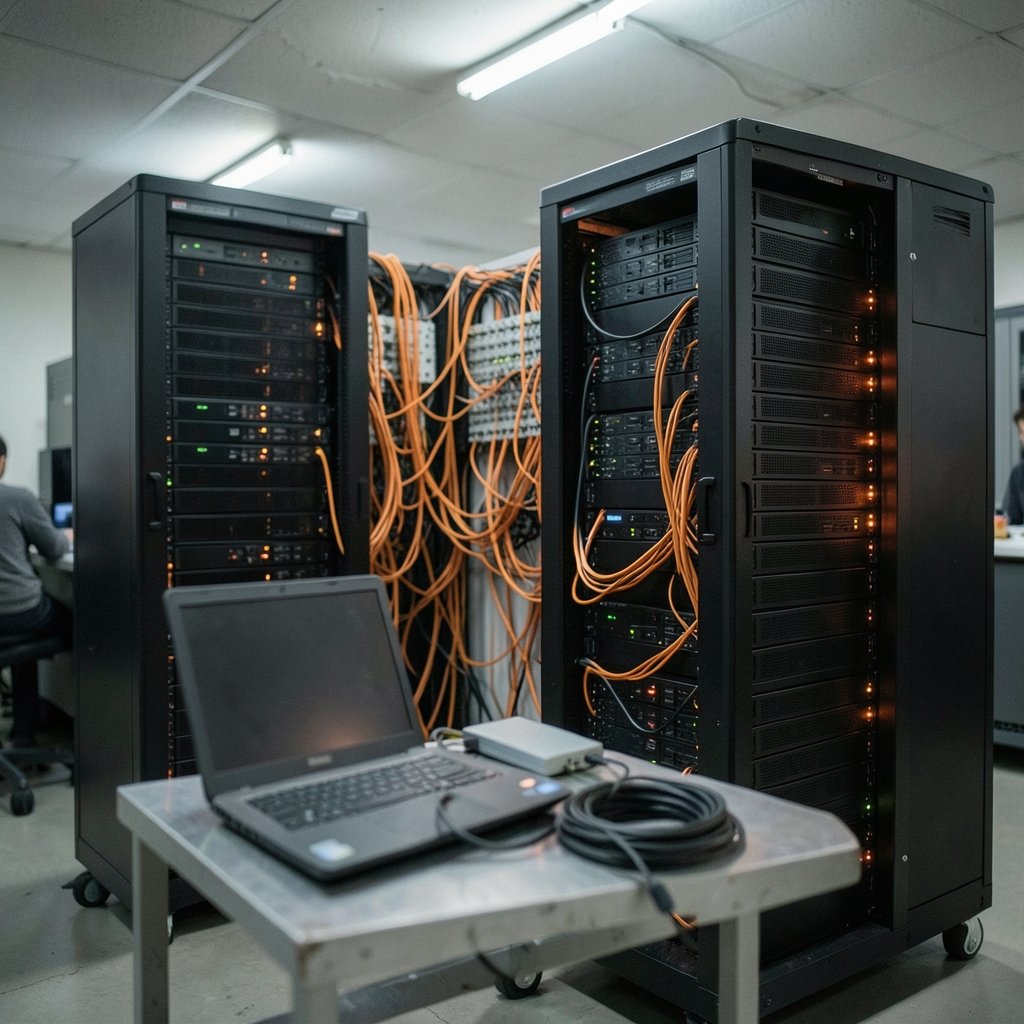
Wiz is an agentless, API-driven platform. It connects to cloud accounts through read-only roles, pulls configuration data, and snapshots workload volumes to inspect operating systems, libraries, and secrets without installing anything.
The practical consequence is coverage speed. A new account or subscription can be connected in minutes and scanned almost immediately. For organizations with hundreds of accounts and a history of shadow IT, that speed is often the deciding factor. The platform also builds a security graph that connects findings across compute, identity, data, and network paths, so a single issue can be traced to the resources it actually exposes.
The limitations are equally real. Snapshot-based inspection is a point-in-time view. It is excellent at answering “what is exposed right now” and weaker at answering “what happened at 2 a.m. when nobody was watching.” Teams that need live runtime detection usually pair agentless scanning with a separate runtime tool or a lightweight agent.
How Orca Security is built
Orca Security also takes an agentless approach, built around its SideScanning method, which reads workload data from the cloud provider’s block storage layer rather than from inside the guest operating system. The design goal is full-stack visibility without deployment friction: one connector per cloud account, then coverage across virtual machines, containers, serverless functions, and stored data. (Cloud networking architecture virtual networks actually work)
The architectural bet here is that most security value comes from correlating findings across layers rather than from runtime telemetry. Orca emphasizes a unified view where a vulnerable library, an over-permissive role, and a publicly reachable bucket are presented as one attack path rather than three tickets.
That is a sensible model for posture work. It is less suited to threat detection use cases like process-level anomaly detection or live incident response, where an in-workload sensor still earns its keep.
How Prisma Cloud is built
Prisma Cloud is the hybrid option among the three. It combines agent-based workload protection, inherited from the Twistlock acquisition announced in 2019, with agentless posture scanning, strengthened by the Bridgecrew acquisition announced in 2021. In practice, that means customers can run agents where runtime depth matters and rely on API-based scanning everywhere else.
This flexibility is genuinely useful and genuinely complicated. A common mistake is treating agentless scanning and agents as competing features and picking one. They are complementary. The agentless layer gives broad coverage across every account; the agent layer gives depth on the workloads that carry the most risk. Getting value from Prisma Cloud usually depends on being deliberate about which workloads get agents and which do not.
The other consideration is portfolio churn. The vendor has reorganized its cloud security offerings more than once, so buyers should confirm current product naming, packaging, and roadmap commitments directly rather than relying on older comparisons.
Side-by-side architecture comparison
| Dimension | Wiz | Orca Security | Prisma Cloud |
|---|---|---|---|
| Primary collection model | Agentless, API and snapshot based | Agentless, block storage scanning | Hybrid: agentless plus agents |
| Time to full coverage | Fast, connector per account | Fast, connector per account | Fast for posture, slower where agents deploy |
| Runtime depth | Limited without add-ons | Limited by design | Strong where agents run |
| Attack path analysis | Central security graph | Central correlation model | Available across modules |
| Operational overhead | Low | Low | Medium to high, depends on agent scope |
| Best fit | Fast multi-cloud posture at scale | Unified posture without deployment | Regulated or runtime-heavy environments |
Read that table as a starting point, not a verdict. The right column depends on what your team is actually trying to detect.
Why the collection model changes your cost curve
Agentless platforms shift work to the vendor’s compute. Every scan consumes API calls and snapshot storage, and those costs land on your cloud bill in ways that are easy to overlook during a proof of concept. A pilot with ten accounts looks cheap. A rollout across two hundred accounts with daily scanning can produce a surprising line item for snapshot egress and storage.
The practical tip: before signing, ask exactly how often snapshots are taken, how long they are retained, and who pays for the storage. Then model it against your largest accounts, not your average ones. Teams routinely underestimate this because they test on small, tidy environments.
Agent-based tools push cost in a different direction: deployment engineering, change management, and the operational burden of keeping agents current across thousands of workloads. Neither model is free. They just bill you in different currencies.
The data residency question nobody asks early
With agentless scanning, workload disk data is copied and analyzed in the vendor’s cloud. That is the whole mechanism. For organizations in regulated sectors, this raises questions that need answers before procurement, not after: where is the analysis performed, which region holds the copies, how long do they persist, and can the vendor’s staff access them?
Agent-based tools keep analysis closer to the workload, which some compliance teams find easier to defend. Neither approach is automatically compliant. The point is that the architecture determines which questions you will have to answer, so surface them during evaluation while you still have leverage.
Identity and network context are where architectures diverge most
Configuration scanning is now table stakes. The differentiator is whether a platform can answer “who can reach this, and through what path.” That requires modeling identity permissions and network reachability alongside workload findings.
This is where a graph-based approach earns its reputation. If a storage bucket is public, that matters. If it is public and reachable from a workload with an over-privileged role that can also read a customer database, that matters far more. Platforms that model these relationships surface the second finding; platforms that do not, hand you a list.
Cloud networking architecture is worth understanding here, because reachability analysis is only as good as the model beneath it. The same applies to how object storage and erasure coding work, since misconfigured storage remains one of the most common causes of real-world exposure. If your team is building or reviewing these layers, a primer on how cloud storage architecture actually works with objects and erasure coding is a useful companion to any security evaluation. (Cloud disaster recovery architecture design systems that) (NIST SP 800-207: Zero Trust Architecture)
Where each platform tends to fit
Based on architecture rather than marketing, some patterns hold up.
Wiz tends to suit organizations that need fast, broad, multi-cloud posture coverage and strong attack path analysis, and that already have runtime detection handled elsewhere. Orca tends to suit teams that want unified posture visibility with minimal deployment effort and are comfortable with point-in-time inspection. Prisma Cloud tends to suit enterprises with existing runtime requirements, regulated workloads, or a preference for a single vendor across prevention and protection.
None of these are permanent truths. They are starting hypotheses to test in a proof of concept.
Practical tips for running the evaluation
A few things separate a useful pilot from a demo.
- Connect your messiest accounts first, not your cleanest. Include legacy subscriptions, sandbox environments, and anything acquired through a merger.
- Measure time to first meaningful finding, not time to first dashboard.
- Test the same three real scenarios across all vendors: a public storage bucket, an over-privileged role reachable from the internet, and a vulnerable library on an internet-facing workload.
- Ask each vendor to show the attack path alongside the individual finding.
- Model snapshot and API costs against your largest accounts.
- Ask what happens when an account is added at 2 a.m. by an engineer nobody told you about.
The most common mistake is evaluating on UI polish. The second most common is assuming agentless and agent-based are substitutes. They are not, and the vendors that offer both will tell you so if you ask directly.
The question to ask in 2027
The market is consolidating, and ownership changes can reshape roadmaps overnight. The announced Google acquisition of Wiz in July 2024 is the clearest example: whatever its final status, it signals that platform ownership is now part of the architecture conversation. Buyers should ask what happens to pricing, data handling, and product direction if ownership changes, and get answers in writing.
The durable question is simpler than any feature matrix: which collection model fits the risks you actually carry, and can you afford it at the scale you will reach in three years? Answer that honestly, and the vendor choice tends to make itself.
Conclusion
Wiz, Orca Security, and Prisma Cloud are all credible platforms, and the differences between them are architectural rather than cosmetic. Wiz and Orca both bet on agentless collection for speed and simplicity, with Wiz leaning harder into graph-based attack path analysis and Orca into unified cross-layer visibility. Prisma Cloud bets on hybrid collection, trading operational complexity for runtime depth.
The right choice depends on three things: how much runtime visibility your threat model demands, how much data you are willing to have copied into a vendor’s environment, and how your cloud bill reacts to daily snapshot scanning at scale. Get those three right and the rest is detail. Get them wrong and no dashboard will save the deployment.
FAQ
What is the main architectural difference between Wiz, Orca, and Prisma Cloud?
Wiz and Orca are primarily agentless, collecting data through cloud provider APIs and disk snapshots. Prisma Cloud is hybrid, combining agentless posture scanning with agent-based runtime protection. That single difference drives coverage speed, runtime depth, and operational overhead.
Is agentless scanning less secure than using agents?
Not less secure, but different. Agentless scanning gives broad, fast coverage and strong posture analysis but offers limited real-time runtime visibility. Agents provide deep behavioral telemetry but require deployment and maintenance. Many organizations end up using both.
Do agentless platforms copy my workload data?
Yes, that is how the mechanism works. Agentless tools snapshot workload disks and analyze the copies in the vendor’s environment. Where that analysis happens, how long copies persist, and who can access them are questions to settle during procurement, especially in regulated industries.
Which platform is best for multi-cloud environments?
All three claim strong multi-cloud coverage, and all three largely deliver it. The more useful question is how quickly new accounts get covered and whether findings correlate across providers. Test that with your messiest accounts rather than relying on vendor claims.
How much does agentless scanning add to my cloud bill?
It varies with scan frequency, account count, and data volume. Snapshot storage and API calls are billed by your cloud provider, so a small pilot can look cheap while a full rollout does not. Model the cost against your largest accounts before committing.
Should I worry about vendor ownership changes?
Yes, at least enough to ask. Consolidation in this market can affect pricing, data handling, and roadmap priorities. Ask for written commitments on data residency and pricing continuity, and treat ownership stability as part of the architecture decision rather than a legal footnote.



