
The most useful software purchase our small team ever made was also the least exciting one. It had no launch video, no chatbot, and no dashboard full of coloured charts. It did one job, which was to keep track of client work, and it did that job every day for two years without a single dramatic moment. Nobody on the team ever showed it off to a visitor. Nobody ever described it as game changing. It simply worked, and because it worked, the team could spend its attention on clients instead of on software.
The purchase before it had been the opposite. That tool arrived with a demo that felt like a magic show: it wrote, summarised, predicted, and visualised, all in the same breathless minute. We bought it in an afternoon, used it hard for three weeks, and then quietly stopped opening it, because the features that dazzled in the demo were the same features that got in the way of real work. Your first AI tool should be boring.
Boring, in this piece, does not mean weak or old fashioned. It means reliable, predictable, and honest about what it does. A boring tool has support that answers, pricing that stays still, data you can export, and a job description so plain that everyone on the team understands it. Flashy tools promise transformation. Boring tools promise Tuesday, and Tuesday is what a small business actually needs. This is an opinion, argued from two purchases, one good and one bad, and from watching other small teams make the same choice both ways.
Key takeaways
- The most useful tool our team ever bought was the least exciting one: plain, reliable, and used every day for two years.
- A flashy demo proves that a tool can impress in a minute, which says nothing about whether it helps on a normal Tuesday.
- Boring means reliable: support that answers, pricing that stays still, data you can export, and one job done well.
- The first tool should solve one painful, recurring job, and it should be judged after a month of real use.
- A boring first tool builds the habits that make a second, braver purchase safe later on.
The demo that sold us nothing
The flashy tool entered our office the way flashy tools always do: through a demo that was genuinely impressive. The salesperson typed a vague request, and the screen filled with a plan, a draft, and a chart, all in seconds. The team watched in silence, and then someone said the sentence that should have warned us. This changes everything. It did not change everything. It changed three weeks, and then it changed nothing, because the demo had shown us a performance rather than a workday.
A demo is a stage, and a stage hides the parts of software that matter most to a small team. It hides the Tuesday morning when the tool is slow, the Friday when a feature breaks, and the month when the price rises. None of those things appear on stage, because they are not impressive, and they are exactly the things that decide whether a tool survives contact with real work.
Our flashy tool failed on the boring questions, one by one. The first failure was small: two people on the team needed different levels of access, and the tool offered only one level for everyone. The third failure was the one that ended it: when we tried to leave, our data came out as a tangle of files that no other tool could read. Small teams should stop buying software they do not use, and the first defence against that habit is to buy boring on purpose, because a boring tool is bought for the job rather than for the show.
What boring actually means
Boring is a test, not an insult, and the test has five questions. First, does the tool do one job, and can you state that job in a single sentence without reaching for marketing words? Second, does it work the same way on a bad day as on a good day, without surprises, outages, or silent changes? Third, can you get your data out in a format another tool can read, without paying a fee or filing a request? Fourth, does support answer within a day? Fifth, does the price stay still in year two?
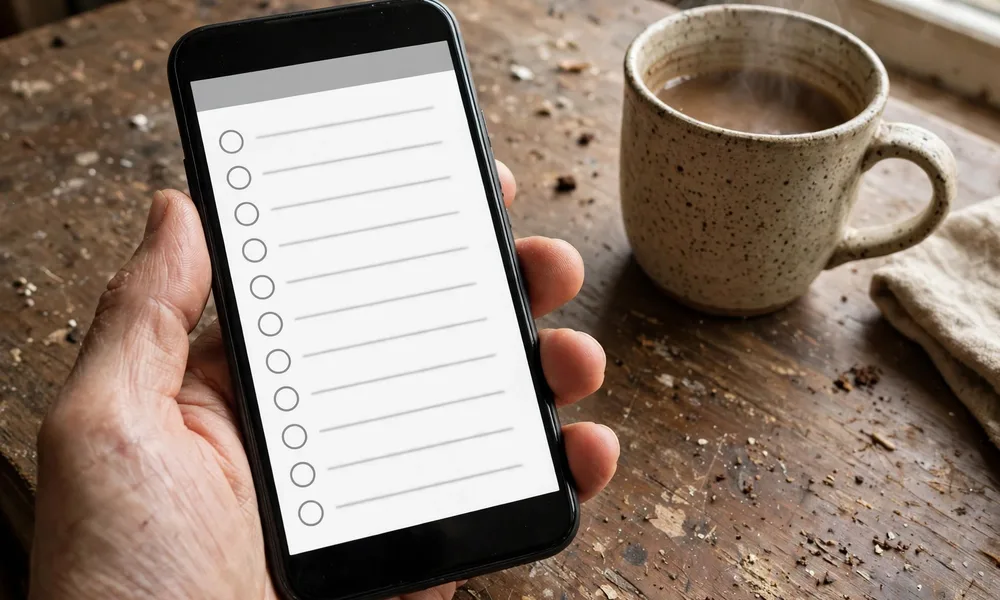
A tool that passes all five questions will rarely win a demo contest, and that is fine, because demo contests are not the job. The job is to be there every morning, to do the same task the same way, and to get out of the way so the team can do the work that actually earns money. Our boring tool did exactly that. It tracked client work, it sent reminders, and it kept one shared list that everyone trusted.
The opposite of boring is not exciting. The opposite of boring is fragile. A fragile tool depends on a single clever feature, a single integration, or a single person who understands it. A boring tool spreads its value across simple habits: a shared list, a clear owner, a daily routine. If one person leaves, the next person reads the list and carries on.
The boring checklist in practice
Here is how the boring test works on a real purchase, using the example of a team choosing its first AI helper for customer replies. The boring option writes one plain reply, logs it against the customer record, and lets a human approve it before sending. The boring option wins the month, because the human approval step catches the errors that the flashy tool makes with confidence, and the log means the next person can see what was promised to the customer.
The second practical question is about the exit. Before buying any tool, ask how you would leave it, and actually test the answer during the trial. Export a week of data, open it in a spreadsheet, and check whether it makes sense without the tool. If the export is a mess, the tool owns your work, and the price of leaving will rise every month you stay. An exit test takes twenty minutes.
The third practical question is about the second tool. A first purchase sets the pattern for every purchase after it, and a pattern of flashy buying builds a stack that nobody owns and nobody can explain. That is not a theoretical worry: an AI tool stack can become a liability, not an asset, precisely because each tool works well on its own while the whole grows beyond anyone control. Every later tool has to meet that standard, and most flashy tools fail it in the first five minutes.
The caveats that matter
Boring is the right first choice, but it is not the right choice for every job, and this piece would be dishonest if it pretended otherwise. Some work genuinely needs a powerful, complex tool, and a plain tool will waste more time than it saves.
| Detail | What is known |
|---|---|
| The core claim | A first AI tool should be boring: reliable, plain, and judged on daily use rather than on a demo. |
| The boring test | One clear job, steady behaviour, clean export, human support within a day, and a stable price. |
| The demo trap | A demo shows a performance, not a workday, and hides support, pricing, permissions, and export. |
| The exit test | Export a week of data during the trial and check it reads cleanly outside the tool. |
| When boring loses | Specialist work that genuinely needs power or depth, where a plain tool wastes more time than it saves. |
| The stack risk | Flashy first buys set a pattern, and each new tool adds a login, a data copy, and a contract. |
| The right order | Buy boring first, learn the habits, then buy braver tools that meet the same standard. |
| The judgement rule | Judge any tool after a month of real use, not after a demo or a free trial week. |
Checklist: buy boring first
- Pick one painful, recurring job, and state it in a single plain sentence before looking at any tool.
- Ask the five boring questions: one job, steady behaviour, clean export, human support, and a stable price.
- Test the exit during the trial: export a week of data and check it reads cleanly outside the tool.
- Run the tool for a full month of real work, and judge it on daily use rather than on the demo.
- Give the tool one named owner, and let that person decide whether it stays or goes.
- Only after the boring tool works, consider a braver second tool, and hold it to the same standard.
Frequently asked questions
Does boring mean I should buy the cheapest tool?
No. Cheap and boring are different things. A cheap tool can be fragile, unreliable, and hard to leave. Boring means reliable and honest, and a reliable tool is often worth a fair price.
What if the boring tool cannot do the job at all?
Then it is the wrong tool, and boring is not an excuse for weakness. The test is whether the tool does its one job well, every day. If the job genuinely needs power or depth, buy the powerful tool, but still ask the boring questions about export, support, and price before you sign.
How do I resist a demo that genuinely impresses the team?
Let the team enjoy the demo, then run the boring test before anyone buys. Ask for the export, the support response time, and the price in year two.
Should a first tool be free?
A free trial is useful, and a free tool can be a good first step, but free is not the same as boring. A free tool that locks in your data is more expensive than a paid tool with a clean export.
How long should I give a boring tool before judging it?
A full month of real work is a fair test. After a month, ask the owner one question: would you miss it if it vanished tomorrow?
When is it safe to buy something flashy?
After the boring tool works, and after the team has learned the habits that make tools safe: one owner, one export, one review. The standard is the protection, not the tool itself.
The bottom line
Our team paid for the flashy lesson once, and the boring tool has repaid us every day since. The difference was never about intelligence or features. It was about what we were actually buying: a performance for an afternoon, or a habit for two years. The habit cost less, did less, and delivered more, because it showed up every morning and did the same job the same way.
If your team is choosing a first AI tool, start with the boring one. Pick the tool that passes the five questions, test the exit, give it a month, and name an owner. In the end, the rule is simple, and it is the same rule that governs most good software decisions: the best AI tool is the one your team actually uses, and the tool a team actually uses is almost always the boring one.
Note: This is an opinion piece based on two purchases by one small team, not a review of any specific product. Your first job may differ, but the boring test applies to most small business software decisions.