

When is the first day of school in 2026, and when does the year end in 2027? If you have typed that into a search bar lately, you already know the frustrating truth: there is no single answer. The 2026 and 2027 school calendar is not one document. It is thousands of local documents, each set by a different district, board, or education authority, and each with its own quirks.
That matters more than it sounds. Families plan vacations, childcare, summer camps, and work schedules around school breaks. Get the calendar wrong by a week and you are paying for a flight you cannot use. So here is a practical, honest look at how the 2026 and 2027 school calendar actually works, what the common patterns look like, and where the traps are hiding.
Why There Is No National School Calendar
In the United States, there is no federal school calendar. State education agencies set frameworks, usually minimum instructional days or hours, and then individual districts publish their own calendars. Two districts in the same state, thirty minutes apart, can start on different days and take spring break in different weeks.
The same logic applies elsewhere. England’s term dates are published by each local authority within national rules. Wales, Scotland, and Northern Ireland each handle term dates through their own devolved education bodies, and they do not match England’s. In Australia, term dates are set by state and territory. In New Zealand, the Ministry of Education publishes them. In Canada, provincial ministries and local boards decide.
The practical takeaway is simple: any website claiming to offer “the” 2026 and 2027 school calendar for a whole country is almost certainly aggregating guesses. Treat it as a rough sketch, not a booking confirmation.
The Typical Shape of the 2026-27 Year
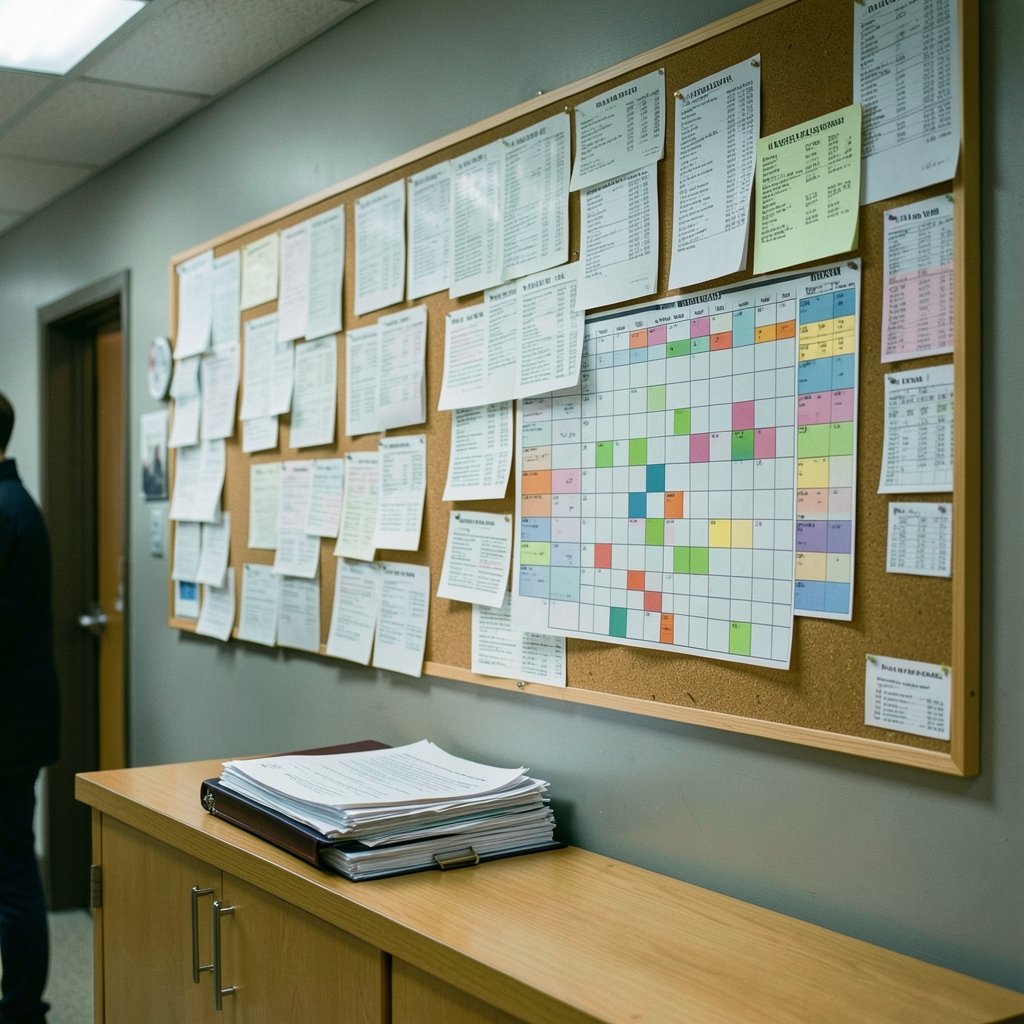
While exact dates vary, the broad rhythm is predictable. Most U.S. districts start somewhere between mid-August and early September 2026 and finish between late May and mid-June 2027. Winter break lands around late December 2026, and spring break falls in March or April 2027.
Here is how that general pattern maps onto a typical year:
| Period | Typical timing | What to expect |
|---|---|---|
| First day of school | Mid-August to early September 2026 | Varies widely by district |
| Fall break | October or November 2026 | Some districts only; often a long weekend |
| Thanksgiving | Late November 2026 | Usually a two-to-three day closure |
| Winter break | Late December 2026 | One to two weeks, spanning the New Year |
| Spring break | March or April 2027 | One week in most districts |
| Last day of school | Late May to mid-June 2027 | Depends on snow days and start date |
That table is a pattern, not a promise. The only reliable source is the specific district or authority page for the specific school your child attends.
Federal Holidays That Usually Close Schools
Some dates are fixed by law, which makes them the most dependable anchors in the 2026 and 2027 school calendar. U.S. federal holidays are set under 5 U.S.C. § 6103, and while school closures remain a district choice, most districts follow them.
For the 2026-27 year, the key dates are:
- Labor Day: Monday, 7 September 2026
- Thanksgiving: Thursday, 26 November 2026
- Christmas Day: Friday, 25 December 2026
- New Year’s Day: Friday, 1 January 2027
- Martin Luther King Jr. Day: Monday, 18 January 2027
- Presidents’ Day: Monday, 15 February 2027
- Memorial Day: Monday, 31 May 2027
Notice how several of these fall on a Friday or Monday. That creates natural long weekends, and districts often extend them into a full week off. If you are planning a trip, these are the dates to build around first, because they will not move.
Easter 2027 and the Spring Break Puzzle
Easter Sunday in 2027 falls on 28 March. That single date explains a lot of confusion about spring break that year.
Many districts tie spring break to Easter week, which means 2027 breaks may cluster around late March and early April. Others use a fixed week regardless of Easter. And some use the week after Easter. The result is that two neighboring districts can have spring breaks two or three weeks apart in 2027.
There is a second wrinkle. Neither 2026 nor 2027 is a leap year, so February 2027 has 28 days. That can shift how week numbers line up compared with 2028, which is a leap year. It sounds trivial until you are counting weeks backward from a break and land on the wrong Monday.
If your family coordinates with relatives in another district, compare both calendars early. Spring break mismatches are one of the most common planning headaches, and they are entirely avoidable with a five-minute check.
How to Find Your Actual Calendar
The most reliable method is boring, and it works. Go straight to the source.
- Find your district or local authority’s official website, not a third-party aggregator.
- Look for a page labeled “calendar,” “term dates,” or “school year dates.”
- Download the official PDF or approved calendar if one exists, since web pages sometimes lag behind board approvals.
- Check whether the calendar is marked “approved” or “proposed.” Proposed calendars change.
- Note any listed make-up days or snow days, since these can push the last day of school later.
- Re-check in the spring, because boards sometimes revise calendars mid-year.
A common mistake is trusting a screenshot shared in a parent group chat. Those images go stale fast, and they often come from a neighboring district with a similar name. Another mistake is assuming the calendar you found for elementary school applies to the high school, which may run different exam schedules and start times.
Where School Calendars Go Wrong
Even careful planners trip over a few recurring issues.
Confusing different kinds of calendars. A “school calendar” can mean the instructional year, the exam timetable, or the holiday list. These are three different documents with three different purposes. Exam schedules in particular are often published separately and much later.
Forgetting about professional development days. Many districts schedule teacher workdays that close school to students mid-week. These are easy to miss on a one-page summary and can wreck childcare plans.
Ignoring early dismissal days. Half days before holidays are common and rarely appear in bold on the calendar.
Assuming breaks are uniform. Even within one district, different schools may observe different minimum days.
Booking non-refundable travel before the calendar is approved. This is the big one. If the calendar is still marked as a draft, do not commit money to dates that could shift by a week.
A Smarter Way to Manage the Chaos
Once you have the real dates, the challenge becomes keeping them visible. A calendar buried in a browser bookmark is a calendar you will forget.
One practical approach is to load all the key dates into a shared digital calendar the whole household can see, then set reminders two weeks before each break. If you are weighing which app to use, a comparison of the best calendar apps for 2026 and how they fit different work styles can save you from picking one that fights your routine.
For families juggling activities, appointments, and school events, planning tools help too. A guide to the best AI content calendar tools for planning 30 days in 30 minutes is aimed at creators, but the underlying method, batching dates into one planning session, translates well to household scheduling.
And if you are building a family information hub, perhaps a simple chatbot on your own site to answer “when is spring break” for relatives, a Chatbase review covering how to build a custom bot in about ten minutes shows how low the barrier has become.
What About Outside the United States?
Families relocating or traveling need to know that the 2026 and 2027 school calendar looks quite different elsewhere.
In England, the school year typically runs from September to July with half-term breaks, and each local authority publishes its own term dates. Wales, Scotland, and Northern Ireland each publish separately, and none of them match England exactly. In Australia and New Zealand, the school year generally follows the calendar year, starting in late January or early February and ending in mid-December, with term dates set by state, territory, or the national ministry. In Canada, most schools start in early September after Labour Day, which falls on 7 September 2026, but provincial variation is large.
If you are moving between countries, do not assume the summer holidays line up. They usually do not, and that gap can run six weeks or more.
Technology and the School Year
School calendars increasingly intersect with technology planning, especially for families buying devices before term starts. Timing a purchase around launch cycles matters, and speculation about whether the Nvidia RTX 60 series skips a 2027 launch in favor of 2026 is the kind of question that affects back-to-school buying decisions for students in design or engineering programs.
Software costs matter too. Families using school-issued tablets should understand fee structures, and coverage of the Apple Supreme Court case over the 27 percent App Store fee in 2026 explains why in-app purchase prices can differ from what you expect.
For students interested in retro gaming as a hobby, a practical RetroAchievements setup guide for PC emulators in 2026 is a useful weekend project that does not require new hardware. And for anyone curious about where the broader AI boom is heading, analysis of the AI infrastructure race in 2026 and parallels to the 2000 telecom bust offers useful context on which tech bets may age well.
Conclusion
The 2026 and 2027 school calendar rewards a little patience. There is no national answer, no single trusted list, and no shortcut that beats checking your own district or local authority page directly. The dates that will not move are the federal holidays and Easter on 28 March 2027. Everything else, from the first day of school to the last, is a local decision that can shift.
Start with the official source. Confirm the calendar is approved, not proposed. Load the dates into a shared calendar the whole household checks. Then book your travel with a refundable option until the calendar is locked. Do those four things and the school year stops being a source of surprises and starts being something you can actually plan around.
FAQ
When does school start in 2026?
Most U.S. districts start between mid-August and early September 2026, but the exact date is set locally. Check your district’s approved calendar rather than relying on national summaries, since start dates can vary by several weeks even within one state.
When is spring break in 2027?
Spring break in 2027 usually falls in March or April, and many districts tie it to Easter, which lands on 28 March 2027. That means breaks may cluster around late March and early April, but some districts use fixed weeks instead. Confirm with your own district.
Is there a national school calendar in the United States?
No. There is no federal school calendar. State education agencies set minimum instructional requirements, and individual districts publish their own calendars. This is why two districts in the same state can have completely different start dates and break schedules.
Are 2026 and 2027 leap years?
No. Neither 2026 nor 2027 is a leap year, so February 2027 has 28 days. This can shift how week numbers line up compared with 2028, which is a leap year, and it occasionally causes confusion when counting weeks backward from a spring break.
Do all schools close on federal holidays?
Not necessarily. Federal holidays are fixed by law, but school closures are a district choice. Most districts do close for Labor Day, Thanksgiving, Christmas, New Year’s Day, MLK Day, Presidents’ Day, and Memorial Day, but you should verify against your district’s published calendar.
What should I check before booking a family trip?
Confirm the calendar is marked as approved rather than proposed, check for teacher workdays and early dismissal days, and look for listed make-up days that could push the school year later. Choose refundable bookings until the calendar is final, since boards do sometimes revise dates.



