
What does it say about the car market that the cheapest version of a beloved off-roader is also the hardest one to find on a dealer lot? That is the strange reality of the 2026 Ford Bronco Base, the no-frills trim that anchors the Bronco lineup on paper and often vanishes in practice. Ford has spent years pushing buyers toward loaded trims, and the Base model sits quietly at the bottom of the ladder, promising the same boxy silhouette and off-road bones as its expensive siblings for a fraction of the money. (Airtable vs notion 2026 relational database vs document)
The question is whether that promise holds up. Strip away the marketing and the desert-racing videos, and the Base trim is a real vehicle with real trade-offs. Some buyers will love it. Others will drive it for a week and start missing the features they skipped. Here is a clear look at what the entry Bronco offers, who it suits, and where the smart money actually goes.
Where the Base Trim Sits in the 2026 Bronco Lineup
The Bronco family has grown crowded. Above the Base, buyers can climb through Big Bend, Black Diamond, Outer Banks, Badlands, Wildtrak, and the high-performance Raptor. Each step up adds equipment, capability, or both. The Base trim exists to do one job: get people into a Bronco at the lowest possible price.
That positioning matters because the Bronco competes against the Jeep Wrangler, the Toyota 4Runner, and a wave of new off-road SUVs. Every one of those rivals has an entry model designed to advertise a low starting price. The Base Bronco plays the same game. It is the number you see in ads and the vehicle you rarely see in inventory.
Ford has shuffled Bronco trim availability across model years, adding and dropping configurations based on demand and production constraints. That history is worth keeping in mind. A trim that exists in the configurator does not always exist in meaningful numbers on the ground, and the Base has been one of the more elusive builds.
What the Base Trim Actually Includes
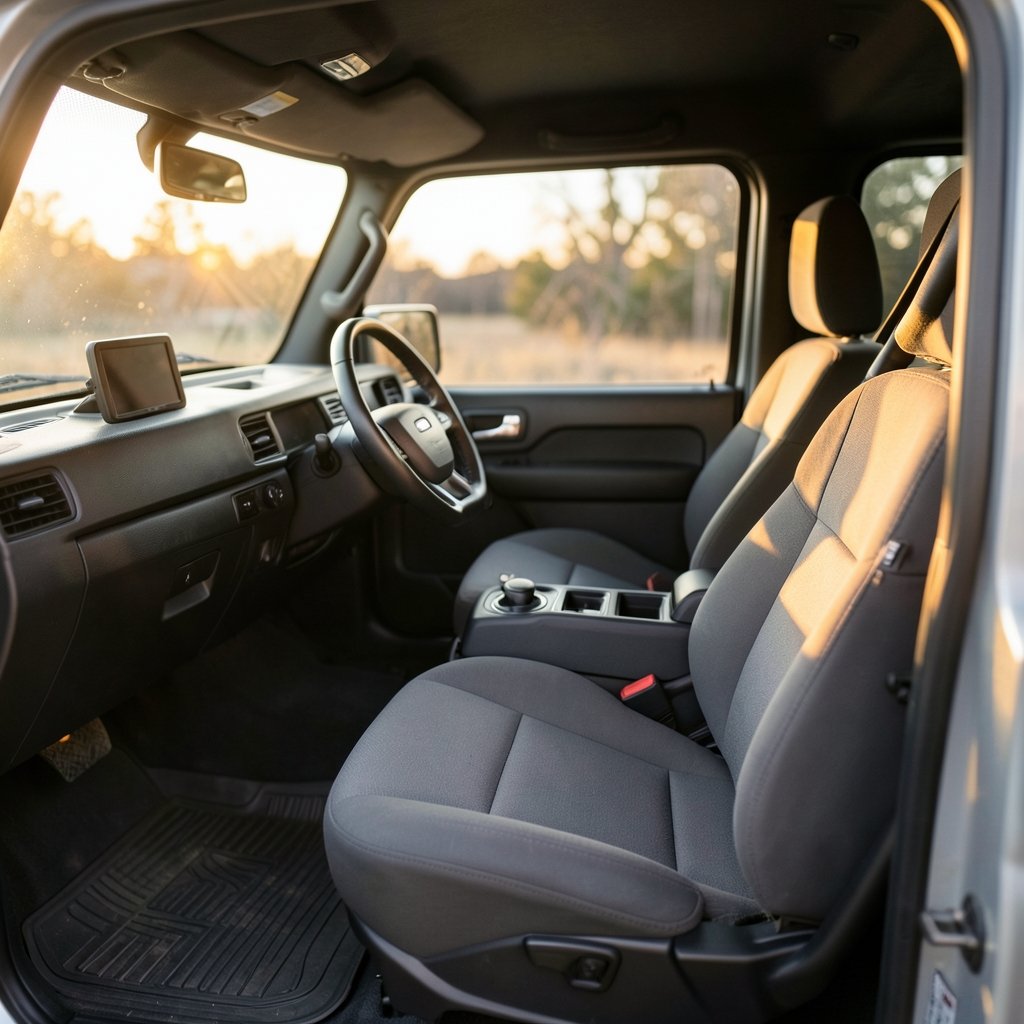
The Base Bronco is not a stripped-out penalty box. It keeps the essentials that make a Bronco a Bronco: the boxy body, the removable roof and doors, the turbocharged four-cylinder engine, and a four-wheel-drive system. The bones are the same as the more expensive trims, which is the whole point.
What it lacks is mostly comfort and convenience. Expect cloth seats, a smaller infotainment screen, fewer drive modes, simpler wheels, and a shorter list of standard driver-assistance features than upper trims. The off-road hardware is present but basic. Serious rock crawlers will want the locking differentials and disconnecting sway bar that come further up the range.
| Feature Area | Base Trim | Upper Trims |
|---|---|---|
| Roof and doors | Removable | Removable |
| Engine | Turbocharged four-cylinder | Turbo four or V6 depending on trim |
| Seats | Cloth | Cloth or leather |
| Infotainment | Smaller screen | Larger screen, more features |
| Off-road hardware | Basic four-wheel drive | Lockers, advanced modes, upgraded suspension |
| Availability | Limited | Broad |
The pattern is consistent: the Base gives you the shape and the capability, and asks you to live without the polish.
The Real-World Case for Buying the Base
Here is where the Base trim earns its keep. Buyers who plan to modify their Bronco heavily often prefer starting with the cheapest version. Aftermarket wheels, tires, bumpers, lights, and suspension kits exist for every trim, and installing them on a Base costs less than paying for features you would replace anyway.
There is a second group the Base suits well: people who want a weekend toy rather than a daily driver. A removable-roof SUV that sits in the garage most of the week does not need heated leather seats or a premium audio system. It needs to start, go anywhere, and come home dirty.
A third group is the budget-conscious buyer who genuinely wants a Bronco and cannot stretch to a higher trim. For them, the Base is not a compromise so much as the only honest path into the model.
Practical tip: if you are shopping the Base specifically, call dealers before visiting. Inventory is thin, and many lots stock only mid- and upper-trim Broncos because those carry better margins. Asking directly about allocation and ordering timelines saves wasted trips. This is the same lesson that shows up across the car market, where the advertised entry price and the actual available vehicle often diverge, a pattern familiar to anyone tracking something like Ford Bronco lease deals and discovering the fine print rarely mentions the base model.
Where the Base Trim Falls Short
Honesty matters here. The Base Bronco is not for everyone, and several shortcomings show up quickly in daily use.
The smaller infotainment screen feels dated next to what rivals offer. The cloth seats are fine but not plush. Road noise in a vehicle with a removable roof is a genuine factor, and the Base does not add extra sound deadening to compensate. Fuel economy is modest, as it is across the Bronco range, because the shape and weight work against efficiency.
Then there is resale and equipment creep. Buyers who start with a Base sometimes find themselves wishing for the mid-tier features within a year. The jump from Base to Big Bend adds meaningful content for a relatively small price difference, and that gap is where many shoppers end up.
The most common mistake buyers make is assuming the Base is a bargain without checking the out-the-door price against a lightly equipped mid-trim. Once destination charges, dealer fees, and mandatory packages enter the picture, the gap can shrink fast. Comparing total cost, not starting price, is the discipline that separates a good deal from a regret.
Base vs. Big Bend: The Decision Most Buyers Face
The Big Bend trim is the natural next step up and the comparison most Base shoppers should run. Big Bend adds more standard equipment, better wheels, and a more livable interior without jumping to the expensive off-road trims.
| Consideration | Base | Big Bend |
|---|---|---|
| Starting price | Lowest | Moderate |
| Standard equipment | Minimal | Broader |
| Appeal to modifiers | High | Medium |
| Appeal to daily drivers | Low to medium | High |
| Dealer availability | Limited | Better |
If the Bronco will be a daily driver, Big Bend usually wins on value. If it will be a project vehicle or a second car, the Base makes more sense. That single question, daily driver or toy, resolves most of the debate.
Ordering, Availability, and Timing
Ordering a Base Bronco requires patience. Ford’s production planning favors trims with higher take rates, and entry models can face longer waits or limited allocation. Buyers who order early in the model year generally fare better than those who wait.
A few practical habits help:
- Confirm with the dealer that the Base trim is actually orderable at that moment, not just listed in a brochure.
- Ask for the order confirmation and track the build status rather than relying on verbal updates.
- Get the out-the-door price in writing before placing a deposit.
- Check whether any mandatory packages apply to the Base in your region.
- Keep a backup trim in mind in case allocation falls through.
These steps sound basic, but they prevent the most common frustrations. The broader lesson, that supply and configuration constraints shape what buyers can actually get, echoes across the tech and auto worlds alike. Anyone who has watched a company promise a product and then struggle to ship it in volume will recognize the pattern described in coverage of the AI infrastructure race and the 2000 telecom bust parallels. Scarcity is a strategy as much as an accident.
What the Base Says About the Bronco’s Future
The Base trim functions as a gateway. It keeps the Bronco’s advertised starting price within reach and gives the model a broad identity, from budget off-roader to desert racer. Whether Ford keeps the Base around depends on demand and on how aggressively the company wants to push average transaction prices upward.
For buyers, the takeaway is simple. The Base is a real Bronco with real capability and real compromises. It rewards people who know exactly what they want and punishes those who buy on price alone without thinking through how they will use the vehicle.
How the Base Compares to Rival Entry Models
The Base Bronco does not exist in a vacuum. The Jeep Wrangler’s entry trims and the Toyota 4Runner’s lower grades compete for the same buyer, and each makes a different trade. The Wrangler offers a long modification tradition and a similar removable-roof formula. The 4Runner leans on reliability reputation and a more traditional SUV feel. The Bronco Base counters with distinctive styling and a strong off-road foundation.
The comparison rarely produces a clear winner. It produces a fit. Buyers who value character and modification potential gravitate to the Bronco. Buyers who value predictability lean elsewhere. Neither choice is wrong, but the decision should rest on how the vehicle will be used, not on a spec sheet alone.
Conclusion
The 2026 Ford Bronco Base is the purest expression of the Bronco idea: a boxy, removable-roof, four-wheel-drive SUV with the essentials intact and the luxuries removed. It is a smart buy for modifiers, weekend adventurers, and budget-focused shoppers who understand exactly what they are getting. It is a poor fit for daily drivers who will miss the comfort and convenience features that come standard one or two trims up.
The practical path is straightforward. Decide whether the Bronco is a toy or a daily driver. Compare out-the-door prices rather than starting prices. Confirm availability before falling in love with a build. Do those three things, and the Base trim becomes either an obvious yes or an obvious no. Skip them, and the cheapest Bronco can quietly become the most expensive mistake in the showroom.
Frequently Asked Questions
Is the 2026 Ford Bronco Base a good value?
It depends on how the vehicle will be used. For buyers who plan to modify the Bronco or use it as a weekend vehicle, the Base offers the core capability at the lowest price and represents strong value. For daily drivers who want comfort features, a mid-trim like Big Bend usually delivers better value once total costs are compared.
What features does the Base trim leave out?
The Base trim typically omits the larger infotainment screen, premium audio, leather seating, advanced off-road hardware like locking differentials, and some driver-assistance features found on upper trims. It keeps the removable roof and doors, four-wheel drive, and turbocharged four-cylinder engine.
Can you order a Base Bronco from a dealer?
Yes, in most cases, but availability is limited. Dealers often stock higher trims because they carry better margins. Buyers should confirm that the Base trim is orderable at that moment, request written out-the-door pricing, and keep a backup trim in mind in case allocation falls through.
Is the Base Bronco good for off-roading?
It is capable but basic. The four-wheel-drive system and ground clearance support light to moderate trail use. Serious rock crawling benefits from the locking differentials and upgraded suspension found on higher trims, so buyers planning hardcore off-roading should consider stepping up.
How does the Base compare to the Big Bend?
The Big Bend adds more standard equipment, better wheels, and a more livable interior for a moderate price increase. The Base appeals more to modifiers and budget buyers, while the Big Bend suits daily drivers. The gap between them is smaller than many shoppers expect once fees are included.
Does the Base Bronco hold its value?
Entry trims of popular off-roaders generally hold value reasonably well, though resale depends on condition, mileage, and local demand. The Base’s appeal to modifiers can support demand, but buyers should not assume resale will match higher trims that carry more desirable equipment.



