
What if the most important thing about the 2027 F-150 is not what Ford has announced, but what it hasn’t? That’s the strange spot shoppers are in right now. The F-150 has been America’s best-selling vehicle for decades, and it comes in gasoline, hybrid, and electric Lightning forms. Yet as of late 2026, Ford has not officially confirmed a specific “2027 F-150” product. So anyone planning a purchase is working with a mix of pattern, precedent, and a few known facts. This guide sorts the solid ground from the guesswork.
Where the 2027 F-150 Actually Stands
Start with the safest assumption. The current F-150 is the fourteenth generation, launched for the 2021 model year and revealed in June 2020. A mid-cycle refresh was expected somewhere around 2024 to 2025. That makes it very likely that any 2027-model F-150 is a continuation or a refreshed version of the fourteenth-gen truck, not a clean-sheet redesign.
That matters more than it sounds. A refresh usually means updated styling, revised tech, and small mechanical tweaks. A new generation means a new platform, new powertrains, and a fresh interior. Buyers who assume “2027” equals “all-new” may be setting themselves up for disappointment.
There’s also a timing quirk worth knowing. Ford typically introduces new model-year F-150s in the fall of the prior calendar year. So a 2027 F-150 would likely be revealed or go on sale in late 2026. Given that we’re already past that point in the calendar, a 2027 model may well have been announced by now. That single detail is the most important thing to check before you sign anything.
Why the “All-New” Label Is Risky
Truck buyers love a redesign. But the honest read is that the fourteenth-gen truck still has life in it. Ford has been juggling EV strategy shifts, production adjustments, and cost pressure. In that climate, a company tends to stretch a proven platform rather than bet big on a new one. So treat “all-new 2027 F-150” claims on dealer lots and in comment sections with suspicion until you see an official confirmation.
The Electric Question: Lightning and Beyond
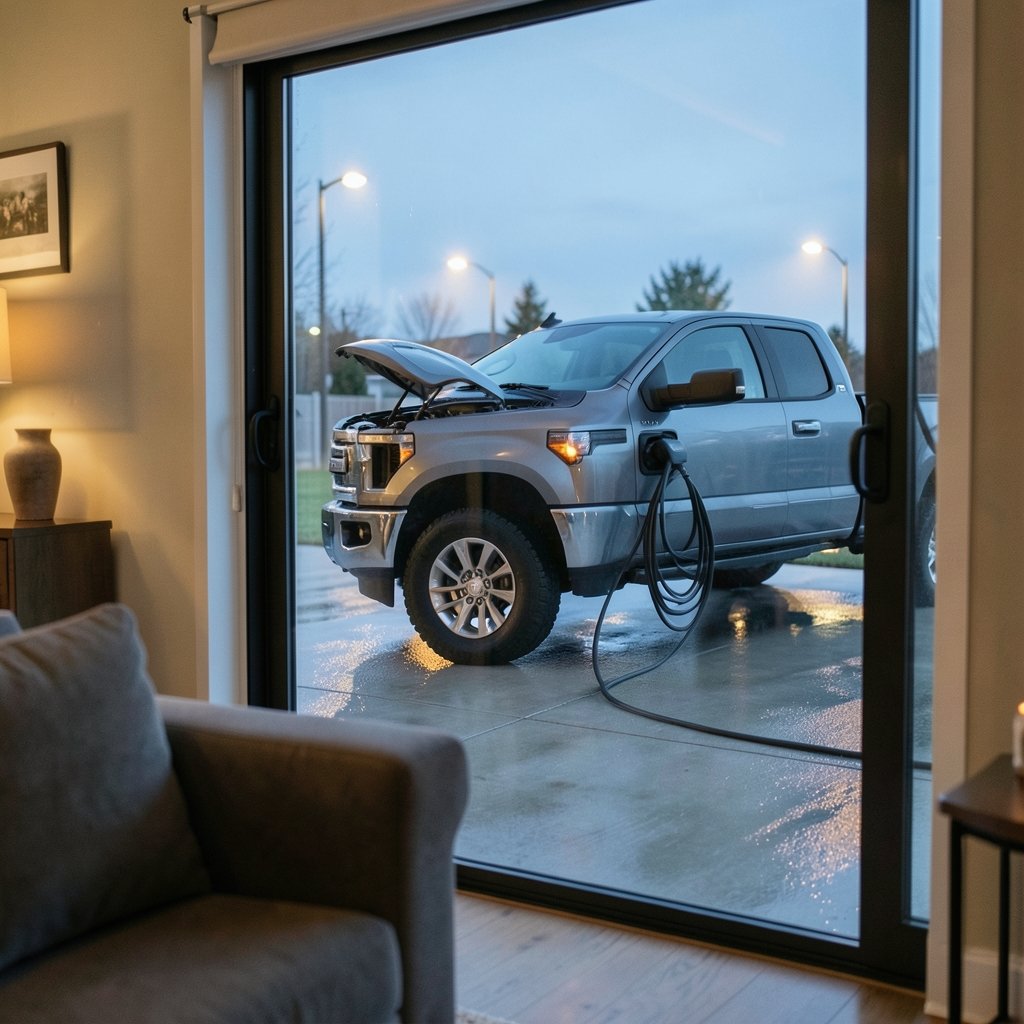
The F-150 Lightning went on sale in 2022, with first deliveries in spring 2022. It proved that a full-size electric pickup could find real buyers. But the market has cooled since. Ford has scaled back some EV production and adjusted Lightning output amid softer electric demand.
Then there’s the “skunkworks” story. Ford publicly discussed a low-cost EV platform in 2024, and some reporting pointed to a mid-size electric pickup around 2027. That timing is tentative and widely reported as uncertain. It is not the same thing as a 2027 F-150 Lightning replacement. Keep the two ideas separate in your head, because plenty of coverage blurs them.
If you’re weighing electric against gas, the practical takeaway is simple: don’t plan a 2027 purchase around an unconfirmed electric model. Plan it around what’s on the lot and what’s officially announced.
What Likely Carries Over
Assuming a refreshed fourteenth-gen truck, here’s what buyers can reasonably expect to see again.
| Area | Likely Status for 2027 |
|---|---|
| Core platform | Carryover from fourteenth generation |
| Gas powertrains | Carryover, possibly retuned |
| Hybrid option | Carryover, likely expanded trims |
| Lightning electric | Separate model, timing uncertain |
| Interior tech | Refresh-level updates possible |
| Safety ratings | Should be checked per model year |
The pattern here is evolution, not revolution. That’s not a knock. A proven truck with small fixes is often a better buy than a first-year redesign, which brings its own teething problems. First-year generations are where recalls, parts shortages, and software bugs tend to cluster.
Practical Tips for Shopping a 2027 Truck
Here’s where first-hand shopping experience pays off. A few habits separate smart buyers from people who overpay.
Wait for the official model-year announcement. Don’t trust a salesperson’s “2027 is coming with X” claim until you see it in writing from Ford. Model-year timing is exactly the kind of detail that shifts, and a dealer repeating a rumor is not a source.
Check the door-jamb sticker, not the ad. The build date and model year live on the vehicle itself. Listings get model years wrong all the time, especially near a model-year changeover.
Verify safety data for the exact model year. Crash-test ratings and recalls are tracked by year, and a rating earned by a 2025 truck doesn’t automatically transfer to a 2027. Look up the specific year before you assume.
Compare fuel economy by trim, not by truck. A base engine and a hybrid can differ a lot in real-world numbers. Official fuel-economy data is published per trim and per model year, so check the exact configuration you’re considering.
Watch tariff and pricing pressure. U.S. auto tariffs in 2025 affected imported vehicles and parts. The F-150 is assembled in the U.S., in Dearborn and Kansas City, which softens but doesn’t erase that exposure. Pricing can move for reasons that have nothing to do with the truck itself.
Common Mistakes People Make
The biggest one is buying the hype cycle. People hear “2027” and assume a redesign, then feel cheated when it’s a refresh. The second is ignoring the hybrid. Many shoppers walk past it because they assume a hybrid truck is slow or weak. In practice, it’s often the smartest daily-driver choice in the lineup. The third mistake is treating an unconfirmed electric pickup as a sure thing and delaying a purchase for a truck that may not arrive on schedule.
If you’re also shopping for digital tools to run a business around your truck, it helps to know which ones actually earn their keep. Guides on the best AI tools for e-commerce stores in 2027 cover that ground well. And if you’re comparing chatbot options for customer support, this breakdown of the 10 best AI chatbots for e-commerce in 2027 is a useful starting point.
How the 2027 Truck Fits the Bigger Picture
Ford’s 2025 to 2026 restructuring set the tone. The company shifted EV plans, scaled back some electric production, and adjusted Lightning output as demand softened. That context explains a lot about the 2027 F-150: a company managing cost and demand is a company that favors carryover and careful refreshes over risky bets.
There’s also the tariff backdrop. U.S. auto tariffs in 2025 hit imported vehicles and parts. Because the F-150 is built domestically, it sits in a relatively protected spot. But supply chains cross borders, so parts costs can still leak into the sticker price. Buyers should treat pricing as fluid rather than fixed.
For anyone tracking how hardware pricing gets reported versus confirmed, the same discipline applies to trucks as to gadgets. A guide on handheld console prices in 2027, confirmed versus reported makes the point neatly: reported figures and confirmed figures are two different animals. The same rule holds for F-150 pricing rumors.
Gas, Hybrid, or Electric: A Simple Comparison
If you’re deciding which direction to lean, this table keeps it honest.
| Choice | Best For | Watch Out For |
|---|---|---|
| Gas | Towing, long trips, simple ownership | Fuel costs, fewer efficiency gains |
| Hybrid | Daily driving, mixed use, mileage | Slightly higher upfront price |
| Lightning (electric) | Short-haul, home charging, low running costs | Charging access, output uncertainty |
The hybrid deserves more attention than it gets. For a lot of buyers, it’s the Goldilocks option: real truck capability without the range anxiety of electric or the fuel bill of a pure gas V8. The electric Lightning is excellent if your routine fits it, but its production future is less certain than the gas and hybrid lines.
What to Do Before You Commit
Here’s a sequence that works in practice.
- Check Ford’s official announcements for the 2027 model year before trusting any rumor.
- Confirm whether it’s a refresh or a new generation, because that changes resale value.
- Look up safety ratings and recalls for the exact model year you’re considering.
- Compare fuel economy by trim and configuration, not by truck name.
- Test drive the hybrid if you haven’t. It surprises people.
- Get pricing in writing, and ask how tariffs or incentives affect the final number.
That list sounds basic. It is. But most buyers skip at least two of those steps, and that’s where regret comes from.
If part of your decision involves the technology inside the truck or the business you run alongside it, it’s worth understanding how the underlying AI systems differ. A comparison of DeepSeek, ChatGPT, and Gemini on output quality in 2027 gives a grounded view of what these tools actually do well. Knowing when to skip automation entirely matters too, and this piece on when not to use an AI chatbot in 2027 is refreshingly candid about the limits.
Conclusion
The 2027 F-150 is most likely a refined, refreshed version of a truck that already works, not a reinvention. That’s genuinely good news for buyers who value reliability over novelty. The fourteenth-gen platform is proven, the hybrid is underrated, and the Lightning remains a strong option for the right owner even as its production outlook shifts.
The catch is uncertainty. Ford hasn’t officially confirmed a specific 2027 F-150 product, the electric roadmap is in flux, and pricing can move on tariff news. So the smart play is patience plus verification. Check official announcements, confirm the model year on the vehicle itself, and don’t let a rumor set your budget. Do that, and you’ll end up with the right truck instead of the most hyped one.
FAQ
Has Ford officially confirmed a 2027 F-150?
Not as a specific, named product. As of late 2026, Ford had not officially confirmed a distinct “2027 F-150.” Any 2027-model truck would most likely be a continuation or refresh of the fourteenth-generation F-150 rather than an all-new generation. Always check official announcements before relying on a claim.
Is the 2027 F-150 a new generation?
Probably not. The current generation launched for the 2021 model year, and a mid-cycle refresh was expected around 2024 to 2025. A 2027 model would most likely be a refreshed version of that same truck, not a clean-sheet redesign with a new platform.
When will the 2027 F-150 go on sale?
Ford typically introduces new model-year F-150s in the fall of the prior calendar year. That means a 2027 model would likely be revealed or go on sale in late 2026. Since that window has already passed, the truck may already be announced, so check current official information.
Will there be an electric 2027 F-150?
The F-150 Lightning has been on sale since 2022, but its production outlook has shifted as electric demand softened. Ford has discussed a low-cost EV platform with a possible mid-size electric pickup around 2027, but that timing is tentative and not the same as a confirmed 2027 Lightning.
Should I wait for the 2027 model or buy now?
It depends on your need and tolerance for uncertainty. A refreshed truck usually brings small improvements, not dramatic changes. If you need a truck now, a current model with a proven platform is a low-risk choice. If you can wait, verify what’s officially confirmed before delaying a purchase for a rumor.
What should I check before buying a 2027 F-150?
Confirm the model year on the door-jamb sticker, look up safety ratings and recalls for that exact year, and compare fuel economy by trim rather than by truck name. Get pricing in writing and ask how tariffs or incentives affect the final number. Test drive the hybrid if you haven’t already.



