
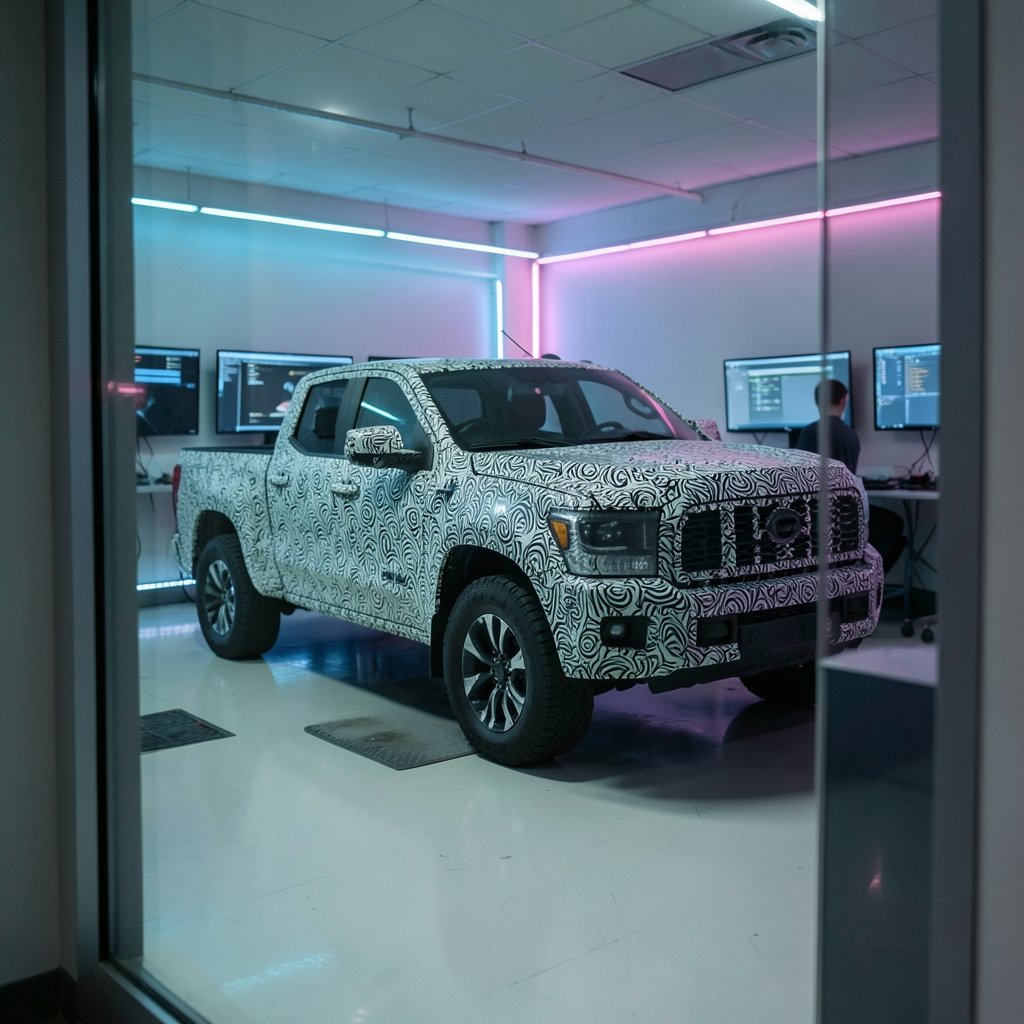
What will the next GMC Sierra look like when the wraps finally come off? That question has been circulating in truck forums, dealership break rooms, and YouTube comment sections for a while now. The short answer: nobody outside General Motors has seen the final truck, and GM has not published a 2027 Sierra spec sheet. The longer answer is more interesting, because the 2027 model year is widely expected to bring a full redesign of the Sierra 1500, and the clues scattered across GM’s product strategy tell a fairly coherent story. This article separates what is solid from what is speculation, and it flags the traps that catch buyers and casual readers alike.
Why the 2027 Model Year Matters
The current-generation Sierra 1500 rides on what is known as the T1 platform, which launched for the 2019 model year. It got a refresh for 2022 and further updates after that, including a 2024 revision that reworked the interior and technology. By the time 2027 arrives, that architecture will be roughly eight years old. In full-size truck terms, that is about the point where a clean-sheet redesign becomes due rather than optional.
There is a second reason the date keeps coming up. The Sierra and the Chevrolet Silverado are badge-engineered siblings that share architecture, and a Sierra redesign typically follows or coincides with a Silverado redesign. When trade press reports on the next-generation Silverado, the Sierra is almost always part of the same conversation. Treat the 2027 timing as widely reported and expected, not as something GM has confirmed in a formal product announcement.
The Single Biggest Source of Confusion: Two Different Trucks
Before going further, one distinction needs to be nailed down, because it derails more discussions than any other. There are two vehicles that both carry the Sierra name, and they are not the same truck.
| Vehicle | Powertrain | Platform | Status |
|---|---|---|---|
| Sierra 1500 (current) | Gasoline and diesel engines | T1 | On sale, aging architecture |
| Sierra EV | Battery electric | Ultium | Launched as a 2024 model, Denali Edition 1 first |
| Sierra 1500 (expected 2027) | Unconfirmed | Unconfirmed | Redesign widely reported, not officially detailed |
The 2027 redesign discussion concerns the internal-combustion Sierra 1500. The Sierra EV is a separate product on GM’s Ultium battery platform, and it arrived as a 2024 model starting with the Denali Edition 1. If you read a headline about “the new electric Sierra” and another about “the redesigned 2027 Sierra,” they may be describing entirely different vehicles. Mixing them up leads to badly wrong expectations about what the 2027 truck will be.
What GM Has Actually Said

GM has publicly discussed a next-generation full-size truck program, and that program has been tied to the company’s broader shift toward more electrified and software-defined vehicles. The Ultium platform and the Ultifi software platform, both announced in the 2020 to 2021 window, sit at the center of that strategy. It is reasonable to expect a redesigned Sierra to reflect some of that thinking, particularly in the cabin electronics and driver-assistance features.
What GM has not done, as of available reporting, is publish detailed 2027 Sierra specifications. Pricing, trim walk, powertrain lineup, towing ratings, and even the exact launch timing remain unconfirmed. Anyone presenting a precise horsepower figure or a firm starting price for the 2027 Sierra is working from rumor or inference, not from an official release.
Powertrains: The Rumors Worth Watching
This is where the speculation gets thick, so it helps to sort claims by how much weight they deserve.
The most persistent reports suggest the next-generation Silverado and Sierra could offer both internal-combustion and electric variants within the same family. That would mirror what several rivals have done, keeping a gas truck for buyers who tow heavy and an electric option for buyers who do not. There has also been discussion of a next-generation small-block V8. That idea is speculative and unconfirmed, and it should be treated as such. GM’s existing engine families are well established, and a redesign does not automatically mean a clean-sheet engine.
A practical note for anyone planning a purchase around these rumors: engine rumors have a way of arriving a model year late or not at all. If you need a truck in the next twelve months, buying based on an unconfirmed powertrain rumor is a good way to end up disappointed. If you can wait, waiting costs you nothing but time.
Software and Interior: The Quiet Revolution
The least flashy part of a redesign is often the part you notice every single day. GM’s push toward software-defined vehicles suggests the next Sierra’s cabin could change more than its hood. Expect the conversation to center on larger displays, over-the-air update capability, and driver-assistance features that improve after purchase rather than staying frozen at the build date.
That shift has a flip side. More software in a truck means more dependence on the automaker’s update pipeline, and early adopters of any new electrical architecture sometimes spend the first year working through bugs. If you are the type who values a proven, settled platform, the final year or two of the current generation can be genuinely attractive. If you want the newest tech and plan to keep the truck a decade, waiting for the redesign makes more sense.
The AI Angle Nobody Expected
Here is a trend that would have sounded absurd a few years ago: truck buyers increasingly evaluate infotainment and connected services the same way they evaluate phones. Modern pickups are rolling offices, and the software layer matters. That shift is visible well beyond the auto industry. If you want a sense of how fast consumer expectations around AI assistants have moved, a look at the top 10 free AI chatbots in 2027 with no sign-up options shows how quickly people now expect instant, capable digital help. Automakers are chasing the same expectation.
The comparison is not idle. Voice assistants in vehicles are judged against the chatbots people use at home, and a truck that cannot hold a useful conversation feels dated fast. For a deeper look at which underlying models drive that expectation, this breakdown of the 10 best AI chatbots with GPT-5 and Claude under the hood is a useful reference point. For dealer service desks and parts departments, the best AI chatbots for e-commerce that rescue abandoned carts show how much of the buying experience has already moved to automated conversation.
There is a counterweight worth mentioning. Not every task belongs to a bot, and the honest cases where you should not use an AI chatbot apply to vehicle shopping too. A complex trade-in with negative equity, a lease buyout, or a warranty dispute still deserves a human on the other end of the line.
Trims: Denali, AT4, and Elevation Will Almost Certainly Survive
Trim names are brand equity, and GM is unlikely to walk away from them. Denali is the luxury play, AT4 is the off-road play, and Elevation is the value-oriented appearance package. A redesign typically reshuffles what each trim includes rather than eliminating the nameplates. What will change is content: which features are standard, which move down the ladder, and which get bundled into packages.
This is where buyers make a common and expensive mistake. They assume the redesigned truck will include, at the same price, everything the outgoing truck offered in a higher trim. That almost never happens. Redesigns usually arrive with a higher starting price and a re-sorted feature ladder. Budget for a price increase and read the order guide carefully rather than assuming continuity.
What Actually Works in Practice: Advice for Shoppers
Buying around a redesign is a timing problem more than a research problem. A few habits separate smart buyers from frustrated ones.
- Decide whether you need a truck now or can wait eighteen months. If you need one now, shop the current generation and negotiate hard, because dealers discount outgoing models.
- Ignore any “2027 Sierra” price or horsepower figure that does not trace back to an official GM release. Rumor sites are useful for tracking product plans but are not authoritative.
- If you wait, put a deposit down only when the order banks actually open, not when a forum thread claims they will.
- Test drive the current truck specifically for the things a redesign is likely to change: seat comfort, screen usability, and how the transmission behaves in stop-and-go traffic.
- Check insurance and registration costs before you fall in love with a trim. Denali-level trucks cost more to insure than most shoppers expect.
The most common mistake is treating the redesign as a guarantee of a better truck. First-year vehicles from any manufacturer carry some risk of teething problems, and a redesigned full-size pickup is a complicated machine with a lot of new parts. The second most common mistake is the opposite: assuming the current truck will be worthless once the new one lands. Well-kept trucks hold value remarkably well, and the last year of a proven generation is often the smartest buy on the lot.
How the Competition Shapes the Timeline
The full-size truck market is brutally competitive, and no redesign happens in a vacuum. Every major player watches the others, and feature expectations reset with each launch. That pressure is one reason the 2027 window keeps appearing in reporting: falling behind on cabin tech or towing capability for even a couple of model years is expensive in this segment. It is also a reason to expect the redesigned Sierra to arrive with a strong technology story, whatever the final powertrain lineup turns out to be.
Conclusion
The 2027 GMC Sierra redesign is best understood as a widely expected, not officially detailed, event. The current T1-based truck has been on sale since the 2019 model year and received a refresh for 2022 plus later updates, so the architecture is due for replacement. GM has talked openly about a next-generation full-size truck program tied to electrification and software, and the Sierra and Silverado will almost certainly continue to move together. Beyond that, the specifics get soft: powertrains, pricing, trims, and exact timing are all unconfirmed, and the Sierra EV is a different vehicle entirely.
The practical takeaway is simple. If you need a truck soon, the current generation is a known quantity and dealers are motivated to move it. If you can wait, wait for an official GM announcement rather than a forum rumor, and keep your expectations flexible. The redesign is coming. The spec sheet is not here yet, and anyone who tells you otherwise is guessing.
FAQ
When will the 2027 GMC Sierra redesign be officially revealed?
GM has not confirmed a reveal date. The redesign is widely reported in trade coverage and expected around the 2027 model year, aligning with the next Chevrolet Silverado, but no official announcement has set a date. Watch GM’s official communications rather than rumor sites for the real timeline.
Is the 2027 Sierra redesign the same thing as the Sierra EV?
No. The Sierra EV is a battery-electric truck on GM’s Ultium platform that launched as a 2024 model, beginning with the Denali Edition 1. The 2027 redesign discussion concerns the internal-combustion Sierra 1500. They are separate vehicles with separate platforms and should not be confused.
What engines will the 2027 Sierra have?
Unconfirmed. Reports have suggested the next-generation truck family could offer both internal-combustion and electric variants, and there has been speculative discussion of a next-generation small-block V8. None of that has been confirmed by GM. Treat any specific horsepower or displacement figure as rumor.
Will the Denali, AT4, and Elevation trims continue?
Almost certainly, though GM has not published a 2027 trim walk. Those nameplates carry significant brand value, and redesigns typically reshuffle feature content within trims rather than eliminating the names. Expect the feature ladder to change and prices to rise.
Should I buy the current Sierra or wait for the redesign?
It depends on your timeline and risk tolerance. The current truck is a proven platform available at negotiated discounts. A redesigned first-year model offers newer technology but carries some risk of early production issues and a higher price. If you need a truck now, buying the current generation is a reasonable and often smarter choice.
How reliable are the rumors about the 2027 Sierra?
Mixed. Trade outlets that track GM product plans are useful for direction and timing, but they are not authoritative and sometimes get details wrong. The only reliable source for specifications, pricing, and launch timing is an official GM or GMC release. Everything else is informed guesswork.



