
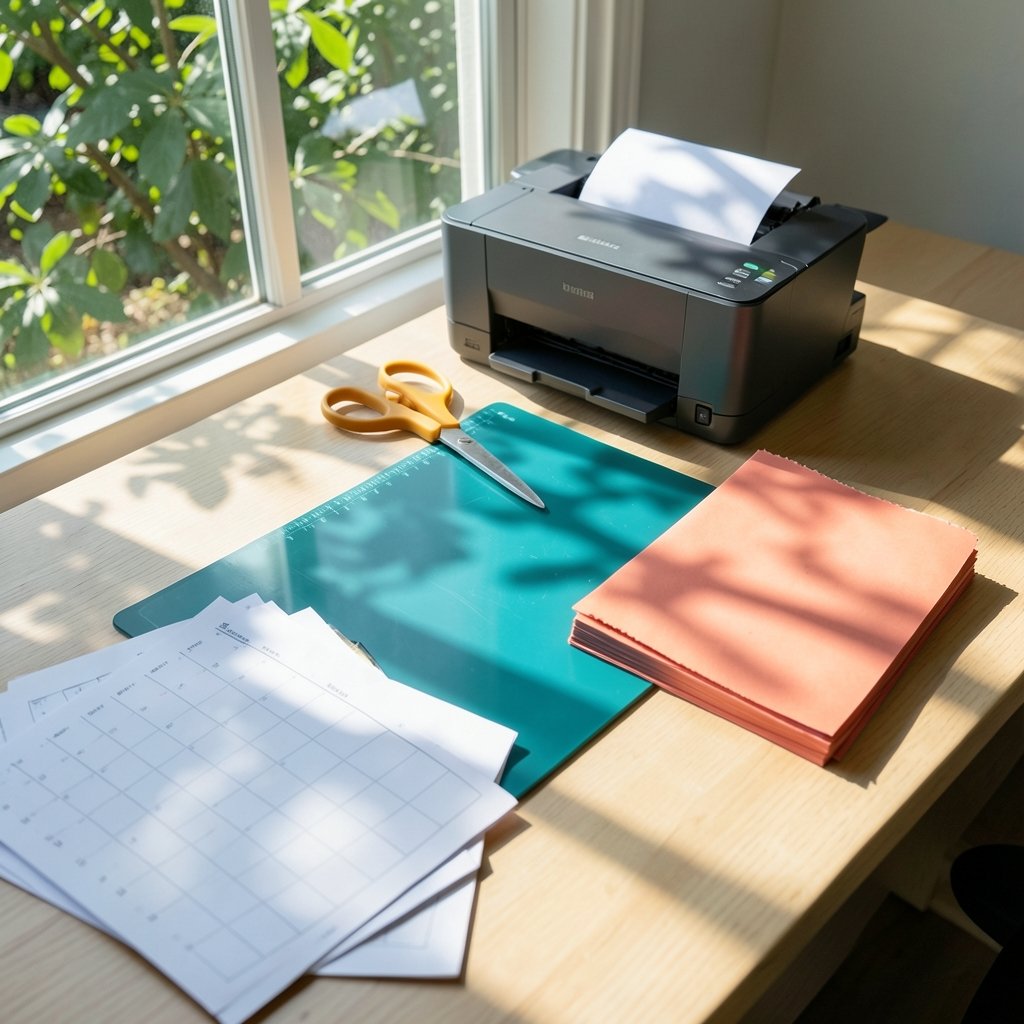
What day does January 1, 2027 fall on, and why does that one detail decide which printable calendar you should download? The answer is Friday. 2027 is a common year of 365 days that begins on a Friday, which means it has no leap day to absorb and no awkward midweek start to work around. That sounds like trivia until you print the wrong file, discover the grid runs Sunday to Saturday when your team plans Monday to Friday, and spend an evening trimming paper with scissors. The humble printable calendar is a small design decision with outsized consequences for how a year gets organized.
Why the 2027 Calendar Is Simpler Than You Think
The 2027 calendar is a Gregorian calendar, the international civil standard that traces back to the papal bull Inter gravissimas in 1582. Unless a file is explicitly labeled as Julian, Hebrew, Islamic, or Chinese, assume Gregorian. For a printable calendar, that means twelve months, 365 boxes, and a fixed layout you can hold in your hand.
Because 2027 starts on a Friday, the year has a quiet symmetry. January 1 is a Friday, and every date in the year shifts by a predictable pattern. That predictability is what makes a printed wall calendar still useful in an era of phone notifications: the whole year is visible at once, no scrolling, no tapping, no dead battery.
One caveat worth flagging upfront: specific 2027 holiday dates, including Easter and lunar new year observances, should be verified against a reliable calendar reference before you print or publish anything. Movable feasts follow rules, not fixed dates. Easter is calculated by the computus, a centuries-old method for aligning the lunar and solar cycles. US Thanksgiving is the fourth Thursday of November. Daylight saving time under the Uniform Time Act of 1966, as amended in 2005, begins the second Sunday in March and ends the first Sunday in November. A good printable calendar marks these; a lazy one leaves you to fill them in by hand.
Monday Start or Sunday Start? The Split That Ruins Prints
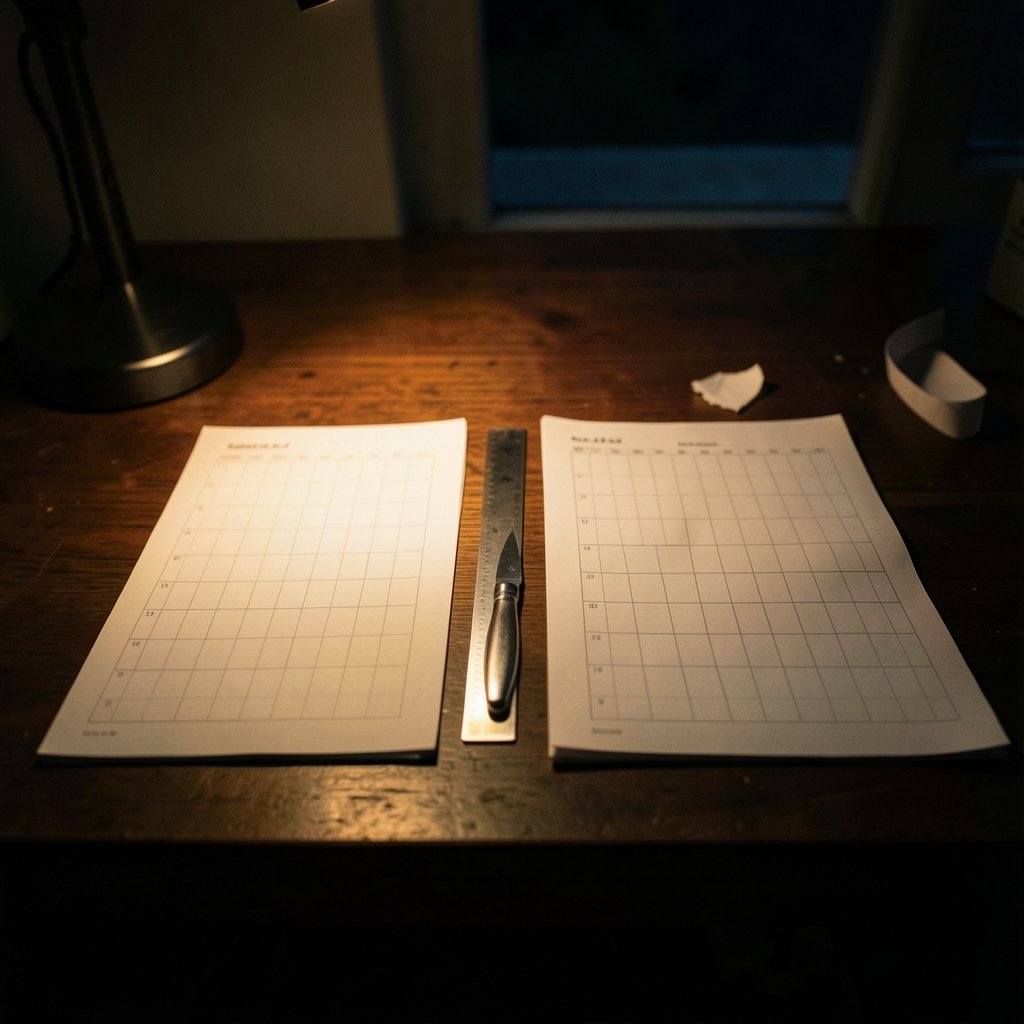
Here is the mistake almost everyone makes: downloading the first attractive PDF and hitting print without checking the week structure. There are two dominant conventions, and they do not agree.
| Feature | ISO 8601 style | US style |
|---|---|---|
| Week starts | Monday | Sunday |
| Week numbering | Week 1 contains the first Thursday | Often no week numbers |
| Common audience | Europe, business planning | US, Canada, household use |
| Typical paper size | A4 (210 × 297 mm) | US Letter (8.5 × 11 in) |
ISO 8601 defines the week as Monday through Sunday, with week 1 being the week that contains the first Thursday of the year. If you work across time zones or manage projects with European colleagues, a Monday-start calendar with week numbers will save you from constant mental conversion. If you are planning a household schedule in the US, a Sunday-start grid usually reads more naturally.
The paper size issue is just as practical. ISO 216 A4 is the standard in most of the world, while US Letter dominates in the United States, Canada, and parts of Latin America and Mexico. Print an A4 file on Letter paper, or the reverse, and you get either a clipped margin or a shrunken grid with wasted white space. Check the file’s stated dimensions before you commit.
What “Printable” Actually Means in File Terms
Most printable calendars arrive as PDF, an open standard published as ISO 32000. The first edition arrived in 2008, and ISO 32000-2 followed in 2017. The format matters because PDF is a fixed-layout container: what you see is what prints, provided the page size matches your paper.
A few file-level details separate a good download from a frustrating one:
- Vector text and lines. Crisp at any size. Rasterized images look fuzzy when scaled.
- Correct page dimensions. A4 or Letter, stated clearly, not left to guesswork.
- Editable fields or blank boxes. Some PDFs let you type into date cells; others are pure ink.
- Print-friendly margins. At least 10 mm of safe space so home printers do not clip the edges.
- Reasonable ink coverage. Heavy background colors drain cartridges fast.
If you are building a content or marketing plan around the year, pairing a printed calendar with a digital planning system works well. Tools like the best AI content calendar tools for planning 30 days in 30 minutes handle the scheduling side while the paper version stays on the wall for quick glances.
Matching the Calendar to the Job
Not every printable calendar serves the same purpose. The format should follow the function.
| Use case | Best format | Why |
|---|---|---|
| Family wall schedule | One page per month, large boxes | Room to write names and activities |
| Project planning | Year-at-a-glance, week numbers | See dependencies across months |
| Habit tracking | Monthly grid with checkboxes | Visual streak reinforcement |
| Budget planning | Monthly with note column | Bills and paydays side by side |
| Classroom use | Large-print, high contrast | Readable from a distance |
A year-at-a-glance sheet is excellent for spotting clusters of deadlines, but terrible for writing detailed notes. Monthly pages give you space but hide the big picture. Many people print both: a year overview for the wall and monthly pages in a binder. That dual approach costs two sheets of paper and solves most planning complaints.
The Copyright Question Nobody Asks About
A grid of dates is a fact, not creative expression, so the layout itself is generally not protected by copyright. But the decorative artwork, fonts, and photographs bundled with a printable calendar may be licensed separately. A free download with hand-drawn florals might permit personal printing but prohibit resale or redistribution.
This matters more than it used to. Sellers who bundle calendars into planners, print-on-demand products, or digital bundles need to confirm the license terms. If you are producing physical goods, the rules around generated artwork deserve a careful read, and resources like this guide to AI generators for print-on-demand sellers cover the licensing landscape in more depth. The short version: personal use is usually fine, commercial use needs explicit permission, and “free” never automatically means “free to sell.”
Printing Tips That Save Paper, Ink, and Sanity
Practical experience beats theory here. A few habits separate a clean print from a crumpled mess.
Do a single-page test first. Print January only. Check margins, font size, and whether the grid lines are visible at arm’s length. Then commit to the full set.
Choose draft mode for drafts. Standard quality is fine for a working copy. Reserve high quality for the final version you will look at all year.
Print double-sided where it makes sense. A twelve-page monthly set becomes six sheets. Just check that month order still reads correctly when you flip.
Laminate or use a dry-erase sleeve. One printed calendar plus a marker beats twelve printed calendars you write on once. This is the single biggest paper saver.
Skip the color if you can. Black-and-white grids print faster, cost less, and photocopy cleanly when you need a spare.
Check the printer’s scaling setting. “Fit to page” can silently shrink a Letter file onto A4 and leave a white border. Set scaling to 100% or “actual size” when the paper matches.
Seasonal Timing: When to Download
Demand for next year’s printable calendar tends to spike in the final quarter of the preceding year, as people plan ahead. That is an inference from general search-seasonality patterns rather than a hard statistic, so treat it as a planning heuristic. The practical takeaway is simple: if you want a specific design, download it in late 2026 before the popular free options get buried under new listings or pulled behind email signups.
There is also a quiet advantage to printing early. You can spot layout problems, test the paper size, and adjust before the January rush. A calendar printed in November gets used for fourteen months. One printed on January 3 gets used for twelve and forgotten by February.
Digital Companions for a Paper Calendar
A printed calendar is a display tool, not a database. The best setups pair paper with something searchable. Customer-facing businesses, for instance, often run a printed schedule alongside automated support. If that is your situation, this roundup of AI chatbots for e-commerce that rescue abandoned carts shows how scheduling and follow-up can run without manual date-checking. Not every tool belongs next to a wall calendar, though, and this honest look at when not to use an AI chatbot is a useful counterweight for anyone tempted to automate everything.
The principle is straightforward: paper for visibility, software for search and reminders. Trying to make one tool do both jobs usually ends with a cluttered wall and a neglected app.
Conclusion
The 2027 printable calendar is a small object with a surprisingly large set of decisions baked in. Start with Friday, January 1, and work outward: confirm the week starts on the day your life actually runs on, match the page size to your printer’s paper, and check whether the holidays you care about are marked or left blank. Print one test page before committing to twelve. Then choose a format that matches the job, whether that is a year-at-a-glance sheet for spotting deadline clusters or a monthly grid with room for handwriting. Get those details right and the calendar becomes what it should be: a quiet, reliable map of the year, hanging where you can see it, needing nothing from you but a glance.
FAQ
What day of the week does 2027 start on?
January 1, 2027 falls on a Friday. Because 2027 is a common year with 365 days and no leap day, the calendar follows a regular pattern across all twelve months, which makes year-at-a-glance layouts easy to read.
Should a 2027 printable calendar start on Monday or Sunday?
It depends on your audience and workflow. ISO 8601 defines weeks as Monday through Sunday, with week 1 containing the first Thursday of the year, so business and European users often prefer Monday starts with week numbers. US households typically find Sunday-start grids more natural. Check before printing.
What paper size should I print a 2027 calendar on?
Use A4 (210 × 297 mm) if you are in most of the world, and US Letter (8.5 × 11 in) if you are in the United States, Canada, or parts of Latin America and Mexico. Confirm the PDF’s stated page size and set printer scaling to 100% or actual size to avoid clipped margins.
Are printable calendars free to use commercially?
Not automatically. A grid of dates is generally treated as a fact rather than protected creative expression, but bundled artwork, fonts, and photographs may carry separate licenses. Personal printing is usually permitted; resale, redistribution, or inclusion in products requires explicit permission from the creator.
Why is PDF the standard format for printable calendars?
PDF is an open standard published as ISO 32000, first issued in 2008 with ISO 32000-2 following in 2017. Its fixed-layout design means the printed output matches the designer’s intent, provided the page dimensions match your paper.
How far in advance should I download a 2027 calendar?
Late 2026 is the practical window. Demand for next year’s calendars rises as the year closes, and popular free designs get buried or moved behind signups. Downloading early also gives you time to test print quality and paper size before January.



