
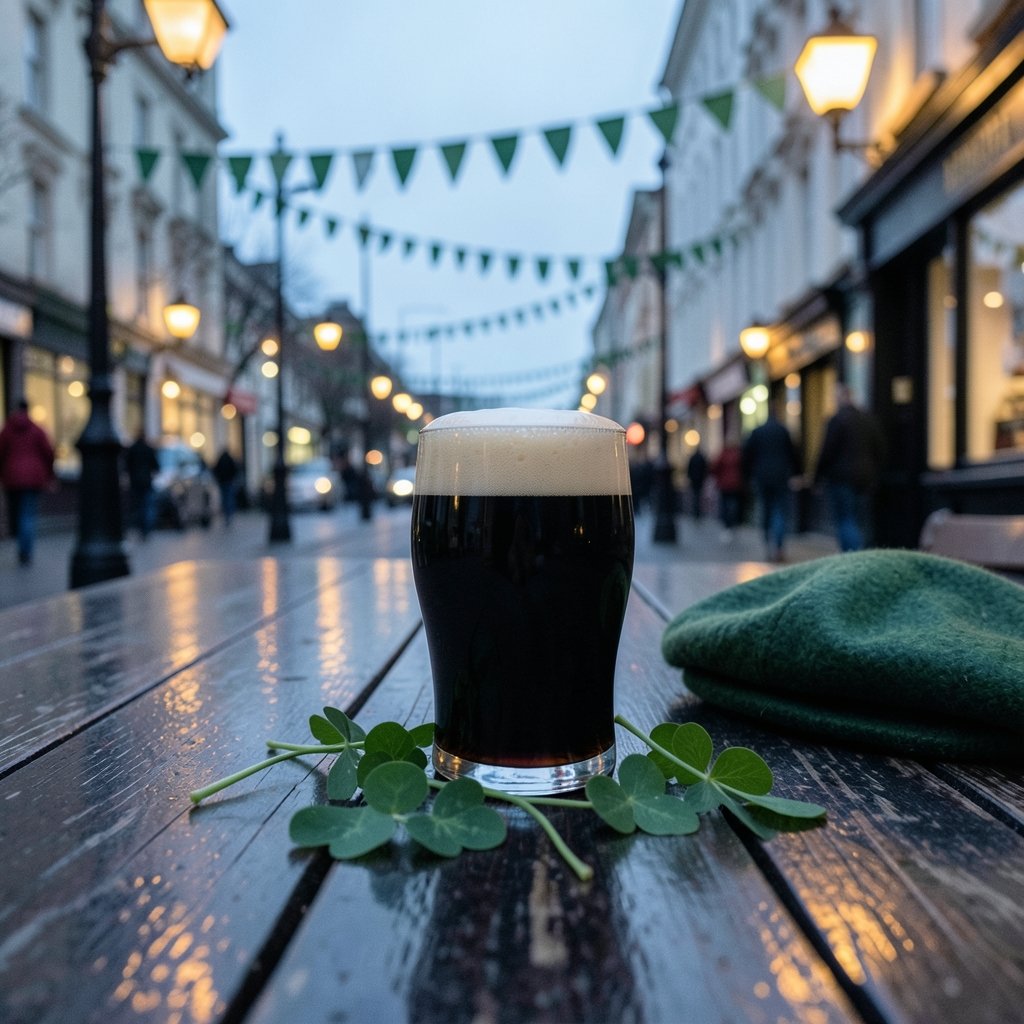
What happens when the world’s most social national holiday lands in the middle of the working week? That is exactly the puzzle St Patrick’s Day 2027 hands to millions of people. On Wednesday, 17 March 2027, Ireland, Northern Ireland, and Irish communities across four continents will raise a glass on a day that normally belongs to long weekends, all-day pub crawls, and parades that stretch into the evening. A Wednesday changes the rhythm of the celebration, and it changes how you should plan for it.
Why 17 March 2027 Falls on a Wednesday
The date itself never moves. St Patrick’s Day is fixed to 17 March every year, which means the weekday rotates through the calendar in a predictable cycle. In 2027, that date lands on a Wednesday. For anyone booking flights, requesting leave, or organising a parade route, that single detail reshapes everything.
The arithmetic is simple but worth stating plainly because so many people assume the holiday always delivers a long weekend. It does not. Some years the date falls on a Saturday and cities brace for record crowds. Other years it lands on a Sunday and the religious observance and the party overlap awkwardly. A Wednesday sits in a strange middle ground: too far from the weekend to extend naturally, but too significant to ignore.
That midweek placement has real consequences. In Ireland, where 17 March is a public holiday, workers get the day off regardless of the weekday. In Northern Ireland it is a bank holiday in the UK system. But in the United States, Canada outside Newfoundland and Labrador, Australia, and most of continental Europe, the day is a normal working day for most people. The result is a split celebration: a full national holiday in some places, an evening-and-weekend affair in others.
The Man Behind the Date

The feast day commemorates Saint Patrick, a fifth-century Romano-British Christian missionary and bishop who is traditionally associated with bringing Christianity to Ireland. The date of 17 March is traditionally given as the day of his death, though the year is genuinely uncertain. Common citations place it around 461, while some scholarship argues for closer to 493. That gap of roughly three decades is a useful reminder that the holiday rests on hagiographic tradition rather than a documented historical record.
This matters for anyone who wants to understand the day beyond the shamrocks and green beer. Patrick was not Irish by birth. He was a Romano-British figure who, according to tradition, was captured and enslaved in Ireland as a young man before returning later as a missionary. The story of the holiday is really the story of how a religious observance travelled, transformed, and eventually became a global cultural event.
Liturgical Status and the Easter Question
In the Catholic Church, 17 March is the feast day of St Patrick. In Ireland it is celebrated as a solemnity, the highest rank of feast. In most other countries it is an optional memorial, which means it can be displaced by other liturgical events. One of the most common complications is Holy Week: when 17 March falls during the final week of Lent, the feast can be moved or suppressed.
That is not a problem in 2027. Easter that year falls on 28 March, which places 17 March firmly in Lent but well before Holy Week. So the liturgical celebration goes ahead as normal, and the religious side of the day sits comfortably alongside the civic and cultural events.
Where St Patrick’s Day 2027 Is an Official Day Off
The list of places where the date is a formal public holiday is shorter than the global party might suggest. Here is how the main jurisdictions compare.
| Place | Status on 17 March 2027 | What It Means in Practice |
|---|---|---|
| Republic of Ireland | Public holiday | Offices, schools, and most businesses close; national festivities |
| Northern Ireland | Bank holiday (UK) | Public services and many employers observe the day |
| Newfoundland and Labrador, Canada | Public holiday | Provincial day off, parades and community events |
| Montserrat (British Overseas Territory) | Public holiday | Island-wide observance with a strong Irish heritage link |
| United States | Not a federal holiday | Local parades, pub events, and evening celebrations |
| Australia, Canada (most provinces) | Not a public holiday | Community events, often held on the nearest weekend |
The practical takeaway is straightforward. If you are planning a trip to Dublin specifically for the day, expect a full national shutdown with everything that entails: busy pubs, packed streets, and transport running on holiday schedules. If you are planning to celebrate in New York, Chicago, or Sydney, expect the main events to cluster around the evening of Wednesday and the following weekend.
The Dublin Festival: What to Expect and What Is Still Unknown
The modern Dublin St Patrick’s Festival was established in 1996, and the first festival ran that year. Since then it has grown into a multi-day event with a parade, music, theatre, and cultural programming that draws visitors from around the world.
Here is the honest part: as of late 2026, the 2027 edition’s specific dates, theme, and programme have not been announced. Anyone who tells you otherwise is guessing. The official festival site is the only reliable source for confirmed details, and it typically publishes the following year’s programme in the months before March. If you are booking travel, build flexibility into your plans and check back closer to the event.
A Practical Tip for Dublin Visitors
The most common mistake people make is assuming the parade happens on 17 March and nothing else matters. The festival runs across several days, and the parade draws large crowds; arriving early and choosing a viewing spot well in advance is necessary. City-centre accommodation books out months ahead, and prices rise sharply in the final weeks. Booking early affects both cost and whether any option remains.
New York, Boston, and Chicago: Three Traditions Worth Knowing
The American celebrations carry their own history, and some of the claims attached to them deserve scrutiny.
The New York City St Patrick’s Day Parade is traditionally dated to 1762, when Irish soldiers in the British colonial army marched. It is one of the oldest continuous parades in the world, though the “first ever” claim is contested. Boston makes a competing claim, commonly dated to 1737, when the Charitable Irish Society of Boston was founded and held a celebration. Whether either counts as the “first parade” depends entirely on how you define a parade, which is why the argument never resolves.
The Chicago River dyeing is a different kind of tradition. It began in 1962, when plumbers used fluorescein dye to trace illegal sewage discharges, and the river was dyed green for St Patrick’s Day that year. The dye used today is a vegetable-based formula. It is a wonderful example of an accidental tradition becoming a civic ritual, and it is widely reported by the city and news outlets each year.
A word of caution on superlatives: claims about “the largest parade,” attendance figures, and “first ever” celebrations vary widely by source and are often promotional. Treat any specific number with suspicion unless it comes with a dated, named source.
How to Plan Around a Midweek Holiday
A Wednesday holiday creates a specific planning challenge, and a few practical adjustments make it far easier.
- Decide whether you are taking the whole week or just the day. In Ireland, the day itself is free, but the surrounding days are not. In the US, the evening of 17 March is the main event, with the following weekend carrying the bigger parades.
- Book accommodation and transport early. Midweek dates can actually work in your favour for flights, since Wednesday travel is often cheaper than Friday or Saturday. Use that.
- Check local event schedules rather than assuming. Many cities hold their parade on the Saturday nearest the date, not on 17 March itself. If you show up on the Wednesday expecting a parade, you may find a quiet street.
- Plan for crowds at the obvious spots. Pubs near major parade routes fill up hours before events begin. Arriving early or choosing a venue slightly off the main route is the difference between a good day and a frustrating one.
- Respect the religious dimension. For many people, particularly in Ireland, the day begins with Mass and religious observance. The celebration is layered, not monolithic.
Common Mistakes to Avoid
The biggest error is treating St Patrick’s Day as a single-day event. In practice it is a season: parades, festivals, and community events spread across the surrounding weekends. The second biggest error is assuming every city celebrates the same way. Dublin’s festival is cultural and multi-day; New York’s is a formal parade with strict organisation; Chicago’s is defined by the river. Knowing which one you are attending changes what you pack and when you arrive.
For readers who enjoy comparing how different tools and platforms handle big cultural moments, the same principle of checking the actual schedule applies elsewhere. The way AI chatbots handle event queries is a good reminder that automated answers about dates and events can be confidently wrong, so verify against official sources. Similarly, if you are using translation tools to follow Irish-language coverage of the festival, the differences between AI translation tools in 2027 matter more than most people expect.
The Global Spread of the Celebration
St Patrick’s Day is observed widely beyond Ireland, in the United States, Canada, Australia, Argentina, and elsewhere, largely through Irish diaspora communities. The scale of modern celebrations is a 19th and 20th century diaspora phenomenon, not a medieval one. The parades, the green rivers, the political visits, and the global brand of the day are all relatively recent inventions layered onto an older religious feast.
That history is worth keeping in mind. It explains why the holiday looks different in different places, why some celebrations are civic and formal while others are commercial and informal, and why the “authentic” version of the day is genuinely contested. There is no single correct way to observe it.
Conclusion
St Patrick’s Day 2027 lands on a Wednesday, and that single fact should shape your plans more than any other detail. Ireland and Northern Ireland get a full day off; most of the rest of the world gets an evening and a weekend. The Dublin festival’s 2027 programme is not yet announced, so anyone booking travel should stay flexible and check official sources closer to the date. The history behind the day is older and more complicated than the green-themed marketing suggests, and the modern global celebration is a diaspora creation rather than an ancient tradition. Plan around the midweek date, verify event schedules rather than assuming them, and the day will deliver exactly what you came for.
Frequently Asked Questions
What day of the week is St Patrick’s Day 2027?
St Patrick’s Day 2027 falls on a Wednesday, 17 March. The date is fixed to 17 March every year, so the weekday rotates. A Wednesday means the celebration is midweek in most countries, with the biggest parades often pushed to the surrounding weekend.
Is St Patrick’s Day 2027 a public holiday everywhere?
No. It is a public holiday in the Republic of Ireland, a bank holiday in Northern Ireland, and a public holiday in Newfoundland and Labrador in Canada and in Montserrat. In the United States, Australia, and most of Canada, it is a normal working day for most people, with celebrations held in the evening or at the weekend.
When is the Dublin St Patrick’s Festival in 2027?
The specific dates and theme for the 2027 Dublin festival had not been announced as of late 2026. The festival has run since 1996 and typically spans several days around 17 March. Check the official festival site in the months before March for confirmed details.
Does St Patrick’s Day 2027 conflict with Holy Week?
No. Easter 2027 falls on 28 March, so 17 March sits in Lent but well before Holy Week. That means the feast of St Patrick is celebrated on its normal date without being displaced by the liturgical calendar.
Which city has the oldest St Patrick’s Day parade?
The claim is contested. New York’s parade is traditionally dated to 1762, while Boston’s celebration is commonly dated to 1737. Which one counts as the “first parade” depends on how you define a parade, and sources disagree. Treat any absolute claim with caution.
What is the best way to plan a trip for St Patrick’s Day 2027?
Book accommodation and transport early, since midweek travel is often cheaper but city-centre rooms near major events sell out months ahead. Confirm whether local parades fall on 17 March or the nearest weekend, arrive early at popular viewing spots, and check official event schedules rather than relying on assumptions or automated answers.



