
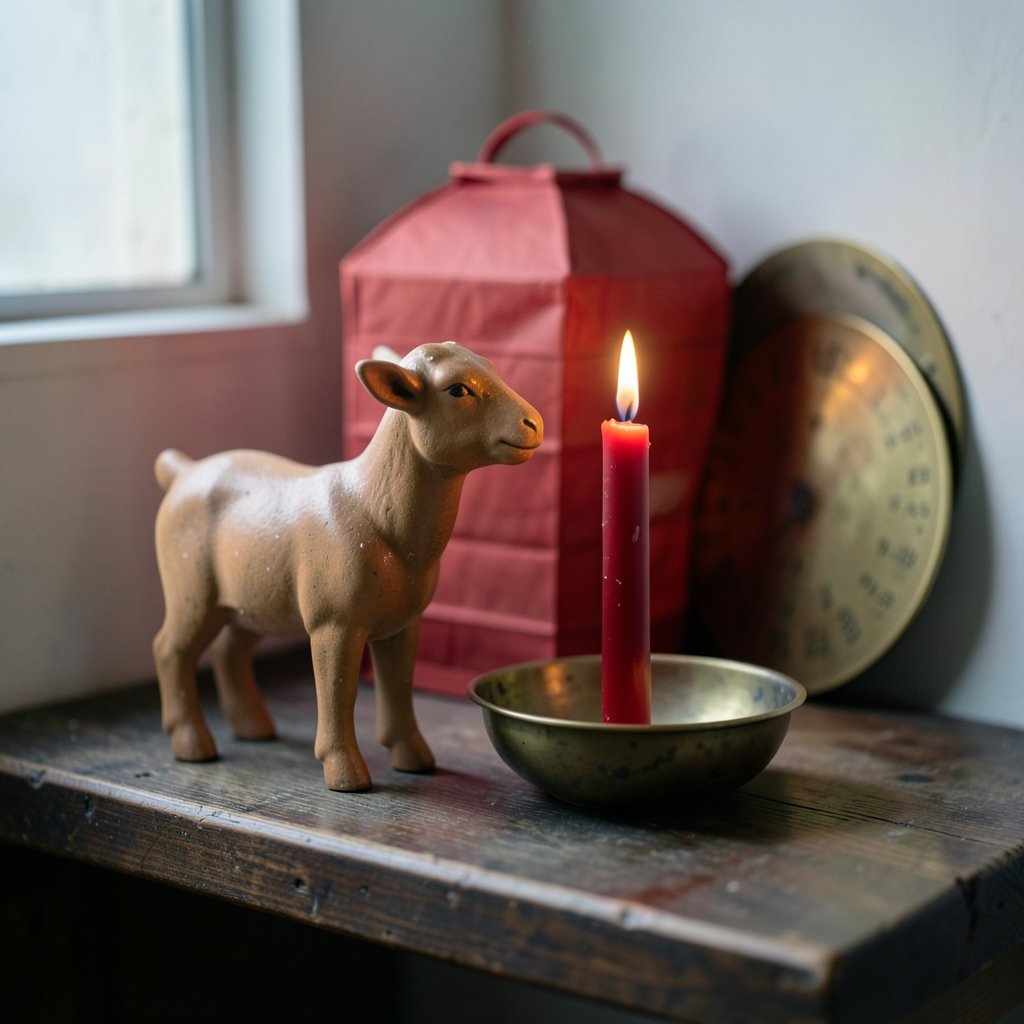
What happens when a gentle animal sign lands on a year tied to fire? That is exactly the puzzle of 2027, a year that sits at a curious crossroads in the Chinese zodiac. The animal is peaceful, but the element is hot. People born under it, businesses planning launches, and couples picking wedding dates all want to know what that mix means. The short answer: 2027 is the Year of the Goat, and it starts later than most people assume. The longer answer involves a 60-year cycle, a date that trips up half the internet, and a naming debate that has run for centuries. Here is the full picture, minus the fortune-cookie fluff.
Which animal rules 2027?
2027 is the Year of the Goat, also written as Sheep or Ram depending on where you are reading. It is the eighth animal in the standard twelve-animal order: Rat, Ox, Tiger, Rabbit, Dragon, Snake, Horse, Goat, Monkey, Rooster, Dog, Pig. The Goat follows the Horse year of 2026 and gives way to the Monkey in 2028.
That ordering is not random. The twelve animals map onto twelve earthly branches, a counting system older than the zodiac animals themselves. The Goat corresponds to the branch wei (未). When the animals were layered onto the branches, wei got the goat, and it has kept it ever since.
The naming question deserves a straight answer because it confuses a lot of readers. There is no single correct English translation. The Chinese character 羊 covers a family of horned, woolly animals, so translators split three ways:
| English name | Where you see it | Why |
|---|---|---|
| Goat | Mainland China, most English-language astrology | Common rendering of 羊 in modern translation |
| Sheep | Japan, Korea, some Western almanacs | Reflects the wool-bearing, flock animal reading |
| Ram | Older English texts, some diaspora communities | Emphasizes the horns and the male animal |
In Vietnam the same eighth sign is usually called the goat. So if a friend says 2027 is the Year of the Sheep and you say Goat, you are both right. Nobody is getting a zodiac citation.
When does the Year of the Goat actually begin?

Here is the mistake that shows up in more articles than any other: 2027 does not start on January 1. The Chinese zodiac runs on the lunisolar calendar, and the animal year flips on Chinese New Year, which falls on February 6, 2027. The Year of the Goat runs from that date until the eve of Chinese New Year 2028, in late January 2028.
This matters for anyone born in the first five weeks of the year. A baby born on January 20, 2027, is not a Goat. That baby is still a Horse, because the Horse year has not yet handed over. The same logic applies to every zodiac year, and it is the single most common error in birthday-based horoscope apps and party trivia.
The date itself moves each year because the lunisolar calendar anchors months to the new moon nearest the start of spring. Chinese New Year can land anywhere from late January to mid-February. In 2027 it lands on February 6, which is on the later side. If you need to confirm a specific birth date against the lunar calendar, official conversion tables exist for exactly this purpose, and they are worth checking before you trust any online calculator.
The same animal year applies across mainland China, Taiwan, Hong Kong, Singapore, Malaysia, and diaspora communities worldwide. Everyone is celebrating the same Goat at the same time, even if the public holiday looks different in each place.
Fire Goat or Earth Goat? Untangling the element label
This is where 2027 gets genuinely interesting, and where popular sources start contradicting each other. The zodiac animal is only half the story. The other half is the sexagenary cycle, a 60-year count that combines ten heavenly stems with the twelve earthly branches.
2027 is a Ding Wei (丁未) year. Ding is the fourth heavenly stem, and it is associated with fire. Wei is the branch tied to the Goat, and it is associated with earth. So you get two labels floating around:
- Fire Goat, drawn from the heavenly stem Ding
- Earth Goat, drawn from the branch Wei
Both labels circulate widely, and both have a logic to them. The cleanest way to think about it is that the stem describes the year’s active energy while the branch describes its foundation. Fire sits on top of earth. Practitioners who lead with the stem call it a Fire Goat year. Practitioners who lead with the branch call it an Earth Goat year. Neither camp is making things up.
What you should not do is treat either label as a hard rule about what will happen in 2027. The element pairing is a framework for interpretation, not a forecast. If a website tells you the Fire Goat guarantees a year of prosperity or warns of certain disaster, that is entertainment wearing a costume.
What the Goat sign is traditionally said to represent
Traditional Chinese astrology gives the Goat a soft-edged personality profile. The Goat is described as gentle, calm, and artistic, with a taste for peace and a dislike of conflict. It is also described as indecisive and sometimes pessimistic, prone to worry and slow to commit. These traits are folk tradition, repeated across centuries of almanacs and storybooks. They are not scientific claims, and they vary by region and by the source you read.
A useful reality check: the same twelve animals get recycled every dozen years, and roughly one-twelfth of the world’s population is born under each one. If Goat traits were destiny, about 8 percent of humanity would share an identical temperament. That is obviously not how people work. The zodiac is a cultural lens, not a personality test.
What the Goat profile is genuinely good for is understanding how the sign is used in practice. Because the Goat reads as a peacemaker, Goat years are often framed as good years for diplomacy, for creative work, and for mending relationships. Because it reads as hesitant, they are also framed as years to double-check contracts and avoid rushed decisions. Notice that both readings come from the same trait set. That flexibility is the tell.
What about people born in a Goat year?
Anyone born in a Goat year, such as 2027, 2015, 2003, 1991, or 1979, is said to be in their běnmìngnián (本命年), the “zodiac year” that returns every twelfth birthday cycle. Folk custom holds that this year brings extra turbulence and calls for caution, which is why red clothing and red accessories show up as traditional protections. Treat it as a cultural ritual rather than a risk assessment. The tradition is real and widely observed. The danger is not.
Common mistakes people make with the 2027 zodiac
Practical errors cluster around a handful of predictable spots. Knowing them saves you from being the person who gets corrected in the group chat.
Assuming January 1 is the start. It is not. February 6, 2027, is the switch date. Anyone born in the gap belongs to the Horse year.
Mixing up the animal and the element. “Fire Goat” and “Earth Goat” both describe 2027, but they come from different halves of the same cycle. If you are writing about 2027, name the stem-branch pair (Ding Wei) and explain the split rather than picking a side silently.
Insisting on one English name. Goat, Sheep, and Ram are all legitimate translations of the same sign. Correcting someone on this is a losing game.
Confusing the Chinese zodiac with the Western one. They are unrelated systems. The Western zodiac runs on months and the sun’s position. The Chinese zodiac runs on years and the lunisolar calendar. A person has one Western sun sign and one Chinese animal year, and the two do not interact.
Treating the zodiac as a forecast. This is the biggest one. The animal year is a cultural calendar marker. It is not a business plan, a medical opinion, or a relationship verdict.
Practical tips if you are planning around 2027
If you are scheduling something for 2027, the zodiac is a cultural consideration, not a logistical one. A few things that actually work:
- Check the February 6 date before you book anything labeled “Year of the Goat” in January. The year has not started yet.
- If you are producing content, marketing, or products tied to the year, plan your launch for early February so it lands after the actual new year, not before it.
- If you are verifying a birth date for a zodiac-themed gift or certificate, use an official lunar-to-Gregorian conversion table rather than a random website.
- If you are writing about the year, state the Ding Wei designation and acknowledge the Fire versus Earth label debate. Readers notice when a source pretends there is no ambiguity.
The same discipline applies to any tool that touches cultural detail. If you are building a product that handles dates, names, or translations across regions, the Goat year is a decent test case: it has a moving start date, three valid English names, and two defensible element labels. Tools that handle that gracefully tend to handle everything else too. For teams weighing whether to build or buy that kind of capability, the build vs buy AI three-year cost and output quality comparison is a useful starting point, and the same evaluation logic shows up in how AI chatbots are judged on output quality when cultural nuance is part of the brief.
How the Goat year fits into the bigger cycle
The twelve animals and the ten stems combine into a 60-year cycle. Do not try to hold the whole thing in your head at once. The rule is simpler than it looks: the animal repeats every 12 years, the stem repeats every 10, and the two only line up in the same pairing once every 60 years.
That means 2027’s exact combination, Ding Wei, last occurred in 1967 and will not occur again until 2087. The animal comes back in 2039, but the element pairing will be different. This is why two Goat years are never quite the same in traditional interpretation, and why serious almanac writers always name the full stem-branch pair rather than just the animal.
The cycle also explains why the zodiac feels like it repeats without repeating. Every dozen years you get the Goat back, but the surrounding elements shift, so the “flavor” of each Goat year changes. 2027 is the fire-flavored one. 2039 will be something else. If you are tracking the cycle for cultural or editorial reasons, note both the animal and the stem, or you will lose the thread within a couple of decades.
For anyone building content or products around recurring calendar events, this layered structure is worth understanding. The 2027 shift toward AI chatbots on every website is a reminder that seasonal and cultural moments now get handled by automated systems, and those systems need the same care with dates that a human editor would apply. Getting February 6 wrong in a chatbot answer is exactly the kind of error that erodes trust fast.
Conclusion
2027 is the Year of the Goat, and it begins on February 6, 2027, not January 1. It is a Ding Wei year in the 60-year cycle, which is why you will see it called both the Fire Goat and the Earth Goat depending on whether a source leads with the heavenly stem or the earthly branch. The animal is traditionally read as gentle, artistic, and a little indecisive, though that profile is folk tradition rather than fact. The English name is genuinely unsettled, with Goat, Sheep, and Ram all in legitimate use across regions. And anyone born in the first five weeks of 2027 belongs to the Horse, not the Goat, because the lunar year has not turned over yet.
The most useful thing to take away is not a prediction. It is a set of accurate details: the date, the stem-branch pair, the naming variation, and the birth-date rule. Those are the facts that hold up when the fortune-telling fades, and they are what make the 2027 zodiac worth understanding rather than just celebrating.
FAQ
When exactly does the Year of the Goat start in 2027?
Chinese New Year 2027 falls on February 6, 2027. The Year of the Goat begins on that date and runs until the eve of Chinese New Year 2028, in late January 2028. Anything before February 6 still belongs to the Horse year of 2026.
Is 2027 the Year of the Goat or the Year of the Sheep?
Both names are correct. The Chinese character 羊 covers goats, sheep, and similar horned animals, so English translations vary. Mainland China and most English-language astrology sources say Goat, Japan and Korea lean toward Sheep, and older texts often use Ram.
What does “Fire Goat” mean for 2027?
2027 is a Ding Wei year in the 60-year sexagenary cycle. Ding is a heavenly stem associated with fire, and Wei is the earthly branch associated with the Goat and with earth. Because the two halves point to different elements, sources call 2027 either the Fire Goat or the Earth Goat. Both labels trace back to the same cycle.
If I was born in January 2027, am I a Goat?
No. Anyone born before February 6, 2027, is still under the previous year’s sign, the Horse. The zodiac animal is assigned by the lunar year, not the Gregorian calendar year, so a January birthday falls in the old cycle.
What are people born in a Goat year supposedly like?
Traditional Chinese astrology describes the Goat as gentle, calm, and artistic, but also indecisive and prone to worry. These are folk characterizations repeated across centuries of almanacs. They vary by region and source, and they are not scientific claims about personality.
What is běnmìngnián, and does it apply in 2027?
Běnmìngnián (本命年) is the “zodiac year” that returns every twelfth birthday cycle for people born under the current animal. In 2027, it applies to people born in Goat years such as 2015, 2003, 1991, and 1979. Folk custom treats it as a year for extra caution, often marked by wearing red, though it is a cultural tradition rather than a prediction.



