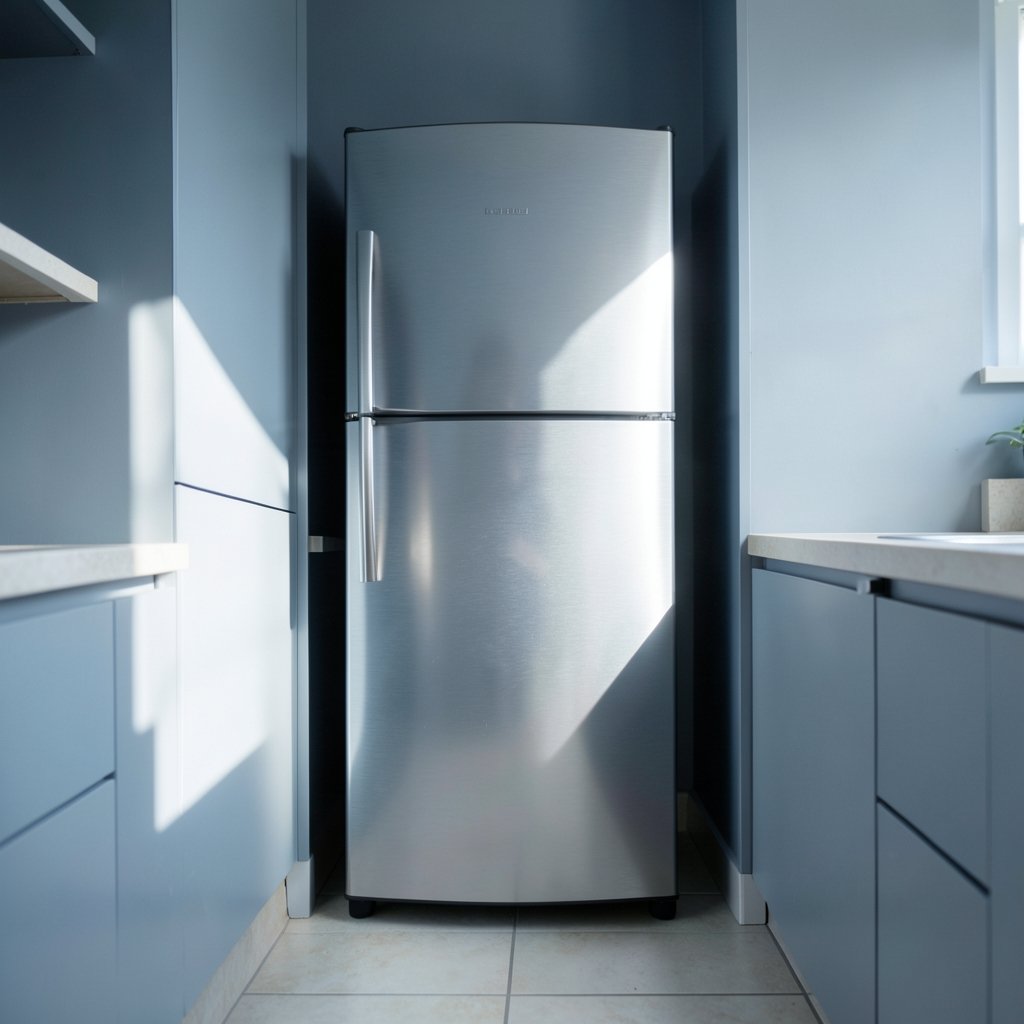
What do you do when the space for your new fridge measures 35 inches, the showroom floor is full of 36-inch giants, and the salesperson keeps saying “just take the doors off”? That gap is exactly where the 34 inch wide refrigerator lives. It is the near-standard size that solves a lot of kitchen problems, and it also creates a few of its own. This guide walks through what that number really means, where it fits, what to measure before you buy, and the mistakes that turn a simple swap into a weekend of regret.
What “34 Inch Wide” Really Means on a Spec Sheet
Here is the first thing to understand: a 34-inch refrigerator is not a formal category the way 36-inch models are. In the U.S., full-size side-by-side and French-door refrigerators most often land in the 30 to 36 inch width class, and 36 inches is the de facto standard for a full-size unit. A 34-inch model sits just below that line, which is why it gets chosen so often for older kitchens, condos, and tight galley layouts. (Netflix clips iphone duo 7 6 inch inner display could mean)
The problem is that “34 inches” can mean different things depending on who printed the label. Some manufacturers list cabinet width with the doors closed and handles excluded. Others round a 33.5-inch cabinet up to 34. Still others use “34-inch” loosely to describe the opening the fridge is meant to fill, not the appliance itself. There is no single industry-wide definition that settles this, so treat every listing as a claim that needs checking against the actual installation manual.
That distinction matters more than the nominal number. A fridge whose cabinet measures 34 inches but whose handles stick out another two inches is not a 34-inch fridge in your kitchen. It is a 36-inch problem wearing a smaller label.
The Clearance Math Nobody Explains at the Store
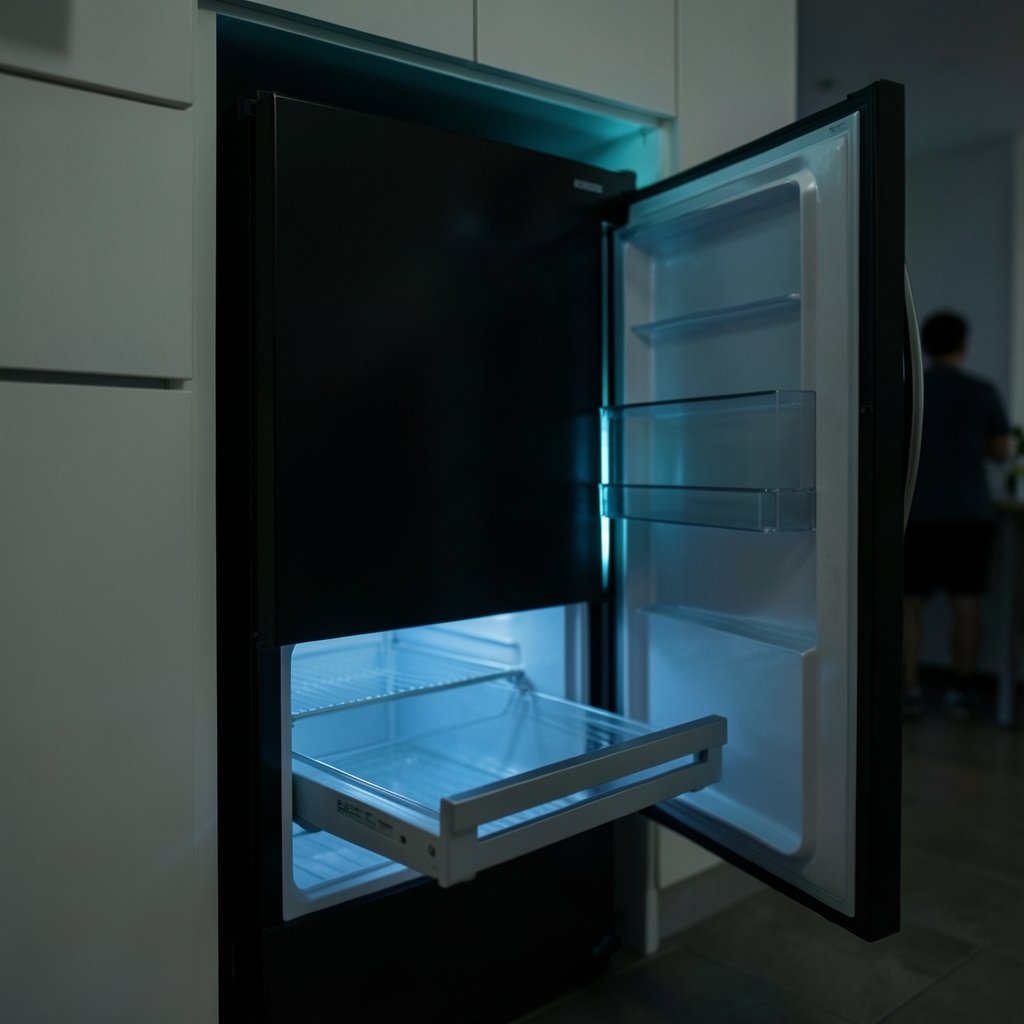
Manufacturers typically call for one to two inches of side clearance for door swing and ventilation. That single sentence reshapes the whole shopping trip. A 34-inch-wide refrigerator generally needs a 36-inch opening to breathe and to let the doors open far enough that the crisper drawers actually slide out.
This is where buyers get burned. They measure the opening, find 35 inches, and assume a 34-inch fridge leaves a comfortable inch. It does not. Doors need room to swing past the surrounding cabinets, and the refrigerator needs airflow to shed heat from the condenser. Squeeze it in and you get doors that open 70 degrees instead of 90, drawers that stop halfway, and a compressor working harder than it should.
The practical rule that works in real kitchens: measure the opening at three points (top, middle, bottom), take the narrowest number, then subtract the clearance the manual requires. If the result is at or above 34 inches, a 34-inch model is a candidate. If it is below, look at 33-inch or 30-inch units instead of hoping.
Why the door swing zone is separate from the width
Width is only one axis. A French-door model needs clearance in front for both doors plus the freezer drawer below. A side-by-side needs swing room for two narrower doors. A standard top-freezer needs a wide arc for one big door. Two refrigerators with identical 34-inch widths can have completely different footprints once opened, so check the manufacturer’s door-swing diagram in addition to the width figure.
Counter-Depth or Standard-Depth? Width Does Not Decide This
New buyers often assume width and depth travel together. They do not. Counter-depth refrigerators are typically about 24 to 25 inches deep excluding doors and handles, while standard-depth models run roughly 30 to 36 inches. A 34-inch-wide refrigerator can be either one, and the depth choice affects your kitchen far more visibly than the width does.
| Spec | Counter-Depth | Standard-Depth |
|---|---|---|
| Cabinet depth (approx.) | 24–25 in | 30–36 in |
| Look in the kitchen | Sits near flush with counters | Projects past the counter line |
| Usable interior | Less, same footprint | More, same footprint |
| Typical price | Higher for the same capacity | Lower for the same capacity |
| Best for | Open-plan kitchens, walkways | Families needing maximum space |
If the fridge sits at the end of a run or beside a doorway, counter-depth earns its premium. If it lives in a dedicated alcove where nobody walks past the side, standard-depth gives you more cubic feet for the money. Width gets the fridge through the door; depth decides whether the kitchen feels cramped every day afterward.
Measuring Before You Buy: A Sequence That Works
The order of operations matters. Do it in this sequence and you avoid the classic return-trip scenario.
- Measure the opening’s width at the top, middle, and bottom. Record the smallest figure.
- Measure the height from floor to the lowest obstruction overhead, such as a cabinet or soffit.
- Measure the depth from the back wall to the front edge of the counter, then note how far the fridge may protrude.
- Measure every doorway and hallway the fridge must pass through, including the front door, stairwell turns, and elevator dimensions if applicable.
- Check the installation manual for the required clearance on sides, top, and back, then subtract those from your opening figures.
- Confirm whether the listed width includes handles and hinges, and whether depth is quoted with or without doors.
- Verify the fridge can be delivered with doors removed if the path is tight, and confirm the delivery team will do that.
That last point is not a formality. A refrigerator that fits the kitchen but not the stairwell is still the wrong refrigerator. If the path is genuinely difficult, the same logistics thinking that applies when an appliance fails and replacement becomes urgent applies here: plan the swap before the old unit dies, not after. A practical guide to fixing a refrigerator that stopped cooling is worth reading precisely because it buys you time to measure properly instead of panic-buying whatever is in stock.
Energy, Safety, and the Labels That Actually Matter
Refrigerators are regulated appliances, and the rules are worth knowing because they affect what you can buy and how much it costs to run. U.S. refrigerator energy use falls under the Energy Policy and Conservation Act, with testing procedures set in federal regulation and the current standards taking effect in 2014. The ENERGY STAR refrigerator specification, Version 5.0, also took effect on September 15, 2014.
Every new refrigerator sold must carry an EnergyGuide label showing estimated annual energy use and cost, a requirement under federal labeling rules. Read it. Two 34-inch models from different brands can differ meaningfully in yearly electricity, and the label makes that comparison honest. Electrical safety is covered separately by the UL 60335-2-24 standard for household refrigerating appliances, which is the kind of certification you should confirm rather than assume.
One caution on efficiency claims: a narrower fridge is not automatically cheaper to run. Insulation thickness, compressor design, and defrost strategy matter more than width. A well-built 34-inch unit can beat a poorly insulated 36-inch one.
Where 34-Inch Models Fit Best, and Where They Do Not
The 34-inch class shines in specific situations. Older homes with openings built for appliances that no longer exist. Condos and apartments where the cabinet run was designed around a slightly smaller box. Galley kitchens where every inch of walkway counts. Replacements where the surrounding cabinetry is custom and cannot be modified without a carpenter.
It struggles in others. If you are remodeling and the opening is flexible, a 36-inch fridge gives you more choice, more capacity, and often a lower price per cubic foot, because 36 inches is where the volume sits. If you need maximum storage for a large household, a 34-inch French-door will feel tighter than the spec sheet suggests once you account for the ice maker and door bins.
There is a related trap with compact and specialty units. People shopping for a second fridge, a garage unit, or an RV appliance often discover that repair economics change completely at the small end of the market. The math on when an RV refrigerator repair fails and it costs less to replace is a useful reality check for anyone considering a secondary unit, because the same principle applies: past a certain repair bill, replacement wins.
Mistakes That Cost Money
The most common error is trusting the listing width without the manual. The second is ignoring the door swing. The third is forgetting the delivery path. The fourth, and the one that stings longest, is buying for the opening instead of for the kitchen.
A few practical habits separate smooth purchases from painful ones. Photograph the opening with a tape measure in frame so you have the numbers at the store. Bring the manual’s clearance page with you, printed or on your phone. Ask the salesperson to state, in writing, whether the quoted width includes handles. And measure the old fridge’s actual footprint before it leaves, because that is the number your kitchen has been living with.
It also helps to keep perspective on scale. People agonize over an inch of width and then discover the real constraint was depth or height. If you want a sense of how much difference a small measurement makes in practice, the same precision that turns 32 inches into an exact centimeter answer is what turns a vague “about 34 inches” into a fridge that fits. It matters in exactly the same way when comparing screen sizes on devices, where a 7, 8, or 10 inch display changes the entire experience despite sounding similar.
Matching the Fridge to the Room, Not the Other Way Around
A 34-inch refrigerator is a good answer to a specific question: what fits this opening without remodeling the kitchen? It is a poor answer to a different question: what is the biggest fridge I can get for my money? Knowing which question you are actually asking saves weeks of browsing.
Buyers who plan ahead also tend to make better choices about features. A fridge that fits perfectly but has a freezer layout nobody in the house likes will be regretted daily. Check interior configuration, shelf adjustability, and where the ice maker sits before falling for the exterior dimensions. The appliance has to work in the room and for the people using it.
Conclusion
The 34 inch wide refrigerator occupies a narrow but genuinely useful slot in the market. It is not the standard, but it is close enough to solve real problems in older kitchens, condos, and tight layouts where a 36-inch unit simply will not go. The catch is that “34 inches” is a looser claim than it sounds, and the only number that counts is the one in the installation manual matched against the narrowest point of your actual opening.
Measure three times, subtract the required clearance, confirm what the width figure includes, and check the delivery path before you pay. Do that, and a 34-inch fridge becomes a straightforward purchase instead of a cautionary tale. Skip it, and you will learn more about door swing geometry than you ever wanted to know.
FAQ
Does a 34-inch refrigerator fit in a 34-inch opening?
Almost never comfortably. Manufacturers typically require one to two inches of side clearance for ventilation and door swing, so a 34-inch fridge usually needs a 36-inch opening. If your opening is exactly 34 inches, check the manual’s clearance requirements before buying, and expect to look at 33-inch or 30-inch models instead.
Is 34 inches a standard refrigerator width?
Not exactly. The standard width for full-size side-by-side and French-door refrigerators is 36 inches. A 34-inch model is best described as near-standard, chosen when a 36-inch unit will not fit. Because there is no single industry definition, always confirm whether a listing’s width refers to the cabinet, the cutout, or includes handles.
Does a 34-inch-wide fridge come in counter-depth?
Yes. Width and depth are independent specifications. A 34-inch-wide refrigerator can be counter-depth, at roughly 24 to 25 inches deep excluding doors and handles, or standard-depth, at roughly 30 to 36 inches. Decide on depth based on how the fridge sits in your kitchen, then find a model that matches both dimensions.
How much space do I need beside a refrigerator?
Plan on one to two inches per the manufacturer’s installation manual, and follow that figure rather than a general rule. Side clearance serves two purposes: airflow for the condenser and room for the doors to open far enough that drawers and bins come out fully. Tightening it causes overheating and daily annoyance.
What should I check on the energy label?
Look at the estimated yearly electricity use and cost, which federal rules require on the EnergyGuide label. Compare models of the same size directly, since two 34-inch refrigerators can differ noticeably in running cost. Also confirm the unit meets the UL 60335-2-24 safety standard for household refrigerating appliances.
Can I get a 34-inch fridge through a narrow doorway?
Often yes, but only if the doors are removed, and that needs checking before delivery. Measure every doorway, hallway turn, and stairwell on the path, then confirm with the retailer that the delivery team will remove doors and handles. A refrigerator that fits the kitchen but not the route in is still the wrong purchase.