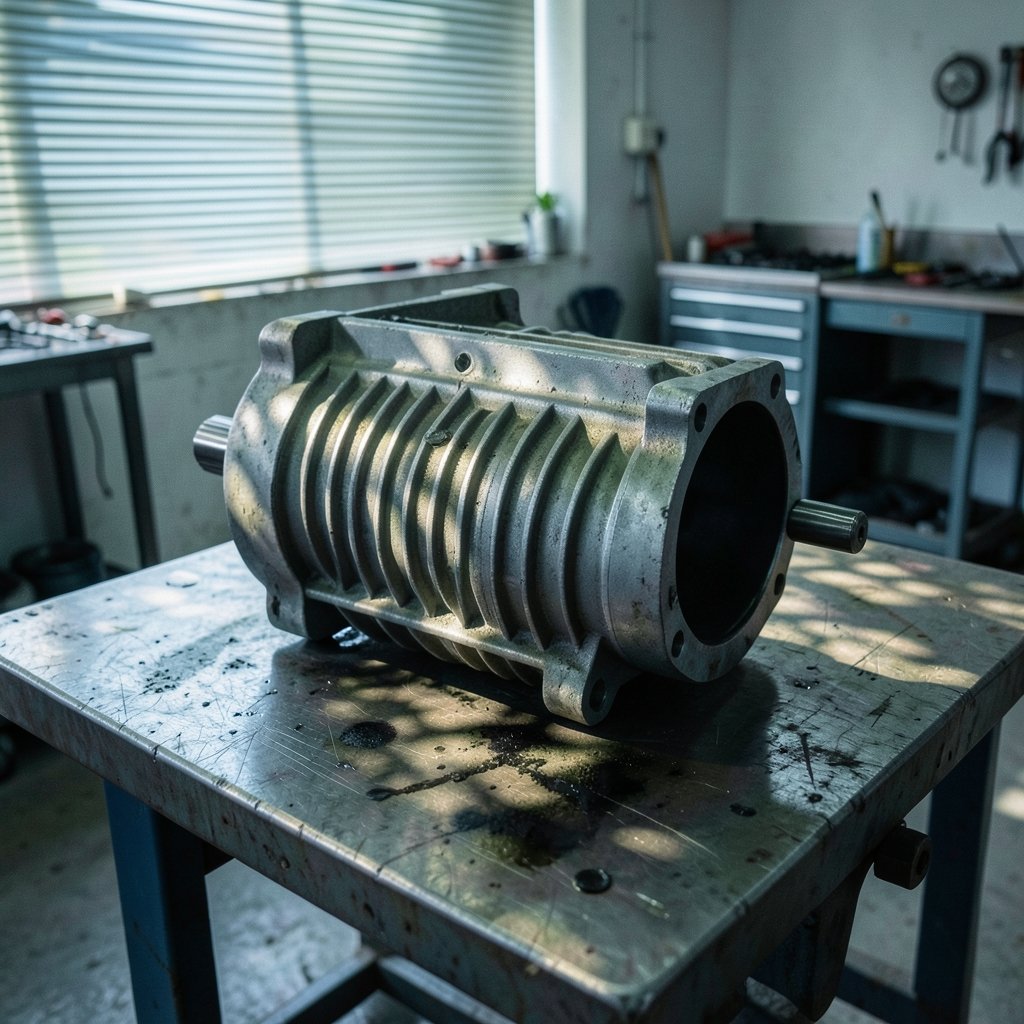
What makes a truck transmission earn a nickname like “bulletproof” from mechanics who have seen everything fail at least twice? For the 4L80-E, the answer comes down to a simple design philosophy: build it heavy, control it electronically, and let it shrug off torque that would turn lesser gearboxes into expensive confetti. General Motors introduced this four-speed automatic for the 1991 model year in its light trucks, and more than three decades later it is still the unit that swap builders, tow rig owners, and drag racers keep coming back to. This article breaks down what the 4L80 actually is, how it works, where it fails, and whether it deserves a place in your project.
What the 4L80-E Actually Is
The 4L80-E is a four-speed automatic transmission built by General Motors, introduced for the 1991 model year in GM light trucks such as the C/K pickups and Suburbans. It is a longitudinally mounted, rear-wheel-drive unit with a torque converter and an overdrive fourth gear. It is widely regarded as the heavy-duty successor to the three-speed Turbo-Hydramatic 400, the TH400, which earned its own reputation for surviving abuse in tow trucks and muscle cars alike.
The name itself is a spec sheet in miniature. In GM’s naming convention, the “4” stands for four forward speeds, the “L” means longitudinal mounting, the “80” denotes the torque-capacity class, and the “E” signals electronic control. Once you know that code, you can read half of GM’s transmission lineup at a glance.
That “-E” suffix matters more than it looks. Unlike the purely hydraulic TH400, the 4L80-E manages its shift points through the powertrain control module, or PCM. Instead of a valve body deciding everything on its own with springs and fluid pressure, the computer commands shifts based on speed, throttle, and load. That electronic layer is what lets the same basic hardware behave like a gentle grocery-getter on Monday and a firm-shifting tow rig on Saturday.
Gear Ratios and What They Mean on the Road
The widely published gear ratios for the 4L80-E are:
| Gear | Ratio | Practical Effect |
|---|---|---|
| 1st | 2.48:1 | Strong launch, good for loaded starts |
| 2nd | 1.48:1 | The workhorse gear for climbing and towing |
| 3rd | 1.00:1 | Direct drive, efficient cruising |
| 4th | 0.75:1 | Overdrive, lowers highway rpm |
| Reverse | 2.07:1 | Solid backing power for trailers |
Those numbers tell a story. The 2.48 first gear is not the deepest in the world, which is why the 4L80-E feels less jumpy off the line than some modern six- and eight-speed units. But the 0.75 overdrive is the real gift for anyone who tows. A truck spinning 2,400 rpm at highway speed in third drops to roughly 1,800 rpm in fourth, and that difference shows up as less noise, less heat, and better fuel economy over a long haul.
One practical note: because the 4L80-E was designed for trucks, its shift calibration from the factory is gentle, sometimes almost lazy. Many owners find the stock tuning mushy. A reputable tuner can firm up line pressure and shift timing, but go too aggressive and you trade smoothness for wear. The middle ground, a modest firmness increase, is what most experienced builders recommend.
Where the 4L80-E Was Used
GM spread the 4L80-E across its heavy-duty trucks, vans, and SUVs from the early 1990s through the mid-2000s. You will find it in 2500- and 3500-series trucks, the Suburban, and the Express and Savana vans. The exact end-of-production year varies by application, commonly cited as ending somewhere around 2007 to 2009 depending on the model, so anyone hunting a donor unit should confirm the specifics for that particular vehicle rather than trusting a forum post from a decade ago.
There is also a strengthened variant, the 4L85-E, used in higher-torque applications such as the 8.1L big-block trucks. Think of it as the same architecture with extra beef where it counts. If you are shopping for a core to rebuild for a high-power build, a 4L85-E core can be a smart starting point, though the aftermarket has largely caught up with parts that make a standard 4L80-E just as stout.
Why Swap Builders Love It
Walk through any engine-swap forum and you will see the 4L80-E come up constantly. The reasons are practical rather than sentimental.
First, durability. The unit was engineered for trucks that tow heavy trailers up grades in summer heat, and it handles that workload without drama. Second, parts availability. Because the transmission stayed in production for well over a decade and shares design heritage with the TH400, rebuild kits, upgraded clutch packs, shift kits, and converters are everywhere. Third, electronic control flexibility. Standalone transmission controllers let you run a 4L80-E behind an engine that never came with one from the factory, which is exactly what LS-swap builders need.
That heritage with the TH400 is often overstated online, though. You will read claims that parts interchange freely between the two. Some do, many do not, and the degree of compatibility depends on the specific component. Anyone planning a build around mixed parts should consult a factory service manual rather than a comment thread.
Common Problems and What Actually Fails
No transmission is immortal, and the 4L80-E has known weak points that show up predictably.
The most common complaint is slipping or delayed engagement, especially when the fluid is old or low. This unit is sensitive to fluid condition in ways owners sometimes underestimate. Checking the fluid properly, on level ground with the engine running and the transmission warm, catches a surprising number of problems before they become rebuilds. If you want a step-by-step method, this guide on how to check transmission fluid without guessing walks through the process in plain terms.
Other frequent issues include:
- Harsh or late shifts tied to a failing pressure solenoid or worn valve body bores
- No fourth gear or torque converter clutch shudder, often electrical rather than mechanical
- Overheating under heavy towing, which cooks fluid and accelerates wear faster than mileage ever will
- Leaks from the pan gasket, output shaft seal, or cooler lines
A mistake many owners make is chasing a shift problem by replacing the transmission when the real culprit is a cheap sensor, a chafed wire, or a clogged cooler. Diagnostics first, parts second. That order saves thousands.
Another common error: skipping the auxiliary cooler. The factory cooler in a half-ton application was never sized for a 10,000-pound trailer in July. Adding a stacked-plate cooler and monitoring temperatures is one of the highest-value upgrades you can make, and it costs a fraction of a rebuild.
Maintenance That Actually Extends Life
The 4L80-E rewards simple discipline. Fluid and filter service at reasonable intervals, typically every 30,000 to 50,000 miles depending on how hard the truck works, keeps the unit healthy. Trucks that tow constantly should lean toward the shorter end of that range. Owners who never tow can stretch it.
Fluid level matters more than most people think. A unit that is half a quart low can shift oddly and run hotter, and the damage accumulates quietly. Check it monthly, and always before a long trip with a load.
Temperature is the other lever. Below roughly 200°F, conventional fluid holds up well. Push past 250°F repeatedly and the fluid breaks down, varnish forms, and clutch material starts glazing. A simple gauge or a scan tool reading transmission temperature tells you more about your unit’s health than any seat-of-the-pants impression ever will.
Finally, resist the urge to flush a high-mileage unit that has never been serviced. A gentle drain and fill, sometimes repeated a few times over several thousand miles, is the safer path for a neglected transmission. A power flush on a unit full of debris can push that debris into places it should never go.
The Diagnostic Side Nobody Talks About
Modern diagnostics for the 4L80-E increasingly rely on data, and that is a good thing. A scan tool that reads live transmission data shows line pressure commands, solenoid states, slip speed, and temperature in real time. Comparing commanded behavior to actual behavior is how a good technician isolates an electrical fault from a hydraulic one in minutes rather than hours.
There is a parallel worth noting for anyone who works around modern vehicles and connected systems: the limits of automated testing. A scanner can flag a code, but interpreting what that code means in context still takes a human who understands the system. The same principle behind API security testing limitations scanners miss applies here, in a different domain. Tools narrow the search; judgment closes the case.
4L80-E vs. Common Alternatives
How does it stack up against the transmissions people usually cross-shop?
| Transmission | Speeds | Strength | Best For |
|---|---|---|---|
| 4L80-E | 4 | Very high | Heavy towing, swaps, high torque |
| 4L60-E | 4 | Moderate | Light trucks, daily driving |
| TH400 | 3 | High | Simple builds, no overdrive needed |
| 6L80-E | 6 | High | Modern swaps wanting more ratios |
The 4L60-E is lighter and cheaper but struggles behind serious torque. The TH400 is tough and simple but lacks overdrive, which hurts highway manners. The 6L80-E offers more gears and better spread but costs more and brings its own quirks. For a build that needs to tow heavy, live behind big power, and keep working for years, the 4L80-E sits in a sweet spot that is hard to beat.
Conclusion
The 4L80-E has earned its reputation the old-fashioned way: by surviving. It is not the smoothest transmission ever built, and its factory tuning can feel dated next to a modern eight-speed. But it is strong, well understood, cheap to support, and backed by an aftermarket that has spent decades making it stronger still. Whether you are maintaining the truck in your driveway or planning a swap that needs a gearbox capable of handling real torque, the 4L80-E remains one of the smartest choices in the room. Treat it to clean fluid, keep it cool, and diagnose before you replace, and it will likely outlast the truck around it.
FAQ
What does the “E” in 4L80-E stand for?
The “E” stands for electronically controlled. Unlike the older TH400, which shifted purely through hydraulic pressure, the 4L80-E relies on the powertrain control module to command shift points based on speed, throttle, and load.
How much power can a stock 4L80-E handle?
A healthy stock unit handles a substantial amount of torque, which is why it was used behind big-block engines in heavy trucks. Exact figures vary by condition and calibration, and a rebuilt unit with upgraded internals can handle considerably more than a worn factory example.
Is the 4L80-E the same as the TH400?
No, though they share design heritage. The TH400 is a three-speed, fully hydraulic unit, while the 4L80-E is a four-speed with overdrive and electronic control. Some parts are similar, but claims of broad interchangeability are often exaggerated.
What are the most common 4L80-E failure symptoms?
Slipping, delayed engagement, harsh shifts, a missing fourth gear, and torque converter clutch shudder top the list. Many of these trace back to fluid condition, solenoid faults, or wiring issues rather than major mechanical failure, so proper diagnosis comes first.
How often should the fluid be changed?
Every 30,000 to 50,000 miles is a reasonable range, with hard-working tow vehicles at the shorter end. Units that see constant heavy loads and high temperatures benefit from more frequent service and an auxiliary cooler.
Can a 4L80-E be swapped into a vehicle that never had one?
Yes, and it is a common project. A standalone transmission controller manages the electronic side, and aftermarket mounts, crossmembers, and wiring solutions exist for many platforms. The main considerations are space, cooling, and correct converter matching for the engine.