A satisfying morning cup starts with choosing a routine you will enjoy repeating, not with chasing the most complicated setup for a home espresso machine. Your budget, time, and favorite coffee drinks matter more than a long list of features. The right choice should suit the way you want to make coffee before work, on weekends, or for guests.
These seven picks cover hands-on brewing and push-button routines, with practical guidance to help you compare them. Learning espresso takes practice, from preparing the coffee to judging how a shot tastes. If you mostly make milk-forward drinks, convenience may matter more than fine control. Beginners can still make excellent coffee at home, but the barista skills come with repetition.
Decide first whether dialing in espresso sounds like a hobby or a chore.
Key Takeaways
- Choose a workflow that fits your daily time and effort.
- Plan for a grinder when the machine does not include one.
- Think about milk texture if you often make cappuccinos or lattes.
- Compare the machine’s footprint with your available counter space.
- Learn the basic routine before paying extra for features you may not use.
Which Espresso Machine Style Fits Your Routine?
Three workflows cover most home setups: hands-on semi-automatic, push-button super-automatic, and manual lever brewing. Semi-automatic machines ask you to prepare the coffee and start the shot, while super-automatic models take over more steps.
A true automatic coffee machine grinds, tamps, and brews with a built-in grinder and internal brewing unit. PID temperature control is an electronic controller that minimizes temperature fluctuations. A touchscreen can guide you through drinks, but it does not create a separate brewing category.
| Style | Grinder and tamping | Your input | Best fit |
|---|---|---|---|
| Semi-automatic | Separate or built-in grinder; you tamp | Prepare coffee and start each shot | Hands-on learning and control |
| Super-automatic | Built-in grinder and internal tamping | Choose a drink and adjust settings | Fast, repeatable push-button drinks |
| Manual lever | Usually a separate grinder; you prepare coffee | Control pressure through the lever | Experienced users who enjoy manual brewing |
Choose the least hands-on routine you will still enjoy using every day.
An assisted semi-automatic routine is not the same as full automation. You may get help with grinding or tamping, yet still handle the portafilter and start the brew yourself. Breville describes the Oracle Dual Boiler as an automatic espresso machine that handles grinding, dosing, tamping, and milk texturing.
That setup can suit someone who wants control over drink choices without doing every preparation step. A classic portafilter machine asks for more practice, but lets you adjust each stage directly. Super-automatic machines keep the routine simple, though their built-in settings shape how much control you have.
Compare espresso machine workflows before settling on a format. Choose based on the work you want to do, not on a touchscreen or label alone.
Do You Need a Separate Grinder?
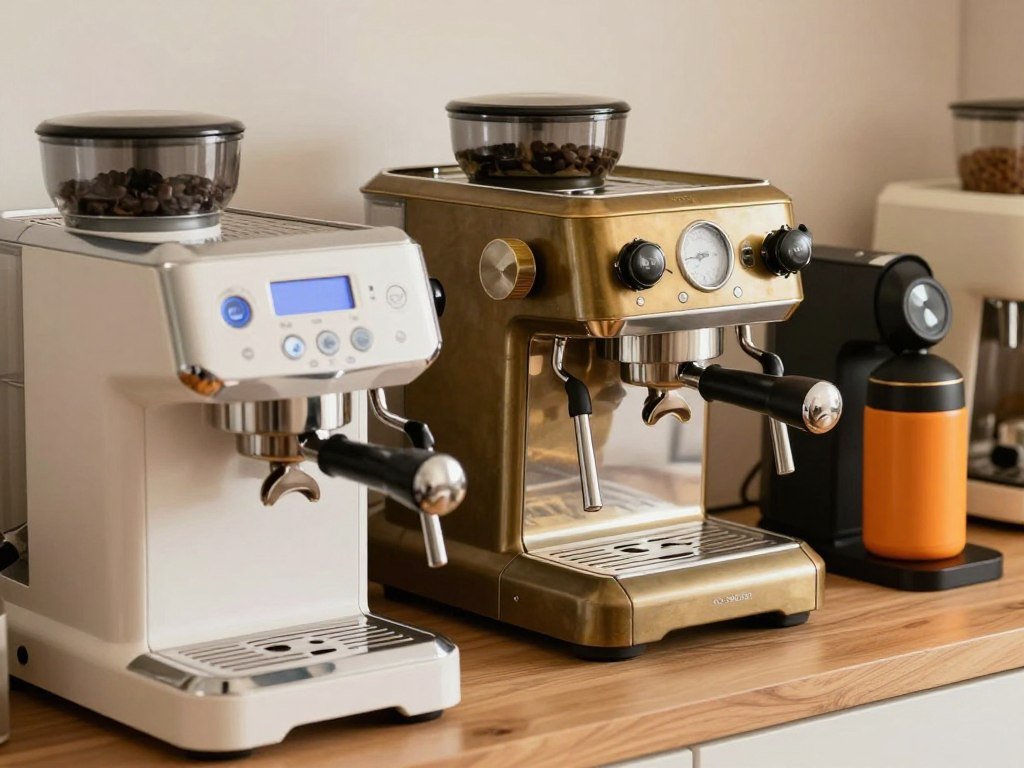
If the machine has no grinder, budget for one before comparing machine prices. Espresso needs fine grounds and small grind changes, so you can tune how quickly water moves through the coffee.
An included grinder saves counter space, but you still need to assess its control. A standalone grinder gives you more freedom to choose a model and keep it if you later replace the espresso machine. That flexibility can matter when your taste changes or you want finer adjustments.
Built-in grinder or standalone grinder?
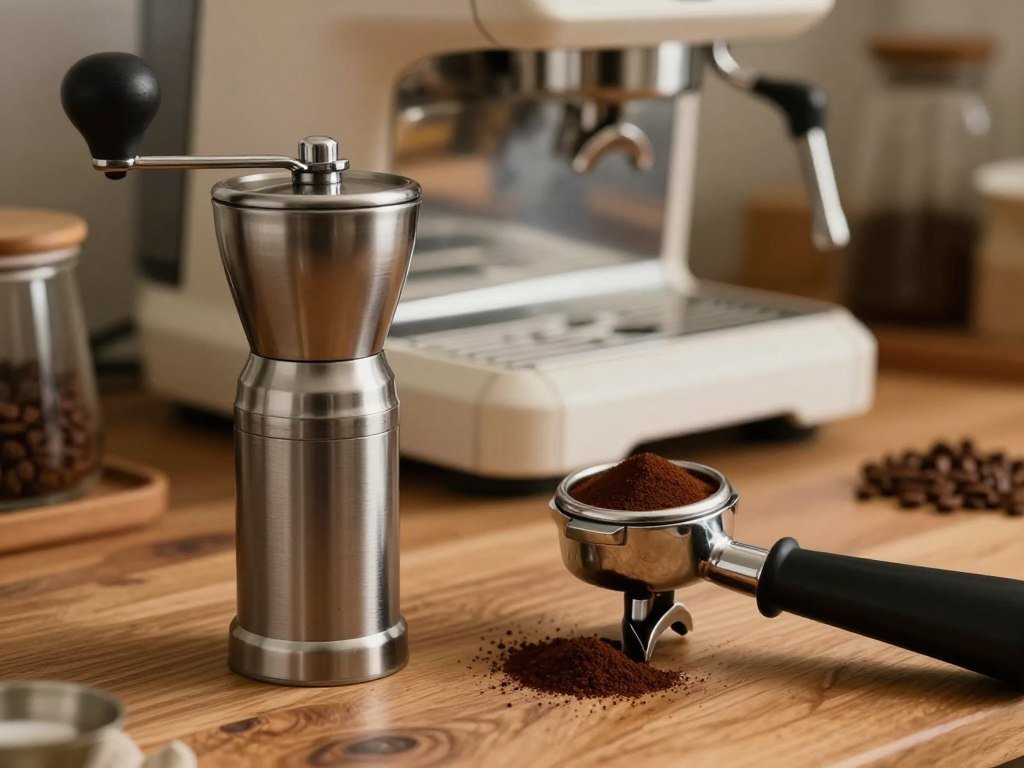
A built-in grinder keeps the setup together and can make a first espresso machine easier to use. You avoid buying another appliance at the start. Its limits depend on the grind range and the size of each adjustment, not simply whether it is built into the machine.
A standalone espresso grinder can offer finer control and a wider range of settings. The Baratza Sette 30 and Eureka Mignon Specialita are two examples made for espresso use. You will need room for the grinder and must include its cost in your budget.
The entry-level espresso setup may look cheaper when you compare machine bodies alone. That comparison misses a key part of brewing if the machine needs a separate grinder. Quality espresso starts with grounds that suit the coffee and the machine’s pressure.
Which grinder adjustments matter for espresso?
Grind size affects how fast a shot flows and how it tastes. Espresso needs grounds fine enough for pressure brewing, with adjustments small enough to tune the result. A broad grinder range is not useful if each step changes the flow too much.
- Grind fine enough for espresso brewing.
- Make small, repeatable adjustments.
- Keep the grounds consistent from one dose to the next.
Test whether the grinder can move a shot from too fast to slower flow in small, repeatable steps.
How to Choose the Best Home Espresso Machine for Your Routine
For a hands-on beginner, start with the Bambino Plus; choose the Barista Express for an integrated grinder or the Rivelia for push-button convenience. Those three choices cover different levels of daily effort.
A best home espresso machine in 2025 shortlist remains useful only when its workflow and grinder needs match the buyer. Release year matters less than whether the model fits your routine, counter, and coffee habits.
Match the workflow to your morning
The Bambino Plus suits a buyer who wants hands-on brewing and can use a separate grinder. The Barista Express combines the grinder with the machine. The Rivelia is a fit when push-button convenience takes priority over preparing each shot.
For a bare-bones budget espresso machine, the De’Longhi Stilosa is an alternative, not one of the seven featured picks. It may suit a buyer seeking a simple starting point, but its routine and features differ from more involved options.
Use three checks before comparing prices:
- How much hands-on effort do you want each morning?
- Do you prefer a built-in grinder or a separate one?
- How much counter space can the machine and grinder use?
These checks keep feature lists in perspective. A machine with more settings is not automatically a better choice if you prefer a quick drink and rarely adjust the brew.
Does a 2025 shortlist still make sense?
A dated list can help you find models, but a release year cannot tell you whether a machine suits your kitchen. Check the workflow and grinder needs first. A newer model may add settings you do not need, while an older option may still match your routine.
Review home espresso machines by routine if you want to compare other formats and budgets. Make the shortlist fit your daily routine before comparing feature counts.
What Does the Breville Bambino Plus Offer in a Compact Body?
The Bambino Plus pairs hands-on espresso brewing with unusually quick readiness for a home routine. It suits beginners who want to learn semi-automatic brewing without waiting long to start.
The machine can be ready to pull a shot about three seconds after startup. It can start steaming in about three to four seconds, which helps when your morning routine moves quickly.
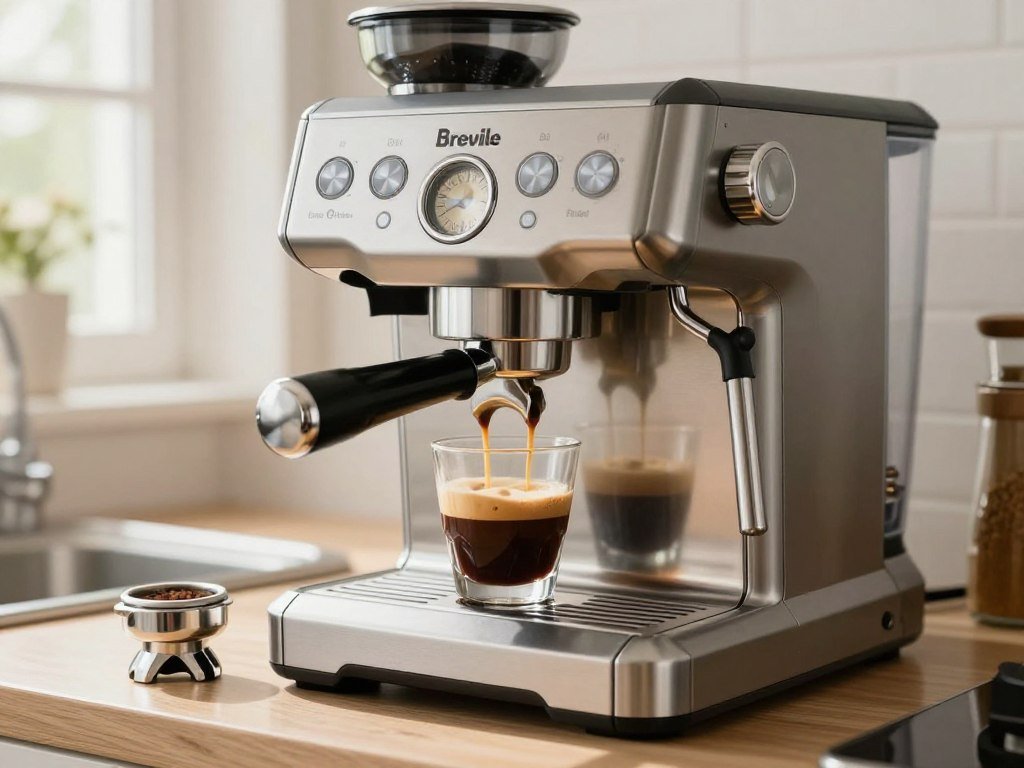
The Breville Bambino Plus includes a built-in PID thermometer, pre-infusion, and 9-bar brewing. Pre-infusion wets the coffee before the main extraction, which can help water pass through the grounds more evenly.
Single- and double-shot presets are programmable, so you can set the machine to suit your preferred serving. That convenience does not remove the need to learn how grind size and coffee dose affect each shot.
The U.S. version includes a pressurized basket. It can help when the grind is not finely tuned, but offers less extraction control than a single-wall basket. A single-wall basket may be useful if you want more control as your skills grow.
For a beginner asking about the best espresso machine for beginners, this model is a good option if learning the steps sounds enjoyable. It combines quick readiness with hands-on brewing, rather than making every drink automatically.
Check whether the basket included in the U.S. package matches the level of extraction control you want.
What Makes the MiiCoffee Apex V2 Stand Out?
The Apex V2 is built for the buyer who wants to adjust more than grind size. Its controls make it a hands-on machine for experimenting with espresso.
It has adjustable PID temperature control, adjustable pre-infusion, and an externally adjustable over-pressure valve. Those controls can help you tune the brew, but they also give you more settings to learn.
The MiiCoffee Apex V2 uses a dedicated stainless steel brewing boiler and a separate thermoblock for steaming. Its 58 mm portafilter matches a size used on many larger espresso setups. Warm-up takes around 7 to 10 minutes.
More control works best when you can tell which change affected a shot. These three habits keep dial-in sessions clear:
- Change one setting at a time.
- Keep a short shot log with the dose and result.
- Adjust grind size before changing several machine controls.
A log can be as simple as a note on your phone. Record whether the shot tasted sharp, bitter, or balanced, then make one small change for the next attempt.
A feature-rich control panel is less useful if you want push-button drinks. Change one variable at a time so a different shot has a clear explanation.
Does the Breville Barista Express Simplify Setup?
A Breville espresso machine with an integrated grinder can reduce the number of separate pieces on the counter. The Barista Express suits buyers who want grinding and brewing in one appliance.
Its conical burr grinder has 16 settings and doses 18 g into a 54 mm stainless steel portafilter. That joined-up design simplifies the setup, though it does not make the machine especially small.
The machine uses low-pressure pre-infusion, followed by 9-bar extraction. Its thermocoil uses PID temperature control to deliver water at 200°F. These features support a repeatable routine once you find settings that suit your coffee.
Sixteen grind settings offer less adjustment granularity than a dedicated espresso grinder can provide. Small changes in grind size can affect shot flow, so that limit may matter if you enjoy fine-tuning espresso shots.
The Barista Express measures 15.9 × 13.1 × 12.4 inches, in width, depth, and height. Integrated does not always mean small, especially when you need room to work at the portafilter.
Measure the counter area against the machine’s 15.9 × 13.1 × 12.4-inch footprint before committing.
Is the Rancilio Silvia Suited to Hands-On Brewing?
The Silvia makes most sense for someone who wants to participate in each step rather than automate the routine. It is a manual espresso machine for a buyer willing to practice.
The Silvia has a commercial-sized 58 mm portafilter and stainless-steel construction, but no built-in PID. The portafilter size offers room for hands-on preparation, while temperature management is less predictable without a built-in controller.
That lack of built-in temperature control means the user must pay closer attention to the brewing routine. A shot can vary more if the machine’s temperature is not managed well. That learning curve differs from a push-button workflow, where you select a drink and let the machine handle more steps.
Plan for the basic tools that make the routine workable:
- A capable grinder for espresso.
- A scale for weighing coffee and the shot.
- A milk pitcher if you make milk drinks.
The Silvia can reward a buyer who enjoys getting better through practice. It asks for more attention than an automatic option, so the full setup matters as much as the machine body.
Confirm that the grinder and basic accessories fit the total setup you are willing to maintain.
How Does the Breville Oracle Jet Score for Drink Quality?
The Oracle Jet’s strongest reported marks are for espresso and milk quality, both rated 5/5. Those top scores point to strong drink results, not a hands-free routine in every detail.
The Oracle Jet is rated 5/5 for espresso quality, 5/5 for milk quality, 4/5 for ease of use, and 4/5 for value for money. Ease and value score lower than its drink quality.
The ratings help show where the machine stands out and where a buyer may want to look more closely. A high quality score does not tell you whether its controls suit your preferred routine or how much work you want to do.
Check the exact drink controls and milk workflow before deciding. A person who makes the same drink each day may value a simple interface, while someone who changes recipes may want more options.
The best espresso for your household is the drink you will enjoy making and drinking, not just a number on a rating scale. Compare the ease-of-use score with how much of the routine you want the machine to take over.
Does the De’Longhi Rivelia Balance Espresso and Milk?
The Rivelia earns the same 4.5/5 rating for espresso quality and milk quality. That balance suits buyers whose coffee drinks include both straight espresso and milk-based choices.
The De’Longhi Rivelia EXAM44055 is rated 4.5/5 for espresso quality, 4.5/5 for milk quality, 4/5 for ease of use, and 4.5/5 for value for money.
The quality and value ratings are 4.5/5, while ease of use is 4/5. That spread suggests a balanced set of scores, but it does not show whether the interface feels simple to you or fits the way your household makes drinks.
Anyone comparing a De’Longhi espresso machine should look at drink priorities alongside its actual interface and maintenance routine. Automatic models can differ in how you choose drinks, prepare milk, and clean after use.
A model may suit one person’s quick morning espresso but feel less convenient to someone who makes several milk drinks. Make sure the model’s drink routine suits the person who will use it most often.
Is the Gaggia Magenta Prestige a Strong Value Pick?
The Magenta Prestige’s highest mark is its 5/5 value-for-money score. That rating makes it worth a look when value matters more than the highest milk-quality score.
The Gaggia Magenta Prestige is rated 4.5/5 for espresso quality, 4/5 for milk quality, 4/5 for ease of use, and 5/5 for value for money.
Its espresso quality score is higher than its milk quality and ease scores. That mix can fit someone who values espresso drinks and a strong value rating, while still wanting a machine that handles milk.
Value is one part of a good fit, not a promise that a model will match every person’s preferred drinks. Think about what you pour into the cup most often before treating the value score as the main reason to choose.
Weigh that value score against the milk quality you expect from daily drinks.
What Makes a Good Home Cappuccino Machine?
For cappuccinos, choose the milk system by deciding whether texture control or convenience matters more. Manual texture control gives you more say over the milk, while automatic systems reduce the work.
The best home cappuccino machine depends on whether you want to shape the milk yourself or make drinks with fewer hands-on steps.
Which machine makes the best home cappuccino?
A manual steam wand is a strong choice if you want control over milk texture. Automatic milk texturing is better suited to a quick routine with fewer skills to learn. A panarello wand can add foam with less technique, but offers less control over fine texture.
Those differences matter because a cappuccino depends on both espresso and milk. The best espresso machine for cappuccinos is the one whose milk method matches the drinks you plan to make, not simply the model with the most settings.
Can a machine texture milk for latte art?
Latte art needs a manual wand that can create a milk vortex in the pitcher. That rolling motion helps blend air and milk into a finer texture. Automatic milk texturing favors convenience, while a panarello wand tends to favor foam over detailed control.
| Method | User control | Texture outcome | Best fit |
|---|---|---|---|
| Manual steam wand | High | Fine texture with practice | Latte art and custom milk |
| Panarello wand | Low to medium | Foamy milk with less skill | Simple cappuccino foam |
| Automatic milk texturing | Low during steaming | Repeatable machine-made texture | Convenience and quick drinks |
A separate frother can make foam, but it does not give you the same manual wand control in a pitcher. Milk choice also affects the result; the Specialty Coffee Association explains how milk foam forms in its Coffee, Decoded article on milk foam.
If latte art is a goal, prioritize a manual wand that can create a vortex in the pitcher.
What Should You Budget for the Machine and Grinder?
Budget for the full routine, not only the machine body. A separate grinder, scale, tamper, and milk pitcher can change the total cost of a hands-on setup.
Machine prices alone do not compare complete workflows. A standalone-grinder setup and a super-automatic model do not include the same tools or ask you to do the same work.
What belongs in the total setup budget?
A semi-automatic machine without a grinder needs one that can grind fine enough for espresso. A scale helps you measure coffee and the finished shot. You may also need a tamper and milk pitcher, depending on what the machine includes and the drinks you make.
Do not assume a listed machine price covers those extras. The Bambino Plus and Baratza Encore ESP bundle is named as a bundle, but other listed prices refer to their models. Check the product details so you know what comes in the box.
How do listed model prices compare?
| Model | Listed price | Machine format |
|---|---|---|
| Breville Bambino Plus and Baratza Encore ESP bundle | $649.95 | Semi-automatic with separate grinder |
| Rancilio Silvia | $995.00 | Semi-automatic |
| Rancilio Silvia PID | $1,199.00 | Semi-automatic |
| De’Longhi Magnifica Duo ECAM33080 | $999.95 | Super-automatic |
| Philips 3300 LatteGo | $899.99 | Super-automatic |
The De’Longhi Rivelia EXAM44055 lists at $1,499.95, the Philips 5500 LatteGo at $1,299.99, and the De’Longhi Eletta Explore ECAM45086S at $1,999.95. These listed prices show how far the options can range across automatic models and hands-on machines.
Verify what comes in a bundle before treating its listed price as the cost of a complete setup.
Which Heating and Pressure Features Affect Your Shots?
Heating layout determines how a machine moves between pulling a shot and steaming milk. Temperature stability can help you repeat a recipe, while the heating system shapes how quickly you can move between tasks.
A single-circuit machine cannot brew espresso and steam milk at the same time. Its workflow requires a changeover wait, which matters more when you make several milk drinks in a row.
How do heating systems affect temperature stability?
A boiler heats and stores water for brewing or steaming. A thermoblock heats water on demand rather than keeping it continuously heated. Either design can work for home coffee, but temperature changes can affect how repeatable your shots taste.
PID control helps limit temperature fluctuations. That can make brewing more consistent, though it does not fix every issue with grind size or coffee preparation. Pressure adjustment changes the force applied during extraction, while temperature adjustment changes the heat of the brew water.
What changes when a machine has one or two circuits?
| System | How it heats | Workflow consequence |
|---|---|---|
| Single circuit | One heating circuit serves brew and steam | Wait to change between brewing and steaming |
| PID control | Electronic controller manages temperature | Helps limit temperature shifts |
| Thermoblock | Heats water on demand | Heats water as brewing or steaming calls for it |
| Dual boiler | Separate boilers serve brewing and steaming | Lets you brew and steam at the same time |
A dual-boiler layout separates brewing and steaming into dedicated boilers. That can make repeated milk drinks easier to prepare, since you do not wait for one circuit to change tasks.
Choose a dual-boiler workflow when repeated milk drinks make waiting between brew and steam a real nuisance.
What Should You Check Before Steaming and Cleaning?
A quick wipe of the steam wand immediately after frothing prevents dried milk from becoming a harder cleanup. Clean the wand promptly while the milk is still fresh.
The De’Longhi Stilosa can release retained pressure messily if you remove the portafilter too soon. It lacks a solenoid valve, so let pressure settle before handling the portafilter.
A panarello steam wand uses an air-intake sheath fitted to the steam pipe. The sheath adds air during steaming, so milk texture can differ from what you make with a manual wand.
De’Longhi advertises U.S. warranty coverage of up to three years. Check whether the specific model qualifies and read its warranty terms, since coverage can differ by product.
Use this four-step cleaning check after making coffee:
- Wipe the wand after steaming.
- Rinse the basket.
- Empty the drip tray.
- Follow the manual’s descaling guidance for your home’s water conditions.
Small cleaning steps help prevent milk and coffee residue from building up around the parts you use every day. Wait for pressure to settle before removing the Stilosa portafilter.
When Is a Professional Espresso Machine for Home Worth It?
A professional espresso machine for home earns its footprint when its control and workflow solve a real daily need. Frequent milk drinks or detailed brewing control can make a larger machine worthwhile.
Choose prosumer-level equipment when you will use its added control often, not just because it has more features. Advanced settings add decisions rather than making every shot effortless.
What counts as a professional espresso machine for home?
For home use, a professional-style machine should earn its space through frequent milk drinks, detailed control, or both. A larger footprint and more settings make sense when you want that workflow. They are harder to justify if your daily need is one simple coffee.
Think about how often you pull shots and whether you want to change pressure, temperature, or pre-infusion. Those controls can help an experienced user shape a recipe, but they also require time and attention.
Which professional espresso machine is best for home use?
The best professional espresso machine for home depends on the controls you want. The Breville Dual Boiler has two dedicated boilers, adjustable PID, and programmable pre-infusion. It suits someone who wants separate brew and steam functions with settings to adjust.
The Lelit Bianca V3 offers three pressure-modification systems. Those options appeal to an enthusiast who wants to change how pressure acts during extraction. A buyer who does not plan to use those controls may prefer a simpler machine.
Compare super-automatic espresso options if you want less hands-on preparation instead. Choose the simplest advanced feature set that you will actually use.
Buy advanced control for a task you do often, not for a feature you may rarely touch.
Conclusion
The right choice is the one you will enjoy using on an ordinary weekday, not only on a perfect coffee morning. Your preferred effort level and the drinks your household makes should guide the decision.
A hands-on routine can reward practice, while a push-button model can make daily drinks easier. Neither approach is better for everyone. The best fit leaves you with enough time and space to enjoy the coffee, rather than work around the machine.
Write down your preferred workflow, measure the available space, and check the grinder plan before placing an order.
FAQ
How fine should I grind coffee for espresso?
Grind fine enough to slow the water and produce a shot that tastes balanced, then adjust in small steps. There is no universal grinder number because beans, roast, dose, and machine affect the result. If a shot runs too fast, try a finer setting. If it runs too slowly, try a coarser setting and taste again.
Do I need a separate grinder for a semi-automatic espresso machine?
You need a separate grinder only if your semi-automatic machine does not have an integrated one. Choose a grinder that can grind fine enough for espresso and make small, repeatable changes. Those adjustments help you tune shot flow as coffee ages or when you change beans. A grinder built into the machine can work, but check its control range.
How many bars of pressure should a home espresso machine use?
Around 9 bars is a common target for espresso brewing. Some machines let you adjust pressure, which can change the way water moves through the coffee. Pressure is only one part of a good shot; grind size, dose, and taste matter too. A machine’s pressure setting does not replace dialing in the coffee.
Can I make latte art with a panarello wand?
It is harder to make latte art with a panarello wand because its air-intake sheath adds foam. A manual steam wand gives you more control over how air enters the milk. Create a rolling vortex in the pitcher to blend the milk into a finer texture. Practice with the same milk and pitcher to make the motion easier to repeat.
How long does an espresso machine take to heat up?
Warm-up time depends on the model and its heating design. The MiiCoffee Apex V2 takes around 7 to 10 minutes, while the Bambino Plus can be ready to pull a shot in about three seconds. Those figures describe different machines, so check the routine that fits your mornings. A quick start can matter if you brew before work.
Can an espresso machine make regular coffee?
An espresso machine can make an Americano by combining espresso with hot water. That drink is not brewed like drip coffee, which passes water through a larger bed of grounds at a different pace. An Americano can offer a similar serving size, but its flavor and body come from espresso. Use the machine’s hot-water function if it has one.
Is a dual-boiler machine worth it for one milk drink a day?
A single-circuit machine can work for one occasional milk drink, since the wait between brewing and steaming happens only once. A dual-boiler layout matters more when you make several drinks in a row and want to brew while steaming. Consider how often the wait interrupts your routine. Extra boiler capacity is less useful if you rarely make milk drinks.



