
A homeowners policy can help pay for covered damage to your home and belongings and protect you from certain liability costs. A fire may be covered, while flooding often is not. A policy can protect the structure, personal property, liability and extra living costs after a covered loss.
Replacement cost is the estimated amount to rebuild a home with comparable materials and labor at current prices. Limits, exclusions and deductibles shape how much financial protection you actually have. The right coverage can help keep an unexpected loss from upsetting your family budget or mortgage obligations.
Choose limits that reflect your home, belongings and ability to pay out of pocket. The right starting point is coverage built around what it would take to rebuild and replace what you own.
Key Takeaways
- Policies pay only for losses they cover.
- Dwelling limits should reflect rebuilding costs.
- Personal property, liability and temporary housing may be covered.
- Exclusions and deductibles affect claim payments.
- Review limits after major home or household changes.
What Does Home and Household Insurance Cover?
A standard policy usually combines protection for the building, belongings and certain costs or claims connected with living there. Covered losses are events the policy agrees to pay for, subject to its terms.
Most homeowners insurance policies include six main coverage types. The table shows what five of them may help pay for.
| Coverage | What it can help pay for | Example |
|---|---|---|
| Dwelling | Damage to the main structure | Fire damage to a kitchen |
| Other structures | Damage to detached buildings | A shed or garage |
| Personal property | Damaged or stolen belongings | Furniture and electronics |
| Loss of use | Temporary housing and added living costs | Hotel stay after covered fire damage |
| Personal liability | Covered legal or medical costs | A visitor’s injury or damaged property |
Medical-payments coverage is also commonly included, but policy terms and covered causes of loss vary.

Medical-payments coverage can help with certain small injury bills, regardless of fault, within policy terms. Liability coverage applies when you are legally responsible for another person’s injury or property damage.
An HO-3 policy generally covers the house on an open-peril basis, meaning it covers risks unless excluded. Its belongings coverage usually applies only to named perils listed in the policy.
That difference matters when you make a claim. A loss may affect the home but not qualify for payment on a damaged item, or the reverse.
Coverage for personal property may also extend beyond the home, though limits or conditions can apply. Check whether the belongings you keep away from home are covered under your policy’s personal-property terms.
What Damage Does a Standard Policy Exclude?
A standard homeowners policy excludes some common causes of damage, including flood and earth movement. Cause matters, because similar-looking water damage can receive different treatment.
Do not assume every water loss or home condition is covered. The exact policy wording, exclusions and endorsements control the outcome.
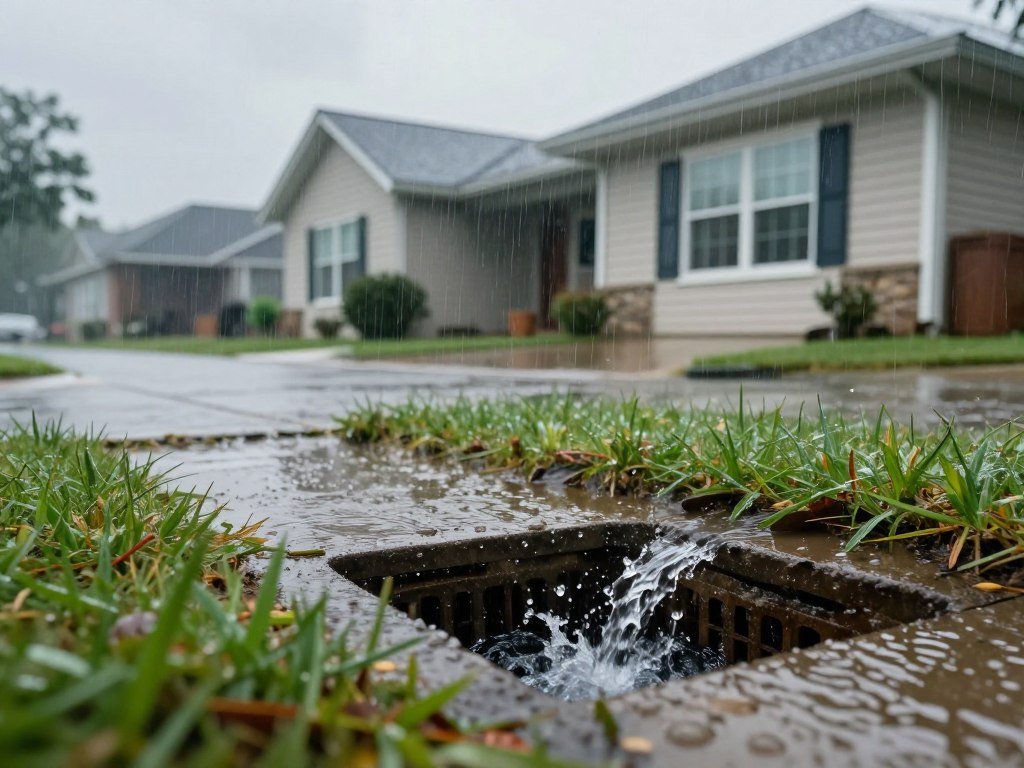
Flood, earth movement and water backup
Standard policies do not typically cover flood damage. Flood insurance usually requires a separate policy or an endorsement where available.
Earthquake damage is also not typically covered by a standard homeowners policy. Earth movement exclusions can include other ground shifts, though wording differs among policies.
Sewer or drain backup may need a water-backup endorsement. That protection is not automatically part of every policy, so check its terms and limits.
A burst pipe may be covered when sudden and accidental, while water entering through a backed-up drain may not be. Policy wording controls whether the event qualifies.
Wear, maintenance and home-use exclusions
Wear and tear, pests and poor maintenance are common exclusions. A policy is not a routine repair plan for aging roofs, worn pipes or damage caused by neglect.
Coverage can depend on how damage began. A sudden pipe break may be covered, while slow leakage tied to poor upkeep may not be.
Some business activity can affect coverage, especially when the home holds business equipment or customers visit. Tell the insurer about business use before relying on ordinary household terms.
Vacant, unoccupied or under-construction homes can face limits or exclusions. A home left empty for an extended period may need different terms than one occupied year-round.
Read the policy’s exclusions and endorsements before assuming a familiar-sounding water loss is covered.
How Much Coverage Should You Choose?
Set the dwelling limit around what it would cost to rebuild the structure, not the price it might sell for. Rebuilding cost reflects construction, not the full value of the property.
Market value and purchase price are not reliable ways to set dwelling coverage. A lender may require homeowners insurance to protect its financial interest, but you still need to review your limits.

Set dwelling coverage around rebuilding cost
A rebuilding estimate should account for the home’s size, layout, materials and labor. Local construction conditions can affect the cost of replacing the same structure.
Market value includes the land and other factors that do not determine rebuilding costs. A home’s sale price can rise or fall without a similar change in the cost to rebuild it.
Use a current estimate based on the structure’s features. A replacement-cost estimate can help frame the dwelling limit, but your policy terms still matter.
Match belongings and liability limits to your needs
Make an inventory of furniture, clothing, electronics and other belongings. Photos, receipts and notes about costly items can help you judge whether personal-property limits fit.
Check sublimits for jewelry, art, collectibles and other valuables. A general personal-property limit may not cover a high-value item in full.
Your household’s assets and risk exposure can help guide liability limits. Consider the financial impact of a claim involving a visitor or another person’s property.
Use this short checklist as you review the main limits:
- Current rebuilding estimate
- Detached structures, such as sheds or garages
- High-value belongings and their sublimits
- Household assets and liability exposure
A lender can set insurance conditions, while you remain responsible for checking whether the limits fit the property. Revisit the rebuilding estimate after major renovations or changes in local construction costs.
How Much Does Homeowners Insurance Cost?
For a typical U.S. home with $400,000 in dwelling coverage, the 2026 average annual premium is $2,628. That figure is a benchmark, not a price promised to every household.
These sample premiums compare the same dwelling limit, but they are not personalized quotes. Location, property details and selected coverage can change an individual premium.
| Sample | Annual premium | Dwelling coverage |
|---|---|---|
| Typical U.S. home | $2,628 | $400,000 |
| State Farm | $1,761 | $400,000 |
| AAA | $1,925 | $400,000 |

The national average and company samples provide a starting point for a family budget. They do not show what a particular insurer will charge for your home.
Rates reflect the property and coverage selected, including its location and features. A premium can also differ when the policy includes different limits or other terms.
For a useful comparison, make sure each estimate uses the dwelling coverage you need. A cheaper figure may reflect less coverage or a different policy structure.
Compare any estimate with the dwelling limit and deductible it actually includes.
What Factors Change Your Premium?
National rates increased 6.0% in 2025, but the factors behind an individual home’s price are more specific. One year’s change differs from a longer trend.
U.S. home insurance rates rose 46.8% cumulatively from 2020 to 2025. No state saw a decrease in 2025.
How insurance costs have shifted
Premiums also rose 8.7% faster than inflation from 2018 to 2022. In that period, the highest-risk 20% of ZIP Codes averaged $2,321, 82% above the lowest-risk 20%.
Nonrenewal rates in the highest-risk ZIP Codes were about 80% higher than in the lowest-risk areas from 2018 to 2022. The U.S. Treasury report links climate-related risks with rising costs and lower availability.
How a home’s risk profile affects its rate
Location and expected losses can affect both price and availability. Rebuild costs, age, condition, roof age, construction materials and access to fire services can also shape an insurer’s view.
Claims history matters, because a recent homeowners insurance claim can raise a rate. Most states also let insurers use credit history as a pricing factor.
Check these details when reviewing a quote:
- Address and local hazards
- Rebuild estimate
- Roof age and condition
- Recent claims and insurance history
- Credit-history rules in the state
Two homes on nearby streets can face different rates if their roofs, claim records or coverage differ. Ask the insurer which property detail or coverage choice is driving a change in your own premium.
How Do Deductibles and Claim Payments Work?
Your deductible is the part of a covered loss you pay before the insurer contributes. The claim amount and policy terms determine the rest.
A higher deductible usually lowers the premium but raises your out-of-pocket cost on a covered claim. A lower deductible usually raises the premium.
| Choice | How payment is calculated | What to check |
|---|---|---|
| Replacement cost | Replace covered property without subtracting depreciation | Policy limits and replacement terms |
| Actual cash value | Subtract depreciation from the covered property’s value | Age and condition affect payment |
| Guaranteed replacement cost | May pay full rebuilding cost less deductible, even above the stated limit | Availability and contract wording |
Replacement-cost coverage does not subtract depreciation from covered property payments. Actual cash value does subtract depreciation, which can make the payment lower for older belongings.
Guaranteed replacement cost may pay the full rebuilding cost, less the deductible, even when that cost exceeds the stated limit. It is available only under some policies and terms.
Dave Ramsey recommends a $1,000 deductible for all coverages and guaranteed replacement cost when available. Those are his recommendations, not rules for every household.
For example, a deductible that feels manageable for a small repair may be hard to pay after a large loss. Choose a deductible you could afford to pay after an unexpected loss.
What Extra Protection Might Your Home Need?
A separate policy or endorsement may be needed when a standard homeowners policy excludes a major risk. Added protection depends on the event and your location.
Flood, earthquake, water-backup and umbrella protection are not automatically part of a standard policy. Terms and availability depend on the insurer and state.
| Protection | Gap it addresses | Typical route |
|---|---|---|
| Flood insurance | Flood damage | Separate policy or available endorsement |
| Earthquake insurance | Earthquake damage | Separate policy |
| Water-backup coverage | Sewer or drain backup | Endorsement where available |
| Umbrella insurance | Liability above home and auto limits | Separate umbrella policy |
Flood insurance can be bought separately and may be available through the National Flood Insurance Program. The right policy depends on the property and the protection offered.
Earthquake coverage may require a separate policy. Water-backup coverage may be available through an endorsement, but its limits and conditions can differ.
An umbrella policy adds liability protection above the limits of home and auto policies. It does not replace the underlying policies or expand property coverage.
Ask what kinds of water entry count as a flood, backup or covered plumbing loss. Confirm the exact event and property covered before adding an endorsement or separate policy.
What Should Florida Homeowners Know About Coverage?
Florida homeowners usually have hurricane wind protection, but the hurricane deductible is typically separate and higher than the standard deductible. That separate amount can affect what you pay after a storm.
A hurricane deductible is not the same as the standard deductible. Check how the policy applies it to a covered hurricane loss.
Hurricane wind coverage and mitigation
Florida homeowners policies usually cover hurricane wind damage, subject to policy terms. A separate hurricane deductible usually applies and can be higher than the standard deductible.
A wind mitigation inspection can document features such as roof-to-wall clips and water barriers. Insurers may use this information when considering discounts, but savings are not guaranteed.
The My Safe Florida Home program offers up to $10,000 to help homeowners strengthen roofs, windows and doors. Program terms determine who qualifies and which work is eligible.
Flood risk, lender terms and local rate comparisons
Flood damage generally needs separate flood insurance. A Florida homeowner with a mortgage in a high-risk flood zone will likely need flood coverage to meet lender requirements.
The Florida Office of Insurance Regulation’s CHOICES tool shows illustrative average rates by county and company, including Citizens Property Insurance Corporation. Actual premiums vary by home and circumstances.
Use this checklist when reviewing Florida coverage:
- Check the home’s flood-zone status.
- Ask how the hurricane deductible applies.
- Ask what wind-mitigation documents the insurer accepts.
- Compare county and company illustrations in CHOICES.
Flood-zone status, roof details and policy terms can change the practical cost of protection. Treat CHOICES figures as illustrations and confirm the premium and coverage for the individual home.
How Should You Compare Home Insurance Providers?
Among these three 2026 sample premiums, USAA is lowest for eligible members and Cincinnati Insurance is lowest among the other two. These are sample prices, not a ranking of service or coverage.
USAA’s sample annual premium is $1,773 for $300,000 in dwelling coverage and $100,000 in personal liability. The other two samples use the same limits.
| Provider | Sample annual premium | Eligibility or comparison note |
|---|---|---|
| USAA | $1,773 | Limited to eligible military-connected households and qualifying federal agency employees |
| Cincinnati Insurance | $1,807 | Same sample limits |
| State Farm | $1,934 | Same sample limits |
USAA membership is limited to current and former military personnel, their families, and employees of qualifying federal agencies. For eligible members, it is the lowest of these three sample premiums.
Cincinnati Insurance has the lowest sample price of the two non-USAA options. These figures do not establish an overall best or cheapest homeowners insurance provider.
A good fit depends on matched coverage, exclusions, deductible, eligibility and service needs. A low premium may not suit you if the policy leaves a risk you need to cover.
Compare the same dwelling limit, liability limit and deductible before judging which quote costs less.
Which Policy Fits a Condo, Rental, or Senior Household?
The right policy type depends first on whether you own a house, a condo, a rental property or a manufactured home. Ownership and use help determine which policy fits.
Condo, renters, landlord and manufactured-home insurance are distinct policy types. Each addresses a different mix of property and household risks.
Condos, rentals and manufactured homes
A condo association’s master policy may cover shared areas and parts of the building, but not everything inside your unit. Your policy may need to address interior features and personal property.
Renters insurance covers a tenant’s belongings and liability, not the building owned by a landlord. Landlord coverage addresses an owner’s rental-property risks.
Manufactured homes need policies designed for that type of structure. A standard owner-occupied house policy may not match its construction or use.
Coverage checks for older homeowners
Home and household insurance for seniors should still reflect rebuilding cost, belongings, liability exposure and the ability to pay the deductible. Age alone does not guarantee a discount or a certain rate.
Review valuables and accessibility-related renovations, such as ramps or bathroom changes. Consider whether the home is occupied seasonally, since extended vacancy can affect policy terms.
Household income and savings can shape how much deductible you can comfortably manage. A Social Security benefit estimate may help you plan retirement income alongside housing costs.
Condo owners should read the association’s bylaws and master-policy summary before setting their own unit coverage.
How Can You Lower Your Home Insurance Costs?
Start with discounts and risk improvements that leave the policy’s important limits intact. Lowering cost should not mean removing protection you need.
Ask which discounts apply to your household, and compare them with any coverage change. Eligibility and savings vary by insurer and state.
Savings through policy choices
Smoke detectors, burglar alarms and deadbolt locks may help lower insurance costs. Bundling policies or having a claim-free history may also qualify you for discounts.
Ask whether an offer changes the coverage, deductible or other policy terms. A smaller premium is not useful if it removes protection the household needs.
- Ask about eligible safety-device discounts.
- Ask whether bundling changes the total cost.
- Check whether a claim-free discount applies.
- Ask what proof is needed for mitigation discounts.
Reduce preventable property risks
Routine maintenance can help prevent avoidable losses. Repair roof damage, keep plumbing in good shape and address hazards before they cause a larger problem.
A wind-mitigation inspection in Florida may document roof features insurers recognize. The inspection does not guarantee a discount, and requirements can differ by company.
Smart cameras, doorbells, locks and security systems can support home monitoring. Before buying, check device fit, installation needs and any ongoing costs, such as recording plans.
See this smart home device guide for ways to match cameras, locks and sensors to your home. Compatible speakers can also run routines that control lights or sensors, but features vary by device.
Ask the insurer to show how a discount changes both the premium and the coverage terms.
What Do You Need for a Homeowners Insurance Quote?
A more accurate quote starts with the address, basic home details and the coverage limits you want to compare. Accurate details help the insurer assess the property.
Quote information often includes the home’s age, size, construction, safety features and insurance history. An online estimate is not the same as active coverage.
Gather the property and policy details
Collect the address, year built and finished square footage. Note roof age and materials, construction details, safety systems and any recent upgrades.
Have prior claims and current insurer information ready. The company may ask about current coverage and the policy limits you want to carry.
Compare quotes on equal terms
Compare the same dwelling and liability limits, deductibles, exclusions and endorsements. Ask what each estimate includes before judging its price.
An insurer may inspect the exterior, yard or roof, request an interior review, or require repairs after finding hazards. Inspection results can lead to policy changes.
Follow these steps to keep the process organized:
- Collect home details and insurance history.
- Choose limits that fit the property and household.
- Request quotes with matching coverage terms.
- Confirm the effective date and payment arrangements.
Confirm whether your lender or escrow account needs updated policy information. Do not cancel an existing policy until the replacement coverage’s effective date is confirmed.
What Should You Check Before You Buy or Renew?
Before accepting a policy or renewal, check the declarations page against the home and belongings you intend to protect. Small differences can change what a policy covers.
The policy contract controls coverage decisions and exclusions. Wording can differ by insurer and state, so read the contract that applies to you.
Confirm the declarations and exclusions
The declarations page lists the insured property, limits, deductibles, premium and policy dates. Check each item against the coverage you chose.
Find the exclusions and endorsements in the contract. An endorsement can add, remove or change coverage, so its exact wording matters.
Keep a copy of the current policy and inventory where you can access them after a loss.
Keep the policy aligned with household changes
Tell the insurer about renovations, major purchases, changes in occupancy or new household needs. A new addition or costly item may affect the limits you need.
Keep an inventory with photos and receipts for important belongings. Store policy records securely, with a backup you can reach if the home is damaged.
Use this final review list before accepting a change:
- Insured address and named insured
- Dwelling and personal-property limits
- Deductibles and endorsements
- Current inventory and household changes
Use unique passwords and multi-factor authentication for online accounts that hold policy records. A guide to identity theft prevention explains ways to protect sensitive household information.
Conclusion
A suitable policy protects against covered losses while making its limits and exclusions clear. Start with a realistic rebuilding estimate, then choose limits and a deductible that fit your household.
Take time to check the contract and consider how much you could pay after a loss. No single premium tells you whether the protection matches your home.
Gather your home details and compare quotes on equal coverage terms before choosing a policy.
FAQ
Who usually has the cheapest homeowners insurance?
USAA has the lowest of these three 2026 sample premiums at $1,773 for $300,000 in dwelling coverage and $100,000 in liability coverage. Membership is limited to eligible military-connected households and qualifying federal agency employees. Cincinnati Insurance is lowest among the two non-USAA samples, at $1,807. These sample prices do not show which provider offers the best fit or service.
How much is insurance on a $400,000 house?
The 2026 average is $2,628 per year for a typical U.S. home with $400,000 in dwelling coverage. That is an average, not an individual quote. Your home’s location, construction, condition and selected policy terms can affect the premium. The dwelling limit refers to rebuilding coverage, not necessarily the home’s sale price.
What is a normal amount to pay for homeowners insurance?
A useful benchmark is the 2026 U.S. average of $2,628 per year for $400,000 in dwelling coverage. A household’s premium can be higher or lower because location and coverage affect the price. Compare quotes with matching limits and deductibles to see whether one estimate offers less protection. An average does not set a normal price for every home.
Is homeowners insurance going down in 2026?
A nationwide decline or increase in 2026 should not be assumed. Your renewal depends on location, rebuilding costs, claims and the coverage you choose. Compare the renewal with fresh quotes that use the same limits and deductible. Also check that a lower offer does not remove an endorsement or change an important policy term.
What is the 80% rule for homeowners insurance?
Some policies use an 80% of replacement-cost threshold when setting partial-loss payments. The contract controls how the rule works, and the threshold is not a universal legal requirement. A policy may require you to insure the home to a set share of its rebuilding cost. Review the wording and ask how it affects a partial claim.
What not to say to home insurance?
Do not hide or misstate claims, occupancy, business use or the home’s condition. Give accurate information when applying or updating a policy, since wrong details can lead to a coverage dispute. If a question is unclear, ask what it means before coverage begins. Keep notes about information you provide and changes you report.
What does Dave Ramsey say about homeowners insurance?
Dave Ramsey recommends a $1,000 deductible for all coverages and guaranteed replacement cost when available. These are his recommendations, not rules for every household. A deductible should fit what you can pay after a loss. Guaranteed replacement cost may cover rebuilding costs above the stated limit, less the deductible, when the policy includes it.
How many quotes should you get for homeowners insurance?
Aim for at least three comparable quotes as a rule of thumb. Use the same dwelling and liability limits, deductible and optional coverages for each estimate. That makes price differences easier to understand. Compare exclusions and policy terms too, since matching numbers alone does not mean the coverage is identical.