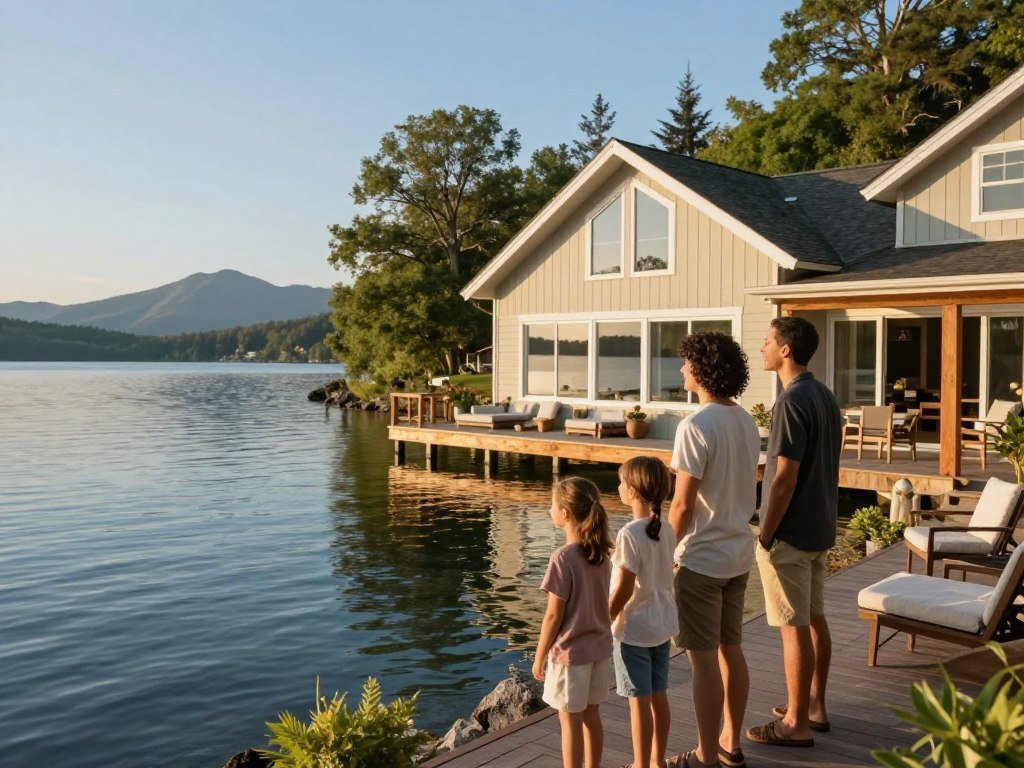
A lake home can mean anything from a year-round residence on the water to a small getaway a short drive from shore. Across the United States, listings differ in shoreline access, setting, and intended use, so the same search can show very different choices. Waterfront access is the legal and physical right to reach the shoreline or water from a property. A waterfront home has direct shoreline frontage, while a lake-view home offers a view without direct shoreline access. Those details can shape how a property fits your plans.
You may be choosing a primary residence, a vacation place, or a retreat where family can gather. The right real estate search should give you clear information about each home’s setting and use, not just attractive pictures. Compare the home itself with the kind of lake living you want, including how often you plan to visit and what access matters most. Decide first whether direct shoreline access or a nearby lake setting matters more to your plans.
Key Takeaways
- Choose a state, lake, or community before comparing individual listings.
- Separate waterfront homes from lake-view homes and shared-access properties.
- Compare the property type with your plans for full-time or seasonal living.
- Check documents for shoreline rights, docks, and shared community access.
- Build a budget that includes taxes, insurance, utilities, and upkeep.
How to Search by State, Lake, and Distance
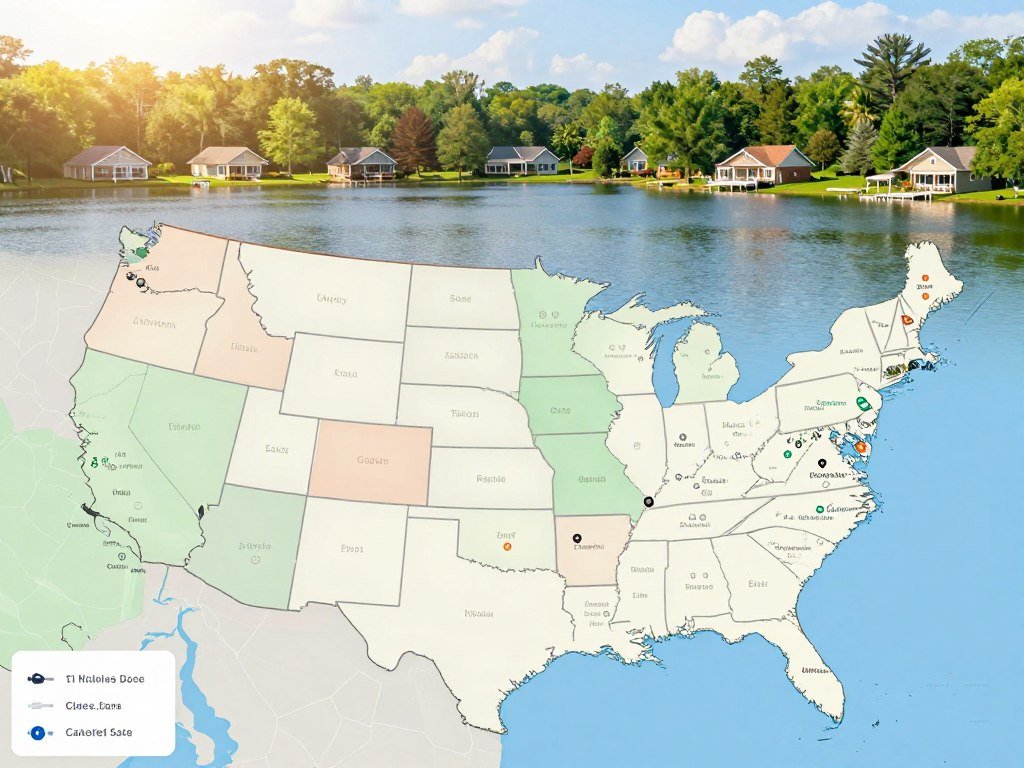
Start with one state or named lake, then narrow the results by the features you will not compromise on. A clear starting point helps you avoid listings scattered across a region you would not visit. Lake Homes Realty provides an interactive map, and its state search options include New Jersey and New York.
Judge distance by the real drive from your address, not by a broad regional label. A listing may look close on a map but sit far from the roads you use. Search results work best when you pair the lake or state with a price limit and a travel range.
Use your regular starting address to judge the trip, then check the route at the times you expect to travel.
Start with a state or lake name
Begin with a state, then add a lake name or community when you know where you want to look. The official U.S. Geographic Names Information System can help you check a lake’s name, location, and alternate names. Its domestic geographic names database can help when listings use different names for the same place.
For example, a search for lake homes for sale in New York may return properties spread across distant regions. Add a lake or town name to make the results more useful. Combine the location with a maximum price, then compare the resulting homes and listings on the same basis.
Set a realistic travel radius
Lake homes for sale near me should be judged by actual drive time from your address, not by a regional label. Check routes from the place you will leave, such as home, work, or a family member’s house. A map estimate can change with traffic, road work, and your chosen route.
Lake homes for sale within 2 hours of me also need a map check from the intended starting point. The two-hour estimate is useful only when it reflects a route you would take. Compare weekday and weekend trips if both affect how often you will use the home.
- State: choose where you are willing to own property.
- Lake or community: name the place you want to visit.
- Maximum price: set a ceiling before browsing widely.
- Property type: choose the kind of home or land you need.
- Travel time: enter a practical limit from your starting address.
Save the exact lake and community name with each promising listing so you can compare places accurately.
Which Lake Property Type Fits Your Plans?
A compact cabin can be a better fit than a large house when you want a simple retreat and less indoor space to manage. Size should follow use, not the largest floor plan in the search results. A smaller place can suit weekend visits, while a year-round home may need more room for work, guests, and daily routines.
Small lake homes for sale may suit a simple getaway, but a low asking price alone does not make a home a good value. Check its condition, access, and the work it may need. The property type also matters because a category page can include more than houses.
Smaller cabins and cottages
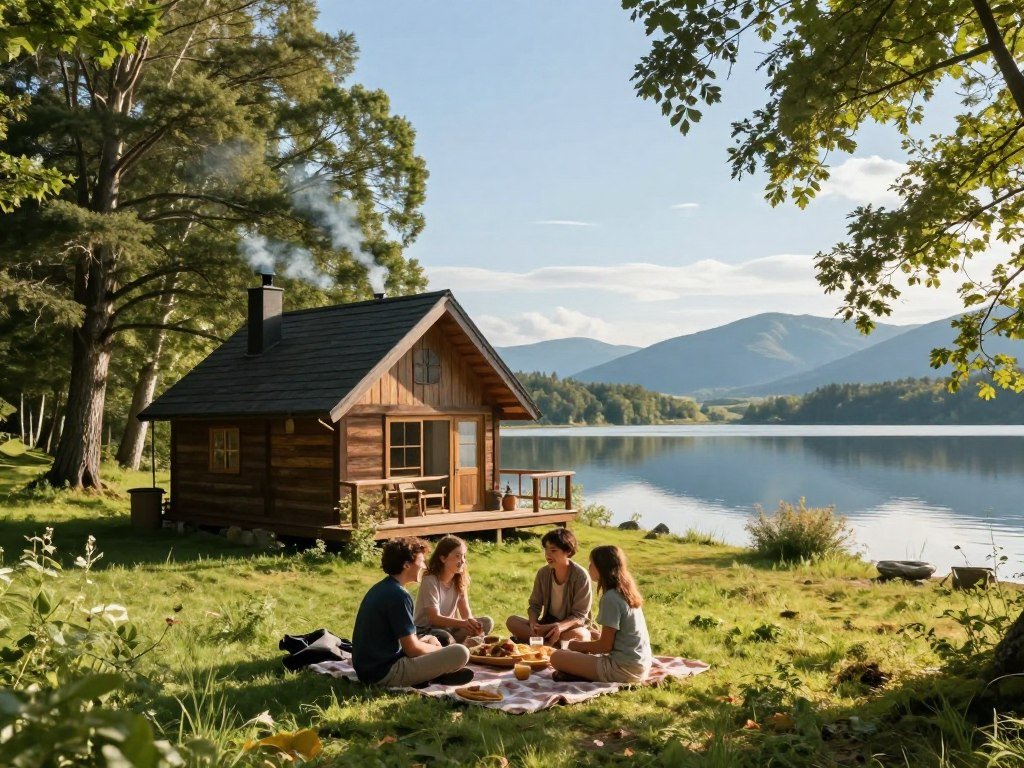
Cabins and cottages often have less indoor space than a detached home. That can mean fewer rooms to furnish and maintain, with enough space for a small family or a weekend visit. Think about sleeping space, storage, and where everyone will spend time when weather keeps you inside.
Cheap lake homes for sale need a closer look at the whole property. A low price may come with repairs, limited access, or work that changes how soon you can use the place. Ask what the home needs, then compare the likely work with your budget and plans.
A cottage can also be a poor fit if you expect long stays or need room for guests. A larger home may support everyday routines, though it can bring more indoor space to care for. Match the layout to how many people will stay and how often.
Houses, condos, lots, and acreage
Detached houses provide private indoor space, while condos may place some outdoor or building duties under an association. Read the rules that apply to a condo before assuming you can make changes or use shared areas in a certain way. Both types can appear in lake-area listings.
Listings may also include vacant lots, acreage, commercial properties, and businesses. These categories help show the range of real estate available around a lake, but land is not a move-in-ready home. A lot may need approvals, utility work, and construction before it can serve your intended use.
More acreage can provide space and privacy, but it may also mean more land to maintain. Commercial properties and businesses call for a different review than a family home. Keep your search focused on the property’s current use and what you want to do with it.
Confirm whether a lot already has the legal access and utilities needed for the use you have in mind.
Where to Look in New Jersey, New York, and Beyond
A state can contain very different lake settings, so choose a lake or community rather than relying on a state label alone. Local routines can change quickly from one area to another. Compare the kind of setting you want with the services and roads you will use.
Compare each lake community by access, services, and activity across the year. New York offers examples such as Lake George, Lake Placid, the Finger Lakes, Lake Champlain, Oneida Lake, Chautauqua Lake, and Great Sacandaga Lake. They sit within distinct settings, including the Adirondacks, Hudson Valley, and western New York.
Compare regions and individual lakes
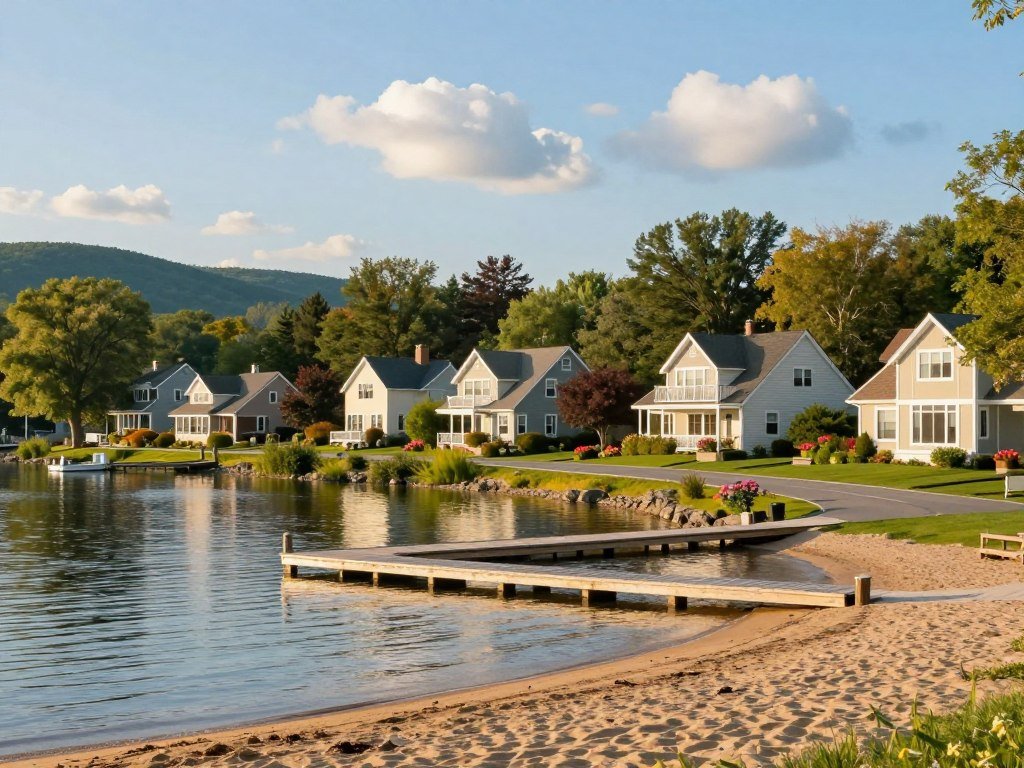
Those New York lakes are examples, not a complete list of places to consider. Even lakes in the same state can differ in road access, nearby towns, and the pace of local life. New Jersey and other states also need a lake-by-lake comparison rather than a choice based on state name alone.
If you are comparing lake homes for sale in Southern Illinois, narrow the search to a specific lake or community first. A broad area can hide long drives between listings. A local shortlist makes it easier to compare homes against the same daily needs.
For a family considering a move, family-friendly places to live can offer a wider view of services and community life. Still, compare the roads and services near the exact lake address. A regional ranking cannot tell you what a particular route or nearby community is like.
Weigh year-round services against a quieter setting
A quiet area may suit occasional visits, while full-time living can depend on nearby stores, health care, schools, and reliable roads. Think about the services you use in an ordinary week. If a place feels remote during a short visit, picture how that distance will affect regular routines.
Seasonal activity also changes how a community feels. Some places have more open businesses and events during certain parts of the year. Compare the setting during the months you expect to be there, rather than assuming a busy summer reflects every season.
- Nearby services: note where you would shop or get care.
- Road access: check the roads you would use in each season.
- Recreation: identify the activities available near the lake.
- Seasonal community activity: compare busy and quiet times.
- Travel time: estimate trips from the places you visit often.
Compare the same location factors for every community on your shortlist.
How to Check the Setting Before You Tour
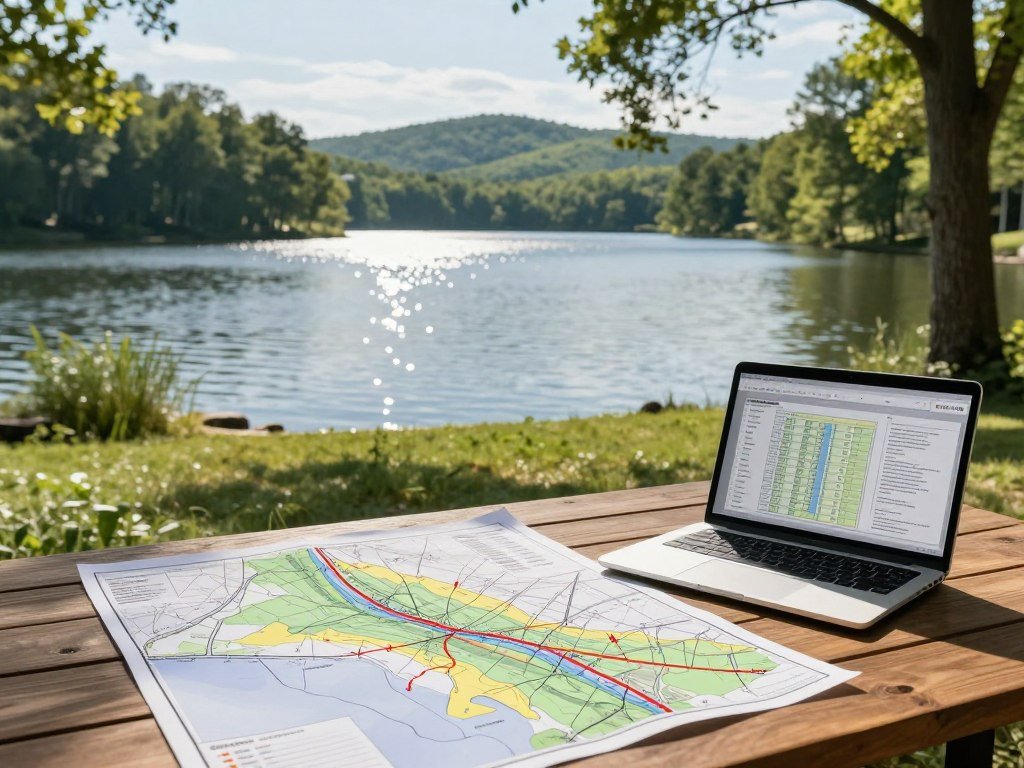
Before arranging a tour, check the parcel against a flood map and the local property record. Start with the address and see whether it matches the location shown in public records. FEMA’s Flood Map Service Center provides flood-hazard information, while county assessor offices maintain local property records.
A map is an initial screen, not proof of a parcel’s boundaries, condition, or rights. Check the road approach, neighboring uses, and the view around the home. A quiet shoreline in one photograph may sit near a busy road, public access point, or other use that affects your plans.
Look at photographs from more than one season when available. Leaf cover, water levels, snow, and seasonal activity can change how a place looks and feels. Ask whether the views show the property as it appears during the months you expect to visit.
County assessor records can help you identify the parcel and review local property details. They do not replace the deed, survey, or other property documents. Use the records to spot questions that need a closer review before spending time on a tour.
Check the road route as well as the land around the home. A property may sit near a lake but have a long or difficult drive from a main road. Nearby businesses, farms, public areas, or other homes may also affect noise and privacy.
Use the address consistently across maps, assessor records, and the listing. If the map pin appears away from the parcel, clarify its location before relying on that view. Match the listing address to the parcel record before relying on details from a map.
What Counts as Waterfront Access?
A waterfront label is not proof that the buyer receives private use of every visible stretch of shoreline. Access rights depend on documents, boundaries, and any agreement tied to the property. A listing may describe private frontage, shared or deeded access, or a lake view without direct shoreline access.
Listing language alone does not establish who owns the shore or which use rights transfer. Check the deed and recorded agreements, then compare them with the site. The same word can describe different arrangements, so ask for the document that supports the claim.
| Listing description | What it may mean | Document to check | Question to ask |
|---|---|---|---|
| Private frontage | Shoreline may border the parcel | Deed and survey | Where are the recorded boundaries? |
| Shared or deeded access | Use may rely on an agreement or group | Recorded access agreement or association documents | Who may use the access, and when? |
| Lake view without direct access | The home may overlook water without reaching it | Deed and site visit | Is any separate path or access right included? |
Private shoreline frontage
A home with direct shoreline frontage is a waterfront home, but the boundary still matters. A deed and survey can help show where the parcel meets the lake shore. They can also clarify whether structures or paths sit within the property lines.
Do not assume that visible shoreline belongs to the home. A road, public land, or another parcel may sit between the house and water. Compare the documents with what you see at the property.
Shared or deeded community access
Shared access may give owners a right to use a common shoreline or launch area. Deeded access can tie that right to a property, while association rules may set limits on use. Ask whether the right transfers when the property changes hands.
Some lakes have shoreline rules set by a public agency. At Corps-managed lakes, the U.S. Army Corps of Engineers explains how shoreline plans and permits affect allowed uses. Its shoreline management FAQ notes that dock permits do not grant exclusive use of surrounding Corps land or water.
Lake views without shoreline access
A lake-view home may have a clear view but no direct path to the water. The view can still be a strong feature, but it does not establish a right to swim, launch a boat, or use the shore. Read the property documents for any separate access terms.
Ask for the deed and any recorded access agreement before treating shared shoreline as a property right.
Which Amenities Matter for Lake Living?
Choose amenities by how you will use the property, not by how many appear in the listing photographs. Useful features fit your routine, whether you plan to swim, boat, relax outside, or host family. A home’s amenities should be described in the listing and supported by property documents where rights or upkeep matter.
A private dock and a community boat dock are different arrangements. Check whether a feature belongs to the home, is shared, or depends on an agreement. A photograph alone cannot show who controls a dock or pays to maintain it.
Docks, boat storage, and water access
Kentucky lake homes for sale with a boat dock need a separate check of whether the dock is private, shared, or available under an agreement. Ask what rights transfer with the home. Also check whether a permit or local rule affects the dock’s use.
A boat-storage area can make regular trips easier, but confirm whether it is included and where it sits. Look at how you would move a boat from storage to the water. The layout matters if family members will help with launching or loading.
Water access can involve more than a dock. The path to the lake, the place where you enter the water, and the people allowed to use it all affect daily use. Keep those details separate from a general amenity label.
Pools and outdoor spaces
Lake homes for sale with a pool should be compared by pool type, condition, maintenance responsibility, and whether the feature is included with the property. An in-ground pool and a shared community pool are not the same amenity. Check the listing details and documents for what comes with the sale.
Outdoor space may include a deck, patio, yard, or screened porch. Consider how those areas fit family meals, quiet time, and the way you enter or leave the home. Shade, access, and the layout can matter more than a long feature list.
A deck facing the lake may offer a place to sit, yet it does not create shoreline rights. Treat the home’s outdoor features and any water-related rights as separate facts. Verify the dock or pool’s ownership and maintenance responsibility before counting it as a lasting benefit.
How Much More Do Waterfront Homes Cost?
Waterfront listings average $328 per square foot in analyzed lake and river communities, compared with $214 for non-waterfront listings. That is a $114 gap per square foot, or a 53% premium. The figures offer a broad market comparison, not a price estimate for one home.
In 383 of 419 analyzed lake and river communities, waterfront properties had a higher listing price per square foot. That result shows the direction of the comparison, not a promise about any individual property. Local homes can differ in size, condition, access, and setting.
| Comparison | Waterfront listing | Non-waterfront listing or difference |
|---|---|---|
| Typical price per square foot | $328 | $214 |
| Per-square-foot gap and premium | $114 higher | 53% lower baseline comparison |
| Illustrative 2,000-square-foot premium | About $228,000 more | Home a short drive from the water |
Compare the listing-price gap
The typical gap adds up quickly on a larger home. In a lake or river community, the illustrative premium for a 2,000-square-foot waterfront home is roughly $228,000 compared with a home a short drive from the water.
Use the figure as a starting point for comparing similar homes, not as a set price rule. Size, condition, shoreline rights, and location can change what buyers will pay. A lake-view home may also differ from a home with direct frontage.
Automated valuation tools can help organize property details and comparable sales, but their estimates depend on the information entered. A practical guide to AI in real estate explains why local comparable sales and property condition still matter when reviewing an estimate.
Put the premium in a home-budget context
Compare the added price with how often you expect to use the shoreline. A higher price may matter differently to someone who lives there year-round than to someone who visits a few weekends each season. Keep the decision tied to your own plans.
Nearby homes can help you see whether a listing fits its local market. Compare properties with similar access and features, rather than placing a waterfront home beside a distant inland house. Compare nearby homes in the same community before treating a national premium as a local valuation.
What Should You Verify Before Making an Offer?
Before making an offer, verify the house, the land, and the rights attached to the shoreline as separate parts of the purchase. Each part needs its own evidence, since a sound house does not prove that a dock or access right transfers. Ask the relevant professional or local office for property-specific records.
Waterfront property can include features and obligations beyond the house itself. A focused review can help you spot gaps between a listing and its documents. Keep the answers in writing when a right or feature affects your decision.
- Inspection findings: review the home’s condition with a qualified inspector.
- Septic or sewer status: confirm the system type and local records.
- Well or water information: learn the water source and available records.
- Dock and shoreline documents: check ownership, permits, and access terms.
- Recorded easements or association rules: read rules that affect use.
Property condition and utilities
A home inspection can flag issues with the roof, foundation, heating, and other parts of the house. It does not replace separate checks for a septic system, well, dock, or shoreline rights. The U.S. Environmental Protection Agency offers guidance on septic systems, while county health departments and local authorities handle local records and requirements.
Find out whether the home uses a septic system or public sewer. For a septic system, local records may show its location and known details. Ask about water-source records for a private well, and use qualified help to assess property-specific concerns.
Shoreline, dock, and land documents
Review the deed, survey, recorded easements, and any association rules tied to the home. Check that the documents describe the same access, shoreline, or dock arrangement shown in the listing. A dock permit may have separate terms from ownership of the land below it.
At a Corps-managed lake, a shoreline permit may apply to a dock or other activity, and its terms depend on the lake plan. A permit does not by itself grant exclusive use of surrounding public land or water. Keep written confirmation of any access or dock right that materially affects your decision.
Can a Lake Home Work as a Full-Time or Vacation Home?
A lake home can work for full-time living or vacation use when its services, upkeep, and location match how often you will be there. The daily routine is the test, not the listing category. A home that works for summer weekends may not fit the same needs as a year-round residence.
Vacation use must fit local rules and any association restrictions. Do not assume that a property can be rented or used seasonally just because its listing presents it as a getaway. Freddie Mac publishes guidance on second-home mortgages, and lenders may assess a primary residence differently from a second home.
Year-round routines and services
Full-time living calls for regular access to the services you use, including stores, health care, schools, and work routes. Consider whether winter roads or weather-related upkeep fit your routine. A short visit in mild weather may not show what daily travel feels like in another season.
Think about the time you will spend at the home each week. A remote setting may suit someone who works nearby or wants quiet, while another household may need more services close by. Compare the exact address with your routines, not just the name of the nearest town.
Families should weigh school routes, activities, and visits to relatives alongside the appeal of the lake. A broader place-to-live comparison can help frame those needs, but the exact community still matters. Check travel routes and services around the property itself.
Seasonal visits and second-home use
Seasonal use can mean a few weekends, longer summer stays, or visits across several seasons. Estimate how often you will make the trip and what tasks the home needs between visits. Weather, landscaping, and other upkeep can affect how easy it is to leave the property empty.
Local rules and association limits can shape vacation use, including short-term rentals. Review the rules for the specific property before counting on rental income or guest stays. Ask a lender how the property’s intended use affects the loan application.
Which Ongoing Ownership Costs Belong in Your Budget?
The asking price is only one part of the budget for a lake property. Plan for recurring costs such as taxes, insurance, utilities, and upkeep. The amount depends on the parcel, coverage, property condition, and local requirements.
Build a property-specific monthly budget before deciding what price feels manageable. County assessor offices provide local property-tax records. FEMA flood-risk information can help you discuss insurance needs for the parcel with an insurance professional.
Taxes, insurance, and utilities
Property taxes depend on local records and the parcel’s assessed value. Review the county assessor’s information for the home rather than using a neighbor’s bill as your estimate. Coverage needs also depend on the property and the insurance policy.
Ask about homeowners insurance and whether flood coverage applies to your situation. Flood maps can inform that discussion, but the specific parcel and policy details matter. Utilities may include costs for heat, electricity, water, sewer, or other services available at the home.
A seasonal home can still need heat, service, or regular checks when you are away. Ask which utilities stay on and what the property needs between visits. The right plan depends on the home’s systems and how long it will sit empty.
Upkeep for a home near the water
Routine maintenance may include ordinary house care as well as upkeep for decks, docks, paths, and outdoor areas. The work depends on the home’s condition and what features come with it. Ask what tasks the property needs through the year.
Travel and seasonal services can add to the budget when you live far away. Include trips to the property and any regular help you may need while absent. A simple checklist can keep these costs visible:
- Taxes: review parcel-specific county records.
- Insurance: price coverage for the home and its location.
- Utilities: include services used year-round or seasonally.
- Maintenance: plan for the house and outdoor features.
- Travel or seasonal services: account for visits and help while away.
Request parcel-specific tax and insurance information before setting a final monthly budget.
What Does It Cost to Sell a Lake Home by Owner?
A seller of a roughly $400,000 home can expect FSBO selling costs of about $10,000-$20,000, depending on the state, agent compensation, and preparation. FSBO means for sale by owner, when a home sells without a listing agent. Lake homes for sale by owner still involve selling expenses.
Closing costs and buyer-agent compensation are separate categories, and the total depends on which costs apply. Sellers typically pay 1%-3% of the sale price in closing costs, separate from commissions. On a $400,000 home, that range is $4,000-$12,000.
| Cost category | Estimate on a $400,000 home | Condition |
|---|---|---|
| Overall FSBO estimate | $10,000-$20,000 | Depends on state, compensation, and preparation |
| Closing costs | $4,000-$12,000 | Typically 1%-3%, separate from commissions |
| Common buyer-agent compensation | $8,000-$10,000 | Commonly 2%-2.5% when offered by seller |
| Buyer-pays-own-agent scenario | $2,500-$6,000 FSBO costs | Buyer pays their agent directly |
Separate sale expenses from closing costs
FSBO costs can include different services and transaction expenses. The overall estimate is not a bill that you add to every row in the table. Some categories overlap with the total, while others depend on the arrangement used for the sale.
For a roughly $400,000 home, a buyer-pays-own-agent arrangement is estimated to bring FSBO costs to about $2,500-$6,000. The buyer pays their own agent directly in that scenario. The total still depends on other costs that apply to the seller.
Compare buyer-agent compensation arrangements
Buyer-agent compensation is payment offered by a seller to a buyer’s agent. Sellers commonly offer 2%-2.5% on a $400,000 home, or $8,000-$10,000. An offer of compensation is separate from the buyer paying their agent directly.
Do not add the common compensation estimate, closing costs, and the overall FSBO estimate as if each were a separate required charge. Compare the cost categories under the actual arrangement before deciding what a buyer or seller will pay.
What Listing Preparation Costs Should Sellers Expect?
A seller can choose which listing services to pay for, while repairs depend on the home’s condition. Some costs are optional, such as photography or staging, while other work may help address visible problems. The right mix varies by property and the service included.
Get the service details in writing before paying for a listing or preparation item. A flat-fee service may cover different tasks from one provider to another. Compare what you receive, not just the price.
| Item | Typical range | What it covers or when it applies |
|---|---|---|
| Flat-fee MLS service | $299-$999 | Provider and service level vary |
| Attorney agreement review | $300-$800 | Review or drafting of a purchase agreement |
| Pre-listing inspection | $300-$500 | Inspection before listing the home |
| Photography and optional drone footage | $200-$500; drone adds $150-$400 | Listing images, with aerial footage as an add-on |
| Repairs and touch-ups | $500-$3,000 minor; $5,000-$30,000 or more major | Cost depends on the home’s condition and work needed |
Listing access and professional help
A flat-fee MLS service costs $299-$999, depending on the provider and service level. Ask what the package includes, how long the listing stays active, and what changes you can make. A low fee may cover fewer tasks than a larger package.
A real estate attorney may review or draft a purchase agreement for $300-$800. The service can help you understand the contract terms and steps involved in the sale. Confirm which documents and revisions the fee covers.
Seller needs differ by property and state. A home with complex land or access records may need different professional help than a simple sale. Choose services based on the property and the tasks you can handle yourself.
Inspection, photography, and staging
A pre-listing inspection typically costs $300-$500. It can give the seller a clearer view of the home’s condition before buyers visit. The inspection does not replace records or professional advice for separate land or shoreline questions.
Listing photography typically costs $200-$500, while drone footage adds $150-$400. Choose images that show the home and its setting accurately. Virtual staging can help viewers picture an empty room, but keep the original image available and avoid changing real features.
Partial professional staging typically costs $1,500-$5,000. It may focus on selected rooms rather than the entire home. The value depends on the spaces that need help and the service offered.
For design ideas, an AI interior design tool can help you picture room layouts. Treat generated furniture and decor as concepts, not as features included with the property. Keep listing photos true to the home.
Repairs and touch-ups
Minor repairs and touch-ups commonly cost $500-$3,000. Major repairs can cost $5,000-$30,000 or more, depending on the work. Get a clear estimate before choosing whether to repair an item or describe it to buyers.
Fixes may range from small paint or hardware tasks to larger work that affects the home’s use. Focus on issues that could distract from the property or raise questions during a visit. Get written service details before paying for an optional listing or preparation service.
How to Compare Listings and Contact the Right Expert
A short, consistent shortlist makes it easier to compare homes in different communities without relying on memory. Record the same facts each time, including price, location, access, and features. That gives you a practical way to spot which listing fits your plans.
Ask the listing contact to confirm documents, access rights, utilities, and known property condition. Listing photographs can show the rooms and setting, but they cannot establish legal rights or hidden details. Prepare a few focused questions for each home.
Use the property address and a short set of questions to get clear answers about the facts that matter most.
Build a side-by-side shortlist
Use five steps to make a useful comparison:
- Save the listing and the exact lake or community name.
- Record the asking price for each home.
- Identify the access type shown in the listing.
- Note the features you consider essential.
- Prepare questions for the listing contact.
Lake George, Lake Placid, and Oneida Lake are examples of names you might compare when looking in New York. Record the community along with the lake, since the same lake can include different settings and services. A clear location name helps keep separate listings straight.
A simple spreadsheet or notes page can hold your shortlist. Include the address, asking price, access type, and features that shape your choice. You can then compare similar facts instead of trying to recall every detail from a listing.
Prepare questions for the listing contact
Ask which documents support the stated access, and whether any right transfers with the sale. Ask what utilities serve the property and what is known about its condition. If a dock or other feature matters, ask who owns it and who maintains it.
Browse current listings, then contact a real estate professional with property-specific questions. The listing contact can help direct you to the right documents or local information. Keep the questions tied to the home you are considering, not just the lake area in general.
Contact the listing professional with the property address and the two or three facts you need verified first.
Conclusion
A good lake-home search starts with the location and access that fit your plans. A view, shared access, and direct shoreline frontage can offer different ways to enjoy a lake, so choose based on how you expect to use the property.
Keep a small shortlist of homes that match your budget and intended use. Compare the recorded access and the setting, then arrange a visit to the strongest option. Choose a lake or community, review the current listings, and arrange a visit to the strongest match.
FAQ
How can I tell whether a lake home has private shoreline access?
Check the deed and recorded easements to learn whether the shoreline is private, shared, or view-only. A survey can help show the property boundary where it meets the water. Listing terms such as “waterfront” do not prove that every visible stretch belongs to the home. Ask for documents that describe the exact rights attached to the parcel.
Does a lake-view home always include access to the water?
No, a lake view does not establish shoreline ownership or water-access rights. The home may overlook water from a nearby road, another parcel, or a public area. Check the deed and any recorded access agreement for separate rights. If no right appears in the documents, do not assume you can reach or use the shoreline.
Can I use a lake home as a short-term rental?
Only if local rules and any association restrictions allow that use for the specific property. Rental rules can differ between communities, even around the same lake. Review the rules before relying on rental income or planning frequent guest stays. A listing’s description of a home as a vacation property does not confirm that short-term rentals are allowed.
Should I get an inspection before buying a lake house?
Yes, a professional inspection can assess the home’s condition before you buy. The inspection does not replace separate checks for septic or sewer records, well information, dock rights, and shoreline documents. Those details involve systems or rights beyond the house itself. Use qualified professionals and local offices for the records that apply to the property.
Do I need flood insurance for a waterfront home?
Flood insurance needs depend on the specific parcel, your lender’s requirements, and the coverage available for the home. Check flood-hazard information for the property and discuss the location with an insurance professional. A map can help start that review, but the parcel and policy details matter. Do not use a nearby home’s insurance choice as a substitute for your own.
What should I ask about a dock before making an offer?
Ask whether the dock is private or shared, whether its rights transfer with the property, and who handles upkeep. Request the deed, agreement, permit, or association record that supports the arrangement. A dock shown in photographs may not belong to the home or remain available after a sale. Confirm the rules that apply to its location and use.



